
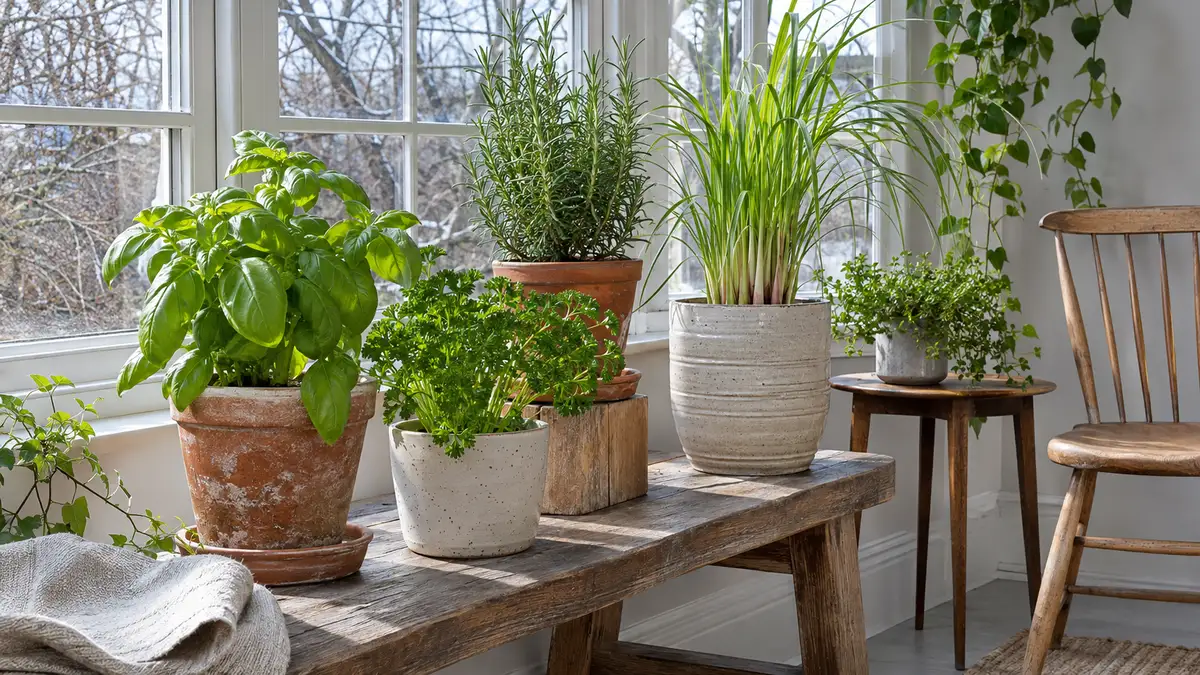
The herbs that kept up with dinner all summer can suddenly struggle when winter arrives. Basil reaches toward the glass, fresh leaves come slowly, and a pot that once needed frequent watering stays damp for days.
Meanwhile, indoor heating can dry another pot much faster than you expect.
Bringing plants inside protects tender herbs from frost, but it does not recreate summer. Short days, cold surfaces, and uneven room temperatures change what each plant can manage. Even a window that looks bright to you may offer little useful direct sun.
These indoor herb garden ideas for winter focus on changes you can make in a real home, including checking the light, protecting roots from cold surfaces, and adjusting care to slower growth.
Some herbs may provide small, regular pickings.
Others are better kept healthy until stronger spring light returns.
Start with the problem your plants are showing, rather than buying a whole new setup. A few well-placed pots with suitable care can be easier to manage than a crowded collection struggling through the darkest months.
1. Find Your Winter Sunniest Spot with a Daylight Check
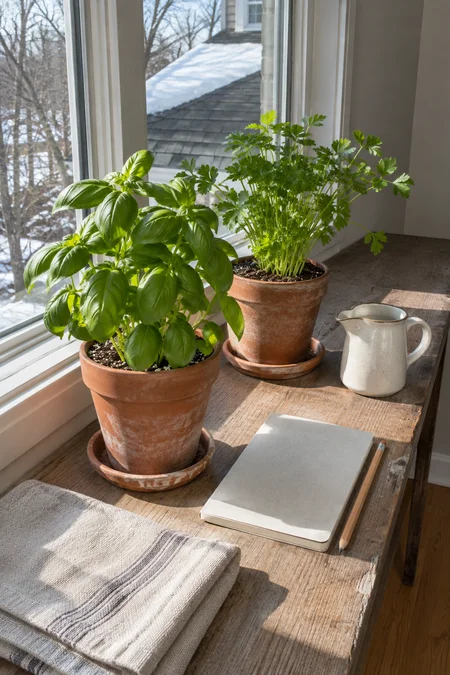
Your summer herb spot may lose its direct sun once winter light drops behind a neighboring roof. Before moving every pot, watch a few possible growing spots across a clear day.
Check them in the morning, around midday, and later in the afternoon:
- Notice where sunlight reaches the leaves, not just the floor.
- Watch for shadows from buildings, trees, and window frames.
- Note when curtains or blinds block otherwise useful light.
Choose the position with the strongest usable daylight, while still meeting the herb’s temperature needs. Repeat the check as the season changes, especially if new stems begin leaning or stretching.
🌤️ What kind of light reaches the leaves?
Direct sun
Sunlight falls directly on the foliage. Record when it begins and when a shadow takes over.
Bright indirect light
The spot is bright, but no direct beam reaches the plant. This may support slower growth.
Deep room shade
A bright-looking room can still have dim corners. Treat weak, stretched growth as a reason to reassess.
2. Clear Winter Grime from the Glass and Dust from Herb Leaves
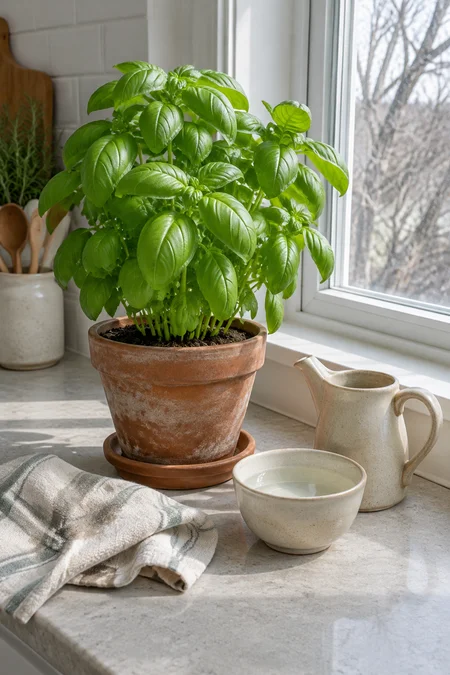
A film of winter grime on the window is easy to miss until sunlight hits it sideways. Dust can collect on indoor herb leaves too, especially after the heating comes on.
Clean accessible glass, moving the plants away from any cleaning spray first. For foliage, use plain water and a gentle method suited to the leaves.
Keep the cleaning light:
- Wipe broad, smooth leaves gently with a damp, soft cloth.
- Avoid scrubbing delicate, hairy, or fragile foliage.
Let rinsed plants drain and dry somewhere suitably warm before returning them. Cleaning helps available daylight reach the leaves, but it cannot make a shaded window sunny.
🧽 A gentle winter cleaning order
Move the pots. Keep window-cleaning products off leaves and potting mix.
Clear the glass. Clean the safely accessible surface and wipe the sill dry.
Check the foliage. Remove dust gently where needed, using plain water rather than leaf-shine products.
3. Add a Matte White Backboard to a Dim Winter Growing Spot

A small white panel can bounce some window light toward the shaded side of an herb plant. Think of it as a modest helper during short winter days, not an extra light source.
Use a plain matte board with a stable stand. Position it behind the pots, on the room side, with its white face toward the window and plants.
Keep the arrangement simple:
- Leave space between the board and the foliage.
- Keep the window side open.
- Secure the panel so it cannot fall onto the pots.
Skip mirrored panels and shiny foil. A diffuse white surface is easier to position, and the plants still need adequate daylight to begin with.
✅ Useful setup
A matte white board stands behind the herbs and faces the incoming window light.
The sides remain open, the leaves have breathing room, and the base stays secure.
🚫 Expecting too much
A reflector cannot turn a dark corner into a productive herb-growing spot.
If new stems keep stretching, reassess the light rather than enclosing the plant with more panels.
4. Insulate Herb Pots from Cold Stone Windowsills

A stone sill can feel much colder than the room, especially after a long winter night. A pot sitting directly on it has little separation from that cold surface.
Place a broad cork mat beneath each drainage saucer. Keep the whole pot base supported, and check that the saucer remains level.
This small change can reduce direct contact with the cold sill. It does not heat the roots or make a freezing window area suitable for tender herbs.
Before adding a mat, check:
- The sill is wide enough for the full setup.
- The saucer is dry underneath.
- The cork is firm and flat, rather than curled or crumbling.
📌 Build a stable base
From the sill upward: flat cork mat, watertight saucer, then the herb pot.
Keep the cork outside the drainage saucer. Check beneath it occasionally, since spills can leave moisture against the sill.
5. Shield Your Herb Corner from Exterior Door Drafts

The bright patch beside a balcony door can look useful until someone opens it on a freezing morning. Tender herbs may receive repeated bursts of cold air even when the room itself feels comfortable.
Watch the route between the doorway and your pots during normal use. Then choose a bright position to the side of that route, rather than directly in front of the opening.
Check the position before settling the plants:
- Keep pots clear of the door’s full swing.
- Leave the walking route open.
- Confirm that moving sideways has not put the foliage into deep shade.
The aim is steadier conditions without giving up the daylight your herbs need.
🚪 Check three parts of the doorway
Door swing
Leave enough room for the door to open fully without touching a pot or plant stand.
Cold-air route
Avoid the position that receives the first cold burst whenever the exterior door opens.
Bright side position
Look beside the traffic route for useful window light and more stable conditions.
6. Use a Humidity Meter Before Adding a Room Humidifier
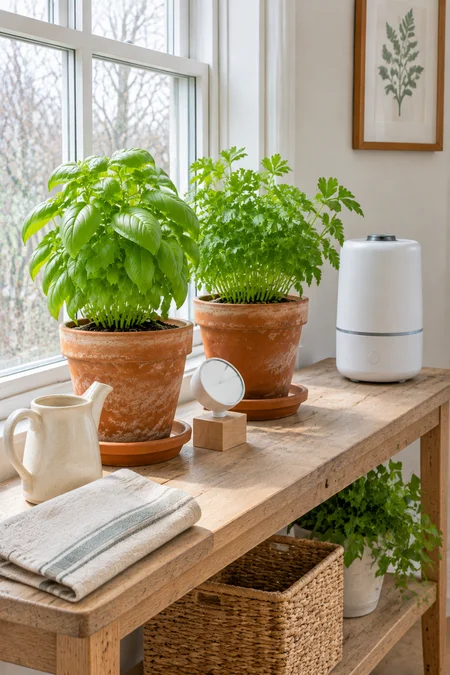
Crisp leaf edges can make you reach for a humidifier, but dry soil and other problems can look similar. Check the room before adding more moisture.
Place a small humidity meter near the foliage, away from direct mist, heating vents, and wet soil. Watch how the reading changes while the heating runs.
Let the room guide the next step:
- Check soil moisture alongside the air reading.
- Follow the herb’s needs rather than chasing one target for every plant.
- Watch for persistent window condensation.
If a humidifier is needed, keep its mist off the leaves and follow its cleaning instructions. Damp foliage beside cold glass creates a different winter problem.
💧 Before switching on a humidifier
- Check the meter’s position. Direct mist or a hot-air vent can distort the reading.
- Check the pot separately. Humid air does not replace water at the roots.
- Check the glass and leaves. Persistent condensation or wet foliage is a reason to reassess.
- Check the maintenance plan. Use the water and cleaning routine specified for the appliance.
7. Replace Summer Watering Dates with a Pot-Weight Check

A watering reminder cannot tell whether your parsley has spent the week in weak daylight or beside dry heated air. The pot gives you better clues.
After a thorough watering has drained away, gently lift the pot to learn its heavier feel. Compare that weight as the mix dries, keeping the same pot and saucer combination each time.
Pair the weight check with the soil:
- A heavy pot with damp mix usually needs more time.
- A lighter pot needs a closer moisture check.
- Water when the mix has dried enough for that particular herb.
Do not wait for every herb to become bone dry. Moisture-loving herbs need a different approach from those that prefer drier conditions.
8. Use Room-Temperature Water for Herbs in Cold Winter Rooms
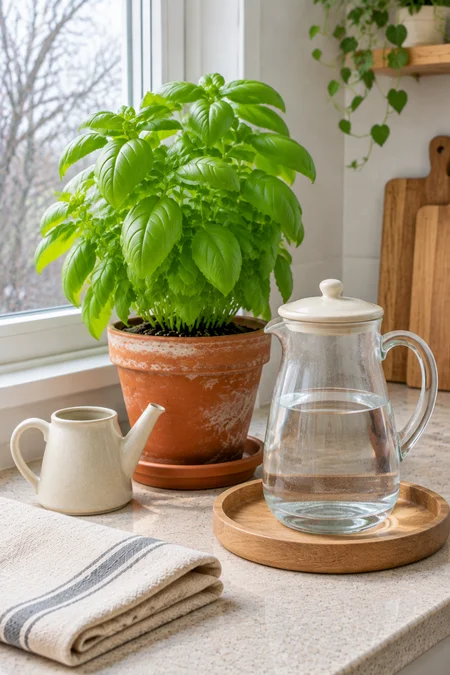
Water straight from a winter tap can feel much colder than the room. When it is very cold, let it warm naturally before watering herbs that are already dealing with chilly conditions.
Fill a clean jug with fresh water and leave it loosely covered in the room until the water reaches room temperature. Keep it away from heaters and direct sun.
Make the routine simple:
- Prepare only what you expect to use soon.
- Use a container kept clean between fillings.
- Check that the plant actually needs watering first.
There is no need to make the water warm or hot. The aim is to avoid a sharp temperature difference, not to heat the potting mix.
🚰 Let cold water adjust naturally
Fresh water can stand in a clean, loosely covered jug until it reaches room temperature.
Skip added heat: do not use a radiator, microwave, or kettle to warm watering water.
Keep the jobs separate: suitable water temperature does not mean a damp pot needs another drink.
9. Match Winter Feeding to Visible New Growth
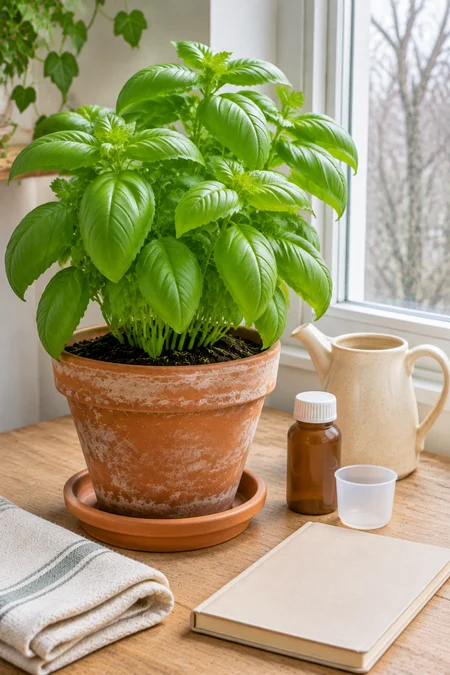
Extra fertilizer cannot replace missing winter light. Before continuing a summer feeding routine, look at what the plant is actually doing.
An herb making steady, healthy new leaves may still benefit from feeding. Follow the product’s directions for edible container plants, and account for any fertilizer already in its potting mix.
For a plant that has nearly stopped growing, reduce or pause feeding rather than trying to push it.
Use growth as your guide:
- Check new leaves and shoots, not just the plant’s overall size.
- Investigate yellowing before assuming a nutrient shortage.
- Resume a suitable routine when healthy growth returns.
A quiet winter pot does not automatically need more fertilizer.
🌱 Read the growth before reaching for feed
Steady, healthy new leaves
Feeding may be appropriate if the plant needs nutrients and has enough light to grow.
Check the product directions and the potting mix’s existing feed before adding more.
Little growth or declining leaves
Pause and assess light, watering, temperature, and pests before treating the problem with fertilizer.
A plant resting through winter needs a different routine from one growing actively.
10. Give Each Herb a Recovery Turn Between Winter Harvests

The parsley that filled a summer salad may only spare a small garnish in winter. Let that slower pace shape how much you cut.
Before harvesting, look for enough healthy foliage to leave the plant growing comfortably. Take a modest amount using the method suited to that herb, then watch for replacement growth.
Make the next harvest a plant decision:
- Choose a different ready herb while the first recovers.
- Leave sparse or struggling plants alone.
- Wait for fresh growth rather than following a fixed picking day.
If every pot looks thin, use bought herbs for the meal. Keeping enough leaves on your plants helps them make use of the winter light they have.
✂️ A winter harvest rhythm
Assess. Pick from a healthy plant with enough foliage to spare.
Take a little. Harvest in a way that suits the herb and preserves its growing points where needed.
Wait and watch. Return when healthy replacement growth supports another small picking.
11. Postpone Cosmetic Repotting During the Darkest Months

A scratched pot can wait. If your herb is healthy, drains properly, and has enough root space, winter is not the best moment to disturb it just for a different look.
During the darkest months, slow growth means the plant may take longer to settle after repotting. Moving it into a much larger container can also leave extra mix damp for longer.
Separate appearance from plant needs:
- Keep a sound pot that still suits the roots.
- Save a purely decorative change for active growth.
- Investigate genuine drainage or root problems promptly.
Waiting is useful when the plant is comfortable. It should not become a reason to ignore a failing container or deteriorating roots.
🪴 Can this repot wait?
| What you notice | Winter response |
|---|---|
| The colour or finish no longer suits the room. | Leave healthy roots alone and save the change for active growth. |
| Roots appear at a drainage hole, but the plant still grows and waters normally. | Monitor the whole plant before deciding it needs a larger pot. |
| The container is breaking, drainage has failed, or roots appear unhealthy. | Assess the problem now and make the necessary repair or repot. |
12. Bring Tender Outdoor Herbs Inside Before Cold Nights Damage Them

The first frost is too late to start planning for some tender herbs. Basil, for example, can suffer in chilly weather even when temperatures stay above freezing.
Check the forecast alongside the cold tolerance of each plant. Have its indoor position ready before the weather turns.
Where mild conditions allow, help an outdoor herb adjust to lower light gradually. Move it to a bright, sheltered outdoor position before bringing it into its suitable indoor spot.
Let the weather set the pace. If cold nights are already arriving, bring the plant inside rather than extending the transition. Once indoors, check moisture again because its old outdoor watering routine may no longer fit.
🏡 Plan the move before the cold arrives
Check the plant and forecast. Use the herb’s cold tolerance, not frost alone, to choose the moving date.
Prepare the indoor position. Make sure useful light and suitable temperatures are available before moving day.
Adjust when weather allows. Ease the light change during mild conditions, but bring plants inside promptly when cold threatens.
13. Save Major Woody-Herb Pruning for Stronger Spring Growth
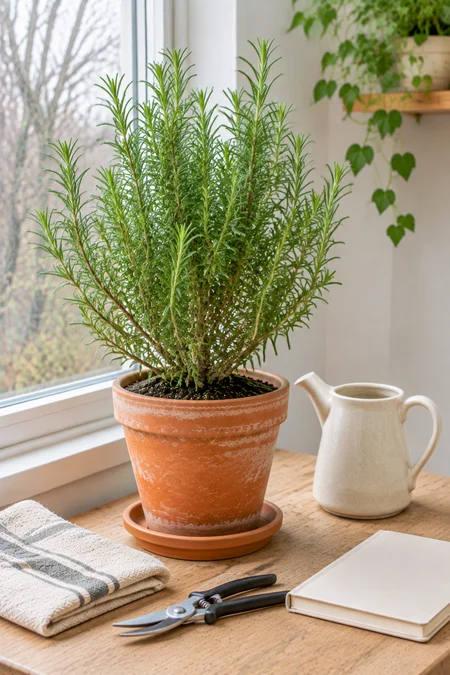
An uneven woody herb can look tempting to reshape while it sits indoors all winter. Heavy pruning, however, removes foliage when weak light already limits replacement growth.
Keep major shaping separate from the occasional small harvest. For herbs such as rosemary, avoid cutting back into bare old wood that may not regrow reliably.
Keep winter trimming modest:
- Remove clearly dead or damaged material where needed.
- Leave healthy leafy structure in place.
- Plan larger cuts for suitable active growth, following the herb’s needs.
Do not use the calendar alone as your signal. Stronger light and healthy new shoots are more useful than the first date marked “spring.”
✅ Keep useful foliage
Preserve healthy leafy stems while winter growth is slow.
Make necessary cleanup cuts carefully, using clean tools and the plant’s natural structure as a guide.
🚫 Avoid a winter haircut
Do not cut every stem back simply to make the plant neat.
Check the herb’s pruning needs before cutting into bare woody sections or removing a large part of its canopy.
14. Add a Leaf-Underside Check to Your Winter Routine
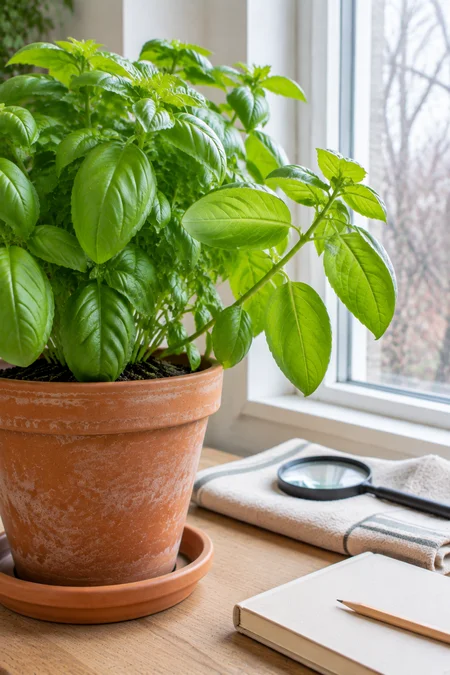
The tops of your herb leaves can look fine while trouble starts underneath. Indoor warmth can let pests build up during winter, when plants may already be growing slowly.
During a regular care check, gently examine leaf undersides, soft shoot tips, and the places where leaves join stems. A small magnifier can help you see details without guessing.
Look for:
- Clusters of insects around tender growth.
- Fine webbing alongside pale speckling.
- Sticky patches, shed skins, or unusual leaf curling.
Treat these as clues, not a diagnosis. Identify the problem before choosing a treatment, and use only products labelled for the edible herb and indoor setting.
🔎 A closer look at winter foliage
- Under the leaves: check around veins and sheltered folds.
- At the growing tips: examine soft new leaves before they fully open.
- Along leaf joints: look where stalks and stems meet.
- Before treating: confirm what you found and check any product’s crop, indoor-use, and harvest directions.
15. Leave Air Gaps Between Crowded Winter Herb Pots
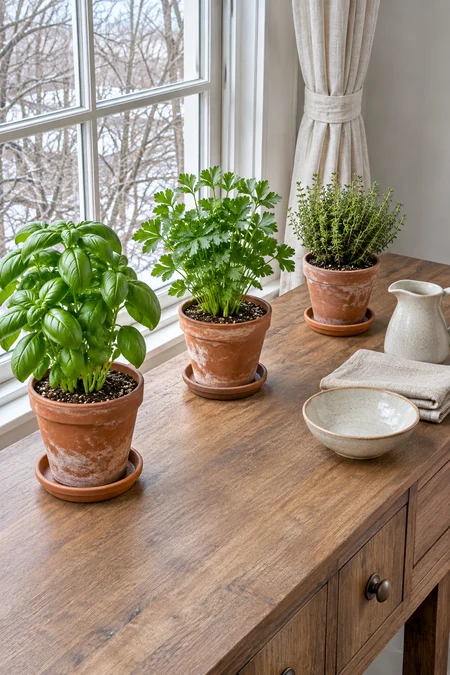
Several pots may fit on a sill while their leaves have nowhere to go. In a cool winter window, overlapping foliage can stay damp longer after watering or contact with condensation.
Arrange the plants by the width of their leaves, not just their pot rims. Leave visible space between neighboring canopies and keep foliage clear of wet glass.
Check the arrangement after plants grow or move:
- Separate leaves that rest against each other.
- Keep curtains from pressing foliage into a tight bunch.
- Remove fallen leaves from crowded gaps.
Gentle room air movement helps, but a cold draft is not the goal. If the space is too tight, move a pot to another suitable bright position.
🌿 Leave room around the leaves
Between plants
Leave visible gaps between leafy canopies, even when the pots themselves are small.
Behind plants
Keep leaves from resting against damp glass or being trapped by curtains.
Below plants
Clear fallen foliage and leave enough access to inspect the soil and saucers.
16. Track Winter Stem Stretching with a Weekly Side-View Photo

A plant can become taller without becoming healthier. In weak winter light, new stems may stretch and leave wider gaps between leaves.
Take a side-view photo each week from the same position. Keep the pot facing the same way for the photo, and include the rim so you have a steady reference.
Compare the newest growth:
- Are the gaps between leaf pairs getting longer?
- Are fresh stems thinner or leaning more?
- Are new leaves smaller than earlier ones?
Look for a pattern rather than one odd stem. If growth keeps stretching, reassess the light available to that plant instead of adding fertilizer to encourage more height.
📷 Make the photos easy to compare
Keep these steady: camera height, distance, viewing side, and the amount of the pot visible.
Note any changes: harvesting, pruning, or moving the plant can change its outline.
After improving the light: judge the fresh growth. Existing stretched sections will not shorten again.
17. Keep an Established Lemongrass Clump in a Warm Winter Corner

An established lemongrass clump is worth carrying through winter, even if it supplies little for cooking until spring. Bring the pot indoors before frost and give it a warm position with the strongest suitable light you can offer.
A warm but dim corner is not enough. Keep the leaves in useful daylight and away from cold drafts or direct blasts of heated air.
Care for the clump at its winter pace:
- Check the mix before watering.
- Avoid leaving the roots soggy or letting the whole root ball become bone dry.
- Hold back on harvesting stalks when growth is weak.
Some older leaves may brown. Preserve the living crown and healthy shoots rather than expecting summer fullness.
🌾 A winter home for lemongrass
Light and warmth together
Choose a bright position that stays suitably warm, including overnight.
Moisture checks
Adjust watering to the plant’s slower use rather than following its outdoor routine.
A modest winter goal
Keep the crown and shoots healthy enough to support stronger growth when conditions improve.
18. Overwinter Cuban Oregano with Bright Light and Careful Watering

Cuban oregano’s thick, softly hairy leaves make it quite different from common oregano. This frost-tender herb needs a protected indoor home when outdoor conditions turn cold.
Give it bright light and a potting mix that drains freely. Check beneath the surface before watering, allowing the upper mix to dry between drinks instead of keeping it constantly damp.
Watch both the leaves and the pot:
- Firm leaves and gradually drying mix suggest the routine is working.
- Soft, yellowing leaves in wet mix call for a closer check.
- Thin, stretched shoots suggest the light needs attention.
Keep winter picking light while growth slows. A healthy established plant is more useful than one stripped for a single meal.
🌿 Check this thick-leaved herb before watering
- Light: foliage receives bright daylight rather than sitting in a warm, shaded corner.
- Mix: the upper layer has had a chance to dry, with moisture checked below the surface too.
- Leaves: assess firmness alongside soil moisture, since a soft leaf alone does not tell you the cause.
- Watering method: direct water toward the mix so the hairy foliage is not left wet in a cool room.
19. Give Dormant Hardy Herbs a Cool, Frost-Free Resting Space
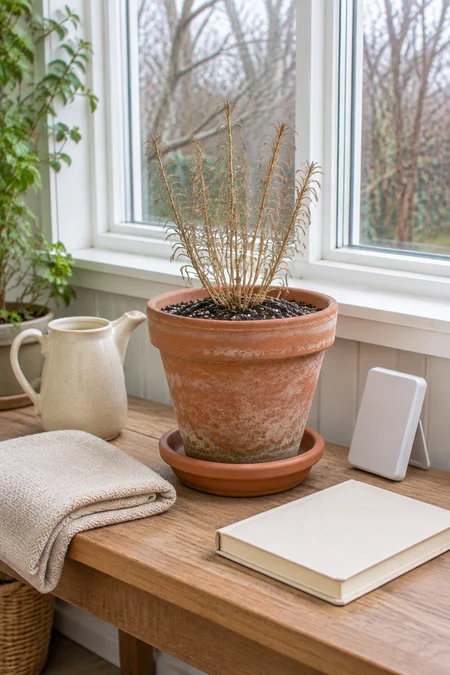
A dormant herb does not need to look like a productive kitchen plant. Some hardy perennials naturally lose their top growth, and a warm room can encourage weak shoots before useful light returns.
For a herb that is already dormant and suited to this treatment, choose a cool, frost-free space. A sheltered porch or spare room may work if its temperatures stay suitable.
Keep the resting routine simple:
- Check the root ball occasionally.
- Water sparingly enough to prevent complete drying.
- Leave fertilizer aside while the plant is dormant.
Do not apply this approach to tender herbs that need warmth. If fresh shoots appear, reassess the light and care rather than leaving them to stretch in darkness.
Suitable dormant perennial
A dormant French tarragon plant is one example of an herb that can rest through winter.
Keep conditions cool and suitable for the species, check moisture occasionally, and watch for returning growth.
Tender herb needing warmth
Basil and Cuban oregano do not belong in a cold resting space simply because growth has slowed.
Check the plant’s natural growth cycle before deciding whether dormancy care is appropriate.
20. Warm Winter Seed Trays Only During Germination

A chilly room can slow germination for herb seeds that need warmer conditions. A seedling heat mat can help, but it should have a clear job and an end point.
Check the seed packet before adding warmth. Use a purpose-made mat with suitable temperature control, and follow its instructions for placement.
As seedlings emerge:
- Move the emerged seedlings off germination heat into suitable growing conditions.
- Give them enough light promptly.
- Check moisture again because the mix may dry differently.
If a tray sprouts unevenly, separate emerged pots where practical. Do not leave early seedlings warm and dim while waiting for every seed, or move them into a room too cold for healthy growth.
🌱 Give germination warmth a stopping point
Check the seed’s needs. Add bottom warmth only when it suits the herb and the room is too cool for germination.
Watch for emergence. Check regularly so newly sprouted seedlings do not remain unnoticed in a warm, dim spot.
Switch to seedling care. Provide suitable room warmth and sufficient light, then adjust watering to the new setup.
21. Reserve Your Strongest Winter Light for Fewer Productive Pots
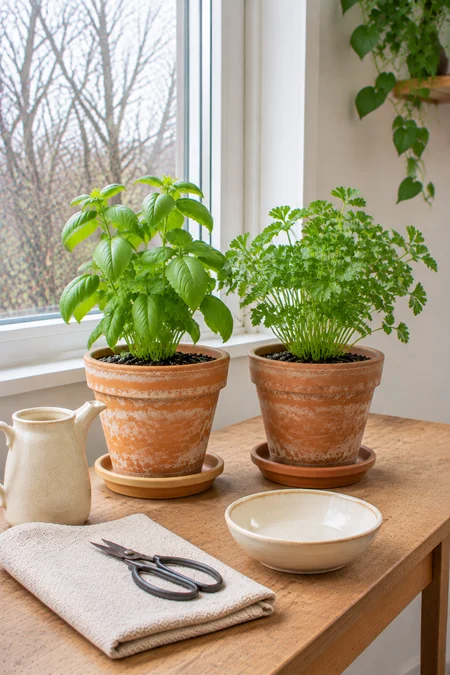
A crowded collection can leave every plant short of useful light. During the darkest months, give your best growing position to a smaller group of herbs you regularly use and can realistically keep growing.
Choose plants that are healthy enough to provide modest pickings. Place their foliage where it receives the available light without taller neighbors shading it.
Give each remaining pot a suitable plan:
- Keep actively growing herbs in conditions that support their needs.
- Move suitable dormant plants to their resting space.
- Pause new purchases if you cannot offer another useful growing position.
Fewer pots will not make the days longer, but they can help you use limited winter light more effectively.
🌤️ Choose which pots get the best position
Useful to you
Prioritize herbs you actually pick, rather than filling the window with plants you rarely use.
Suited to the spot
Match the plant to the light and temperature you can provide through winter.
Room to receive light
Arrange the leafy parts so one plant does not sit hidden behind another.
22. Prepare a Temporary Herb Refuge for Heating Outages
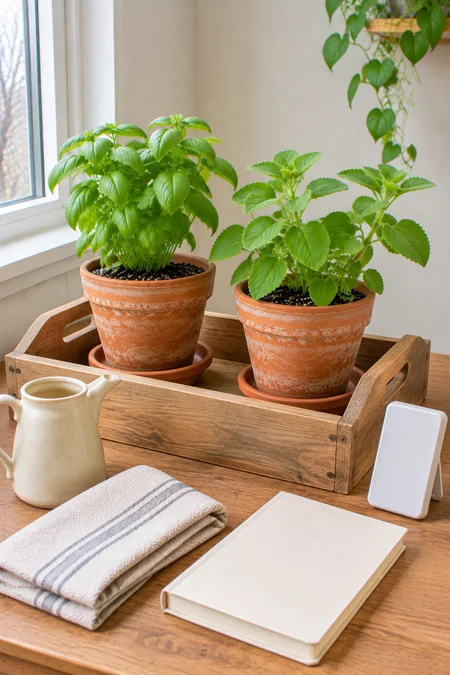
A heating outage can change a comfortable growing spot quickly, especially during severe winter cold. Choose a temporary refuge before you need it, using a room that tends to retain warmth and has some daylight.
Keep a sturdy carrying tray nearby so small pots can move together without spilling. Check the temperature where the plants will sit, since the floor and window area may feel colder than the middle of the room.
During a short outage:
- Move tender herbs before their usual position becomes too cold.
- Keep pots away from frequently opened exterior doors.
- Recheck moisture instead of watering automatically.
For the immediate cold spell, suitable warmth takes priority over the usual light arrangement. Restore useful light promptly when conditions allow.
🧺 Have a simple moving plan ready
- A chosen position: a stable surface in a room that retains warmth, clear of cold door drafts.
- A manageable tray: keep the load light enough to carry securely, with every pot base supported.
- A temperature check: use a room thermometer near the pots rather than relying only on how the room feels.
- A return plan: move herbs back once suitable growing conditions are restored, then check light and moisture again.
Build a Winter Herb Garden Around What Your Home Can Support
Winter herb growing becomes easier when your expectations match the light and warmth you have. A small picking for dinner can be a useful result, and keeping a perennial healthy until spring is worthwhile too.
Choose the indoor herb garden ideas for winter that solve a problem you can see. Make a change, watch the plant, and adjust as the days and indoor conditions shift. You do not need to try every idea or keep every pot actively growing.
Save this list to Pinterest so you can return to it when your herbs need a little extra attention during the colder months.