
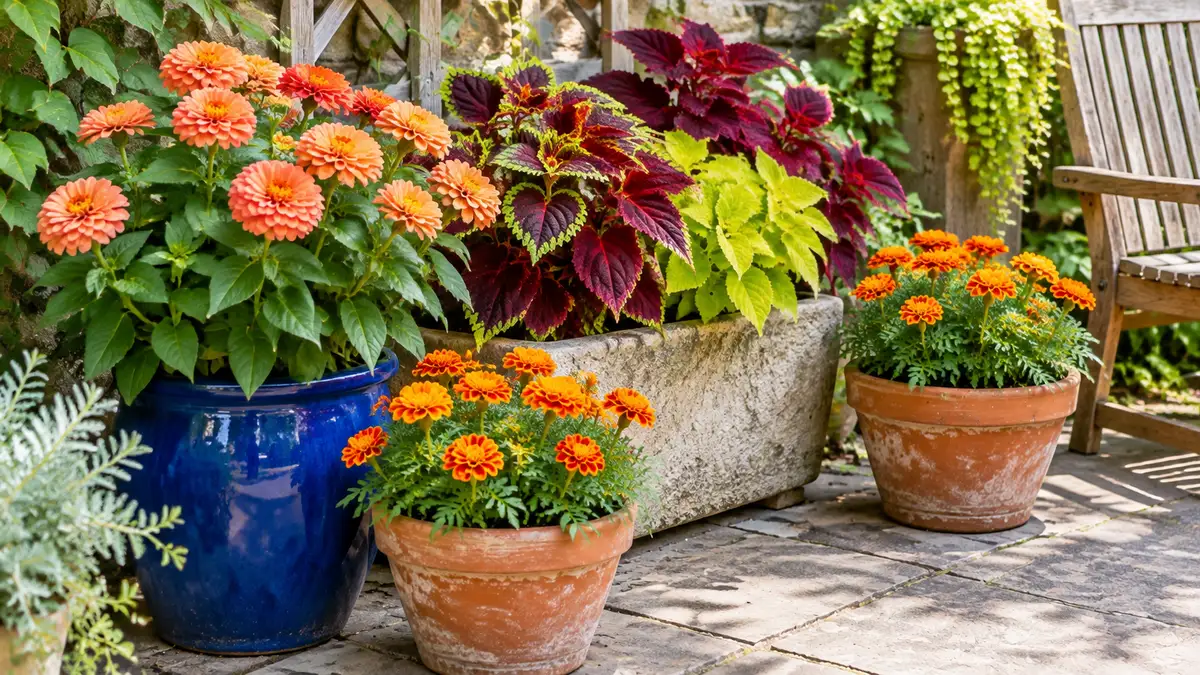
That bright planter looked lovely when you brought it home. A few weeks later, one plant has swallowed its neighbour, another has stopped flowering, and the whole thing seems thirsty again.
Colour is easy to buy at the garden centre. Keeping it looking good takes a little more thought. Plants sharing a pot need similar growing conditions, and those tiny gaps between fresh plants soon disappear. The container matters too.
Its colour can carry the display between flowers, while its size affects how often you reach for the watering can.
These colorful container garden ideas give you different ways to build a display that fits real life. Some lean on leaves instead of blooms. Others use a bold pot, a useful harvest, or a seasonal change you can make without starting over.
You’ll find choices for sunny seats, sheltered porches, and small corners that need something cheerful.
Choose the idea that suits your light and watering routine first. Then enjoy choosing the colours.
1. Pair Cobalt Blue Pots with Apricot Zinnias Beside a Sunny Seat
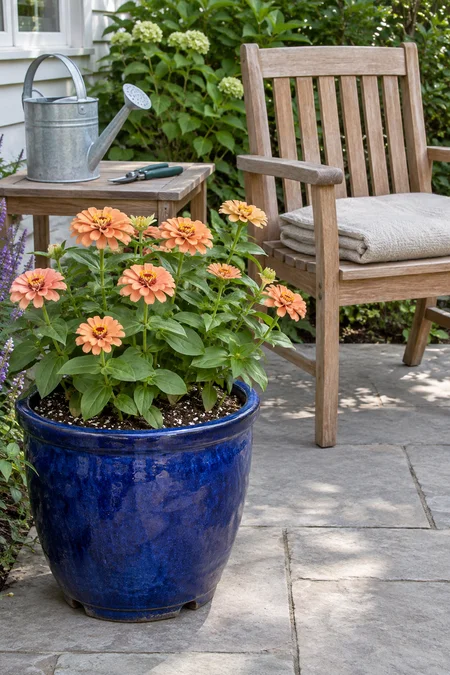
Cobalt blue makes soft apricot flowers stand out without needing a crowded mix of plants. Set a glazed blue pot beside a sunny seat, where you can see the blooms while leaving enough space to walk past.
Choose compact zinnias rather than tall cutting varieties that can lean across the chair. Use a container with drainage holes and leave room between plants for air to move.
- Water the mix beneath the leaves.
- Snip off faded flowers to keep the display tidy.
- Leave the pot slightly away from the chair cushion.
The blue glaze keeps contributing colour even between flushes of flowers.
Choose the pot by the space it leaves
🪑 A narrow seating corner
Use one substantial pot. Keep its mature foliage outside the space needed to pull out the chair.
🌼 A wider patio edge
Repeat the same blue pot and apricot flowers. Leave a watering gap between containers instead of pushing them together.
2. Build a Burgundy and Lime Coleus Display for a Sheltered Porch

Leaves can carry a colour scheme long after a short burst of flowers has finished. Burgundy and lime coleus make a lively pair on a bright porch sheltered from strong wind.
Choose varieties suited to the light you actually have. Some tolerate more sun than others, so check the plant tags before pairing them.
Keep their growth balanced:
- Start with plants of similar vigour.
- Pinch back shoots that crowd their neighbours.
- Check the mix even after rain, since a porch roof may keep it dry.
A plain stone-coloured planter lets the leaf contrast do the work. Bring this display out only once night temperatures stay mild.
🌿 Check the porch before planting
- Watch where direct sun falls, especially during the afternoon.
- Choose coleus with matching light needs and similar mature sizes.
- Keep foliage clear of the door swing and passing bags.
- Make sure the container drains freely without leaving a slippery wet patch.
3. Plant a Fragrant Pot of Pink Lavender and White Alyssum by a Sunny Seat

Plant pink-flowered lavender in a broad terracotta pot, with white sweet alyssum near the rim. Beside a sunny seat, the pale flowers feel gentle, while the lavender’s aromatic leaves give you another reason to pause.
Choose a compact lavender and use freely draining container mix. Leave its woody base uncovered and give the alyssum room without packing plants tightly around the crown.
Water for the lavender’s needs. Let the surface of the mix dry before checking whether more water is needed. Alyssum may fade during hot weather. Trim or replace tired edge plants rather than keeping the whole pot constantly wet to rescue them.
Keep the fragrant centre healthy
✅ A useful pairing
Keep lavender as the lasting centre. Treat alyssum as a seasonal edging plant that can be trimmed or changed.
⚠️ A watering mistake
Do not answer every tired alyssum flower with more water. Check the mix first, and never leave the pot standing in a full saucer.
4. Turn a Wide Terracotta Bowl into a Mosaic of Red and Green Sempervivums
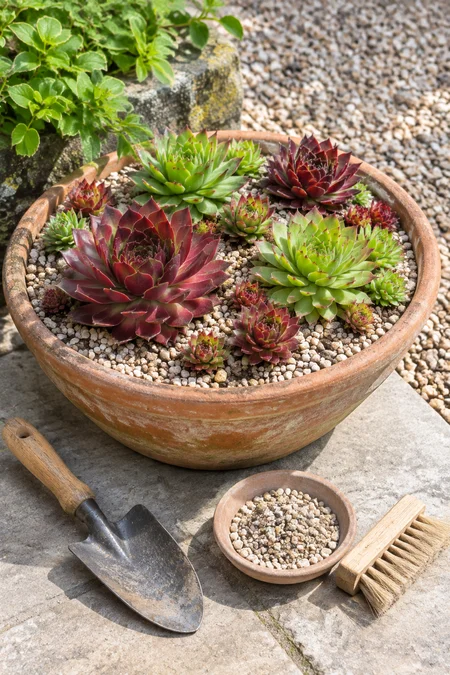
A low bowl of sempervivums brings colour close to the ground without a tall plant blocking the view. Their red and green rosettes look especially clear beside pale paving or a gravel path.
Start with a few contrasting plants and leave gaps for their smaller offsets. The colour can shift with season, light, and variety, so treat the display as something that changes.
- Choose a bowl with drainage holes.
- Use a gritty mix made for succulents.
- Keep rosette bases above the soil surface.
Place it where roof runoff cannot soak it. A thin gravel finish looks tidy, but it cannot fix poor drainage underneath.
Build the mosaic with room to spread
- Arrange first. Set the plants on the mix and turn the bowl to check the pattern before planting.
- Leave open pockets. Give future offsets somewhere to root instead of filling every gap.
- Keep the pattern loose. Move crowded offsets later if one colour begins to take over.
5. Plant a Cool-Season Window Box with Violas and Golden Sweet Flag
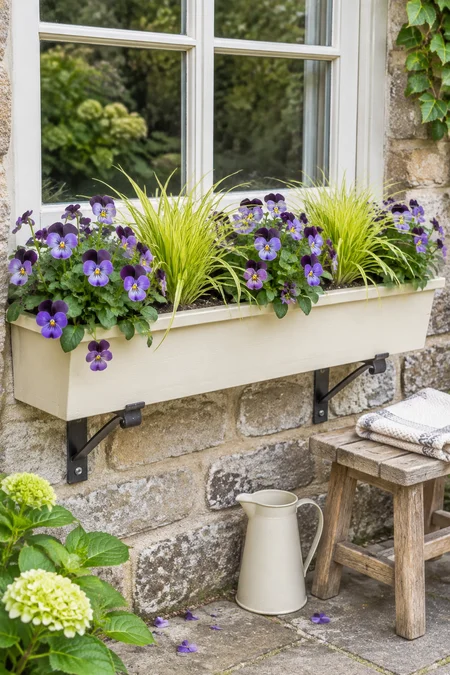
Purple violas sit neatly against the narrow yellow-green leaves of golden sweet flag. Use this pairing in a cool-season window box that gets morning sun, where the foliage can catch the light without facing harsh afternoon heat.
Choose a compact golden form of Acorus gramineus. Give its roots room and keep the mix evenly moist, with drainage holes open.
Plan for the weather to change:
- Remove tired viola flowers as you pass.
- Check moisture beneath the foliage.
- Reassess the display when warmer weather slows flowering.
Sweet flag provides the steady leaf colour. The violas are the seasonal part, so replacing them later is part of the plan.
🗓️ A simple seasonal window-box plan
At planting
Check that the box is securely supported and deep enough for the plants’ root balls.
During cool weather
Check the soil even after rain. A roof overhang may keep the window box surprisingly dry.
As weather warms
Replace fading violas with plants suited to the same light and moisture, leaving the sweet flag room.
6. Give a Compact Dahlia Its Own Large Pot for Flowers You Can Cut

A dahlia in its own pot gives you room to water, support the stems, and reach the flowers without pushing through other plants. Choose a compact variety with stems suitable for small vase arrangements.
Some very short bedding dahlias look lovely outdoors but offer little stem to cut.
Set the pot in a sunny spot within easy reach of the path.
- Add any needed support early, before roots fill the container.
- Water the mix thoroughly, then let excess water drain.
- Cut fully opened flowers above a healthy pair of leaves.
A small kitchen vase is enough. You do not need a tall bouquet to make the pot useful.
✂️ Leave something on the plant
Choose a flower stem you can cut while leaving healthy leafy growth below. Avoid stripping a small plant for one large arrangement. Remove faded flowers separately, even when you are not picking a bouquet.
7. Use Coral Pot Covers to Brighten a Green Fern Corner

A shady corner does not need flowers to look colourful. Coral pot covers give green fern fronds a clear backdrop, especially against a pale wall that otherwise looks a little bare.
Keep each fern in its own nursery pot inside the decorative cover. That makes it easier to lift the plant out for watering and check whether water has collected underneath.
Choose the cover for fit, not just colour:
- Leave enough space to grip and lift the inner pot.
- Keep the nursery pot above any trapped water.
- Empty covers after watering or heavy rain.
Use ferns suited to your climate and shade. The coral colour works even when nothing is blooming.
Make the colour easy to maintain
Before: awkward to check
A nursery pot wedges tightly inside its cover. You cannot lift it easily or see water collecting below.
After: easy to lift
A slightly wider cover leaves a finger gap around the rim. The fern lifts out for watering, and the empty cover is easy to inspect.
8. Train Black-Eyed Susan Vine Up a Freestanding Container Trellis

Guide colour upward when the patio floor has little space to spare. Black-eyed Susan vine, Thunbergia alata, can wind around a slim trellis, carrying orange or yellow flowers above the container.
Fit the support before planting. Choose a broad, stable pot and secure the trellis firmly, since leafy growth catches the wind.
Start young shoots against the lower supports with loose ties. Once they begin twining, guide wandering stems back toward the frame.
Keep the outline manageable. Redirect growth before it reaches nearby chairs or gutters, and shorten stems that spill into the walkway. In frost-prone gardens, plan for this tender vine as a seasonal display.
🌱 Train the vine while stems are young
- Anchor the frame. Check that it stays upright before adding the plant or filling the pot completely.
- Spread the first shoots. Guide them toward different lower supports so growth does not bunch on one side.
- Check the ties. Loosen or remove them as stems thicken and the vine grips the trellis itself.
9. Make a Movable Fuchsia Planter for a Patio with Shifting Shade

The shady patch beside a patio wall can move as the season changes. A fuchsia on a sturdy wheeled plant caddy lets you adjust its position without lifting a heavy, watered pot.
Choose a bushy patio fuchsia with hanging pink and purple flowers. Give it bright light with shelter from harsh afternoon sun, especially during hot weather.
- Use a broad caddy suited to the filled pot’s weight.
- Choose locking wheels for a level patio.
- Keep branches clear of the wheels and path.
You do not need to chase the shade all day. Find a suitable position, then move the planter when seasonal sun or a hot spell makes a change useful.
🌿 Check the spot before moving the pot
Light
Look for bright shade or gentle morning sun, with protection during the hottest part of the day.
Moisture
Check the mix before watering a wilted plant. Heat can cause drooping even when the roots are already moist.
Parking space
Use level paving, lock the wheels, and keep the route to the door open.
10. Grow Purple Basil and Orange Calendulas in Separate Kitchen-Door Pots

Purple basil leaves and orange calendula flowers make a cheerful pair beside the kitchen door. Keeping them in separate pots gives you more freedom than squeezing both into one mixed planter.
Basil needs warm conditions, while calendulas often flower best in cooler weather. Their strongest growth may overlap for only part of the season.
Let each pot follow its own schedule:
- Set basil outside once the weather is reliably warm.
- Pick leafy basil tips above a pair of leaves to encourage branching.
- Remove faded calendula flowers and shift a tired pot out of the display.
Keep the basil close enough to harvest without stepping into the bed or blocking the door.
Two pots, different seasonal jobs
| Purple basil | Orange calendula |
|---|---|
| Brings dark leaf colour and a useful kitchen harvest during warm weather. | Brings bright flowers, often with its strongest display in cooler conditions. |
| Pinch leafy tips and remove flower buds when growing mainly for leaves. | Remove spent flowers, then refresh or replace the plant when it becomes tired. |
11. Tuck Pink Cyclamen into a Removable Pot Inside an Autumn Display

Pink cyclamen flowers stand above their patterned leaves like little folded ribbons. Tuck a nursery pot of pink cyclamen into an autumn container so the centre can be changed without disturbing the surrounding planting.
Use florist cyclamen for this temporary display and treat it as frost tender. A sheltered position with bright, indirect light will suit it best.
Make removal part of the setup:
- Keep its inner pot upright and draining freely.
- Leave the crown clear of mulch and neighbouring leaves.
- Lift it out when frost threatens or the plant needs attention.
You can replace the seasonal centre without disturbing the rest of the container.
A removable centre that stays accessible
🌿 Leave a lifting gap
Keep enough space around the inner rim to remove the cyclamen without pulling its stems.
💧 Check its own mix
The small inner pot may dry at a different pace from the surrounding container. Check both separately.
🏠 Choose a backup spot
Have a cool, bright, frost-free place ready before cold weather arrives.
12. Line a Sunny Gravel Edge with Low Bowls of Jewel-Coloured Portulaca
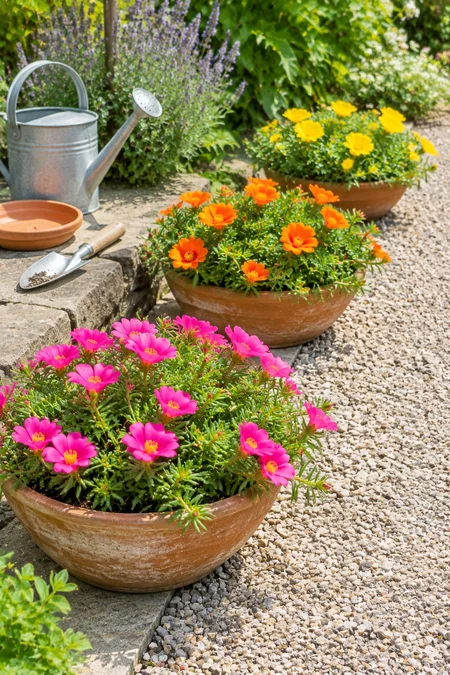
Low bowls of portulaca bring bright flowers to a sunny gravel edge without hiding the garden behind them. Choose moss rose, Portulaca grandiflora, for its fleshy, narrow leaves and flowers in shades such as pink, orange, and yellow.
Use containers with drainage holes and a freely draining mix. Space the bowls so you can reach each one without stepping over trailing stems.
- Water when the mix has dried sufficiently, rather than following a daily habit.
- Keep the bowls away from lawn sprinklers.
- Leave room for growth to spill over the rims.
Many varieties close their flowers in dull weather. Choose a spot you usually enjoy while the sun is out.
☀️ Match the flowers to your viewing time
Portulaca suits a sunny place you pass during the day. If you mainly sit outdoors in the evening, its flowers may already be closed. Look at the foliage and container colour too, since those remain part of the display.
13. Plant Red-Stemmed Begonias in a Raised Trough Where Their Colour Shows
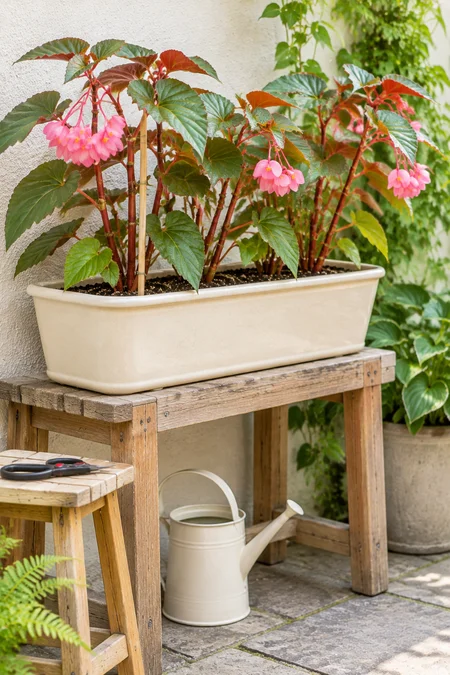
Red begonia stems can disappear beneath a crowded canopy. A raised trough brings them closer to eye level, where the stems, leaf undersides, and hanging flowers become part of the view.
Choose a compact cane begonia with visibly red stems. Set the trough on a sturdy stand in bright, sheltered shade, leaving space between plants for their shape to show.
Keep the planting open:
- Skip trailing plants that would hide the stems.
- Support leaning canes before they bend over the edge.
- Water the mix without leaving the container waterlogged.
Check the mature size before buying. A tall cane variety can quickly outgrow a small raised trough.
Show the stems without weakening the plant
⚠️ The mistake
Packing plants closely, then stripping healthy lower leaves to reveal their stems.
✅ The better setup
Use fewer plants, raise the container, and leave clear sightlines between the canes. Remove damaged growth rather than healthy leaves needed for growth.
14. Hang a Basket of Trailing Petunias and Silver Falls Dichondra Over a Sunny Doorway
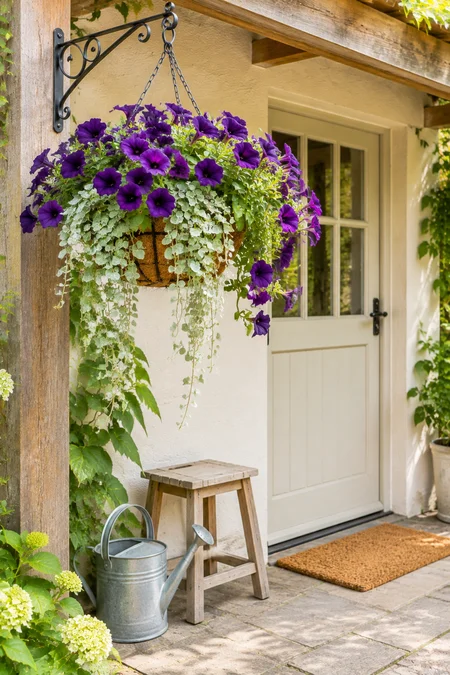
Silver Falls dichondra threads pale foliage between trailing petunia flowers, giving a sunny doorway colour above the ground. Choose one petunia shade, such as deep violet, so the silver leaves remain easy to see.
Use a roomy basket with a liner that holds mix securely and allows excess water to escape. Position it above and to the side of the opening, with clear space beneath the trailing growth.
- Fix the bracket into a suitable structural support.
- Allow for the basket’s weight when fully watered.
- Keep watering access easy.
Check moisture often in hot or windy weather. Trim long trails before they brush against anyone using the doorway.
🧺 Check the doorway before hanging
- The door opens fully without touching the basket or chains.
- The bracket, fixings, and support suit the basket’s fully watered weight.
- Trailing stems have room to grow without blocking the entrance.
- You can check and water the mix without awkward reaching.
- Drainage falls away from the threshold and does not leave the entrance slippery.
15. Give a Burgundy Cordyline a Broad Planter as a Bold Patio Focal Point
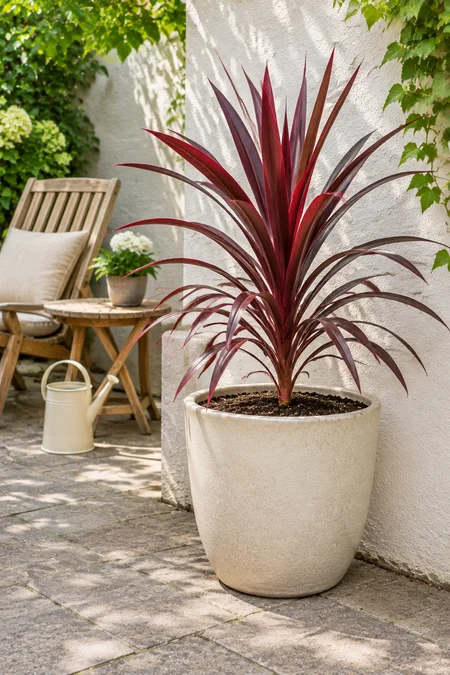
One burgundy cordyline can give a patio a strong point of colour without a changing mix of flowers. Its long, arching leaves look clear against pale render, cream fencing, or light stone.
Choose a young plant with enough room to grow in a broad, stable container. Leave the surrounding surface simple rather than filling every gap with smaller plants.
Think beyond its size at purchase:
- Keep leaf tips away from the seating area.
- Allow room to inspect and water the mix.
- Check the variety’s cold tolerance before planning to leave it outside all winter.
Cordylines can become substantial plants. Treat this as a display that will need more space or repotting later.
Plan for the plant you are growing
At planting
Choose a stable pot with open drainage holes. Keep the plant at its existing soil level.
As leaves spread
Move nearby furniture to preserve space around the plant instead of repeatedly cutting healthy leaf tips.
Before winter
Match protection to the variety and local conditions. Decide how a heavy container will be moved before it needs shelter.
16. Repeat Compact Orange Marigolds in Matching Pots Along a Short Path
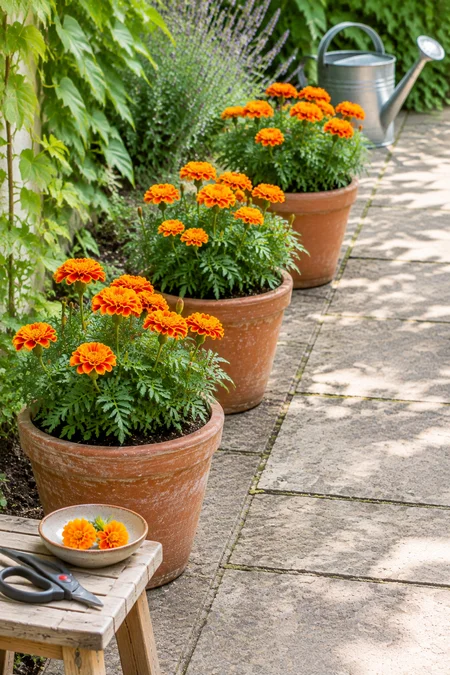
Repeating the same orange flowers along a short path gives the space a clear rhythm without needing a complicated planting mix. Compact French marigolds suit this job, with bushy growth that stays closer to the pots than taller types.
Choose matching containers large enough for the plants’ mature spread. Set them beside the walking surface, leaving space for feet, shopping bags, and the watering can.
- Give each pot a similarly sunny position.
- Remove faded flower heads as you pass.
- Check containers separately, since one may dry faster than another.
If the path is narrow, keep the pots along one side. The repeated colour still works without squeezing the walkway.
🌼 Set the spacing before you plant
- Position the empty pots. Follow the path edge while keeping the walking surface clear.
- Allow for leafy growth. Leave room beyond each rim for the marigolds’ mature spread.
- Walk the usual route. Carry a watering can past the pots and adjust any position that makes you turn sideways.
Colour that fits your space
You do not need a patio full of flowers to make colour feel intentional. One well-placed pot, a strong leaf contrast, or a repeated flower shade can be enough.
The most useful colorful container garden ideas leave room for roots, watering, and the way you move through the space.
Start with the spot you see most often. Match the plants to its light, then choose a container you can comfortably maintain. Leave yourself permission to trim, move, or replace something as the season changes.
Save this list on Pinterest so you can return to it when you’re ready to plant your next colourful container.