
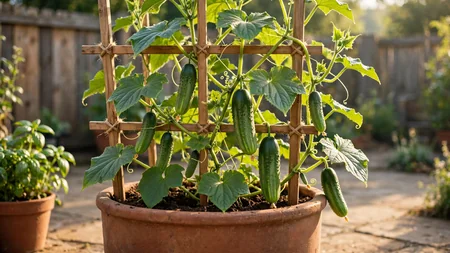
Growing cucumbers in containers is a good choice when you do not have much garden space. You can grow them on a patio, balcony, deck, or in a small yard.
But cucumbers grow fast. They also need a lot of water, food, sunlight, and root space. A small mistake can quickly lead to yellow leaves, weak vines, bitter cucumbers, or very little fruit.
In this guide, you will learn how to grow cucumbers in containers step by step. You will learn how to choose the right cucumber, pick the right pot, prepare the soil, water the plant, feed it, support the vines, and harvest the cucumbers at the right time.
The main goal is to keep the plant growing at a steady pace. Cucumbers do best when their roots do not become too dry or too wet.
Setting up your container will take about 30 to 45 minutes. Most cucumber plants are ready to start producing fruit in about 50 to 70 days, depending on the variety and weather.
What You Need
At a Glance
- Choose a cucumber variety suited to containers.
- Pick a container large enough for the roots.
- Fill the container with a moisture-holding potting mix.
- Install the trellis before planting.
- Plant the cucumber at the correct depth.
- Thin seedlings to the strongest plant.
- Place the container where it gets enough sun.
- Water deeply before the soil becomes completely dry.
- Feed the plant as flowering begins.
- Guide the vine onto its support.
- Check flowers, leaves, and stems for early problems.
- Harvest cucumbers while they are young and firm.
Choose a cucumber variety suited to containers
Pick a cucumber that fits the space you have.
Bush, patio, and compact cucumbers are good choices for containers. Smaller vining varieties can also grow well if you give them a strong trellis.
Read the seed packet or plant label before you buy. Look for words such as bush, compact, patio, or container.
Avoid very large cucumber vines if you only have a small balcony or patio. A smaller plant is easier to water, support, and manage in a pot.
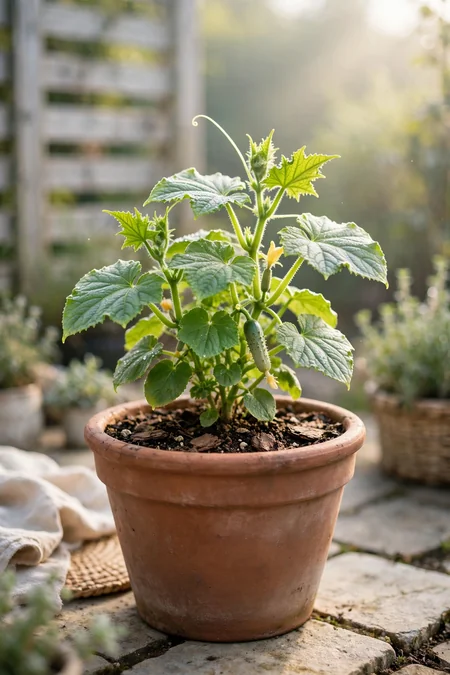
Pick a container large enough for the roots
Use a container that holds at least 5 gallons of potting mix for one cucumber plant.
A pot around 12 to 16 inches deep gives the roots room to grow. A larger pot also holds moisture longer, so the soil does not dry out as fast.
Look under the container before using it. It must have drainage holes. Extra water needs a way to leave the pot.
Plastic, fabric, wood, and glazed containers can all work. Avoid very small pots because cucumber plants can dry out quickly in them.
Do not crowd several cucumber plants into one small pot. They will fight for water, food, and root space.
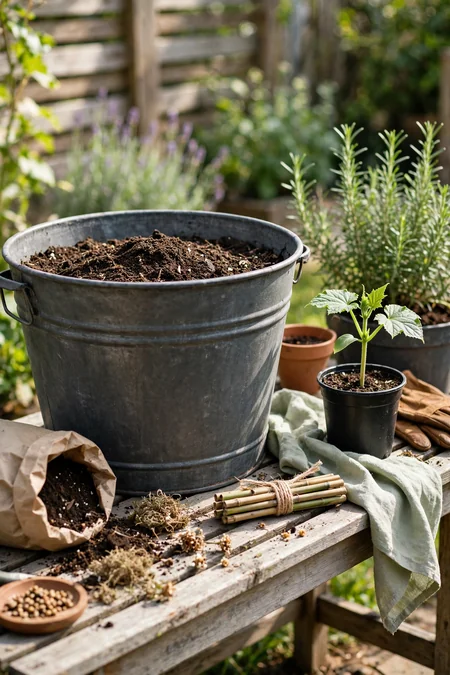
Fill the container with a moisture-holding potting mix
Use fresh potting mix made for containers. Do not use soil taken straight from your garden.
Garden soil can become heavy inside a pot. It may stay wet for too long and make it harder for cucumber roots to get enough air.
Mix about 4 parts potting mix with 1 part finished compost.
Fill the pot until the soil is about 1 to 2 inches below the top edge. This space helps keep water and soil inside the pot when you water the plant.
Install the trellis before planting
A cucumber vine can grow fast, so put the support in place before the roots fill the pot.
Use a trellis about 4 to 6 feet tall for a vining cucumber. Push it firmly into the pot so it does not lean when the plant gets heavier.
If you are growing a bush cucumber, check the plant label first. Some compact types may need only a short support.
Adding the trellis now also helps you avoid damaging the roots later.
Place the trellis near the back or center of the pot. Make sure it feels steady before you add the plant.
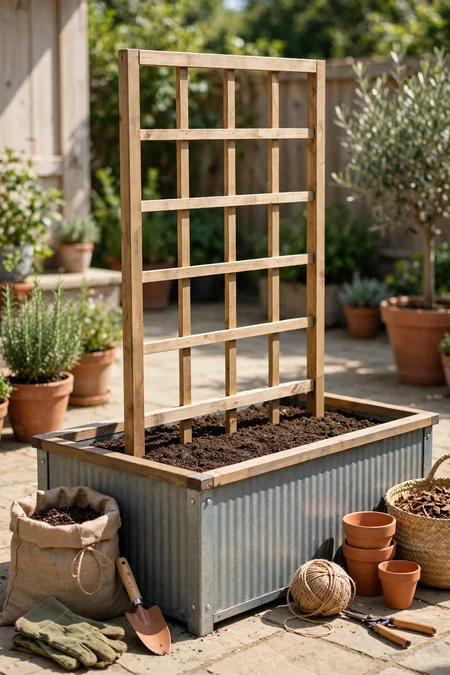
Plant the cucumber at the correct depth
For seeds, make a hole about 1/2 to 1 inch deep. Place 2 to 3 seeds in the center area, then cover them lightly with potting mix.
If you are using a seedling, make a hole wide enough for the root ball. Set the plant at the same soil level it had in its nursery pot. Do not bury the stem deeply.
Water the soil after planting so it settles around the seeds or roots.
Do not pack the soil down hard after planting. Cucumber roots grow better in loose soil with small air spaces.
Thin seedlings to the strongest plant
Wait until the seedlings have a few true leaves and you can see which one is growing best.
Keep the strongest seedling. Cut the weaker seedlings at soil level with clean scissors.
Do not pull them out. Pulling can disturb the roots of the plant you want to keep.
For a 5-gallon container, one healthy cucumber plant is usually enough. Giving one plant the whole pot means more water, food, and root space are available to it.
Place the container where it gets enough sun
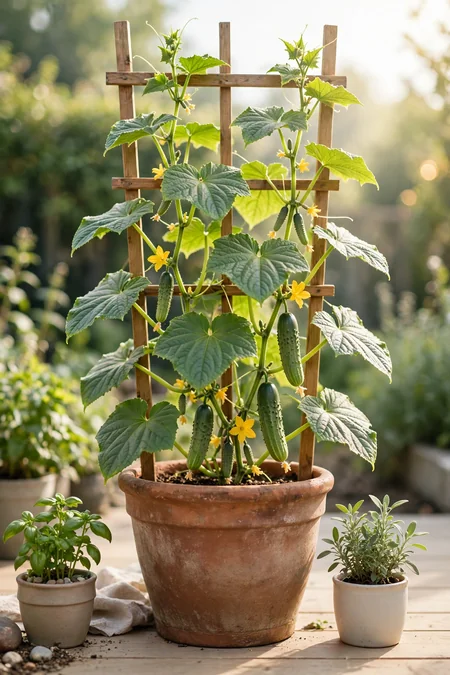
Cucumbers need plenty of light to grow well and make fruit. Put the container where the plant gets about 6 to 8 hours of direct sun each day.
Morning sun is very useful because it gives the plant light without the strongest afternoon heat.
If your patio gets very hot, watch the leaves in the afternoon. A little shade during the hottest part of the day can help in very warm weather.
Water deeply before the soil becomes completely dry
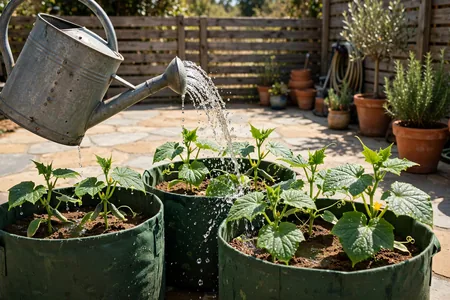
Push one finger about 1 inch into the soil. If the soil feels dry at that depth, it is time to water.
Pour water slowly over the soil until a little water starts to come out of the drainage holes. This helps the whole root area get wet.
Check the pot every day during hot weather. Containers can dry out much faster than garden beds. Try to keep the soil evenly moist instead of letting it become very dry and then soaking it again.
Water the soil, not the leaves. Morning watering is a good choice because the plant has moisture ready for the warmer part of the day.
Do not follow a fixed watering schedule without checking the soil. Hot, windy days can dry a container much faster than cool or cloudy days.
Feed the plant as flowering begins
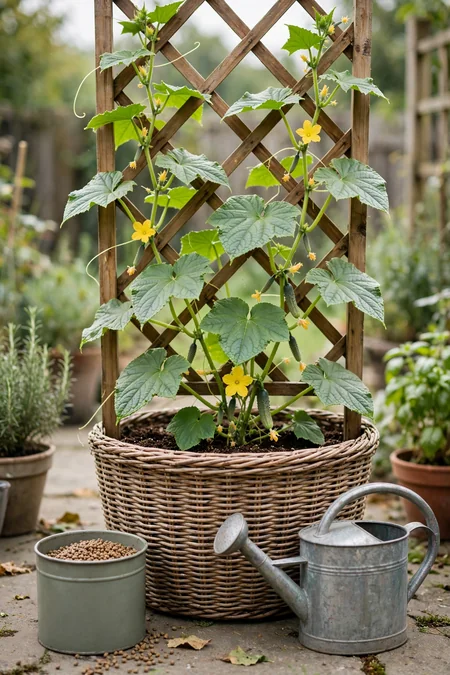
Start feeding when the cucumber begins making flowers.
Use a fertilizer made for vegetables or fruiting plants. Follow the amount shown on the product label because fertilizers can have different strengths.
Avoid giving the plant too much high-nitrogen fertilizer. Too much nitrogen can give you lots of big green leaves but fewer cucumbers.
For liquid fertilizer, feeding about every 1 to 2 weeks is common, but always follow the directions on the fertilizer you are using.
More fertilizer does not mean more cucumbers. Too much fertilizer can damage the roots or push the plant to make leaves instead of fruit.
Guide the vine onto its support
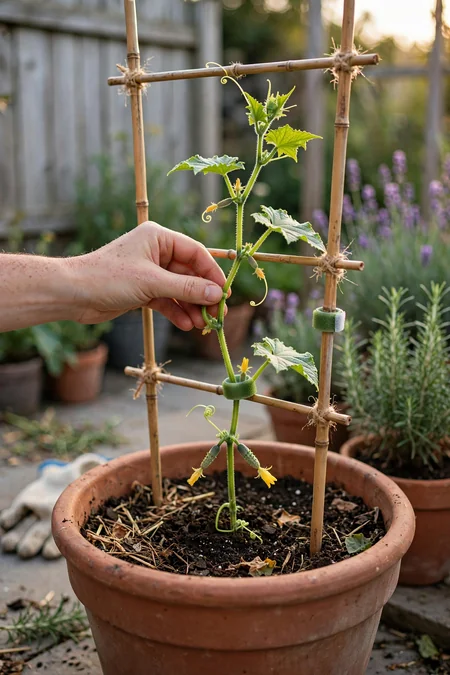
As the cucumber vine gets longer, help it grow up the trellis.
Move the soft vine gently toward the support. Let the small curling tendrils grab the trellis on their own. If needed, use a soft plant tie to hold the vine in place.
Keep the tie loose. A tight tie can press into the stem as it grows.
Check the vine every few days. Training it early keeps the plant neat and makes the cucumbers easier to see and pick.
Check flowers, leaves, and stems for early problems
Look over the plant every few days.
Healthy leaves should usually be green and firm. Watch for yellowing, white powdery patches, holes, sticky leaves, or insects under the leaves.
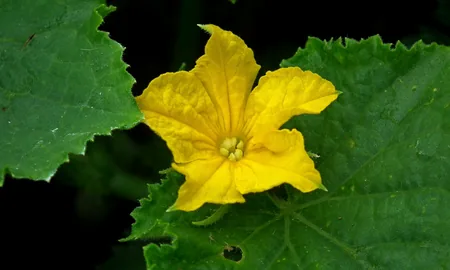
Also check the flowers. If the plant has many flowers but no cucumbers, poor pollination may be the reason.
Finding a problem early gives you more time to fix it before the whole plant becomes weak.
One yellow leaf does not always mean the whole plant is sick. Look for a pattern across several leaves before making a big change to watering or feeding.
Harvest cucumbers while they are young and firm
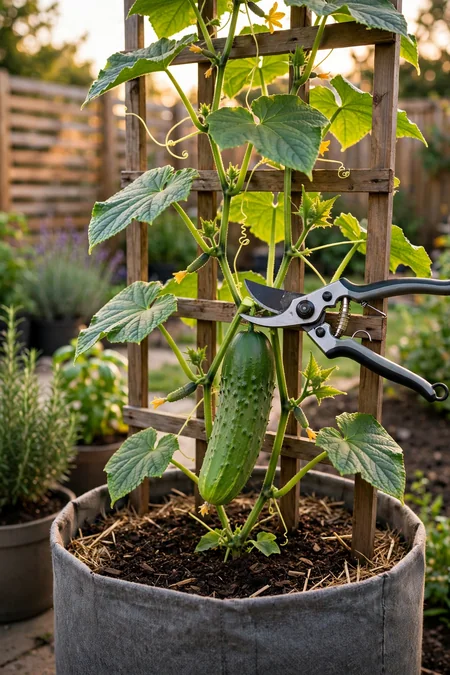
Pick cucumbers when they reach the normal size for the variety and still feel firm.
Do not wait until every cucumber becomes very large. Older fruit can become seedy, bitter, or tough. Leaving overripe cucumbers on the vine can also slow new fruit production.
Use clean scissors or garden snips to cut the stem. Leave a short piece of stem attached to the cucumber.
During heavy production, check the plant every 1 to 2 days so you do not miss fruit hiding behind the leaves.
Pick often once the plant starts producing. Regular harvesting helps the vine keep making new cucumbers.
Troubleshooting Container Cucumbers
Cucumber plants can change quickly when something is wrong. Check the soil, leaves, flowers, and fruit before making a big change.
Use this table to find the most common problems.
Cucumber Troubleshooting Guide
| If This Happens | Try This |
|---|---|
| Leaves wilt during the day | Check the soil about 1 inch deep. Water if it feels dry. If the soil is already wet, do not add more water. |
| Leaves turn yellow | Check for soil that stays too wet or too dry. Also make sure the plant is getting enough food once it starts flowering. |
| Lots of flowers but no cucumbers | Give the plant more time and look for bees or other pollinators. Early flowers may be male flowers, which do not make fruit. |
| Cucumbers are small or misshapen | Keep watering steady and check pollination. Uneven water and poor pollination can both affect fruit shape. |
| White powder appears on leaves | Remove badly affected leaves, give the plant better air flow, and keep water off the leaves when possible. |
| Cucumbers taste bitter | Keep soil moisture more even, protect the plant from severe heat stress, and harvest fruit while it is still young. |
| Plant has many leaves but little fruit | Avoid high-nitrogen fertilizer. Use a fertilizer made for vegetables or fruiting plants and follow the label amount. |
Frequently Asked Questions
Frequently Asked Questions
Use a container that holds at least 5 gallons for one cucumber plant. A larger container is even better because it gives the roots more space and holds moisture longer.
One cucumber plant is usually best in a 5-gallon container. Larger planters may hold more, but the plants still need enough root space and good air flow.
Most vining cucumbers grow better with a trellis. It keeps the vines off the ground and makes the fruit easier to see and pick. Some bush varieties may need only a small support.
Check the soil every day in warm weather. Water when the top 1 inch feels dry. Do not depend on a fixed schedule because pots dry at different speeds.
Yes. A balcony can work well if it gets around 6 to 8 hours of direct sun and has enough room for a large pot and trellis.
Early cucumber flowers may be male flowers. These do not make cucumbers. Poor pollination can also cause flowers to fall without making fruit.
Quick Reference: How to Grow Cucumbers in Containers
Cucumber Container Growing Cheat Sheet
What You Need
- Container of at least 5 gallons
- Fresh container potting mix
- Finished compost
- Cucumber seeds or one healthy seedling
- Trellis or plant support
- Vegetable fertilizer
- Watering can or hose
Best Growing Conditions
6–8 hours each day
5 gallons or larger
About 12–16 inches
Keep soil evenly moist
4–6 foot trellis for vines
Every 1–2 days when producing
12 Steps
- Choose a cucumber variety suited to containers.
- Pick a container large enough for the roots.
- Fill the container with a moisture-holding potting mix.
- Install the trellis before planting.
- Plant the cucumber at the correct depth.
- Thin seedlings to the strongest plant.
- Place the container where it gets enough sun.
- Water deeply before the soil becomes completely dry.
- Feed the plant as flowering begins.
- Guide the vine onto its support.
- Check flowers, leaves, and stems for early problems.
- Harvest cucumbers while they are young and firm.
Grow Your Cucumbers With Confidence
Once you know how to grow cucumbers in containers, the job becomes much easier.
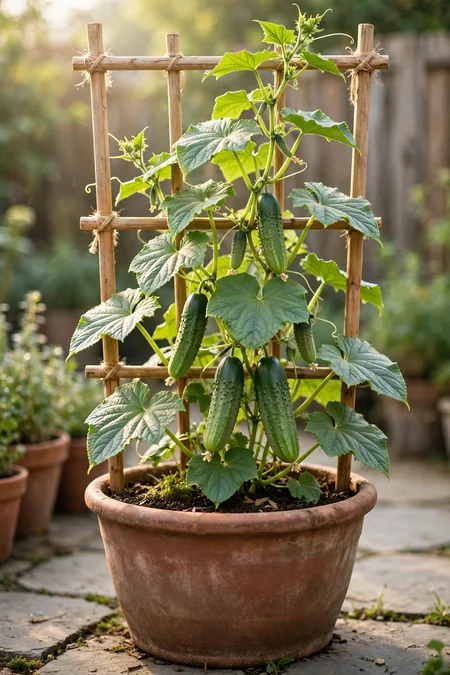
Give your plant a large pot, good soil, plenty of sun, steady water, and a strong trellis. Check it often, especially during hot weather.
Do not worry if your first plant is not perfect. Watch how it grows and make small changes when needed.
Soon, you can be picking fresh cucumbers right from your patio, balcony, or small garden.
Save this guide on Pinterest so you can come back to the steps when your cucumber plants start growing.