
Growing vegetables in an apartment usually starts with one awkward question: where exactly are the plants supposed to go?
A balcony helps, but it is not the only useful growing space. A bright kitchen window, an unused shelf, the end of a dining table, or a narrow spot beside a glass door can all become part of a small food garden. The trick is choosing plants and setups that fit into daily apartment life instead of making every room feel like a greenhouse.
These apartment vegetable garden ideas focus on small footprints, tidy watering, practical light, and crops that make sense when space is limited. You will find ways to grow fresh greens indoors, organize seedlings, protect floors, and use overlooked corners without filling them with random pots.
Start with the brightest workable spot you have. Then build slowly. A few vegetables that are easy to water, harvest, and keep tidy will usually serve you better than a crowded collection that becomes another household chore.
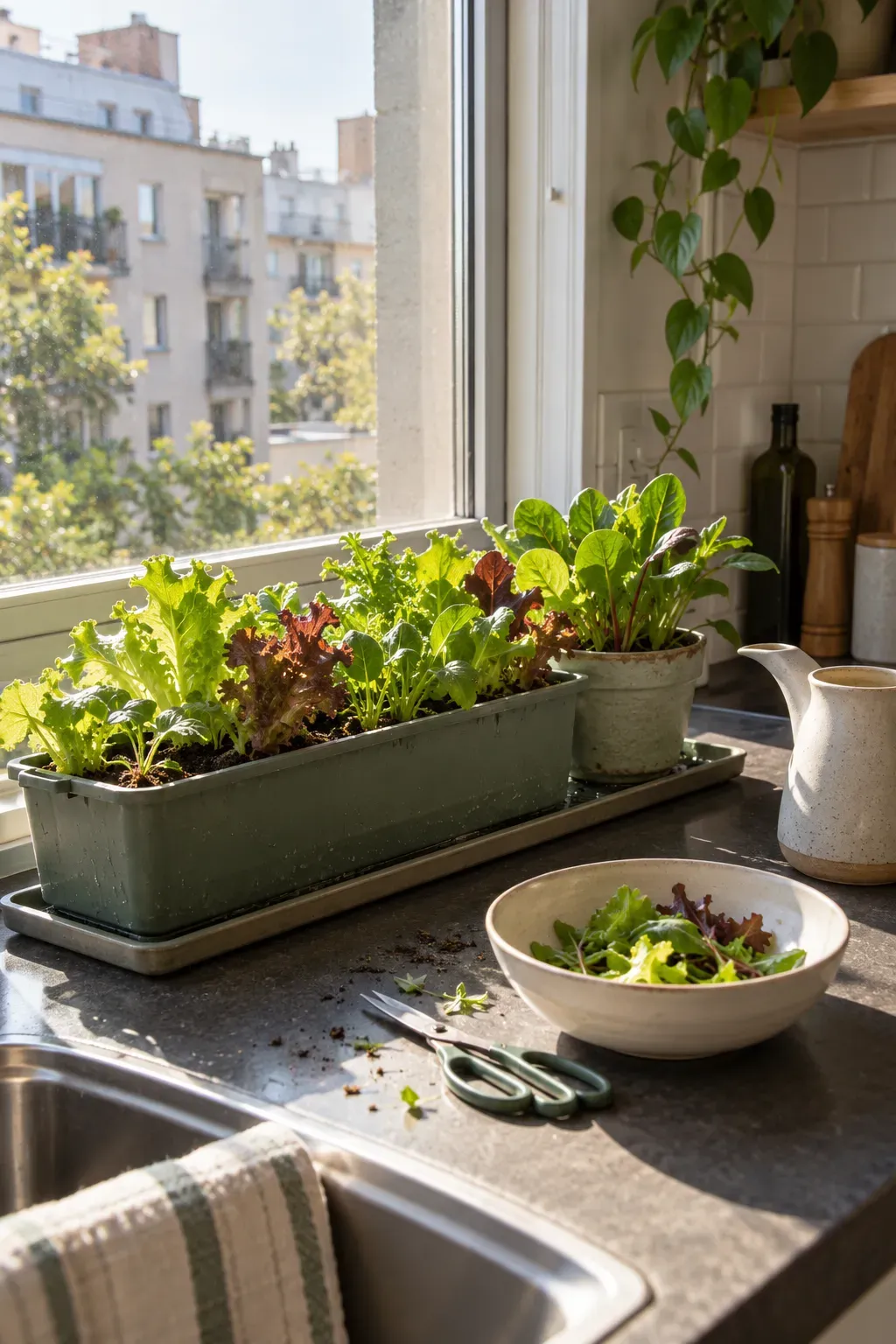
1. Turn Your Brightest Window Into a Mini Salad Station
The brightest window in your apartment can become useful growing space without covering the whole sill in mismatched pots.
Use one or two tidy containers for loose-leaf lettuce, baby greens, or other compact salad crops. Keep them close enough to the kitchen that harvesting becomes part of your normal routine.
Before setting anything up, watch the window through the day. Nearby buildings, trees, balconies, and roof overhangs can change how much useful light actually reaches the plants.
Keep the setup simple: one growing area, one watering tray, and crops you regularly eat. A small salad station is much easier to maintain than vegetables scattered across several rooms.
2. Grow Microgreens on a Kitchen Shelf Instead of Giving Up Counter Space
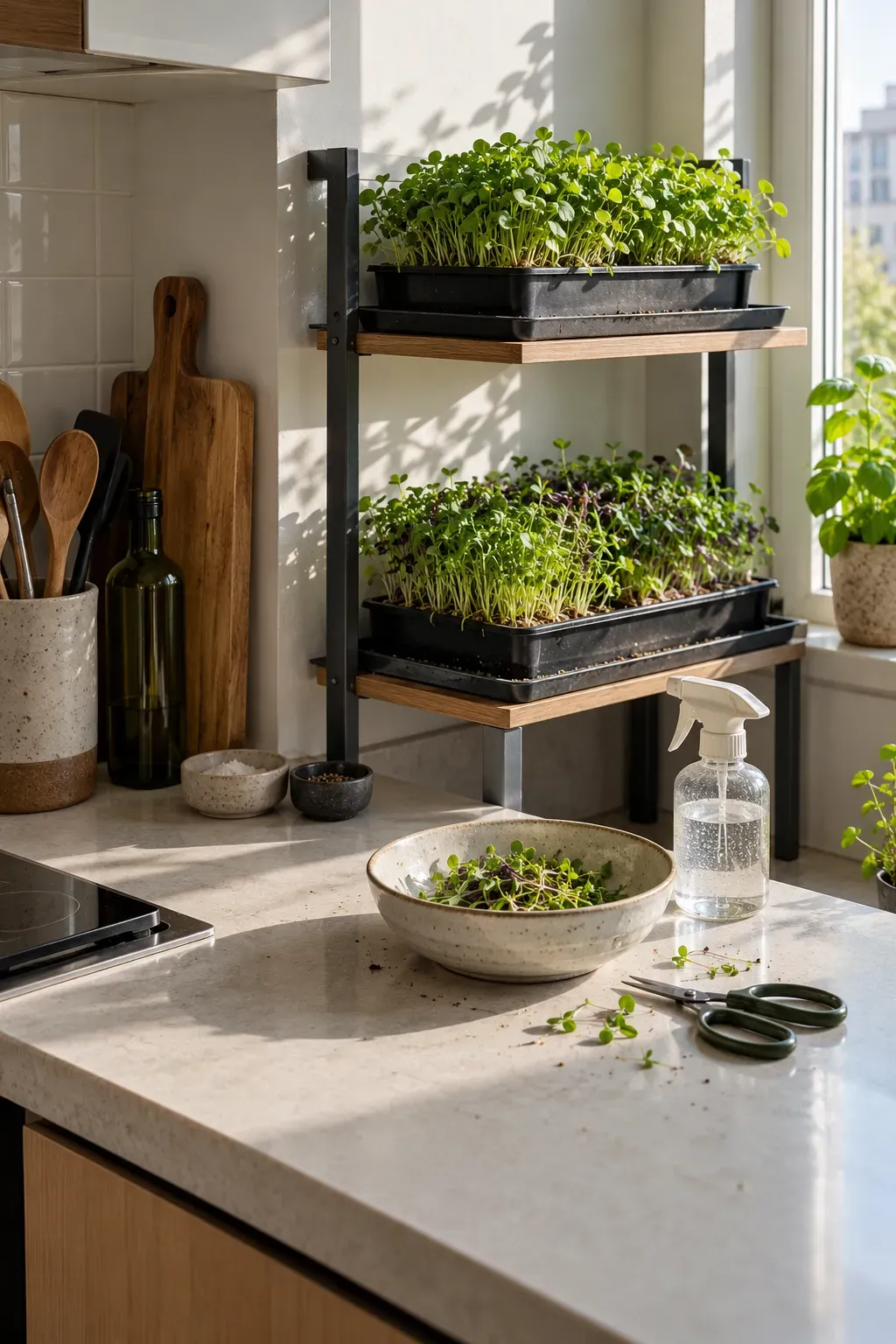
Microgreens can fit into an apartment kitchen without taking over the counter where you prepare food.
A narrow shelf near a suitable light source can hold one or two shallow trays while keeping the main work surface open. Put a waterproof tray underneath so stray moisture and bits of growing medium are easier to control.
Before setting up the shelf, check:
- The trays sit flat and securely.
- Water cannot drip onto books, appliances, or outlets.
- You can lift each tray out without disturbing the shelf above.
- Harvesting does not require moving half the kitchen.
The best location is not the one that holds the most trays. It is the one you can reach and clean easily.
Set up the shelf before sowing
3. Use a Boot Tray Under Indoor Vegetable Pots to Catch Water and Soil
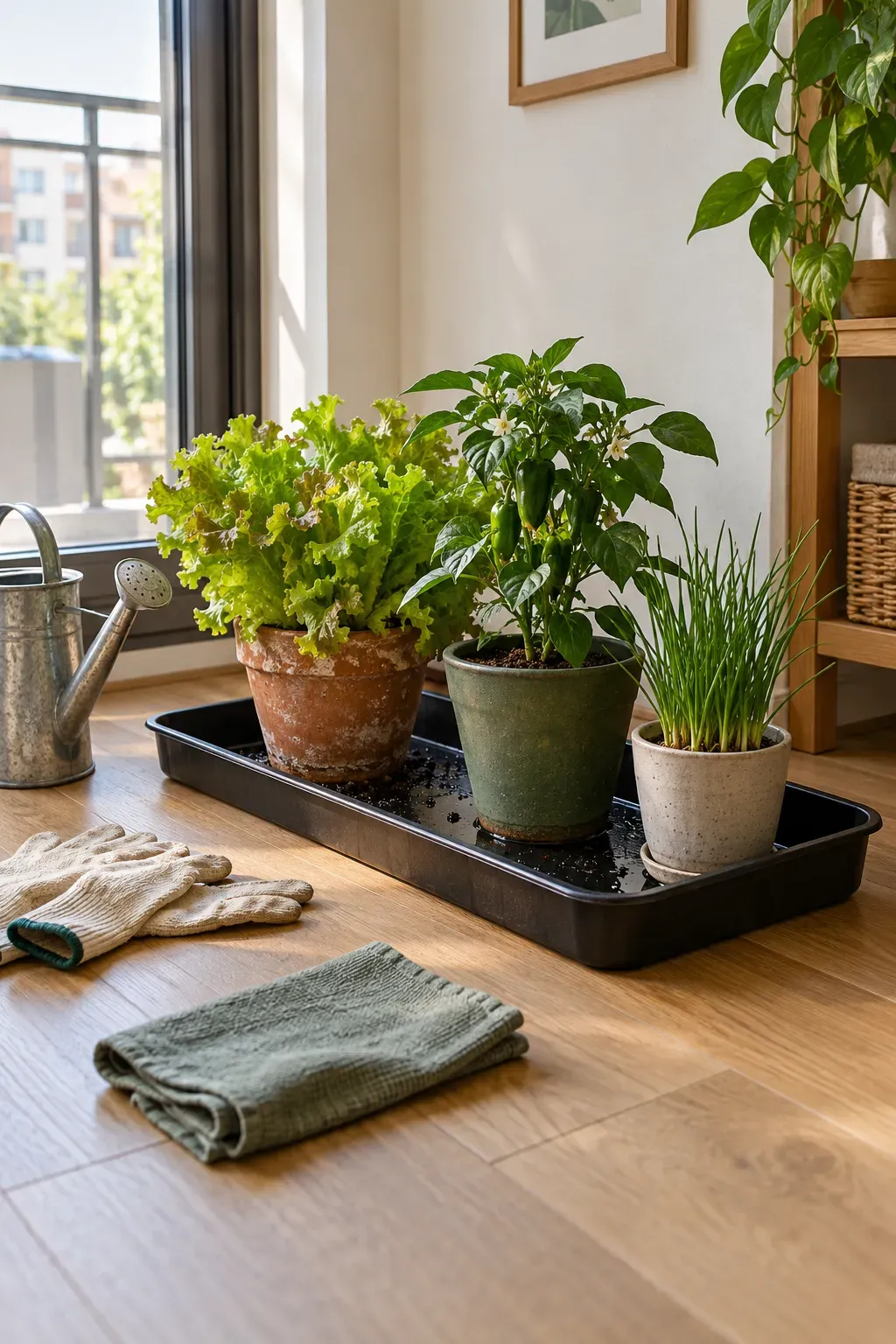
Indoor vegetable gardening gets annoying fast when every watering leaves marks on the floor.
A simple waterproof boot tray can turn several small pots into one contained growing zone. Place the pots inside the tray so drips, loose potting mix, and fallen leaves are easier to collect before they spread across wood, tile, or carpet.
The tray also gives the garden a clear boundary, which helps a group of containers look intentional instead of scattered.
Just remember that a catch tray is not a place for pots to sit in standing water indefinitely. Clean spills, empty excess water when needed, and keep the area underneath dry.
Loose pots leave drips, soil crumbs, and fallen leaves scattered across the floor after routine care.
One waterproof tray keeps several pots together and makes small watering messes easier to see and clean.
4. Grow Baby Greens in Wide, Shallow Containers Under a Simple Grow Light
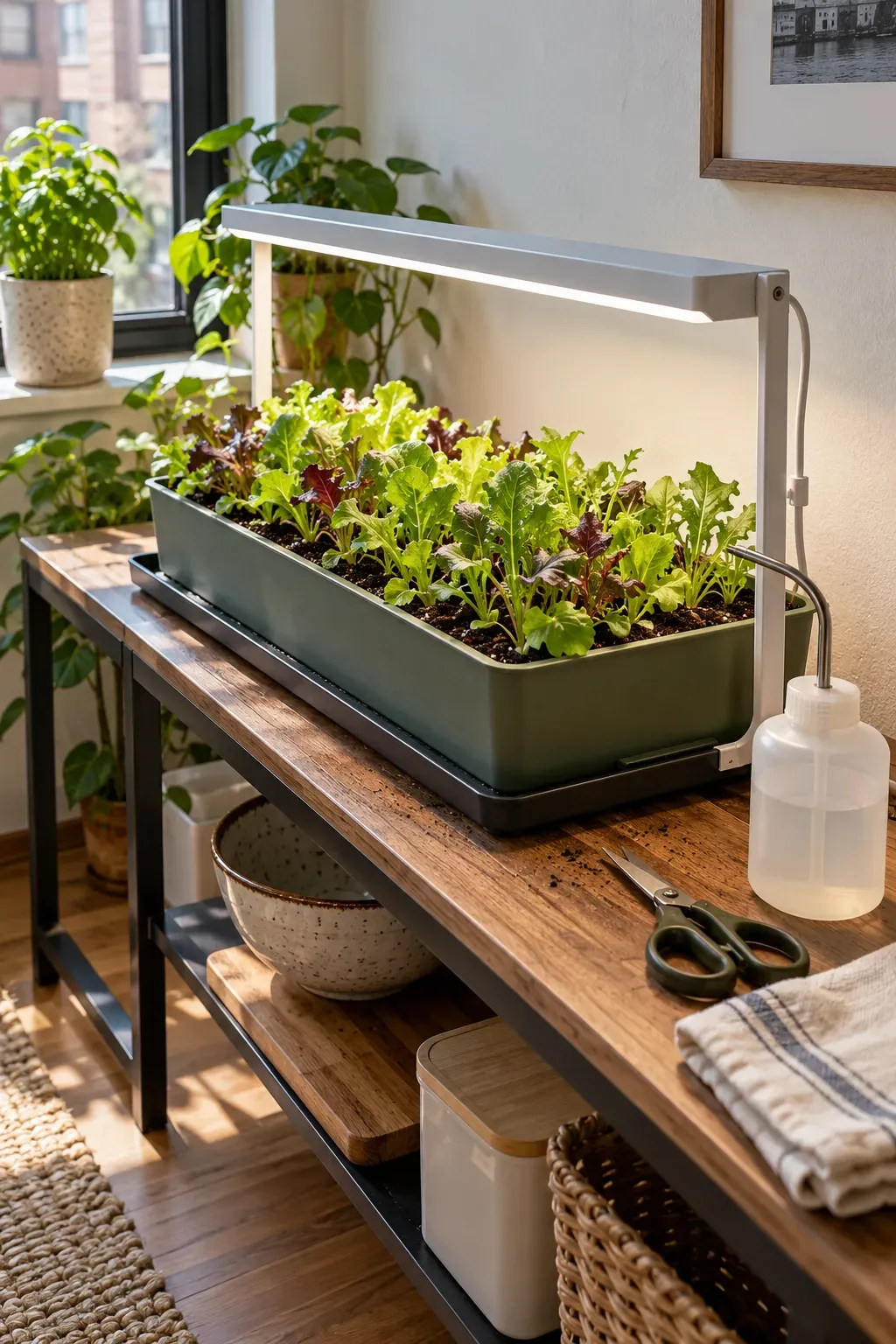
A dim apartment does not automatically rule out every indoor vegetable setup. A small grow light can make a compact tray of baby greens more practical where natural light is weak.
Keep the arrangement focused. One wide container beneath one adjustable light is easier to manage than several pots spread around a room.
Choose a spot where you can raise or lower the light as the plants change, and follow the light manufacturer’s setup guidance rather than guessing the distance.
Keep the equipment simple and dry. Water the container carefully, keep cords and plugs away from spills, and avoid turning a small growing project into a tangle of lights and extension cables.
💡 Keep the Light Setup Simple
Use an adjustable grow light designed for plants, follow its placement instructions, and keep plugs, cords, and electrical connections away from watering areas.
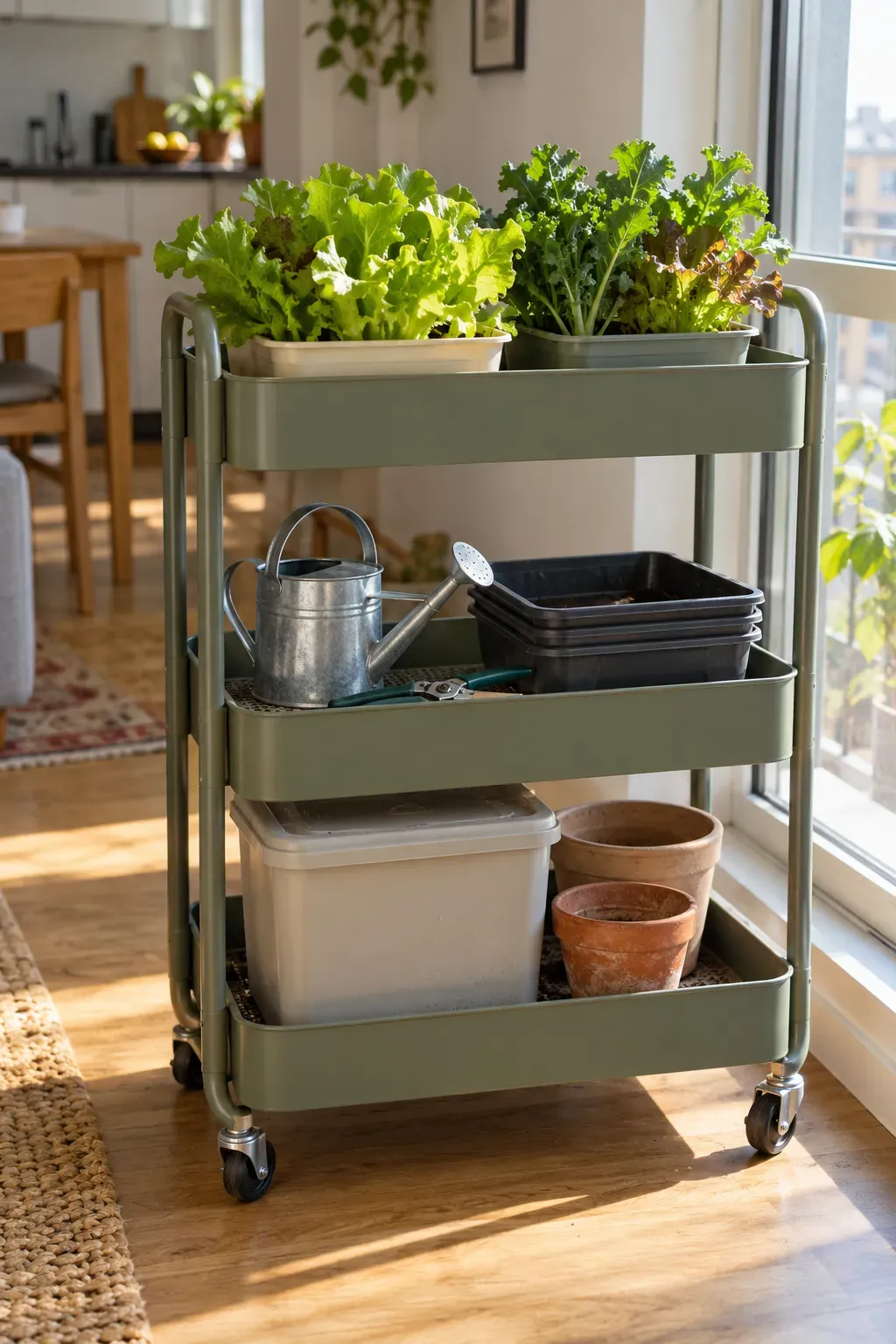
5. Turn a Utility Cart Into a Compact Indoor Vegetable Station
A small rolling utility cart can keep an apartment garden organized without dedicating an entire table or shelf to plants.
Use the upper level for the vegetables that need the best light. Lower shelves can hold empty pots, a watering can, clean trays, and other supplies that would otherwise end up scattered under the sink or across a windowsill.
Keep heavy items low and avoid stacking plants where upper shelves shade them.
The real benefit is organization. When watering tools, scissors, trays, and a few compact vegetables share one tidy zone, the garden becomes easier to maintain and much easier to clean around.
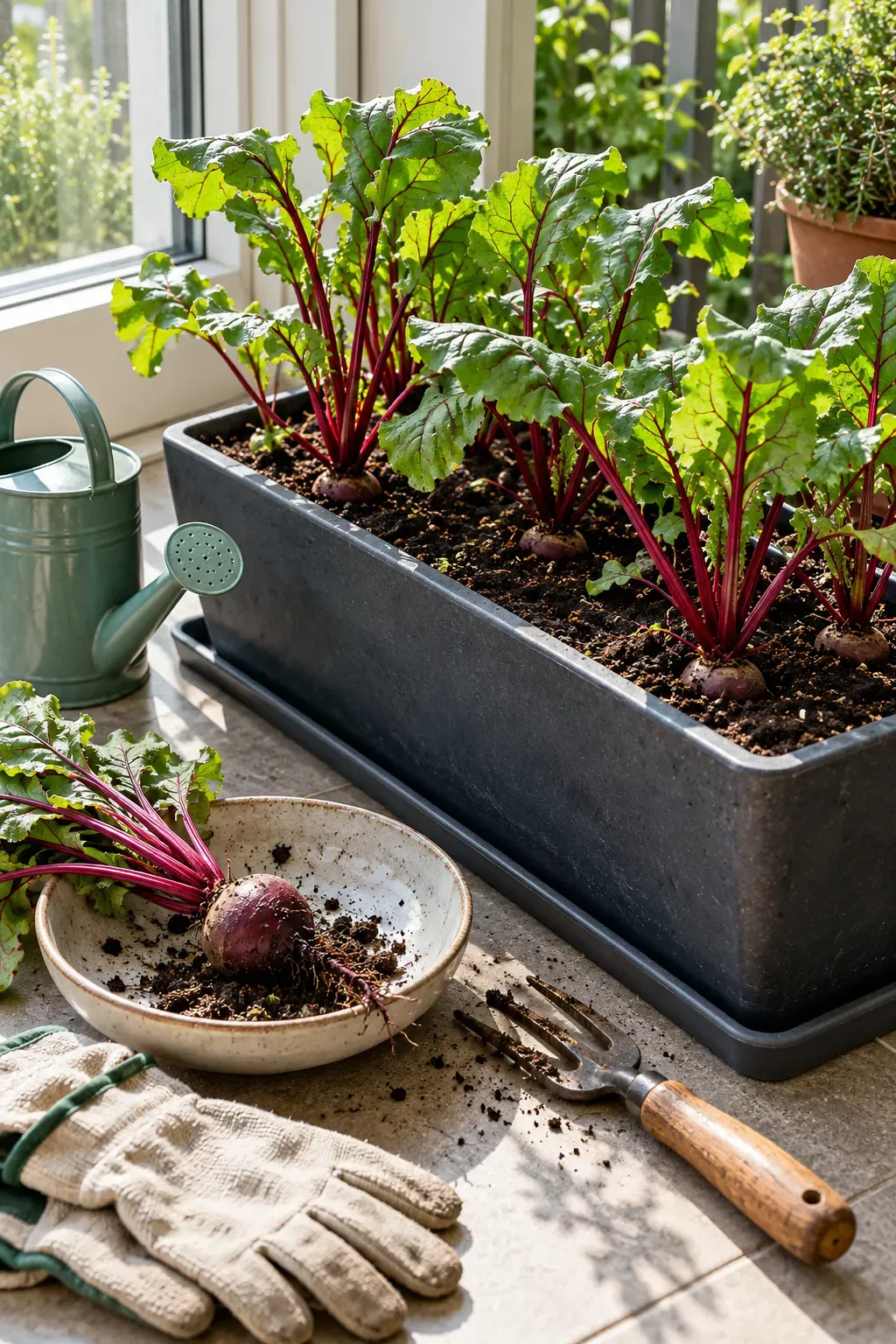
6. Grow Beets for Both Tender Leaves and the Roots Below
Beets can earn their place in a small apartment garden because the plant gives you something useful above and below the soil.
Young leaves can be picked lightly while the root continues developing underneath. The key is restraint. Do not strip too many leaves from one plant or crowd the container so tightly that the roots compete.
Use a container with enough depth, keep the soil loose, and thin seedlings so the remaining plants have room.
This is a good choice when you want one crop to do more than one job without needing separate planters for greens and root vegetables.
Sow into a container deep enough for the roots to develop comfortably.
Thin crowded seedlings so each plant has space both above and below the soil.
Harvest a few tender outer leaves at a time instead of removing most of the top growth.
Leave the roots to mature while continuing normal watering and care.
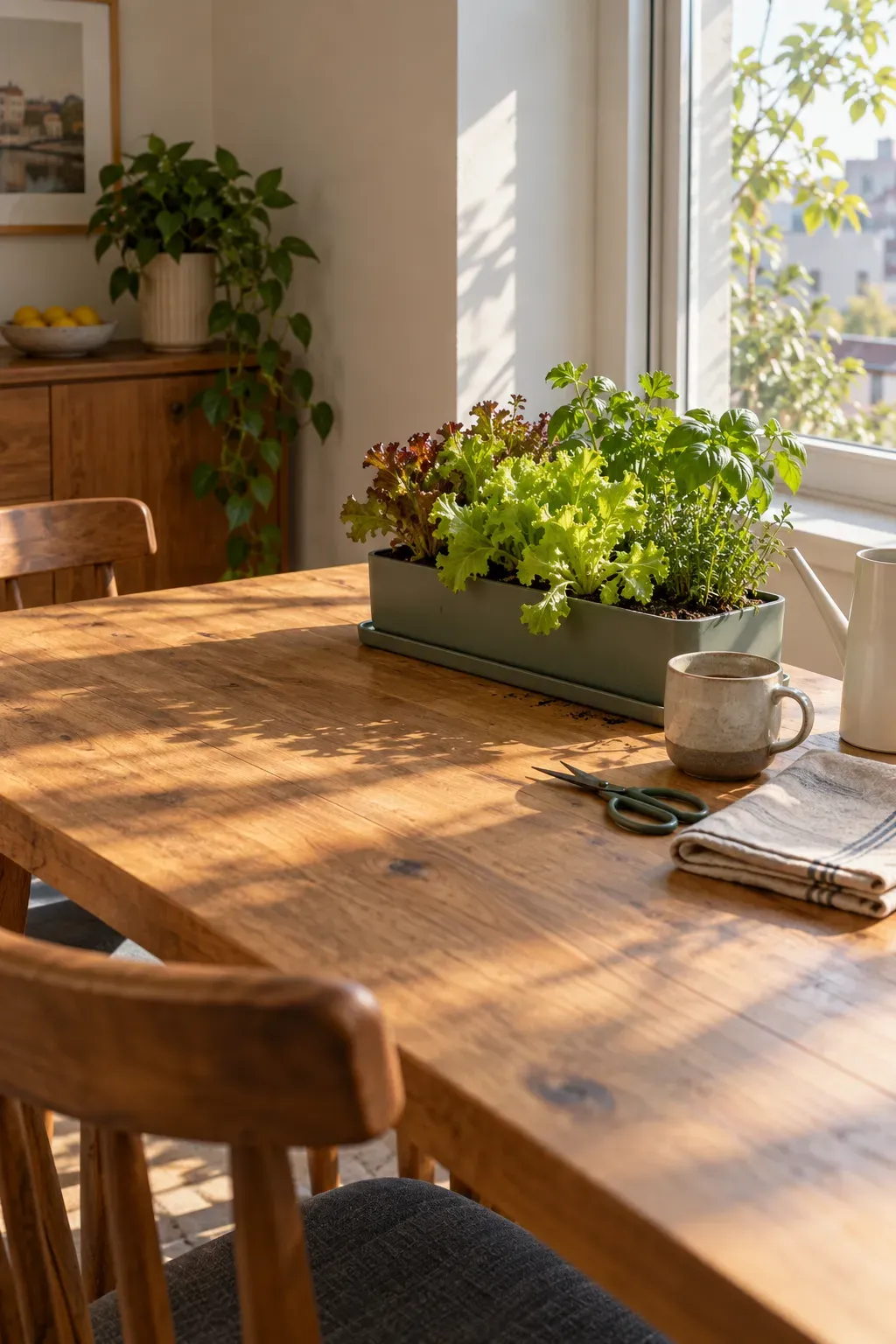
7. Use the Sunny End of a Dining Table for One Productive Planter
If one end of your dining table sits beside a bright window and rarely gets used, it can sometimes hold a compact vegetable planter without turning the whole room into a garden.
The trick is choosing one tidy container instead of spreading pots across the tabletop.
Use a waterproof tray underneath and keep the planting low enough that it does not block conversation, light, or everyday use. Greens or compact herbs usually make more sense here than a tall sprawling crop.
Treat the table like shared space. The planter should be easy to move for cleaning or meals and small enough that the table still works as a table.
Use one low, tidy planter at the unused sunny end of the table.
Protect the surface with a waterproof tray that is easy to wipe clean.
Do not cover the whole table with pots or watering supplies.
Avoid tall crops that make meals, cleaning, or conversation awkward.
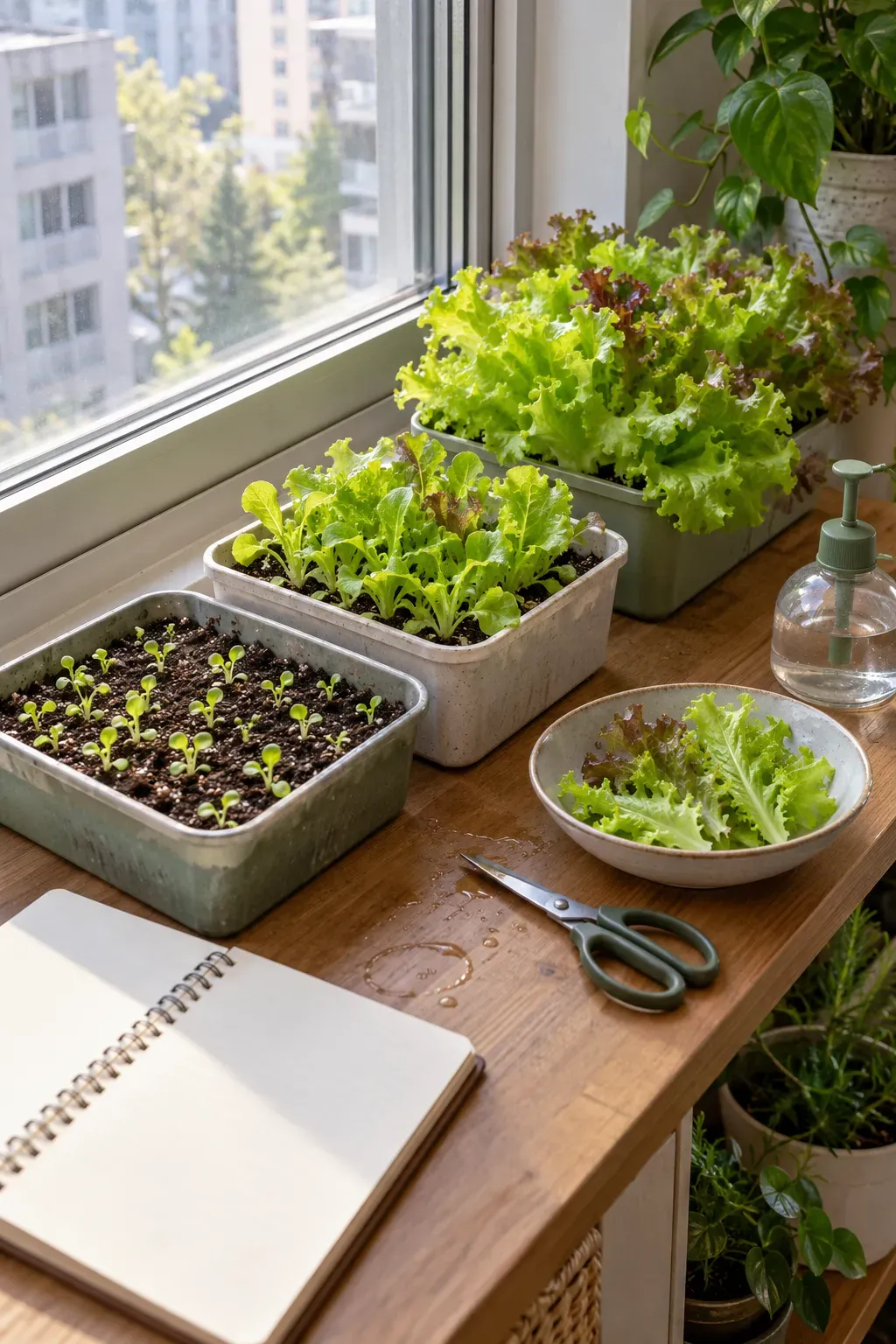
8. Start Lettuce in Small Batches Instead of Planting One Huge Indoor Tray
A giant tray of lettuce can give you more seedlings than you can realistically use at once.
Smaller batches are easier to fit into an apartment and easier to harvest while they are still fresh. Sow one modest container, then start another later rather than filling every available tray on the same day.
This also makes it easier to see what is actually working in your light and temperature conditions.
A small-batch setup gives you:
- fewer seedlings competing at once
- less wasted floor or shelf space
- easier watering
- more manageable harvests
You do not need a constant wall of lettuce. You need enough growing at the right time.
| One Huge Sowing | Smaller Batches |
|---|---|
| Many plants reach harvest around the same time. | Different containers can mature at different stages. |
| Takes a larger block of shelf or window space. | Fits more easily into small open spots. |
| Can create more greens than you need at once. | Makes harvest size easier to match to everyday use. |
9. Give Indoor Seedlings a Small Fan to Help Keep Air Moving
Indoor seedlings can sit in still air for long stretches, especially when they are tucked into a warm corner away from an open window.
A small fan placed nearby can help keep air moving around the growing area. It should create a gentle breeze, not blast young plants constantly.
Keep the fan off the watering surface and position cords where they stay dry and out of the way.
Watch the seedlings rather than following a rigid routine. If leaves are whipping around or the growing mix starts drying much faster, the airflow is too strong or too direct. Gentle movement is enough.

10. Grow Potatoes in One Tall Container Near Your Brightest Outdoor Door
If your apartment has a small patio, stoop, or bright area outside a glass door, one tall potato container can give you a very different crop without spreading pots across the whole space.
Choose a sturdy container with working drainage and place it where it will not block the door or become difficult to reach once filled.
Keep the setup straightforward:
- Use one stable tall container.
- Make sure excess water can drain safely.
- Leave room around the pot for checking and watering.
- Keep the doorway and walking path clear.
A single dedicated potato container makes more sense in a small apartment setting than trying to squeeze several bulky pots into the same area.
Before placing the potato container

11. Use White Walls and Light Surfaces to Brighten a Dim Growing Corner
A vegetable corner can feel darker than it really is when it sits beside dark furniture, heavy curtains, or deep-colored walls.
If you already have a reasonably bright window nearby, lighter surrounding surfaces can help the area feel more open and make better use of the light that reaches it. A pale wall, white shelf, or light-colored tray is often enough to clean up the setup visually.
Do not treat this as a replacement for proper growing light. It works best as a small improvement to an area that already receives useful daylight.
Keep tall objects away from the window side so they do not cast extra shade across your vegetables.
Dark trays, tall objects, and a cluttered window area make an already limited growing corner feel more enclosed.
A pale shelf, lighter tray, and clear window area create a brighter, cleaner place for compact vegetables.
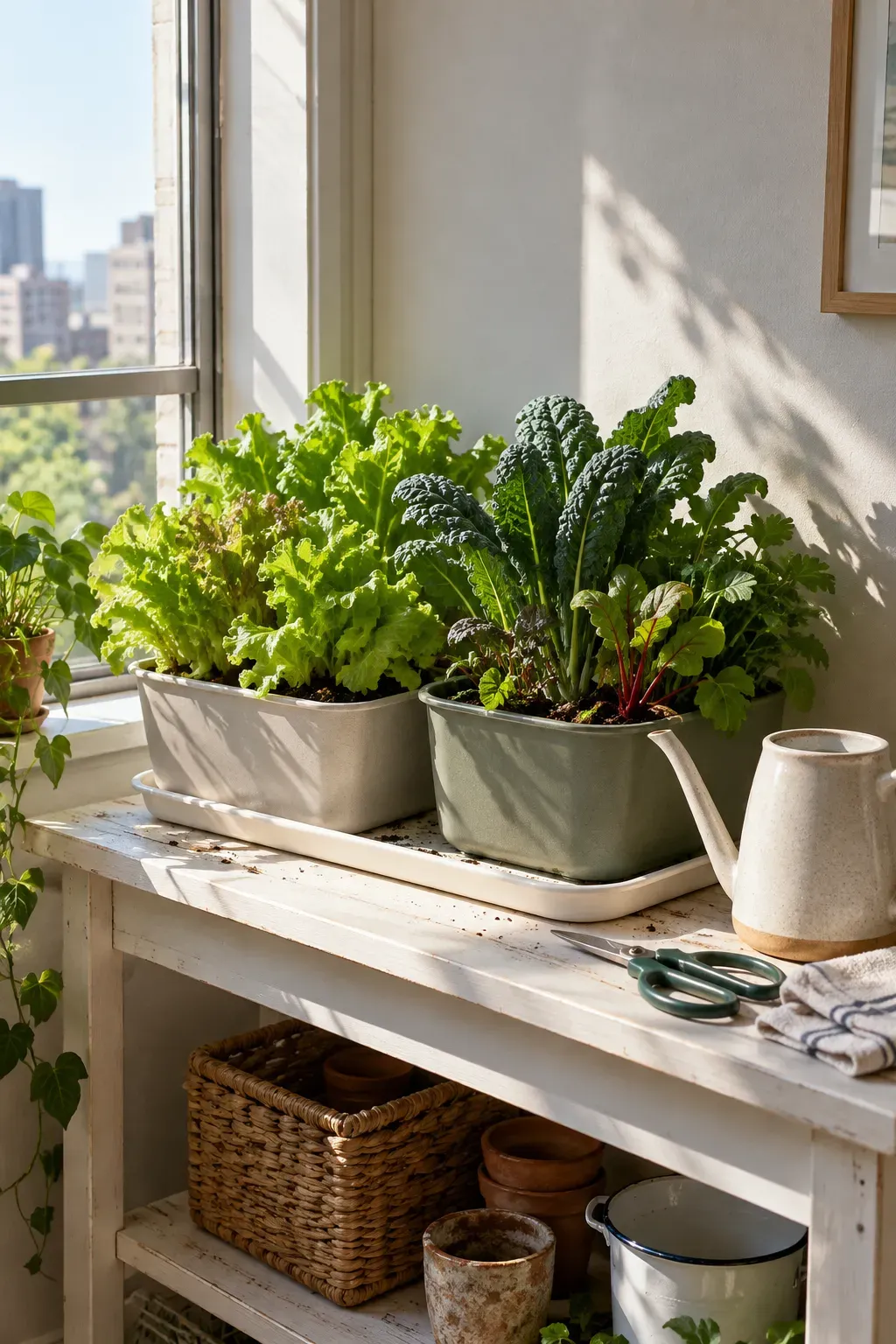
12. Grow Compact Bok Choy in Individual Pots You Can Harvest Whole
Not every apartment crop needs a large shared planter. Compact bok choy can work well in individual containers because each plant stays easy to inspect, water, and harvest.
Give each plant enough room for its leaves to spread naturally rather than squeezing several mature plants into one small pot.
Individual pots also make it easier to move one plant if a window spot becomes crowded.
A few useful habits:
- Keep the growing point above the soil.
- Leave space around the leaves.
- Check the pot before watering automatically.
- Harvest the whole plant when it reaches the size you want.
A tidy row of a few productive pots is easier to manage than a crowded indoor vegetable jungle.
- ▸Give each plant enough room for its leaves to open naturally.
- ▸Use individual pots when you want plants that are easy to move and inspect.
- ▸Check the growing mix instead of watering every container on autopilot.
- ▸Keep enough room around the pots to lift out one plant without moving everything else.

13. Keep a Small Seed-Starting Zone Instead of Starting Trays Everywhere
Seed starting becomes messy when packets, trays, labels, and pots migrate from the kitchen counter to the windowsill and then onto the dining table.
Give the job one permanent home instead.
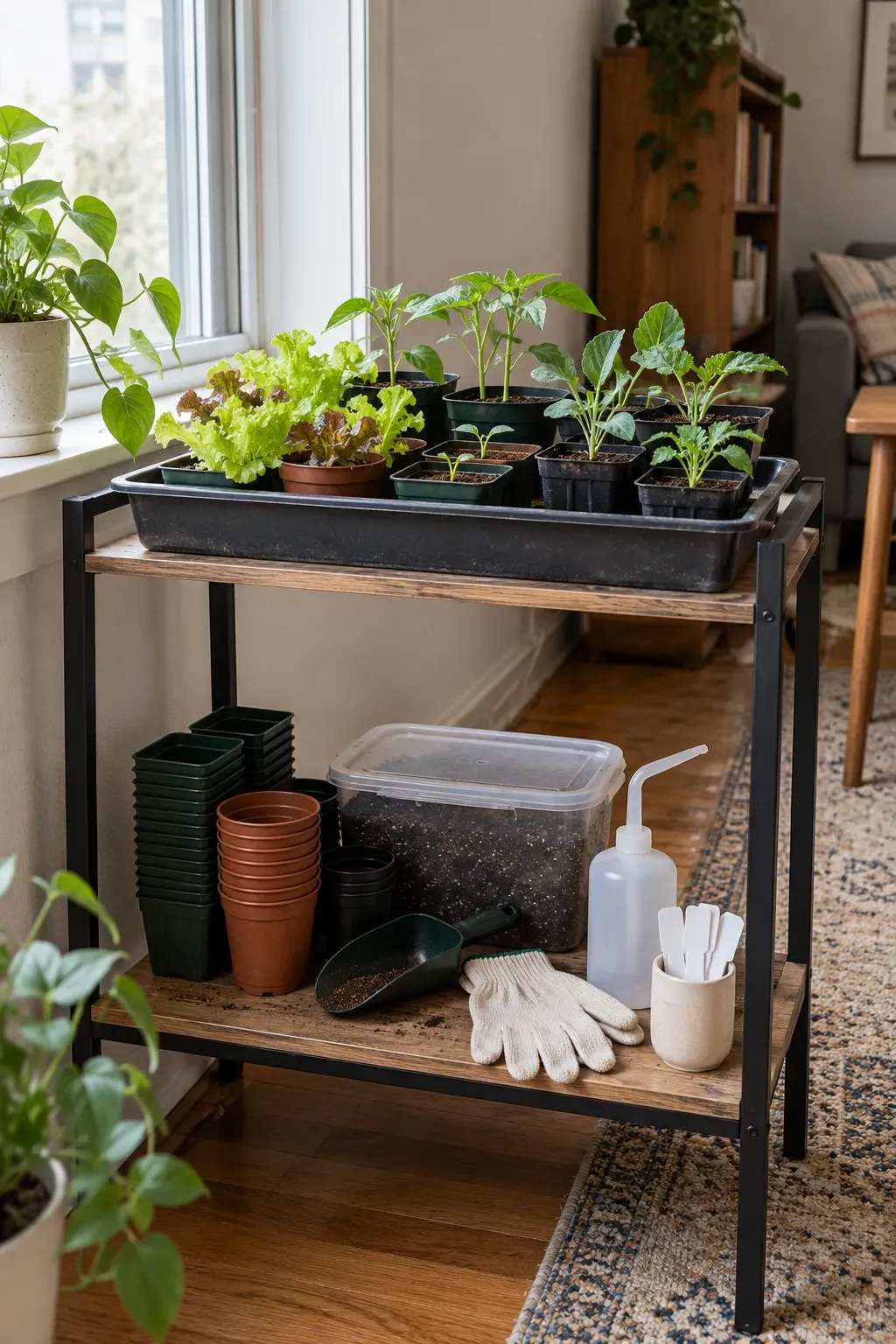
A narrow shelf or small table can hold a seed tray on top and basic supplies below. Keep only the seedlings you are actively raising there, and store unused containers somewhere else.
The setup does not have to be large. In fact, limiting the footprint can help stop you from starting more plants than your apartment garden can eventually hold.
One organized nursery is much easier to water, clean, and check than seedlings scattered through several rooms.
14. Rotate Window-Grown Vegetable Pots So Plants Do Not Lean One Way
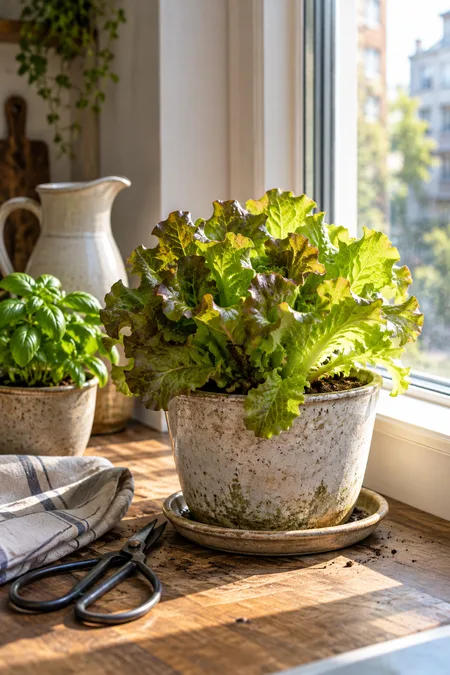
Vegetables grown beside a window often reach toward the strongest light. After a while, one side can become noticeably fuller while stems begin leaning toward the glass.
Give the pot an occasional turn when you see that happening.
There is no need to spin containers constantly. Watch the plant first, then rotate it enough to expose the opposite side more evenly.
Keep one thing consistent: do not keep moving the pot between completely different locations unless there is a reason. A simple turn in the same growing spot is easier than repeatedly changing the plant’s whole environment.
The goal is balanced growth, not a daily pot-moving routine.
📌 Good To Know
Rotate a container when you notice growth leaning strongly toward the window. You do not need to turn every plant on a rigid schedule if it already looks balanced.
15. Use a Deep Window Ledge for One Long Trough of Leafy Greens
A deep window ledge can become surprisingly useful when you stop treating it as a place for several tiny pots.
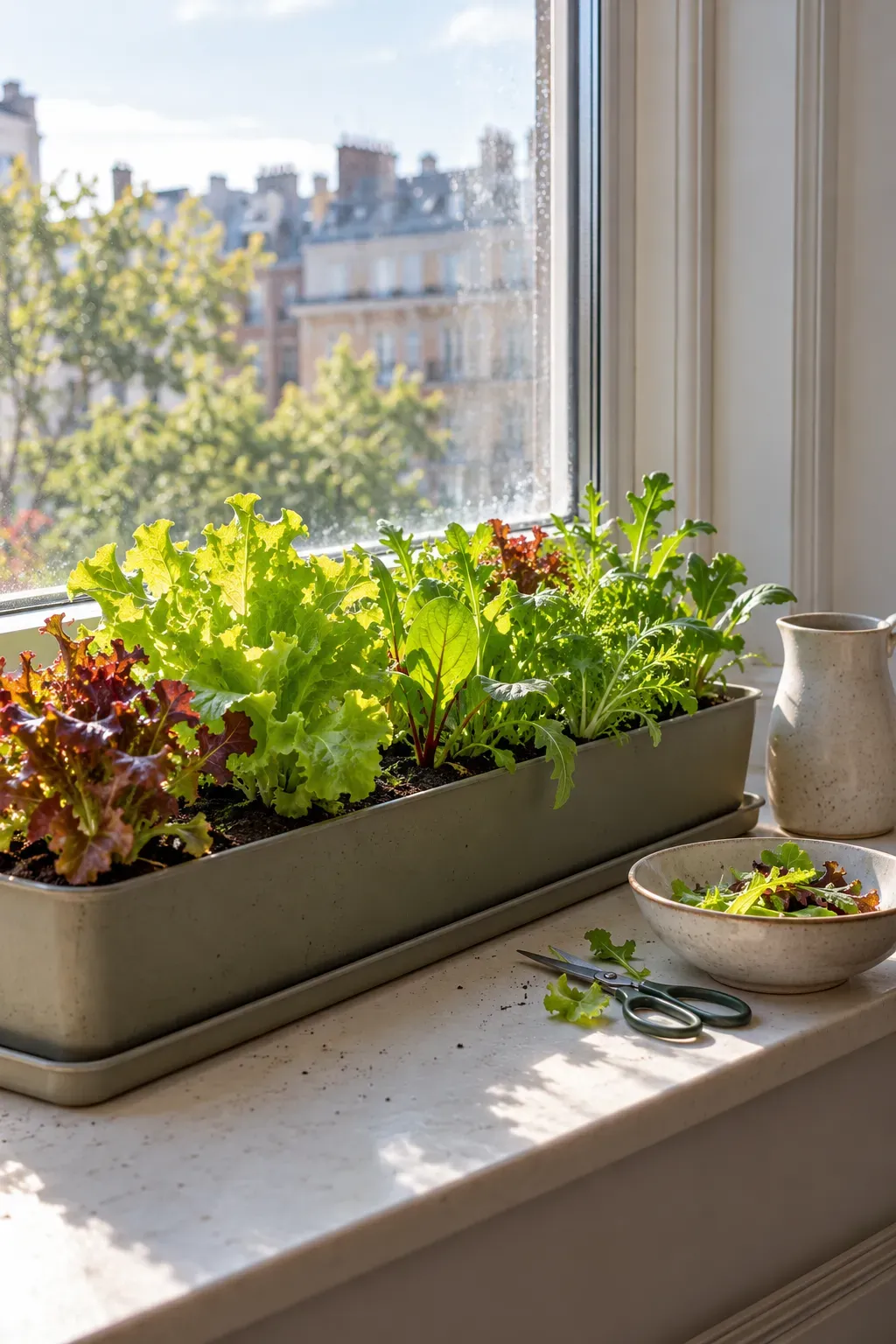
One long trough can use the available width more neatly and give leafy crops a shared growing area. Loose-leaf lettuce, baby greens, or another compact crop can work well when the ledge receives suitable light.
Measure the ledge before buying anything. The planter needs to sit securely without hanging over the edge or interfering with curtains and blinds.
Also think about weight once the container is filled and watered.
A long planter should make the window simpler, not turn the sill into a precarious shelf.
Use the full ledge only when the planter fits securely, stays reachable, and leaves the window easy to open, clean, and use.
16. Grow Radish Greens for the Tops When Root Space Is Limited
Radishes are usually grown for the roots, but the leafy tops can also be useful when you do not have the depth or patience for full root development.
Use a shallow container for a modest sowing, then thin the seedlings so the remaining plants are easier to manage. Harvest young leaves while they are still tender, rather than waiting for a large root crop from a container that was never suited to it.
This can be a practical way to use a small windowsill or shelf.
Keep expectations realistic. The goal here is fresh green growth from a compact setup, not squeezing a full traditional radish bed into the apartment.
Sow a small batch in a clean shallow container with drainage.
Thin crowded seedlings so the leaves have room to open.
Harvest tender greens while they are still fresh and manageable.
Clear and reset the container when the planting becomes tired or crowded.
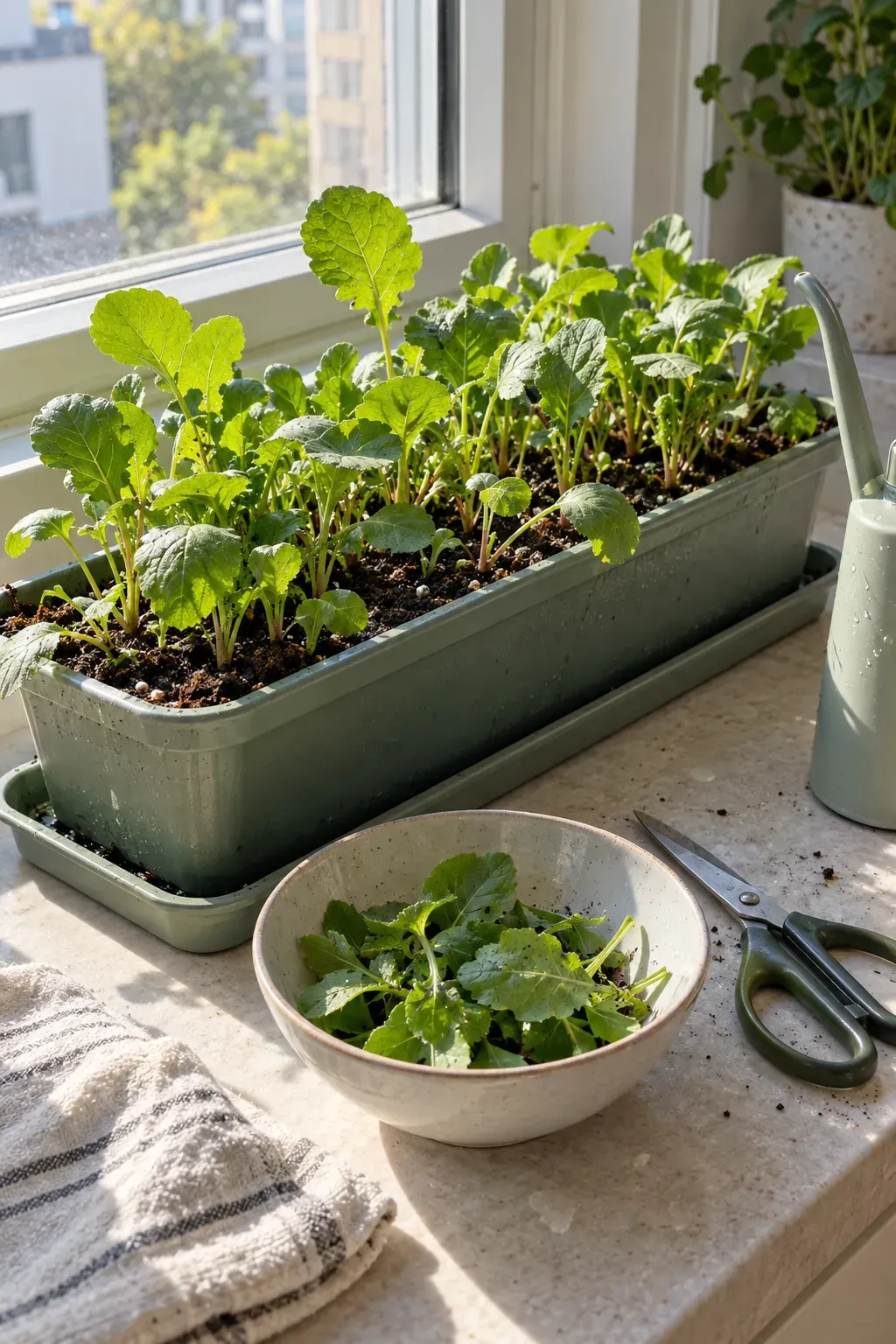
17. Make a Small Indoor Nursery for Replacement Vegetable Seedlings
A tiny backup nursery can be surprisingly useful when your apartment garden depends on only a few productive containers.
Keep several young replacement seedlings growing in a compact tray instead of waiting until a plant fails before starting again. Lettuce, herbs, and other small crops are easier to replace when a healthy young plant is already waiting.
You do not need dozens.
Think of the nursery as a spare-parts shelf for the garden:
- a few young greens
- one or two herb starts
- replacement seedlings for your most useful containers
- labels so you know what is ready next
Keep it small enough that the backup plants never become another full garden to maintain.
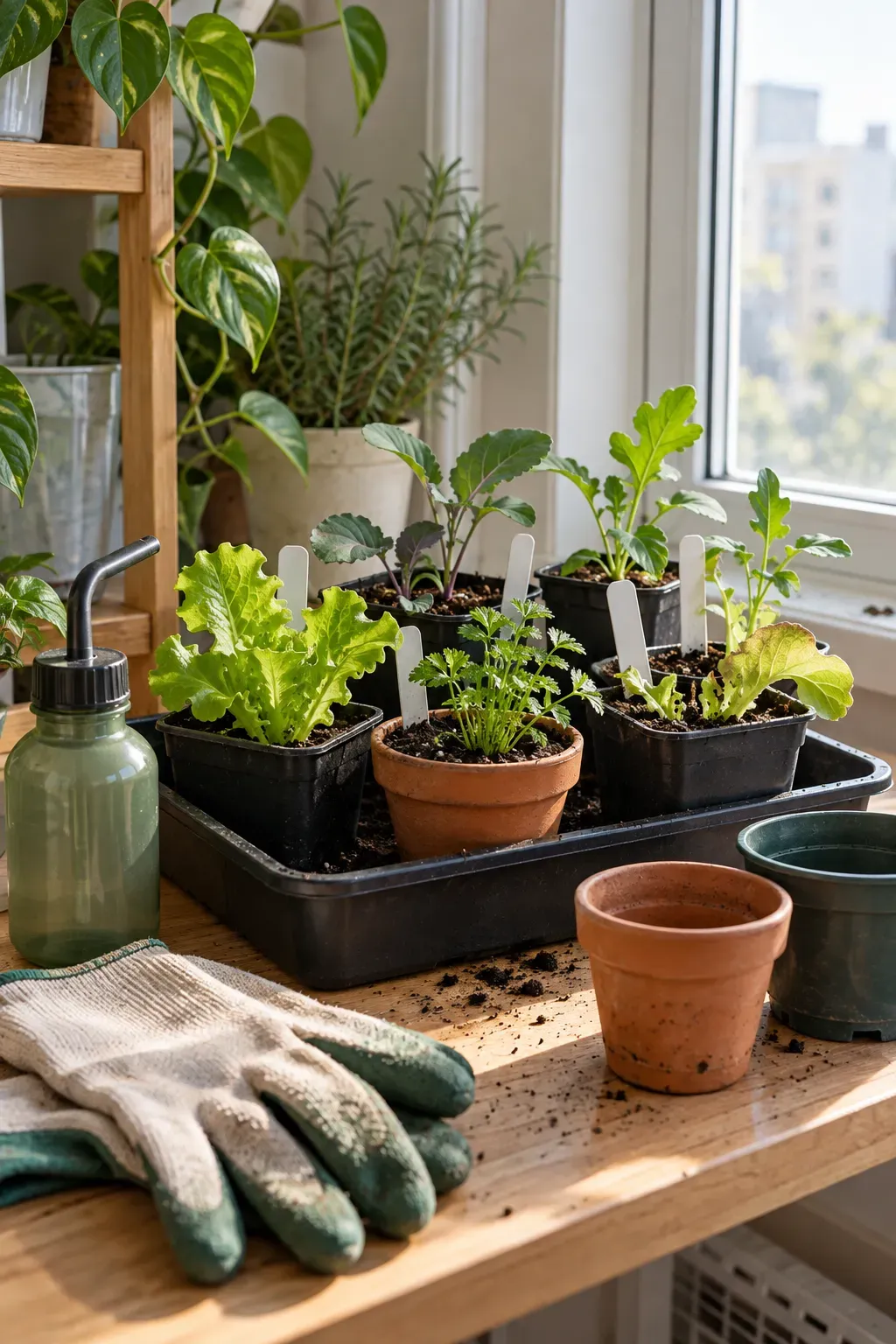
18. Use Clear Saucers or Matching Trays to Keep Apartment Gardening Tidy
A group of indoor pots looks far less chaotic when every container has a clear place for drainage and cleanup.
Use individual saucers for larger pots or one matching waterproof tray beneath a small group of containers. This keeps water marks and loose soil easier to spot before they reach the floor or furniture.
The tray does not need to be decorative. It needs to fit properly and be easy to lift and clean.
Choose a system based on how the pots are arranged. Separate containers may work better with individual saucers, while a small grouped garden can be simpler on one shared tray.
| Individual Saucers | One Shared Tray |
|---|---|
| Useful when pots sit in different parts of the room. | Useful when several small pots are grouped in one growing zone. |
| Each pot can be moved without disturbing the others. | Loose soil and small drips stay inside one easy-to-clean area. |
| Best for larger or widely spaced containers. | Best for compact shelves, carts, and window gardens. |
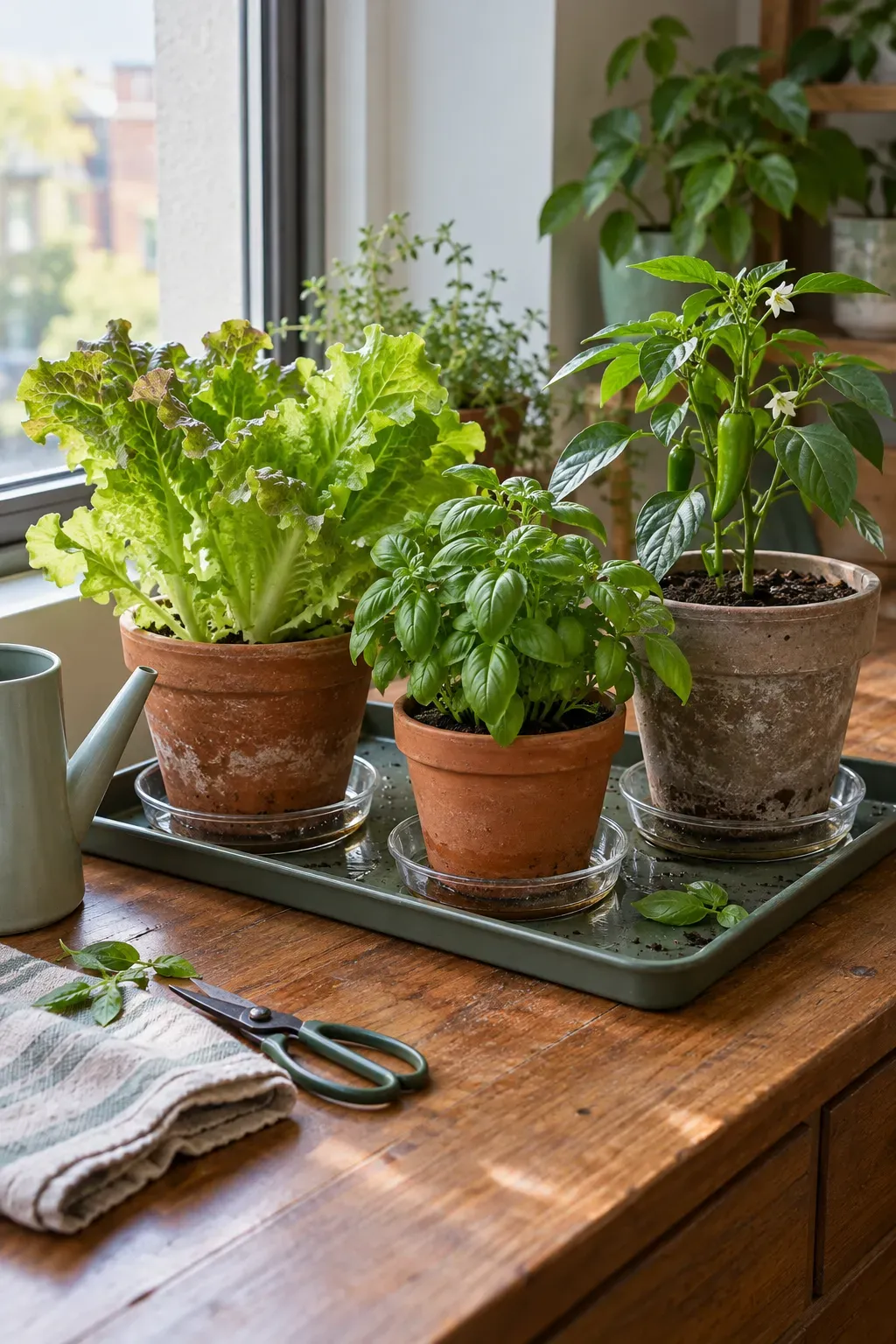
19. Grow One Countertop Hydroponic Crop Instead of Forcing Soil Pots Into a Dark Kitchen
A kitchen with poor window light may not be a good place for soil-filled vegetable pots, but a small countertop hydroponic unit can offer another option.
Keep the project focused on one useful crop or a small group of compatible greens rather than filling every opening just because the unit has space.
Place it where splashes are easy to wipe up and where the light will not shine directly into your eyes while you cook or sit nearby.
Use the system as one compact growing station. If it starts spreading bottles, tools, cords, and extra seedlings across the whole counter, it has stopped solving the space problem.
Use the unit for a small number of crops you will actually harvest.
Keep the surrounding counter clear enough for normal kitchen use and cleanup.
Do not turn every open planting slot into another crop simply because it is available.
Avoid letting cords, bottles, and unused supplies spread around the work surface.

20. Keep a Harvest Basket Beside the Garden So Small Crops Actually Reach the Kitchen
A surprising amount of apartment-grown food gets ignored simply because harvesting feels like one more job.
Keep a small basket or bowl near your growing area with scissors and anything else you regularly use for picking. When lettuce needs trimming or herbs are ready, you can gather them without searching through a drawer first.
It also gives small harvests a clear destination.
You may only pick a few leaves, a handful of greens, or several herbs at a time. That still counts.
The best apartment garden is not the one with the most plants. It is the one that regularly sends something fresh into your kitchen.
💡 Make Harvesting Easy
Keep a small basket or bowl and clean scissors close to the garden. When harvesting takes less effort, even a handful of greens is more likely to end up in your meal instead of staying on the plant too long.
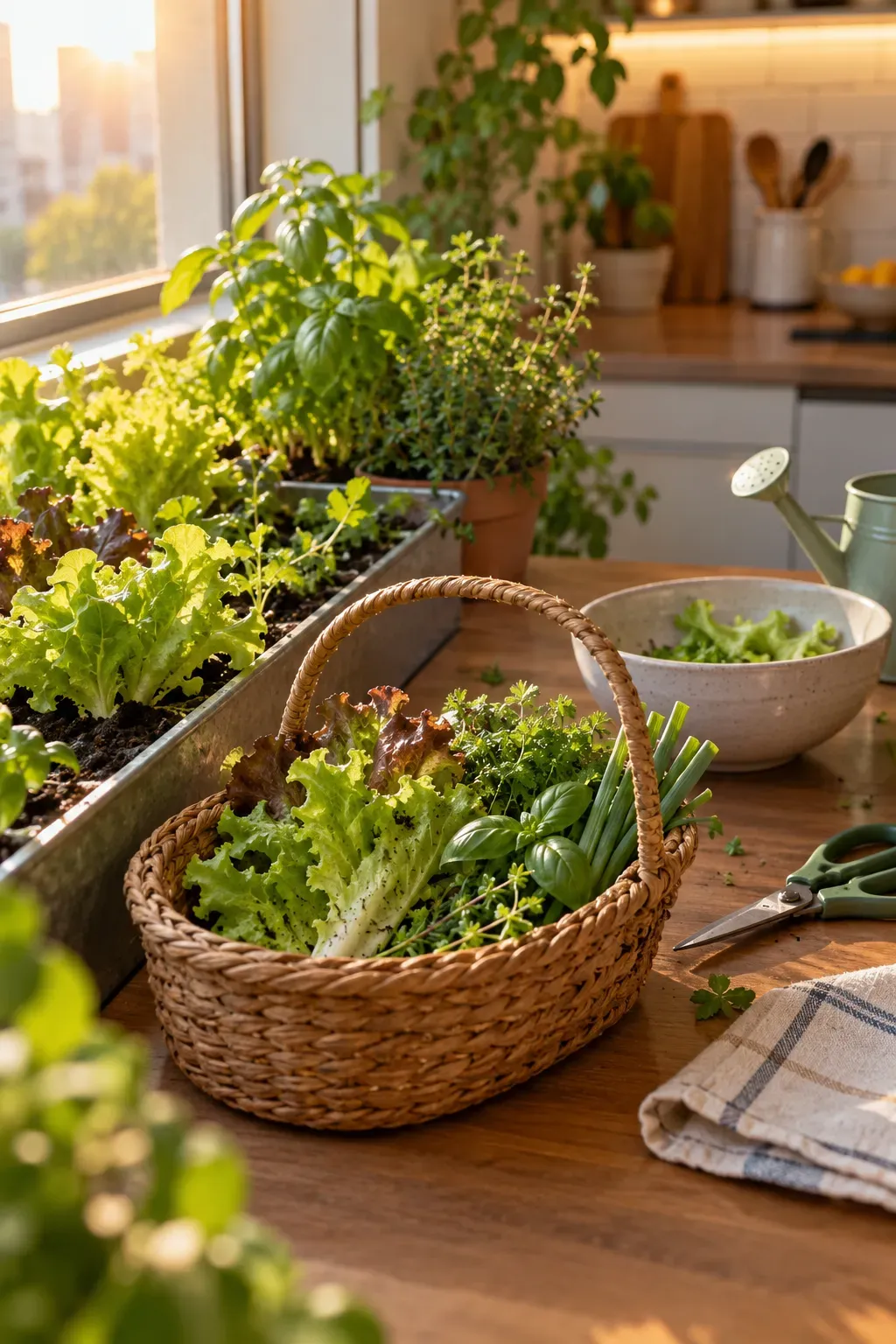
A Small Apartment Can Still Grow Useful Food
A productive apartment garden does not need to fill every window or cover the floor with containers. It works better when the plants fit naturally into the way you already use your home.
Start with one or two of these apartment vegetable garden ideas. You might grow greens near your brightest window, organize seedlings on one shelf, or create a tidy growing station that keeps soil and water under control.
Then pay attention to what you actually harvest and enjoy caring for. Those are the plants worth making room for.
Save this list to Pinterest so you can come back to it when you are ready to build or improve your apartment vegetable garden.