
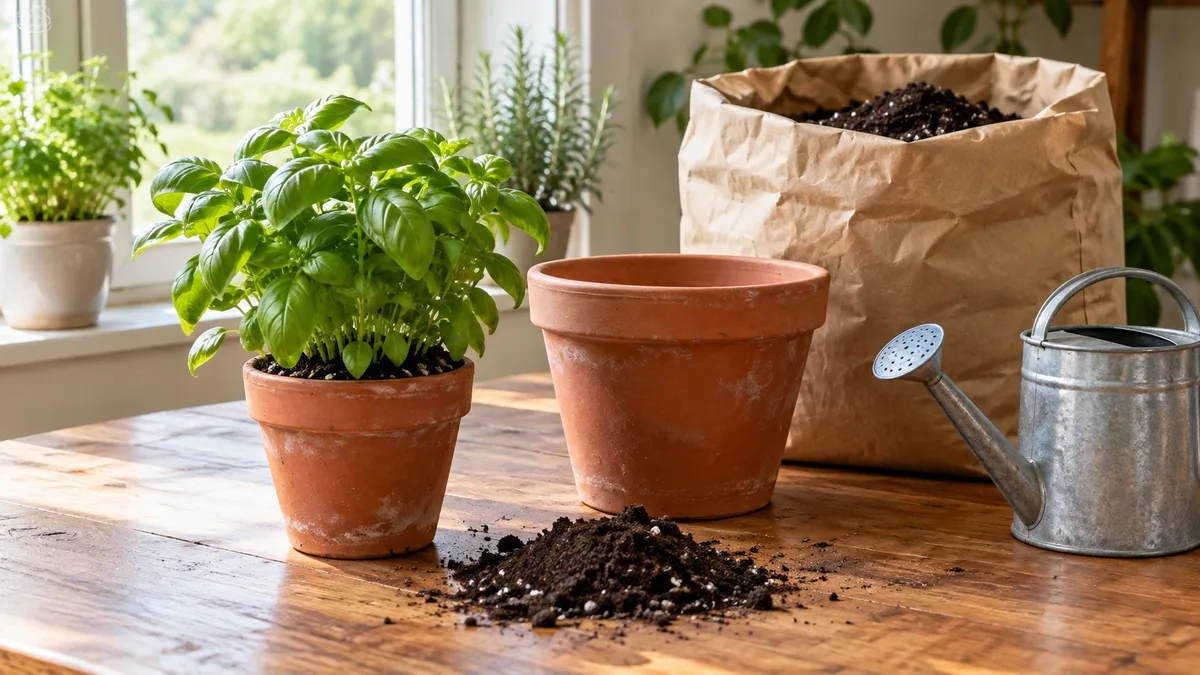
Indoor herbs can stay healthy in the same pot for a long time. But sooner or later, the roots may run out of space.
Repotting gives the plant fresh soil and more room to grow. The problem is that beginners often choose a pot that is too large, use heavy garden soil, bury the herb too deeply, or water too much after repotting. These mistakes can leave the roots wet and stressed.
This guide will show you how to repot indoor herbs step by step. You can use the same basic method for many common herbs, including basil, parsley, mint, thyme, oregano, and chives.
The goal is not to disturb the plant more than needed. You will move it into a slightly larger pot, keep most of the root ball together, and give the roots fresh potting mix.
Most small herbs take about 20 to 30 minutes to repot. Afterward, the plant may look a little tired for a short time. Give it steady light, careful watering, and time to settle into its new home.
Healthy Indoor Herb Gardens often start with something as basic as giving each plant the right amount of root space.
What You Need
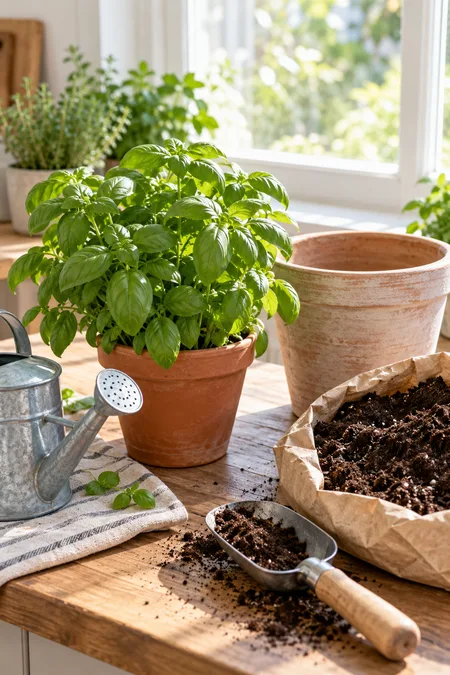
At a Glance
- Check whether your herb really needs a new pot.
- Choose a pot only slightly larger than the old one.
- Prepare fresh potting mix before removing the herb.
- Water the herb lightly before repotting.
- Remove the herb without pulling on the stems.
- Loosen crowded roots gently.
- Set the herb at the same planting depth.
- Fill around the roots without packing the soil hard.
- Water the repotted herb and let it drain.
- Give the herb time to recover before feeding.
Check whether your herb really needs a new pot
Look at the plant before you move it.
Roots coming through the drainage holes are a strong sign that the herb may need more space. You may also see roots packed tightly around the inside of the pot.
Another clue is soil that dries out very fast, even after a good watering.
Do not repot only because you bought a prettier container. If the herb is growing well and still has enough root space, it may be better to leave it alone for now.
Choose a pot only slightly larger than the old one
Pick a new pot that is about 1 to 2 inches wider than the old pot.
The new container must have drainage holes in the bottom. Water needs a way to leave the soil.
Avoid moving a small herb into a very large pot. A big container holds much more wet soil around a small root system. That can make the soil stay wet for too long.
Bigger is not always better. A pot that is only a little larger than the old one is usually safer for an indoor herb.
Prepare fresh potting mix before removing the herb
Get the new soil ready before taking the plant out of its old pot.
Use fresh potting mix made for indoor plants or containers. It should feel light and loose in your hand.
Do not use soil dug from the garden. Garden soil can become heavy inside a pot and may drain too slowly.
Add a small layer of potting mix to the bottom of the new container. Do not fill the whole pot yet. You will add more soil after the herb is in place.
Water the herb lightly before repotting
Check the soil a few hours before you plan to repot.
If it feels very dry, give the herb a small amount of water. The soil should be slightly moist, not wet and muddy.
Slightly moist soil helps the root ball stay together when you remove the plant from its pot.
If the soil is already damp, do not add more water. Repotting a plant in very wet soil can make the job messy and may put extra pressure on the roots.
Remove the herb without pulling on the stems
Hold the pot with one hand and support the base of the plant with the other.
Tip the pot slightly and slide the root ball out slowly. If it does not move, gently squeeze the sides of a plastic pot or tap the bottom.
Do not pull the herb out by its stems or leaves. They can bend or break.
If roots are growing through the drainage holes, loosen them carefully before trying again.
Never pull hard on the stems to remove the herb. If the root ball feels stuck, work around the pot slowly until it slides out.
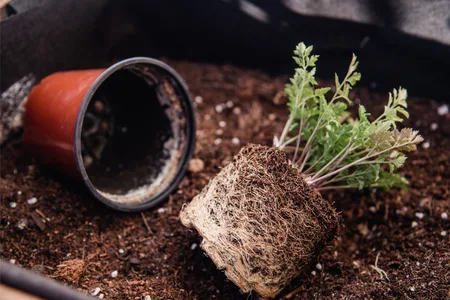
Loosen crowded roots gently
Look at the roots after the plant is out of the pot.
If they are growing in tight circles around the root ball, use your fingers to loosen only the outer roots. Work slowly from the bottom and sides.
You do not need to remove all the old soil. You also do not need to pull the whole root ball apart.
A few loose roots can begin growing into the fresh potting mix after repotting.
If the roots are not tightly packed, leave them mostly alone. There is no need to disturb healthy roots more than needed.
Set the herb at the same planting depth
Place the herb in the center of the new pot.
The top of the old root ball should sit close to the same level it had in the old container. Do not bury the stems under extra soil.
Add or remove a little potting mix from the bottom until the herb sits at the right height.
Leave about 1 inch of space below the top edge of the pot. This gives you room to water without soil spilling over the sides.
Do not bury the base of the stems under fresh soil. Planting the herb too deeply can keep the stem area too wet.
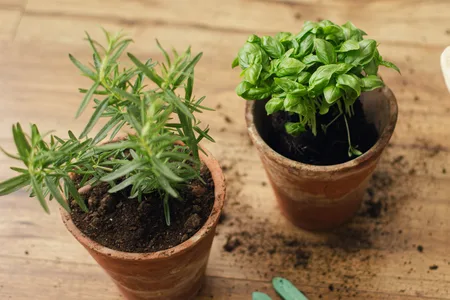
Fill around the roots without packing the soil hard
Add fresh potting mix around the sides of the root ball.
Use your fingers or a small scoop to fill any large empty spaces. Press the soil very lightly so the plant stands upright.
Do not push the soil down hard. Roots need small air spaces in the potting mix.
Stop filling when the fresh soil is close to the top of the old root ball. Keep the stems above the soil.
Tap the side of the pot lightly after adding soil. This can help loose potting mix settle into small gaps without packing it down hard.
Water the repotted herb and let it drain
Water slowly over the fresh soil until a little water begins to come out of the drainage holes.
This helps settle the new potting mix around the roots.
Let the pot drain fully before placing it back on its saucer. If water collects in the saucer, pour it away.
Do not keep adding water because the top looks slightly dry later the same day. Check the soil before watering again. The roots need moisture, but they also need air.
Give the herb time to recover before feeding
Put the repotted herb back in a place with the right amount of light for that herb.
A little drooping after repotting can happen. The roots have been moved, so the plant may need a few days to settle.
Do not add fertilizer right away. Wait about 1 to 2 weeks, or until you see healthy new growth.
Keep checking the soil during this time. Water only when the plant needs it.
Avoid moving the pot from place to place. A steady spot helps the herb recover.
Give the plant time before making more changes. A little drooping after repotting does not always mean it needs more water or fertilizer.
Troubleshooting Repotted Indoor Herbs
A freshly repotted herb may look different for a few days. Check the soil, leaves, stems, and drainage before trying to fix the problem.
Indoor Herb Repotting Troubleshooting
| If This Happens | Try This |
|---|---|
| Leaves droop after repotting | Give the herb a few days to settle. Check the soil before adding more water. |
| Soil stays wet for many days | Make sure the pot has open drainage holes. Wait until the soil begins to dry before watering again. |
| Leaves begin turning yellow | Check for wet soil first. Too much water after repotting is a common cause of stress. |
| Herb dries out very fast | Check whether water is reaching the whole root ball. Water slowly until a little drains from the bottom. |
| Plant feels loose in the new pot | Add a little more potting mix around the sides and press it very lightly to support the root ball. |
| Growth stops for a short time | Give the plant time. Avoid adding extra fertilizer until you see healthy new growth. |
Frequently Asked Questions
Frequently Asked Questions
Look for roots coming through the drainage holes, tightly packed roots, very fast drying soil, or slower growth.
A pot about 1 to 2 inches wider than the old pot is a good starting point for many small indoor herbs.
Yes. Water slowly after repotting and let the extra water drain out. Check the soil before watering again.
It is better to use fresh potting mix made for containers. Garden soil can become heavy in a pot and may drain too slowly.
Wait about 1 to 2 weeks, or until the herb begins showing healthy new growth. Fresh potting mix may already contain plant food.
A little drooping can happen after the roots are moved. Keep the plant in suitable light, avoid overwatering, and give it time to recover.