
Container gardening gets much more rewarding when the plants actually give you something useful to harvest. A big leafy plant can look impressive on a patio, but if it gives you two small vegetables after months of care, that pot may not feel worth the space.
The best vegetables for container gardening earn their place. Some keep producing every time you pick. Others grow quickly, give you more than one edible part, or make good use of vertical space instead of taking over the whole balcony.
You also do not need a huge collection of pots. A few well-chosen vegetables can give you fresh food through the season while keeping watering, feeding, and harvesting manageable.
This list focuses on vegetables for container gardening that make sense in real homes. Think patios, balconies, steps, sunny corners, and small yards where every pot matters. Choose the crops you actually like to eat, then give those plants the best containers and growing spots you have.
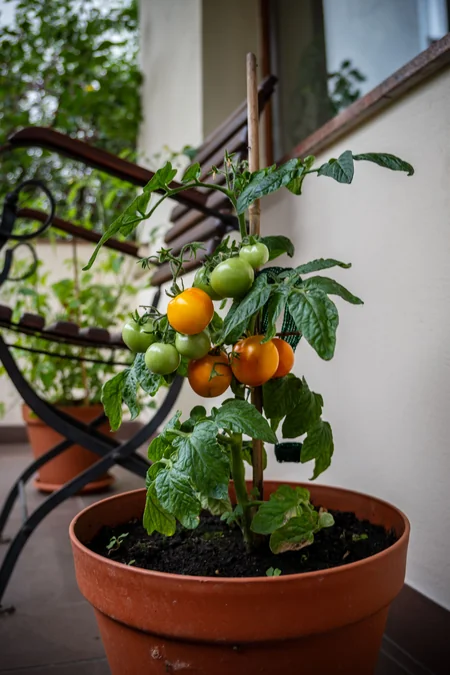
1. Grow Cherry Tomatoes When You Want a Long, Pickable Harvest
Cherry tomatoes make good use of one large container because you can keep picking fruit as it ripens instead of waiting for one harvest day.
Choose a compact or container-friendly variety if space is tight. Give the plant a strong support early, before the stems become heavy.
For a useful setup:
- Use a roomy pot with drainage.
- Put it in your sunniest suitable spot.
- Add a cage or stake while the plant is still small.
One healthy plant can become a regular stop whenever you need a handful of tomatoes for salads, lunches, or quick snacks.
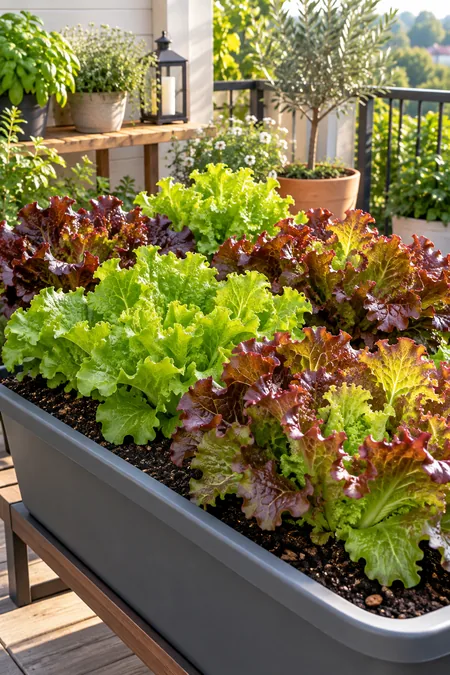
2. Plant Leaf Lettuce for Cut-and-Come-Again Bowls of Greens
Leaf lettuce is useful in containers because you do not always need to pull the whole plant at once. You can harvest some outer leaves and leave the center growing.
That makes a shallow planter surprisingly productive for everyday meals.
Start with:
- A wide container with drainage
- Loose potting mix
- Several leaf lettuce plants with room between them
- A spot that suits the season and local weather
Pick clean outer leaves when they are large enough to use, and avoid stripping every leaf from one plant at the same time.
This works well for gardeners who regularly make sandwiches, wraps, or small salads.
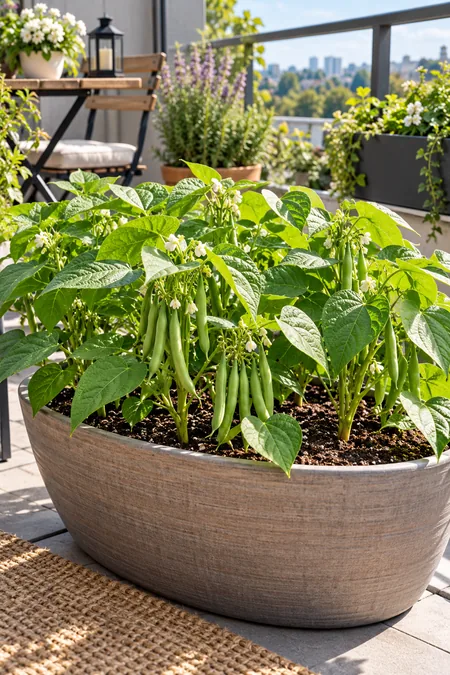
3. Choose Bush Beans When You Want Plenty of Pods Without a Huge Trellis
Pole beans can be useful, but not every small garden has room for a tall support. Bush beans stay more compact and can fit into a large container without climbing across the whole patio.
Give them enough room for air and light rather than packing the pot tightly.
A good container setup keeps the plants close enough to manage but open enough to reach the pods.
The biggest benefit is simple: you can harvest fresh beans without building a large vertical frame.
Check the plants often once pods begin forming. Tender beans are much easier to spot when the container is not buried behind other plants.
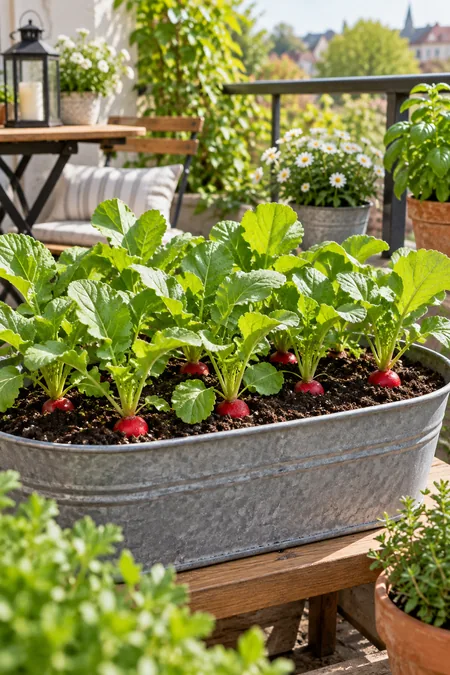
4. Grow Short-Rooted Radishes in a Wide Container
Small, short-rooted salad radishes are handy when you have a wide container with less depth than larger root crops need. Choose the variety carefully: long-rooted radishes, including many daikon types, need deeper pots.
Do not crowd the seedlings if you want the roots to form properly.
Use this simple approach:
- Fill a draining container with loose growing mix.
- Sow the seeds with room to thin them later.
- Keep the soil cared for while the roots develop.
The leaves also make it easier to see where each plant is growing.
This is a good crop for filling a spare container without giving up a large part of the patio.
5. Plant Compact Peppers for a Crop That Earns Its Container Space
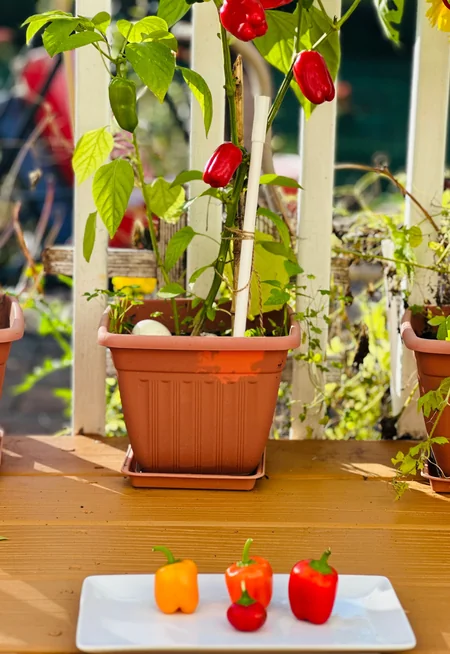
Peppers can be a smart choice when you want one container to keep giving you produce through the season. The trick is picking a compact variety instead of a plant that quickly feels too large for your space.
One healthy pepper plant can fit neatly into its own pot and stay easy to reach.
For the best use of the container:
- Give the roots enough room.
- Keep the plant in a suitable sunny position.
- Support heavy branches if they start bending.
- Pick mature peppers so new fruit stays easy to see.
This works especially well when peppers are something you already use often in the kitchen.
6. Choose Short or Round Carrot Varieties for Containers
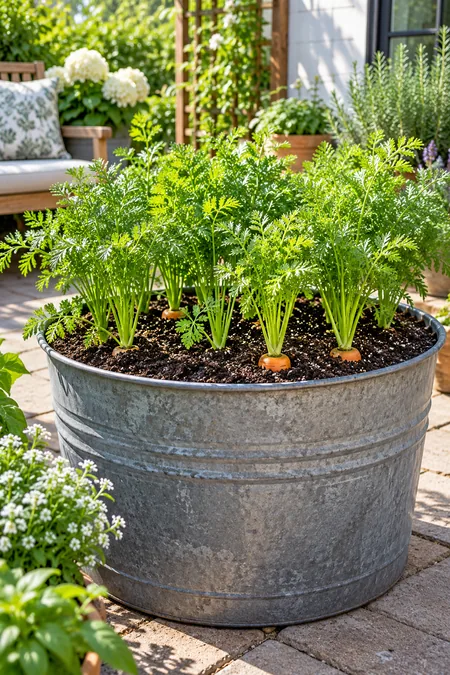
Carrots can work in containers, but the variety matters. Short or round carrot varieties are a good fit when container depth is limited. Long varieties can also grow well if the pot is deep enough for their roots.
“Baby carrots” can simply mean carrots harvested young, so the name does not always mean a naturally short variety.
Give them loose soil and enough room for the roots to form.
A few useful tips:
- Match the usable soil depth to the variety’s expected root length.
- Avoid heavy, packed soil.
- Thin seedlings so the roots are not fighting for space.
- Keep the container where you can water it easily.
Shorter carrots make better use of a manageable pot and are much easier to harvest without digging through a large bed. If you’re not sure which pot size a crop needs, the Vegetable & Herb Pot Size Finder can match each vegetable to the right container.
7. Grow Swiss Chard When You Want Leaves You Can Harvest Again and Again
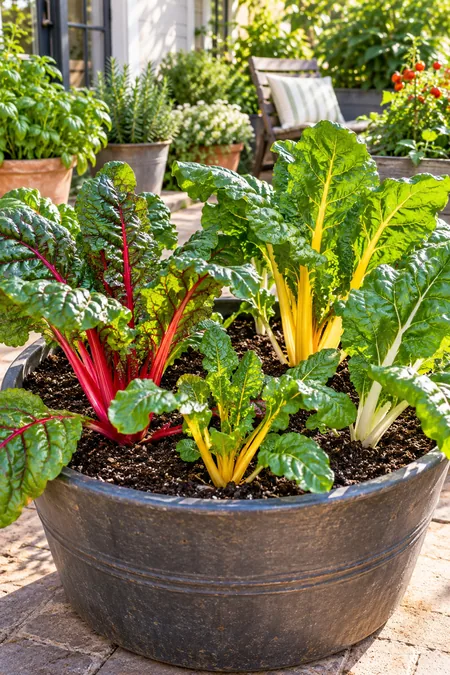
Swiss chard is useful in a container because you can pick the outer leaves and leave the center growing.
That means one plant can keep giving you greens instead of being pulled after a single harvest.
Do this:
- Give each plant enough room for large leaves.
- Harvest from the outside first.
- Leave the smaller center leaves in place.
- Remove damaged leaves when you notice them.
Do not pack too many plants into one pot just because the seedlings look small.
Chard can become surprisingly full, so a little space at the start makes harvesting easier later.
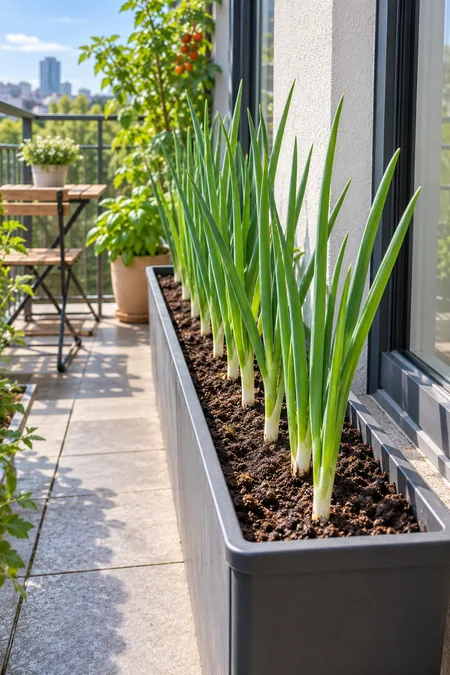
8. Choose Green Onions When You Only Have a Narrow Planter
Green onions do not need much width, which makes them useful for windowsill boxes, railing planters, and other narrow containers.
They also give you an edible crop without asking for a large pot.
Use them when your space is long and slim rather than deep and wide.
Green onions are a better fit for a narrow planter than a bulky vegetable that needs a large root area. Keep the plants easy to reach so harvesting stays simple.
If your container garden has an odd empty strip along a wall or railing, this is the kind of crop that can make that small space useful.
9. Train Vining Cucumbers Upward Instead of Letting Them Cover the Patio
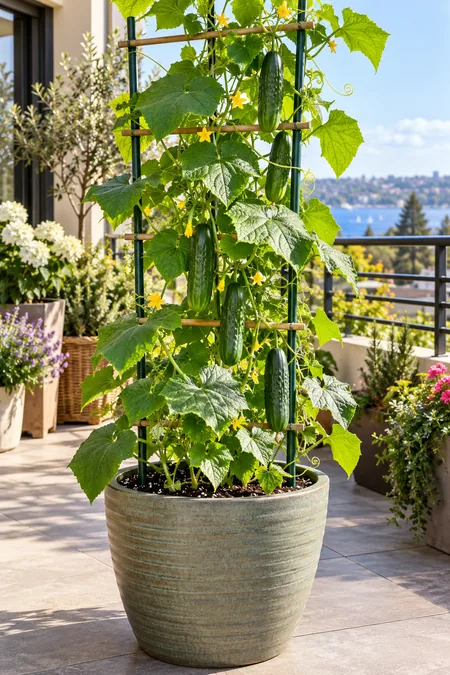
Vining cucumbers can take over a small space if left to spread across the ground. A container-friendly vining variety becomes easier to manage when you guide it upward.
Bush cucumbers are another option, but their shorter vines do not need the same tall support. Choose your variety and support together.
Add the support early.
Use a trellis, cage, or strong frame that fits inside or directly beside the pot.
Keep the vines moving upward rather than across the patio, and make sure the fruit stays easy to see and pick.
This turns one container into a vertical growing space and leaves more room around it for walking, sitting, or growing another crop.
10. Plant Dwarf Peas for Fresh Pods Without Giving Up Much Floor Space
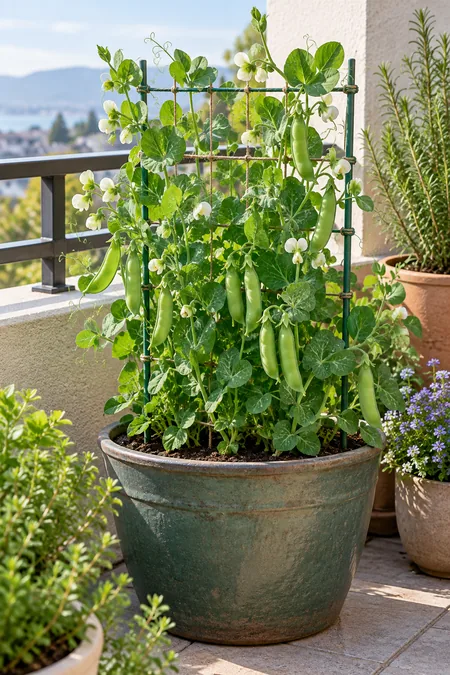
Peas can be a good container crop when you choose a dwarf or compact type. They still benefit from support, but the setup can stay much smaller than a full climbing pea row.
Use one container and a short support.
Before planting:
- Pick a compact pea type.
- Add the support early.
- Keep the stems easy to guide.
- Leave enough space to reach the pods.
Fresh peas are especially useful for gardeners who enjoy picking small amounts at a time.
A compact pea pot can sit against a wall or railing without taking over the whole growing area.
11. Grow Kale for a Container Crop You Can Pick Leaf by Leaf
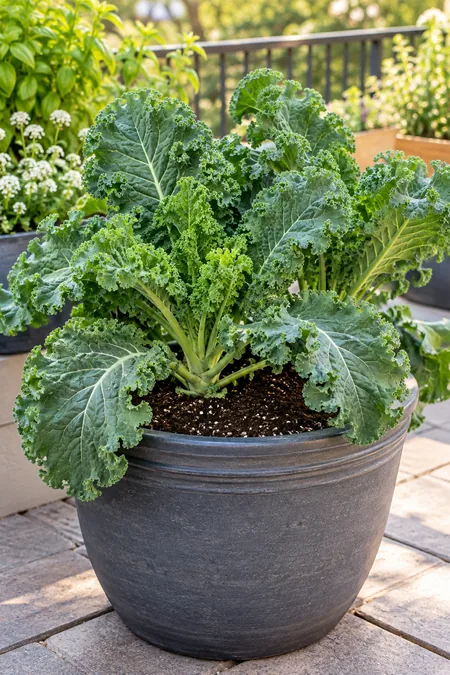
Kale works well in containers because you can harvest the outer leaves and leave the center growing.
That means one plant can keep giving you greens instead of being pulled all at once.
For a simple setup:
- Give each plant enough room to spread.
- Pick the older outer leaves first.
- Leave the smaller center leaves in place.
- Remove damaged leaves so the plant stays tidy.
Kale is especially useful if you like adding a few leaves to soups, stir-fries, or smoothies.
One or two healthy plants can be more practical than filling a whole container with too many seedlings.
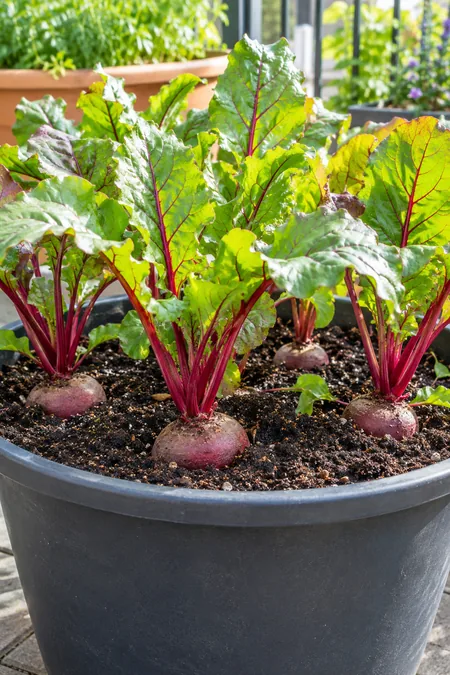
12. Plant Beets When You Want Both Edible Roots and Useful Greens
Beets give you two useful parts from one container. You can harvest the roots, and the leaves can also be used when they are young and healthy.
That makes them a good choice when every pot needs to earn its space.
Keep the crop simple:
- Use a container with enough depth for the roots.
- Thin crowded seedlings so each beet has room.
- Harvest only a few leaves if you still want the roots to develop well.
Do not strip the plant bare just because the leaves are edible.
The best part of container beets is getting more than one kind of harvest from the same crop.
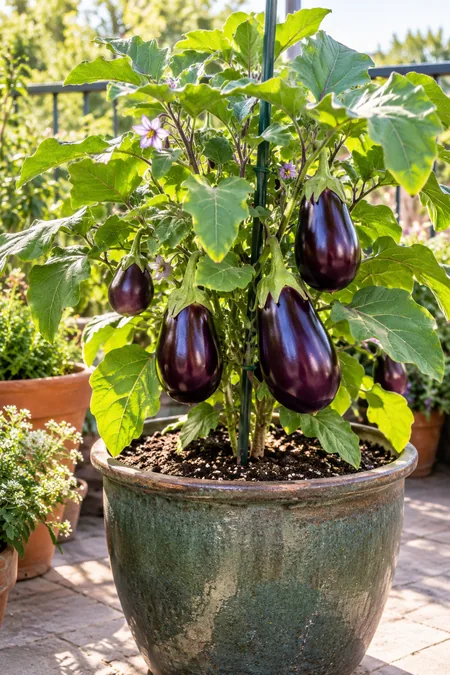
13. Choose Compact Eggplant for a High-Value Harvest From One Pot
Eggplant can feel worth the space when you grow a compact type in its own container. One healthy plant can hold several fruits without needing a whole bed.
The container should give the roots enough room and keep the plant steady.
Compared with growing a large spreading plant, a compact type is easier to place on a patio and easier to reach when the fruit is ready.
Keep the plant supported if the branches become heavy.
This is a good choice for gardeners who actually cook with eggplant, because even a few homegrown fruits can make one pot feel productive.
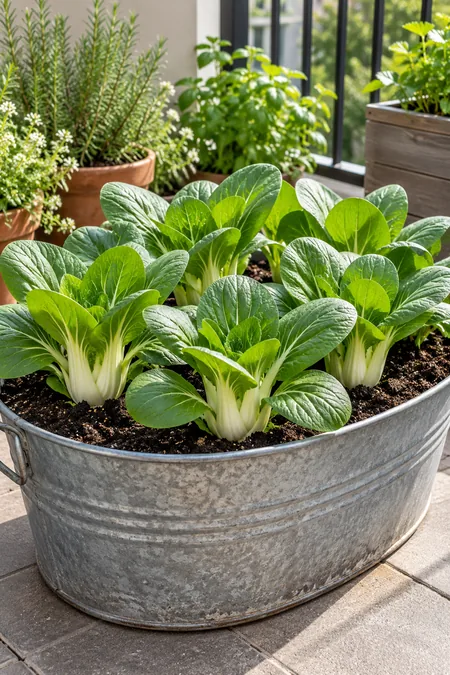
14. Grow Baby Bok Choy for Quick, Compact Heads in Smaller Containers
Baby bok choy is useful when you want a vegetable that stays fairly compact and does not need a huge container.
The small heads fit well into wider pots and planters where a full-size leafy crop might feel crowded.
Give each plant enough space to form its shape instead of packing them tightly together.
A few healthy plants can give you useful portions for stir-fries, soups, or simple side dishes.
The main advantage is size. You can grow several baby plants in a manageable container without letting one large vegetable take over the whole space.
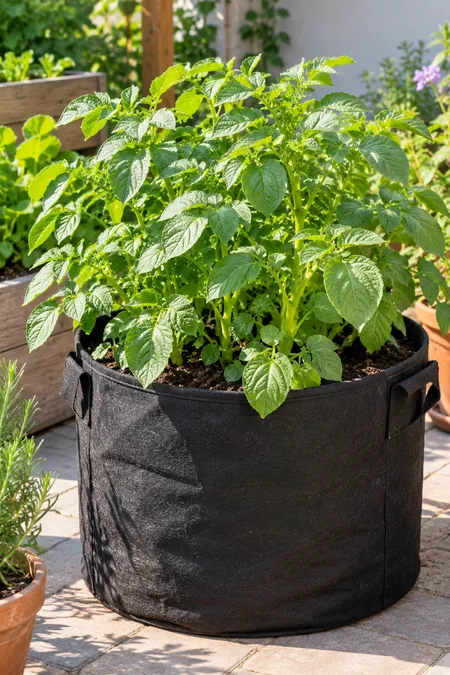
15. Use a Grow Bag for Potatoes When You Want an Easy Harvest at the End
Potatoes can be awkward to dig from a garden bed, but a grow bag keeps the crop in one clear place.
At harvest time, you can empty the bag and search through the mix instead of digging around with a garden fork.
Use a sturdy bag with drainage and enough room for the plants to grow.
The setup works well on a patio because the container keeps the crop separate from the rest of the garden.
Just remember that the bag is still a large container and will need regular care.
The easy harvest is the real reason this crop earns its space. Before you fill the bag, the Container Soil & Grow Bag Calculator can work out how much mix a large grow bag needs.
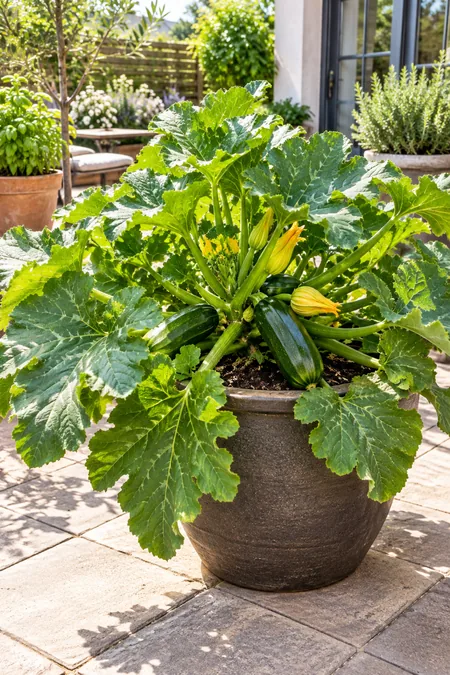
16. Choose Compact Bush Zucchini and Leave Room for Its Leaves
Zucchini can use a lot of space, so variety choice matters in a container garden. A compact bush variety keeps its growth more concentrated than a long trailing vine, but its broad leaves can still spread well beyond the pot.
Use one plant in a roomy container at least 45 cm (18 inches) wide, with enough depth for its roots. Allow space around the pot for the mature leaves.
Bush zucchini works better when space is tight because:
- The growth stays more compact.
- Fruit is easier to spot and pick.
- You can keep walking space clear by allowing for the mature leaf spread.
- One healthy plant can fill a large container on its own.
Give the plant room rather than adding several zucchini plants to one pot.
17. Plant Turnips When You Want Both Tender Roots and Edible Tops
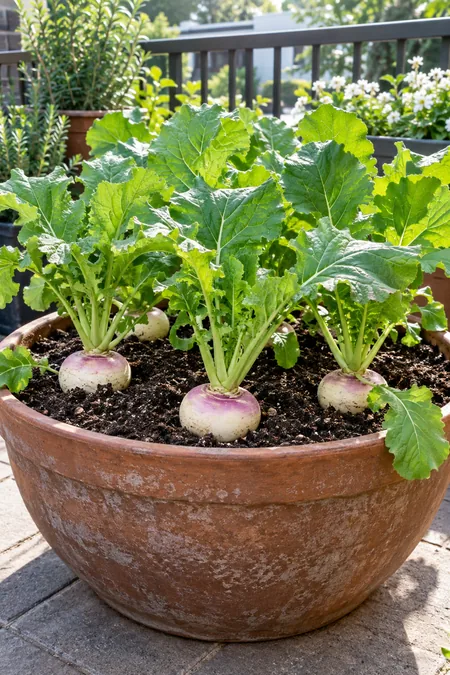
Turnips make good use of a container because the plant gives you more than just the root. The leafy tops are also useful, so one crop can provide two different harvests.
Give the roots enough space and avoid letting seedlings stay crowded.
For the best use of the pot:
- Thin crowded seedlings early.
- Keep enough leaves on each plant for healthy growth.
- Harvest a small amount of greens if you also want good roots.
- Check the roots instead of leaving them packed in the container too long.
That makes turnips a practical final choice when container space needs to work hard.
Choose Vegetables for Container Gardening That Make Every Container Count
The best vegetables for container gardening give you something you actually want to eat from each pot. Some keep producing for weeks, while others give you edible leaves and roots from the same space.
Start with two or three crops you use often, then add more only when watering and harvesting still feel easy.
The best vegetables for container gardening are not simply the smallest plants. They are the crops that fit your available space, grow well in the containers you can provide, and give you a harvest that feels worth the care.
Save this list to Pinterest so you can use it when planning your next patio, balcony, or small-space vegetable garden.