

Apartment gardening gets tricky fast when every sunny spot already has a job. The windowsill holds dishes, the counter is tight, and that bright corner may be the only place your herbs actually want to grow.
That does not mean you need a bigger home. You just need a setup that works with the space you have.
These indoor herb garden ideas for apartments focus on useful spots people often overlook, like narrow shelves, mobile carts, windows, and small corners. The goal is not to squeeze in as many plants as possible. It is to grow a manageable group of herbs that are easy to water, trim, and use.
Some ideas work with strong natural light. Others help when your apartment is dim or you cannot drill into the walls. Start with the setup that fixes your biggest problem first, then build slowly from there. Among indoor herb garden ideas for apartments, these options cover both bright and dim spaces.
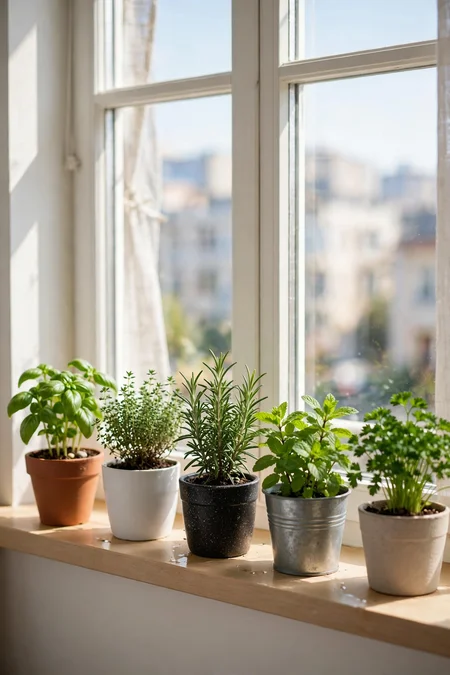
1. Turn Your Sunniest Windowsill Into a Compact Herb Station
A good windowsill can handle more than one lonely basil pot. If it gets useful light and has enough depth for small containers, turn it into a simple growing station instead of scattering herbs around the apartment. It’s one of the simplest indoor herb garden ideas for apartments.
Keep the arrangement easy to manage:
- Use compact pots that fit fully on the sill.
- Put the herbs you harvest most near the easiest side to reach.
- Add one tray underneath to catch drips and loose soil.
Do not crowd every inch. A little breathing room makes it much easier to water, rotate, and trim the plants without knocking leaves against the glass.
2. Grow Three Compatible Herbs in One Narrow Window Box
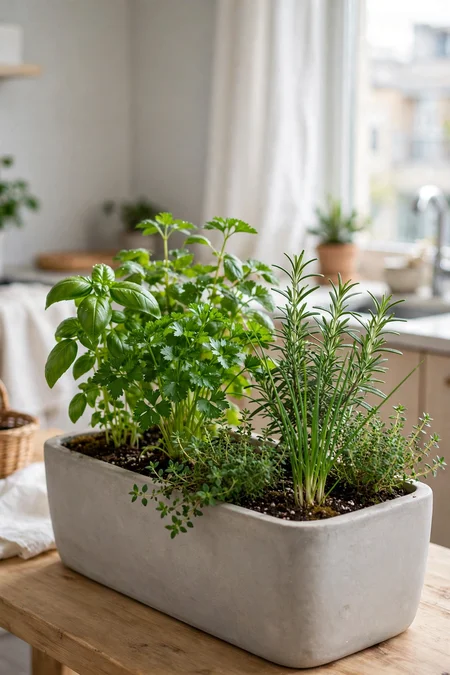
Separate pots are not always the best use of a narrow ledge. A slim window box can hold a small group of herbs while keeping the footprint neat.
The important part is choosing plants that can live comfortably together. Our Herb Compatibility Checker can help you pick combinations that thrive in the same container, making it one of the most practical indoor herb garden ideas for apartments.
Before planting, check:
- Similar light needs
- Similar watering habits
- Enough room for each plant to grow
- Drainage holes under the container
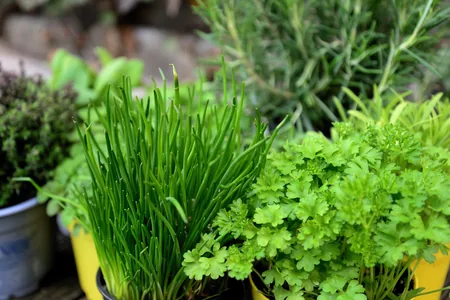
A simple mix such as parsley, chives, and thyme can look tidy without taking over the window. Skip mint in a shared planter if you want the other herbs to keep their space. It is usually easier to manage in its own container.
Check before planting together
3. Use a Slim Tiered Stand to Grow Up Instead of Out
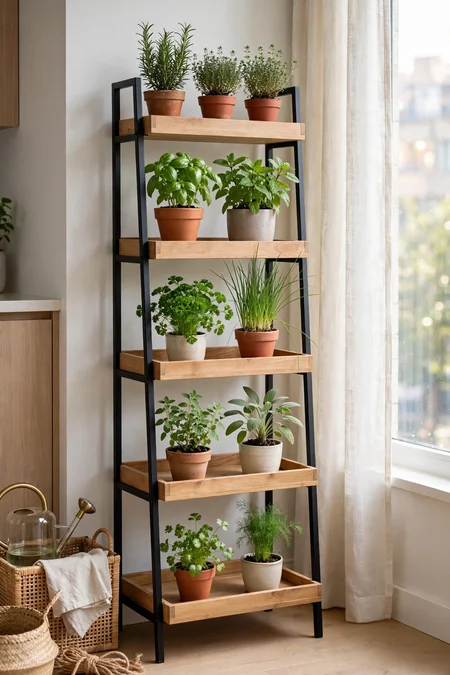
When floor space is tight, height is often easier to find than width. A slim tiered stand lets you keep several herbs in one small footprint instead of lining every pot across the counter.
Use each level with purpose.
Put the plants that receive the best light on the brighter tiers. Keep heavier pots lower down, and leave enough room between shelves to lift each container without scraping the leaves.
A stand works especially well beside a window or glass balcony door. It turns one narrow strip of floor into a proper growing area while keeping the rest of the apartment easier to move through.
Several herb pots spread across the floor, windowsill, and table, taking up useful horizontal space.
One narrow vertical herb station with several growing levels and a much smaller floor footprint.
4. Put Your Herbs on a Rolling Cart That Follows the Light
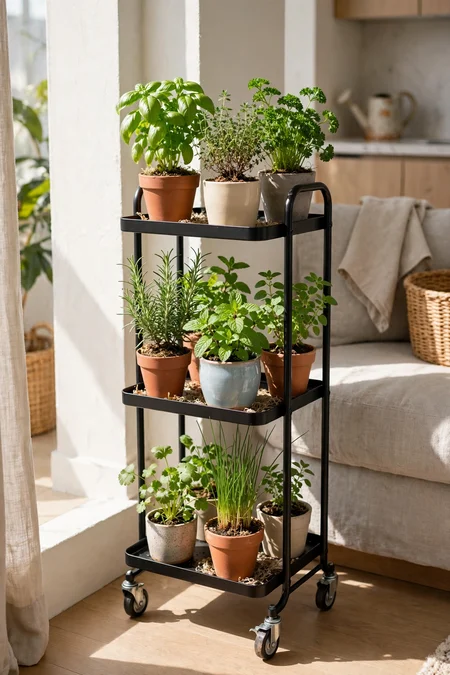
Apartment light can change from one side of a room to another throughout the day. A small rolling cart gives you more flexibility than a fixed shelf.
Use it as a simple mobile herb station:
- Keep your most-used herbs on the top shelf.
- Store scissors, trays, or spare pots below.
- Move the cart closer to useful light when needed.
- Roll it aside when you need the floor space back.
Choose a cart narrow enough to pass through the room without becoming another obstacle. The biggest benefit is not storage. It is being able to move the whole herb garden at once.
Put the herbs you harvest most on the easiest shelf to reach.
Use lower shelves for trays, scissors, spare pots, or seedlings.
Roll the cart toward useful light, then move it back when you need the room.
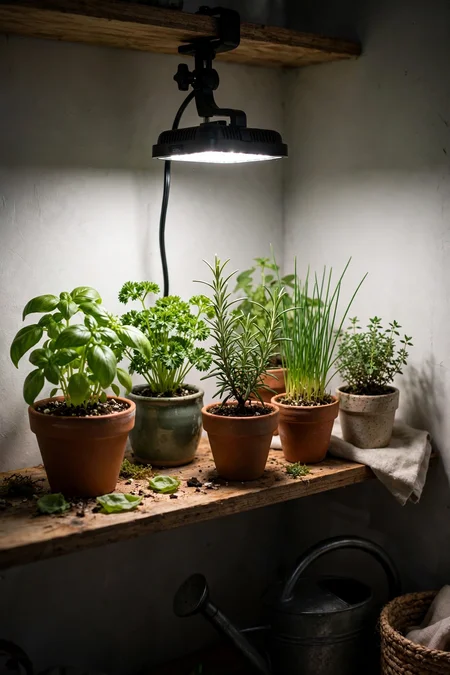
5. Build a One-Shelf Herb Garden With a Clip-On Grow Light
Not every apartment has a bright kitchen window. If your best shelf sits in a dim corner, a small grow light can make that space much more useful.
Keep the setup focused. One shelf with three or four herbs is easier to manage than a huge indoor growing station.
A clip-on light works well when:
- the shelf is narrow
- the plants stay grouped together
- you can position the light over the leaves
- the setup is easy to adjust as the herbs grow
The goal is not to flood the whole room with light. It is to give one compact herb area a more dependable growing spot.
6. Hide Plain Nursery Pots Inside Attractive Cachepots You Already Own
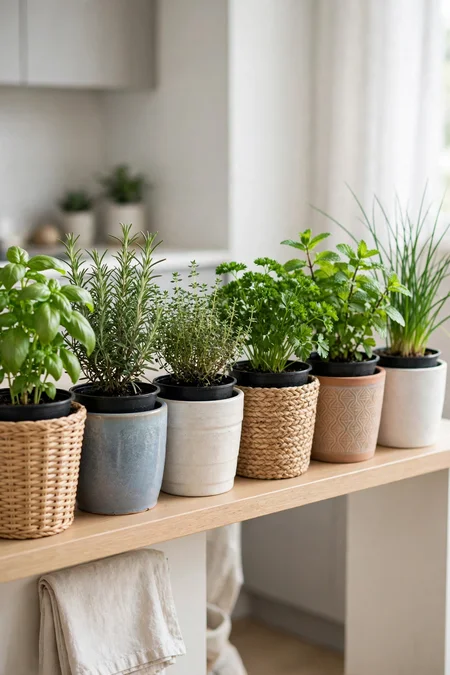
You do not need matching planters to make a small herb garden look tidy. Plain nursery pots can stay exactly where they are if you slip them inside containers you already own.
Look around for:
- Small ceramic bowls
- Old mugs
- Simple crocks
- Decorative plant covers
- Small baskets with a waterproof liner
Keep the herb in its original pot so the drainage holes still work. When it is time to water, lift the inner pot out, let the extra water drain, then return it to the decorative container.
This keeps the setup neat without creating another shopping list.
💡 Quick Tip
Use decorative containers as covers, not sealed planters. Keeping the herb in a draining inner pot makes watering much easier.
7. Use a Freestanding Pegboard When You Cannot Drill Into Apartment Walls
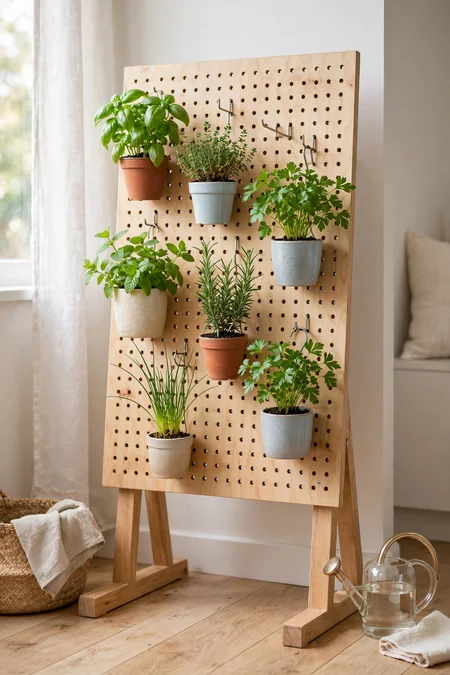
A wall-mounted herb garden sounds useful until your lease says no holes. A freestanding pegboard gives you similar vertical storage without attaching anything permanently.
Set it on a sturdy base or use a model designed to stand on a desk or floor.
Keep the setup light:
- Use small herb pots rather than heavy ceramic planters.
- Hang tools on separate hooks.
- Leave room to remove each pot for watering.
- Keep the board close to useful light.
This works especially well beside a kitchen counter where you want more growing space but cannot change the walls.
Use lightweight pots and secure holders.
Keep the freestanding base steady and easy to reach.
Do not overload the board with large heavy planters.
Do not block access to the pots just to fit more plants.
8. Choose Seeds or Starter Plants Based on How Much Space You Have
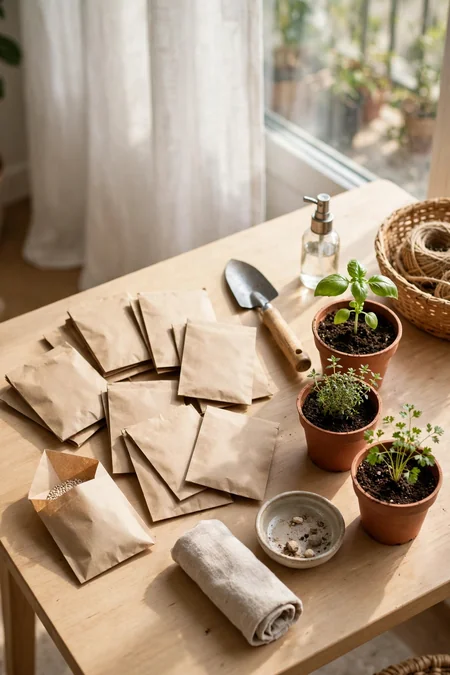
Seeds can give you many plants, but that is not always useful in an apartment. Starting twelve basil seedlings when you only have room for two pots creates more work, not more garden.
Match the starting method to the space you can actually keep.
Seeds make sense when: you have room for trays, enjoy raising seedlings, or want several plants.
Starter plants make sense when: your space is tiny, you only want a few herbs, or you want to skip the seedling stage.
A mix of both can work well. Start easy favorites from seed and buy one plant when that is simpler. If you’re unsure what size container each herb needs, our pot size finder can help you match plants to pots.
| Seeds | Starter Plants |
|---|---|
| Useful when you want several plants. | Useful when you only have room for a few. |
| Needs temporary seed-starting space. | Skips the seedling tray stage. |
| Lets you choose exactly how many seedlings to keep. | Gives you an established plant right away. |
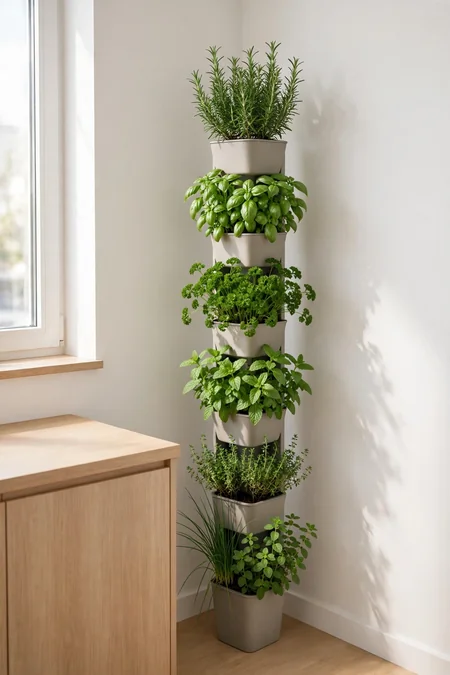
9. Turn an Empty Kitchen Corner Into a Narrow Herb Tower
That slim gap beside a cabinet or near a window may be too small for furniture, but it can still hold herbs. A narrow vertical stand turns the unused corner into several growing levels.
Keep the footprint tight and the arrangement simple.
Put larger or heavier pots near the bottom. Keep the herbs you snip most often around waist or chest height. The upper level should go to plants that receive the best usable light in that location.
The tower should make the corner more useful without making the kitchen harder to walk through. If you have to squeeze past it every day, the stand is too wide.
Use vertical space only when the stand still leaves a comfortable path through the room. Apartment gardening should solve clutter, not create it.
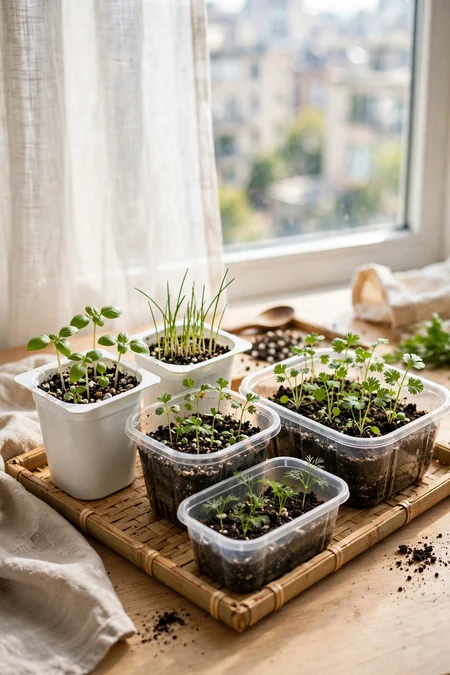
10. Start Herb Seeds in Reused Food Containers on a Small Tray
Seed-starting supplies can take over a tiny apartment surprisingly fast. Reused food containers keep the setup smaller and give you a reason to use what is already in the recycling bin.
Clean yogurt cups, small produce tubs, or similar containers can work for young herbs if they are prepared properly.
Before sowing:
- Wash each container well.
- Add drainage holes if needed.
- Use fresh potting mix.
- Keep everything together on one tray.
- Move seedlings into larger draining pots once they need more room.
One tray makes the setup easier to carry, water, and move away from the dinner table when space is needed.
Small-space seed starting checklist
11. Keep Only the Herbs You Actually Use in Your Cooking
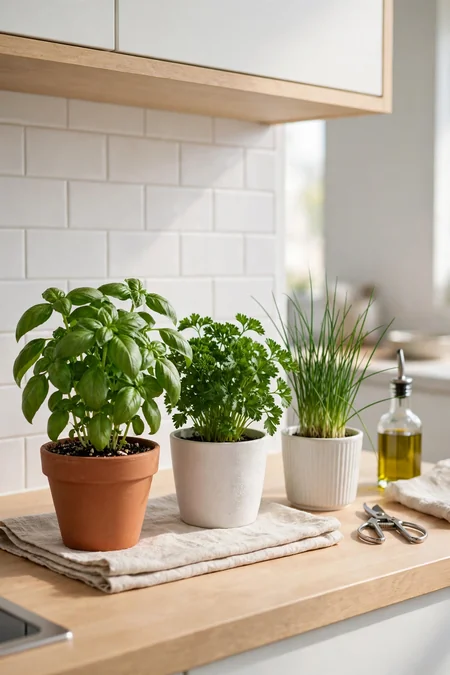
Apartment space is too valuable for herbs you never harvest. Before adding another pot, think about what regularly ends up on your cutting board.
A practical starting group might look like this:
- Basil for pasta, sauces, and sandwiches
- Parsley for soups, salads, and finishing meals
- Chives for eggs and potatoes
- Mint for tea, drinks, and fresh toppings
Your list may be completely different, and that is the point. Build the garden around your kitchen habits.
Four herbs you cut every week are more useful than ten plants you keep alive just because they looked good at the nursery.
12. Split a Crowded Grocery Store Basil Pot Into Smaller Containers
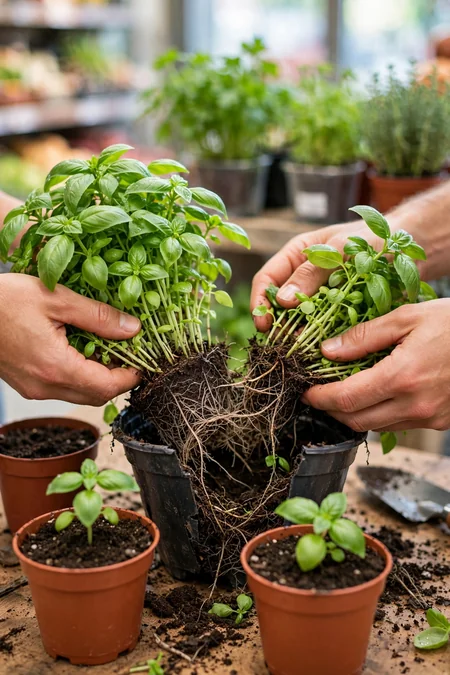
That full basil pot from the grocery store often looks like one big plant, but it may contain many stems growing close together. Giving some of them more room can turn one purchase into several smaller pots.
Take it slowly:
- Water the plant before you start.
- Slide the root ball out of the container.
- Gently separate it into a few sections.
- Replant each section in a draining pot.
- Give the divided plants time to settle before cutting heavily.
You do not need to separate every stem. A few loose groups are much easier to handle than dozens of tiny individual plants.
Water the basil first so the root ball is easier to handle.
Separate the crowded roots into a few manageable groups.
Replant each group in fresh mix inside a pot with drainage.
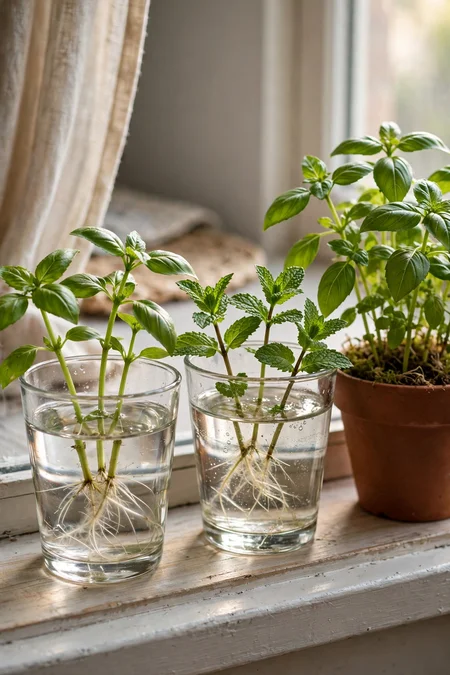
13. Root Basil and Mint Cuttings to Fill Empty Pots for Free
An empty pot does not always require another trip to the garden center. Healthy basil and mint stems can give you new plants from herbs you already have.
Cut a fresh stem and remove the lower leaves before placing it in clean water. Keep the remaining leaves above the waterline.
A small glass on the windowsill is enough for the early stage.
Once useful roots appear, move the cutting into potting mix and keep an eye on moisture while it settles. This is especially handy in apartments because the propagation setup takes almost no room and lets you replace or expand favorite herbs without adding another nursery pot to the budget.
One healthy basil or mint plant and an empty container waiting to be filled.
A rooted cutting ready for soil, started with little more than water and a spare glass.
14. Use Glass Jars as Cachepots Instead of Planting Directly in Them
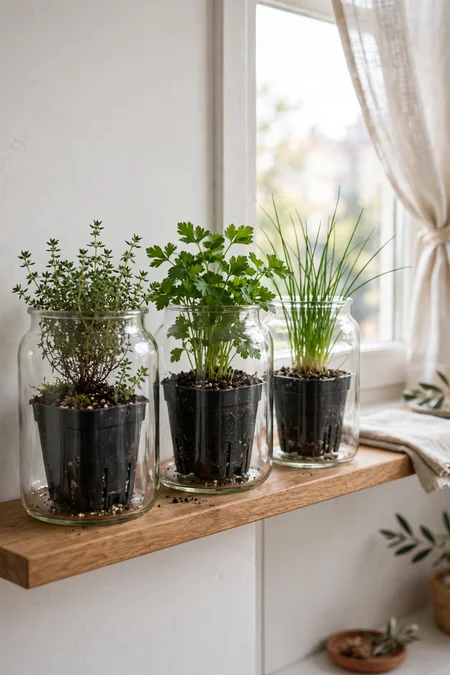
Glass jars fit easily on narrow shelves, but they are usually easier to manage as decorative covers than as direct planters.
Slip a small draining nursery pot inside the jar instead.
That gives you two useful things at once. The glass keeps the shelf looking neat, while the inner pot lets excess water escape from the soil.
Check the jar after watering. If water has collected in the bottom, lift the inner pot out and empty it.
This small change makes jars much easier to use in an apartment herb garden, especially when you want a tidy row without sacrificing drainage.
📌 Good To Know
Keep the herb in a smaller draining pot inside the jar. After watering, empty any water that collects in the outer glass container.
15. Use Shelf Risers to Create Two Growing Levels on One Counter
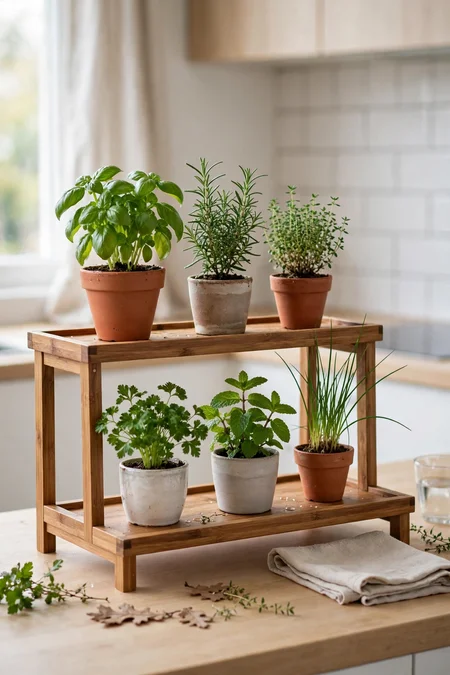
A deep counter often has plenty of space behind the front row of herb pots, but the back plants can become hard to see and reach. A simple shelf riser creates a second level without adding another piece of furniture.
Place shorter pots in front and raise a second row behind them.
This setup works best when:
- the rear plants still receive useful light
- every pot can be lifted out easily
- the riser stays stable when you water
- leaves are not pressed into the shelf above
It is a small adjustment, but it can make one stretch of counter hold several herbs without turning into a flat wall of pots.
16. Pick Self-Watering Pots When Your Apartment Routine Gets Busy
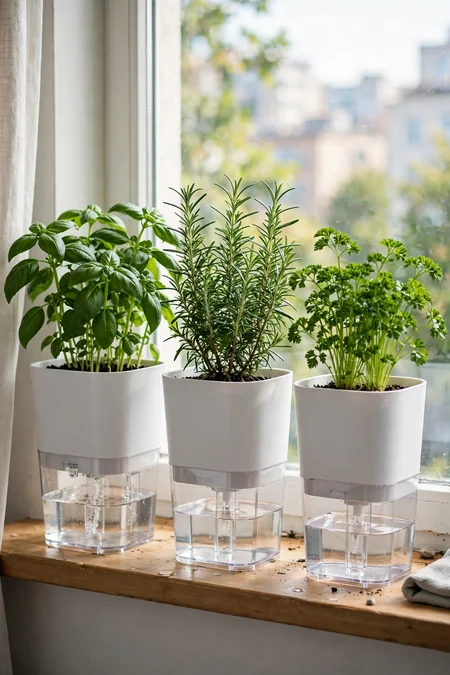
If you travel often, work long hours, or simply forget a watering day, self-watering pots can make a small herb setup easier to manage.
They are most useful when you understand what they actually do. The reservoir helps keep moisture available, but it does not mean every herb wants the same amount of water.
Use them thoughtfully:
- Check the reservoir instead of refilling it on autopilot.
- Let the potting mix guide your watering rhythm.
- Keep herbs with different moisture needs in separate containers.
- Clean the reservoir now and then so buildup does not become a problem.
They are a convenience tool, not a reason to stop checking the plants.
| Self-Watering Pot | Regular Pot |
|---|---|
| Useful for people with inconsistent routines. | Simple and easy to inspect directly. |
| Stores water in a separate reservoir. | Needs more hands-on watering. |
| Works best when matched to the herb’s needs. | Good when you like checking soil yourself. |
17. Group Herbs by Light and Water Needs Instead of Looks
It is tempting to arrange herbs by pot color or leaf shape, but care needs matter more than styling.
Basil may need different attention than rosemary. Thyme may be happier with a drier rhythm than parsley. If everything is grouped only because it looks good together, one watering routine can quickly become a bad fit for half the shelf.
A better approach is to make small care groups.
Keep herbs with similar habits near one another, then check each pot before watering.
That still lets the shelf look organized, but the plants are arranged around how they grow, not just how they photograph.
Group herbs that prefer similar light and moisture.
Check each pot before watering.
Do not group herbs only because the pots match.
Do not assume every plant on one shelf needs water at the same time.
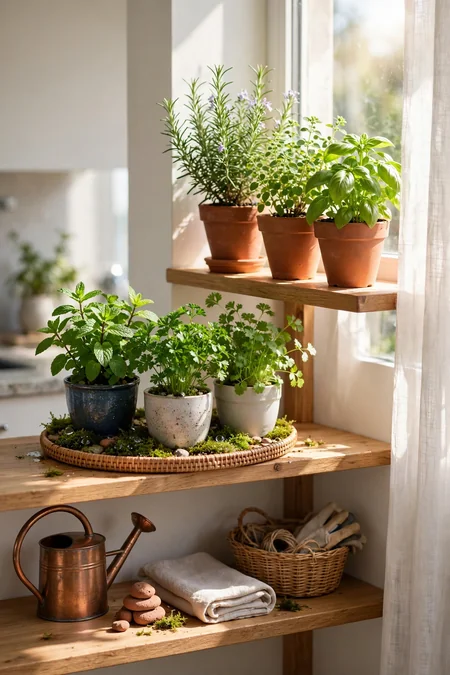
18. Turn an Existing Bookcase Shelf Into a Small Herb Zone
You may already own the structure your herb garden needs. A sturdy bookcase or open shelving unit near useful light can hold a few herbs without adding another piece of furniture to the apartment.
Clear one shelf instead of taking over the whole unit.
Then:
- Protect the surface with a tray.
- Keep pots small enough to remove easily.
- Leave room above the plants for growth.
- Avoid cramming herbs behind books or decor where you will forget them.
A single dedicated shelf can look more intentional than pots scattered across every flat surface in the room.
- ▸Choose a shelf that receives useful natural or supplemental light.
- ▸Protect the shelf with one washable tray beneath the pots.
- ▸Leave enough height to lift plants out for trimming and watering.
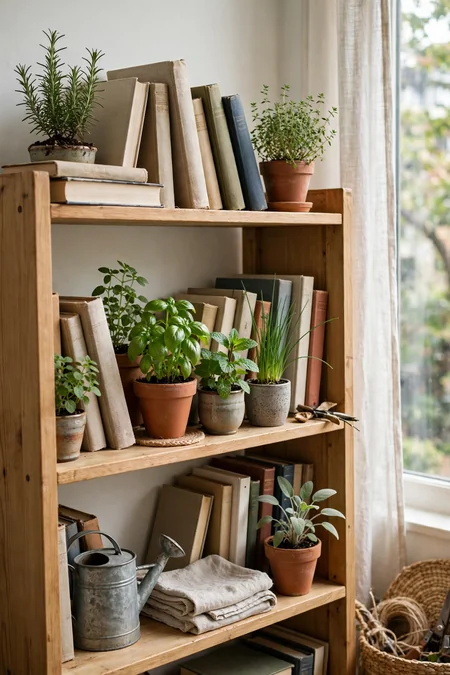
19. Keep Herbs Near the Kitchen So You Actually Remember to Harvest Them
A herb garden on the far side of the apartment can be easy to ignore. If you have to walk past three rooms every time you want a few basil leaves, you may reach for dried herbs instead.
Keep frequently used plants close to where you prepare food when the light allows it.
A windowsill, narrow cart, shelf, or small table just outside the kitchen can work.
The idea is simple: make harvesting easier than forgetting.
When herbs stay visible during meal prep, you are more likely to notice new growth, spot dry soil, and actually cut what you are growing.
The best apartment location is not just where the herbs fit. It is a spot with suitable light that you will actually see and use during normal kitchen routines.
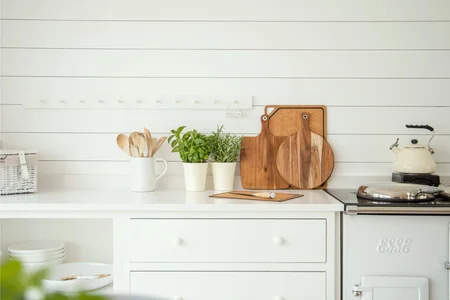
20. Create a Mini Propagation Nursery With Leftover Small Pots
A few leftover nursery pots can become a tiny backup garden for seedlings, divisions, and rooted cuttings.
Keep this area separate from your main display so the small plants are easier to watch.
Use it for:
- Basil or mint cuttings that have been moved into soil
- Extra seedlings you want to keep
- Small herb divisions
- Replacement plants for herbs you harvest often
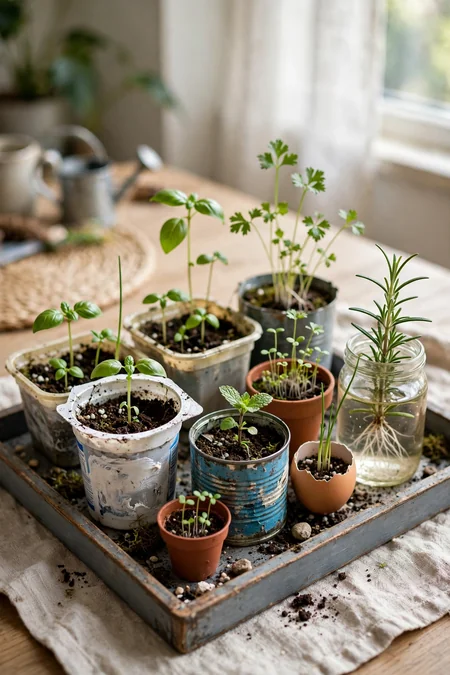
Group the containers on one tray so they do not spread across the apartment.
Once a young plant settles in and starts outgrowing its small pot, move it into a permanent container instead of letting the nursery become a crowded holding area.
Mini propagation nursery
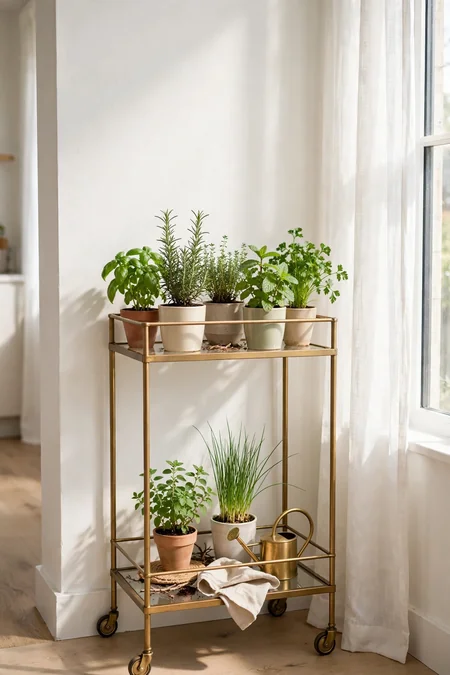
21. Use a Narrow Console or Bar Cart Along a Bright Wall
A slim console table or narrow bar cart can hold several herb pots without eating up much floor space. This works especially well along a bright wall where a deeper table would feel bulky.
Keep the setup practical:
- Use the top surface for the herbs you harvest most.
- Keep smaller supplies on a lower shelf.
- Leave enough room around each pot for watering.
- Avoid pushing the cart so close to the wall that leaves stay pressed against it.
A narrow piece of furniture can turn an unused strip of apartment space into a proper herb station without making the room feel crowded.
22. Rotate Herb Pots So One Side Does Not Always Face the Window
Herbs growing beside a window may start leaning toward the strongest light. A simple pot rotation can help keep the plants from spending all their time reaching in one direction.
Make it part of your normal care routine.
- Look at the plant before moving it.
- Turn the pot slightly rather than constantly spinning it around.
- Keep watching how the new growth responds.
Rotation does not replace adequate light. If a plant is stretching badly, moving the pot around will not fix a dark growing spot.
Use this trick to keep a reasonably lit plant growing more evenly, not to make poor light disappear.
Check which side of the herb is leaning or growing most strongly.
Turn the pot a little so another side faces the window.
Watch the new growth and adjust again when the plant begins leaning strongly.
23. Replace a Cluttered Countertop Collection With One Organized Herb Tray
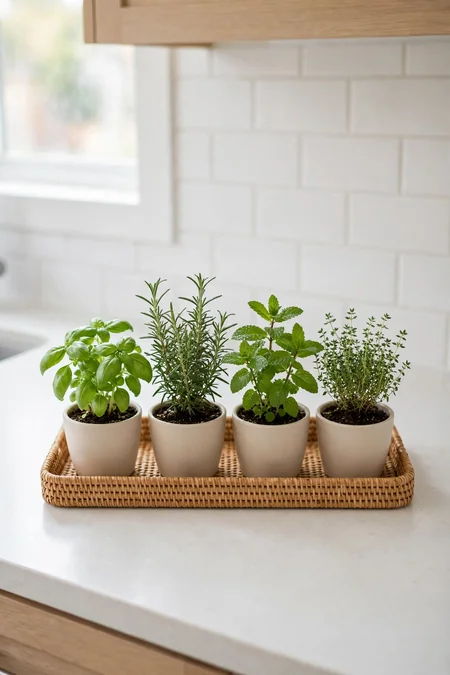
Five small pots spread across the kitchen can feel messier than five pots grouped together. One sturdy tray gives the collection a clear boundary and makes the whole setup easier to move.
Before grouping them, clear away anything that does not belong.
Then keep the tray focused on:
- Herb pots
- A small pair of scissors
- Maybe one compact watering tool
Do not use it as another catch-all surface for mail, keys, or cooking supplies.
The biggest difference is visual and practical. Instead of several loose objects competing for counter space, the herbs read as one small garden that can be lifted and cleaned around.
Loose pots, saucers, scissors, and watering supplies spread across several parts of the counter.
One compact tray holding the whole herb collection, with more clear counter space around it.
24. Keep Mint in Its Own Container Before It Crowds Other Herbs
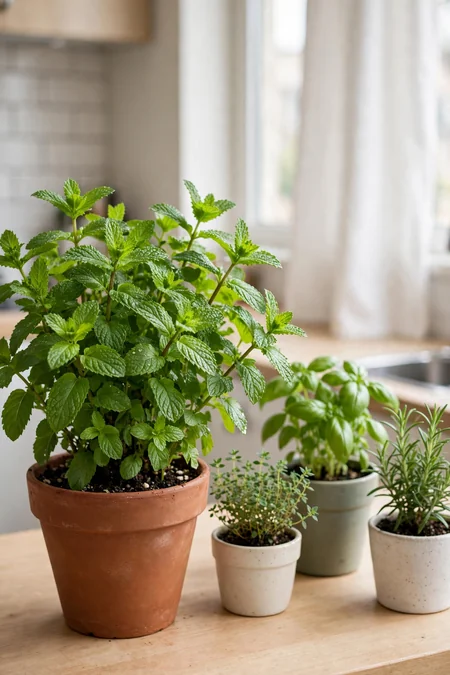
Mint can look harmless when it is small, but giving it a shared planter can make the arrangement harder to manage as it grows.
The simplest fix is to give mint its own pot.
That makes it easier to:
- control how much space it uses
- move it separately
- water it without treating every nearby herb the same way
- trim it without digging around other plants
You can still place the mint pot beside your other herbs so the garden looks like one collection.
The important difference is below the soil. Separate roots mean the mint does not have to compete directly inside the same container.
⚠️ Watch Out
A shared planter may look tidy at first, but mint is easier to control in its own pot. Keep the container beside your other herbs if you want the display to stay grouped.
25. Build a Four-Pot Apartment Herb Garden You Can Actually Maintain
A four-pot herb garden may sound small, but that can be exactly why it works. You have enough variety to cook with without turning the apartment into a plant-care project.
Choose four herbs with a clear reason for being there.
For example:
- one herb you use for pasta
- one for quick meals
- one for drinks or tea
- one you reach for as a finishing herb
Keep the pots close to useful light and somewhere you naturally pass each day.
The strongest indoor herb garden ideas for apartments are usually the ones that fit your routine, not the ones that squeeze in the most plants.
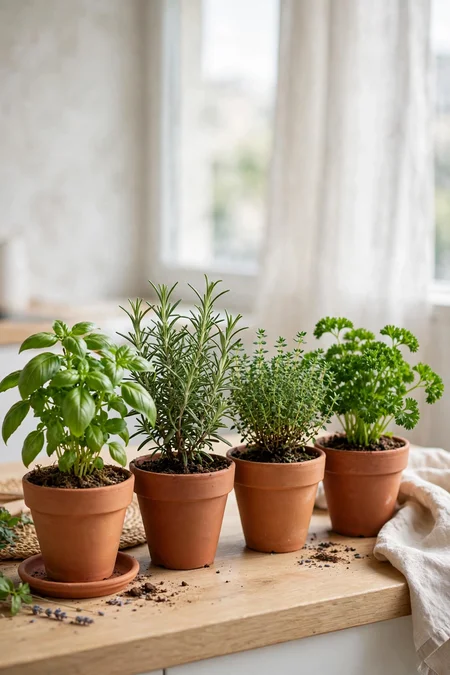
Small Spaces Can Still Grow Useful Herbs
A good apartment herb garden does not need every windowsill covered in pots. A few well-placed plants can be easier to care for, easier to harvest, and much less likely to become clutter.
Start with the light you have, then choose a setup that fits your shelves, counters, walls, or unused corners. Keep the herbs you actually cook with, give each plant enough room, and add more only when the current garden feels easy to manage.
The best indoor herb garden ideas for apartments make fresh herbs part of everyday life without asking your home to become a greenhouse.
Save this list to Pinterest for the next time you want to make better use of a sunny shelf, windowsill, or small apartment corner.