
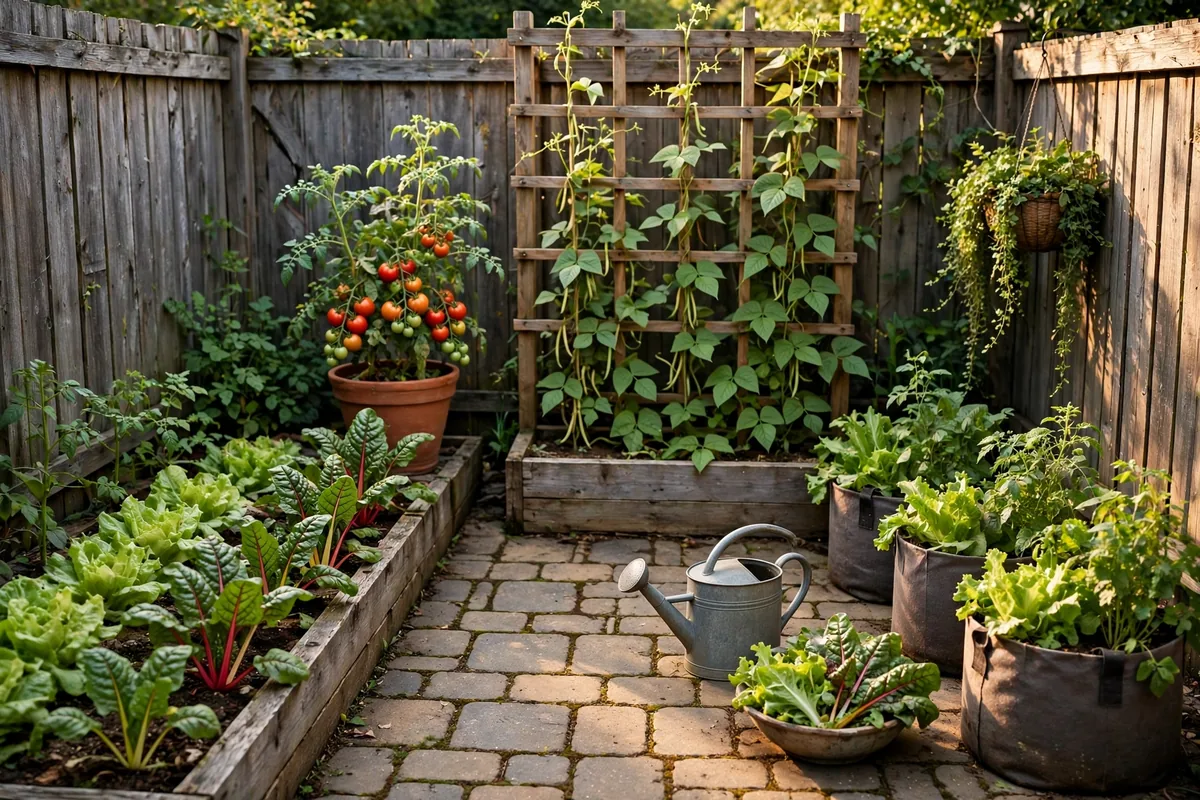
In a small space vegetable garden, a few pots can fill a balcony long before they fill a salad bowl. The tomato spreads across the doorway, the watering can has nowhere to sit, and that empty corner turns out to get hardly any sun. Growing vegetables in a small space takes a little more thought than buying smaller containers.
The most useful small space vegetable garden ideas start with what you have: a sunny stretch of railing, a narrow strip beside the patio, or room for one generous pot. Then you match the crop to that spot. Some vegetables can climb. Others stay compact, tuck into a trough, or give you leaves to pick over several weeks.
This list brings together options for balconies, patios, tiny yards, and indoor growing areas, so you can build a small space vegetable garden that fits your home. You can choose a single setup and leave the rest for another season. Keep enough room to water, harvest, and walk past without brushing every plant. A garden that fits your daily routine is much easier to keep growing.
1. Turn a Sunny Patio Edge Into a Narrow Vegetable Bed
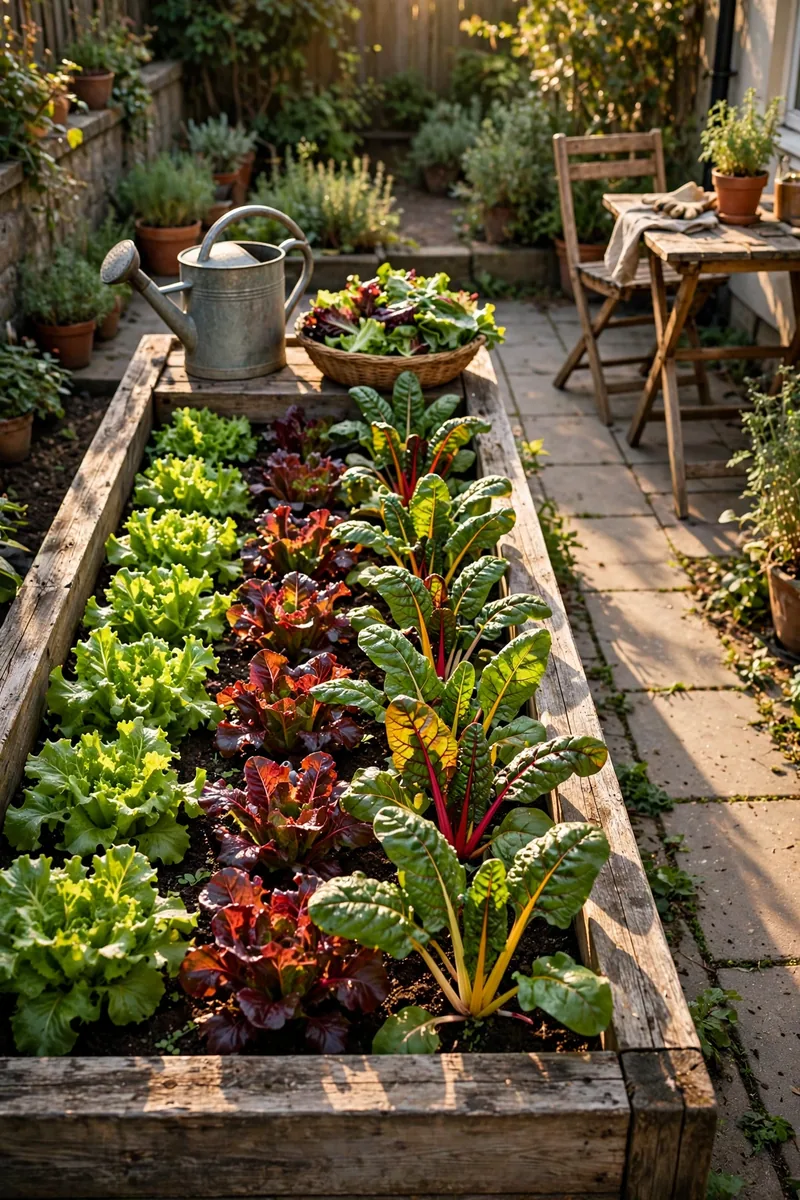
That slim strip beside the patio can earn its keep without swallowing the seating area. A narrow bed is a classic small space vegetable garden solution: it puts vegetables along the edge and leaves the middle clear.
Start with the space you can comfortably reach from the path. You should be able to pick leaves at the back without stepping into the soil.
- Choose a sunny stretch with access to water.
- Leave clearance around doors, drains, and building vents.
- Group crops with similar watering needs, and allow their mature spacing.
Low-growing lettuce or compact leafy greens can keep the edge easy to reach. Leave a spot to set down your harvest bowl.
☀️
Check the light
Watch where nearby walls and furniture cast shade before choosing crops.
🌱
Plan for grown plants
Mark the planting positions using mature spacing, not the size of the seedlings.
🚿
Keep access clear
Check that a hose or watering can reaches the whole bed without crossing your seating.
2. Train Climbing Beans Up a Trellis Behind Your Pots
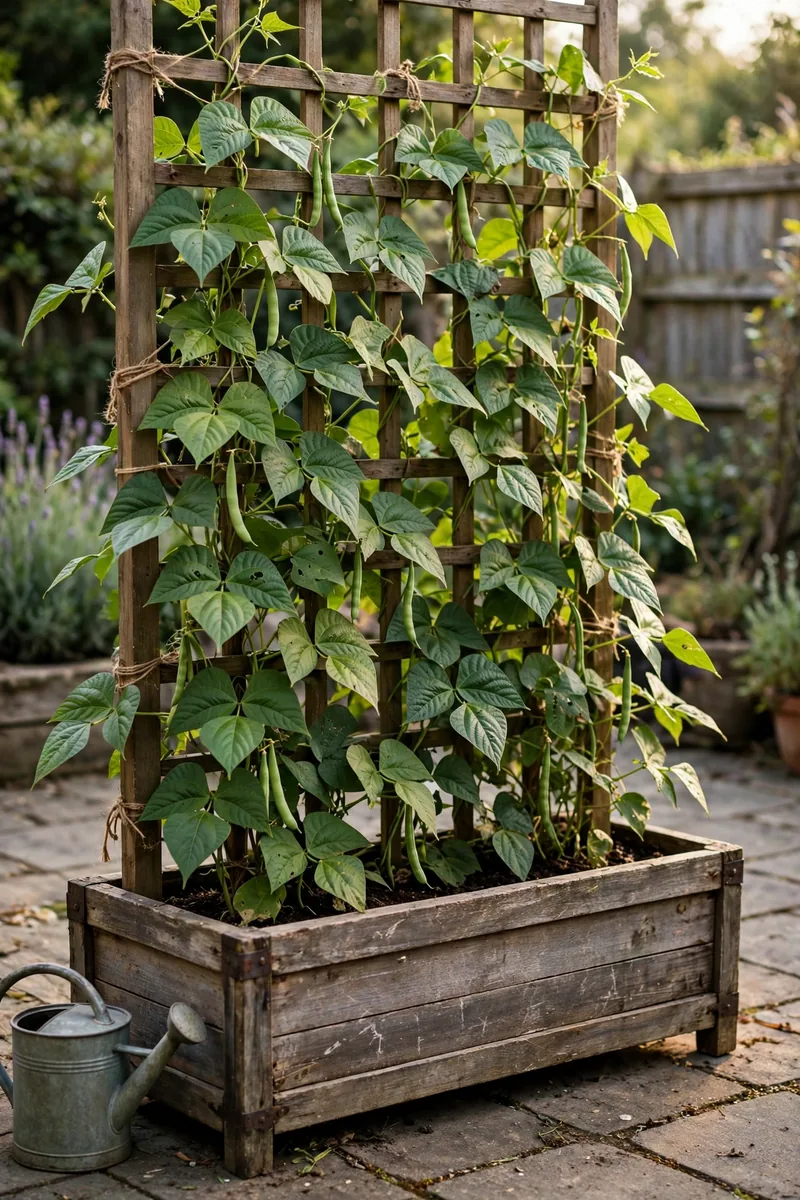
In a small space vegetable garden, give climbing beans somewhere to go before their stems start winding around the nearest chair. A trellis at the back of a generous container lets the crop use height while keeping the front accessible.
Choose a climbing variety. Bush beans will not fill a tall support in the same way.
- Set a sturdy trellis in place before sowing.
- Use a container with adequate root room and drainage.
- Guide young shoots toward the support as they grow.
Position the frame so its leafy growth will not shade sun-loving neighbors. On an exposed balcony, assess wind and secure the structure before it becomes covered in leaves.
3. Choose a Dwarf Tomato That Fits Your Balcony
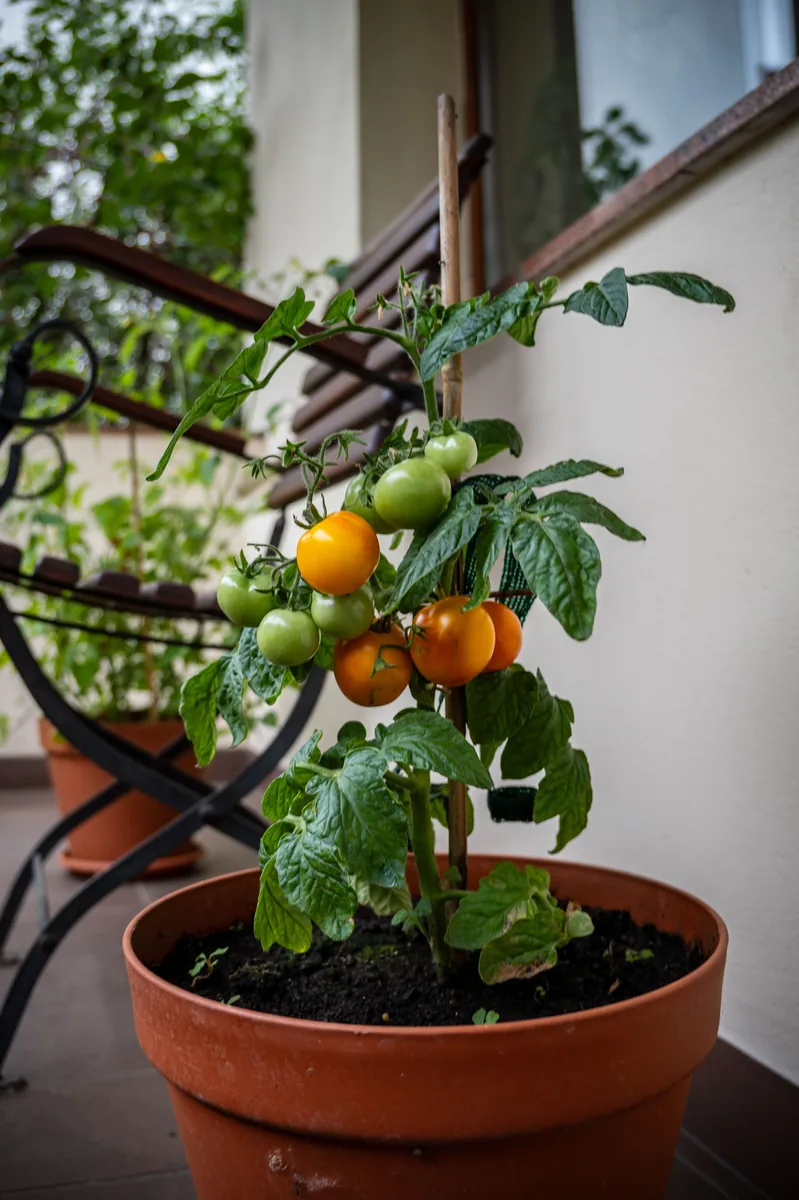
The word “cherry” describes the fruit, not the size of the plant, which matters in a small space vegetable garden: a cherry tomato can still send long stems across a small balcony.
Check the variety description for its mature size and growing habit before choosing it. A dwarf or compact patio variety gives you a clearer starting point than a photo of tiny tomatoes on the packet.
- Match the pot size to the variety’s growing guidance.
- Add a stake or cage if the plant needs support.
- Leave room to reach the compost without pushing through every branch.
Keep the pot in a suitably sunny position. Even a small plant needs root space and consistent attention to watering.
🍅
Fruit size
Cherry, plum, and other fruit descriptions do not tell you how much space the plant needs.
📏
Plant size
Compare the stated mature height and spread with your available growing area.
🪴
Container fit
Use the variety’s container guidance, and make room for any recommended support.
4. Grow Salad Leaves in a Secure Railing Planter
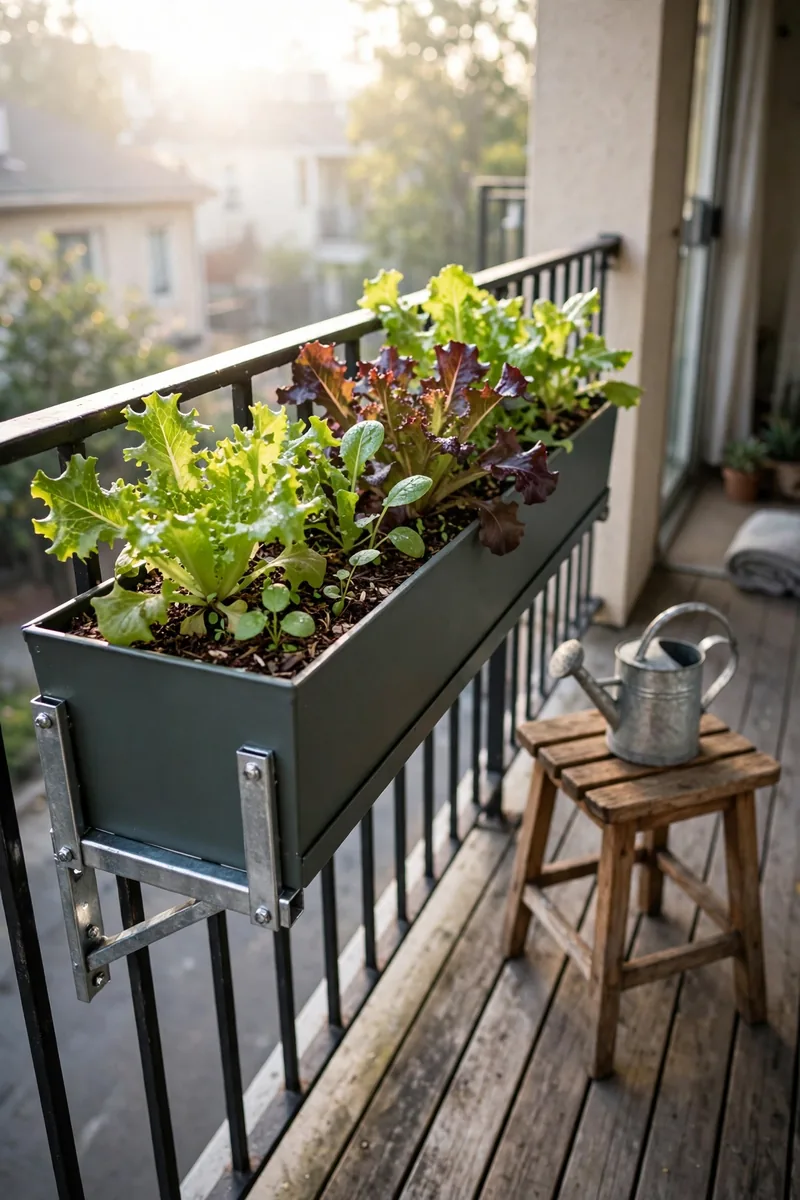
A railing planter is a handy small space vegetable garden fixture: it can hold a small patch of salad leaves while leaving the balcony floor free. The useful detail is the mounting, especially once the container is full of wet growing mix.
Choose a planter designed for your railing and follow its fitting and weight guidance. Position it on the inside where permitted, with drainage that will not drip onto people below.
Sow a suitable leaf mix at the packet spacing, or plant a few young lettuces with room to grow. Check moisture regularly because exposed containers can dry quickly.
Keep a small jug near the door. It makes checking the planter an easy part of stepping outside.
⚠️ Check the whole setup
Confirm building rules and the railing’s suitability before fitting a planter. Include wet growing mix in the load, keep drainage controlled, and leave exits clear. If the mounting is uncertain, use a floor planter instead.
5. Give Cucumbers a Vertical Frame in One Large Container
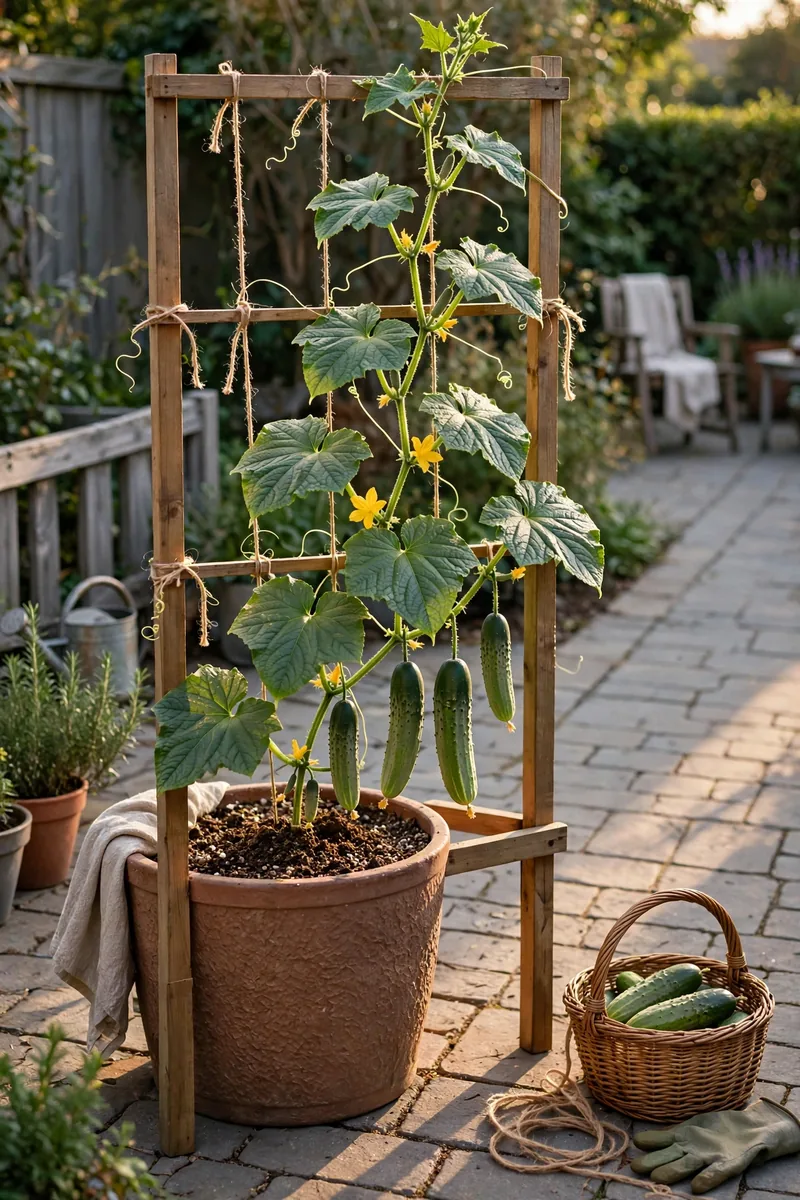
In a small space vegetable garden, cucumber stems do not need to cover the patio if you give a climbing variety a frame. The container still needs enough room for the roots, but training the vines upward can keep their growth out of the walkway.
Install the support at planting time, then guide young stems gently as they lengthen. Avoid pulling a tangled vine into place once it has stiffened.
- Choose a variety suited to container growing and training.
- Follow its spacing guidance rather than crowding in extra plants.
- Keep the soil accessible for watering and feeding.
Check behind the leaves when you harvest. A cucumber can hide surprisingly well against its own foliage.
✅ Give the vine room
Use soft, loose ties only where guidance is needed.
Keep developing fruit clear of tight gaps in the frame.
🚫 Skip these shortcuts
Do not use a smaller pot just because the stems are growing upward.
Do not let ties pinch thickening stems or rely on a wobbling frame.
6. Use a Deep Pot for Carrots Without Digging a Bed
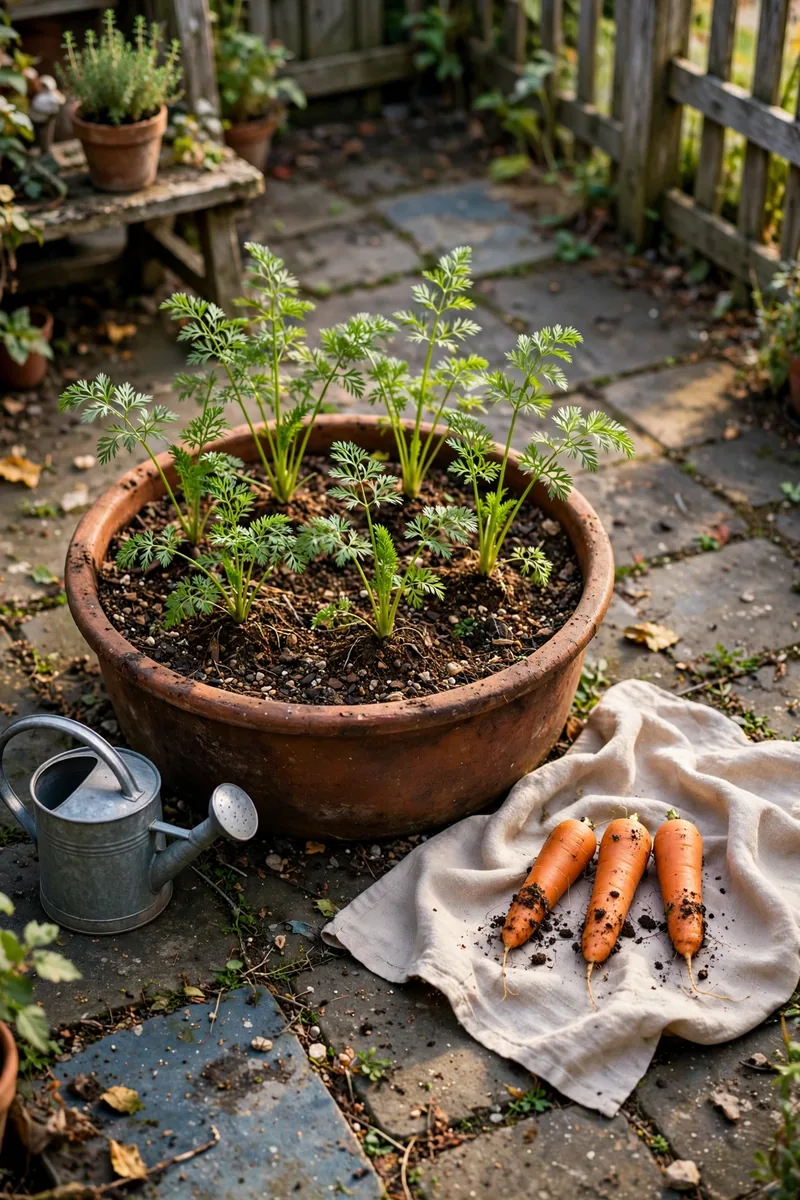
Carrots need room below the soil, even when their leaves take up little space above it. In a small space vegetable garden, a deep pot lets you grow them on a patio without digging a garden bed.
Choose the carrot variety first. Then pick a container deep enough for its full root length, with extra room below. Short or round varieties can suit a shallower pot than long ones.
- Use loose potting mix and a container with drainage holes.
- Sow seeds where the carrots will grow.
- Keep the surface moist while waiting for shoots.
- Thin seedlings using the spacing on the packet.
Pulling a few crowded seedlings early gives the remaining roots room to develop.
| Carrot type | What to check |
|---|---|
| Short or round roots | Check the listed root size. A smaller carrot still needs space between plants. |
| Long roots | Measure the usable soil depth inside the pot, not just its outside height. |
7. Place Grow Bags on an Unused Patch of Paving
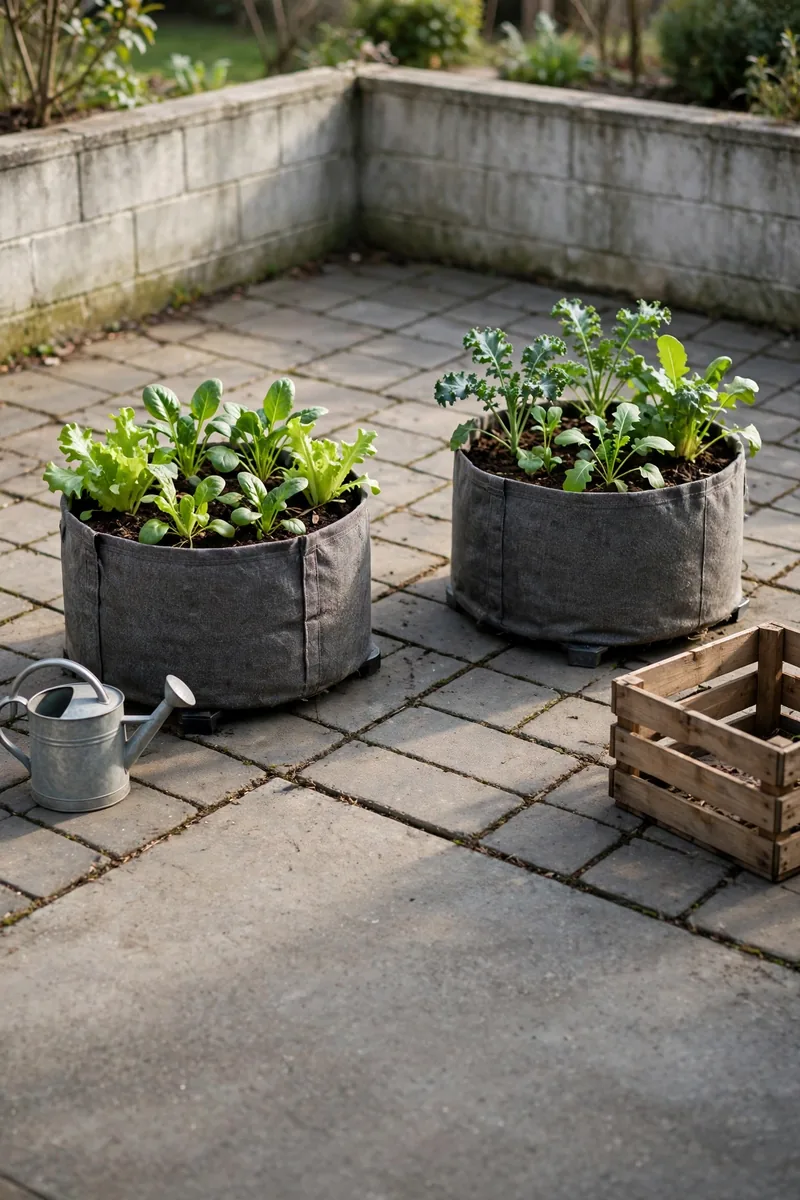
A bare patch of paving can become a small space vegetable garden without a permanent bed. Grow bags let you try a layout and change it between seasons.
Start with one or two bags. Match their size to your chosen crops, and fill them with potting mix made for containers. Our container soil calculator can help you work out how much mix each bag needs. A compact pepper plant is one option for a warm, sunny spot.
Before filling the bags, check three things:
- Can water drain away without making the path slippery?
- Can you reach each plant to water and pick?
- Will the plants leave enough room once fully grown?
Fabric bags can dry quickly in hot or windy weather. Check the mix often, and avoid dragging heavy, full bags by their handles.
☀️
Watch the spot
Check where the sun falls during the day before choosing a crop.
🪴
Test the layout
Set out empty bags first. Leave extra space for leaves to spread.
🚪
Try the doorway
Open nearby doors fully and check your walking route before adding soil.
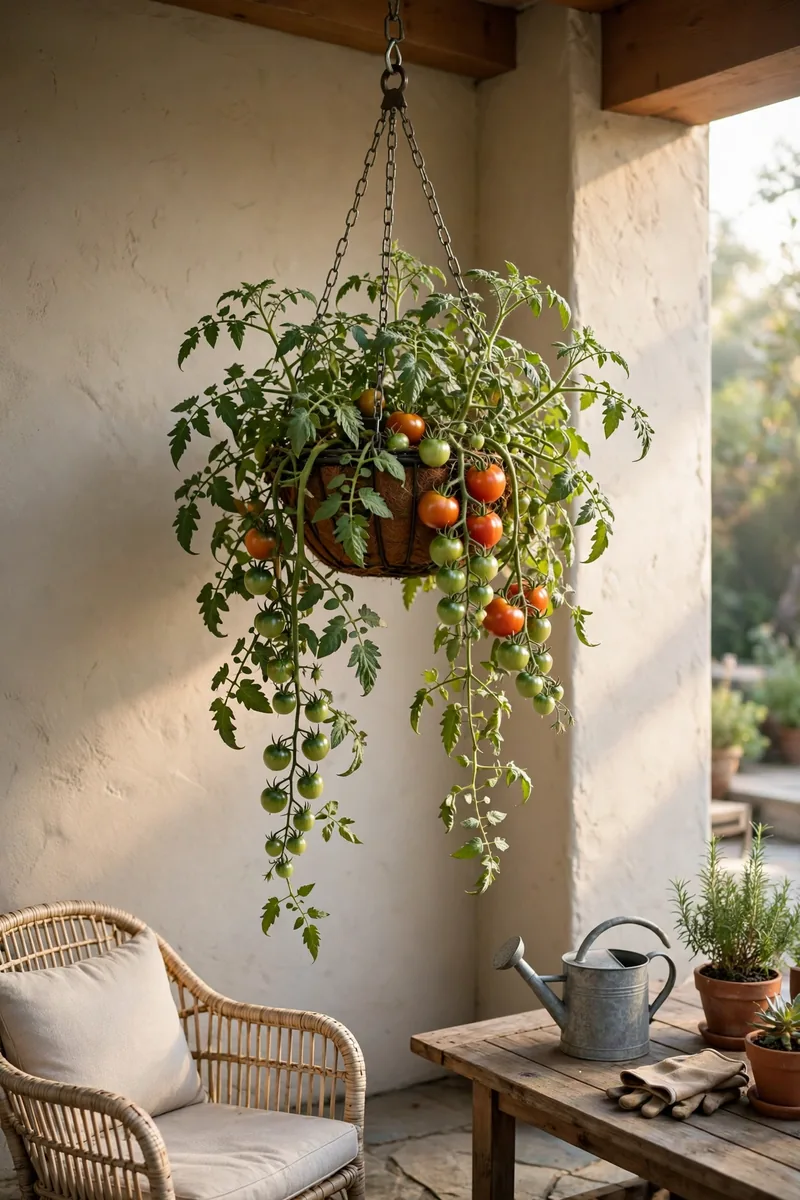
8. Turn a Hanging Basket Into a Trailing Tomato Planter
A hanging basket is a clever small space vegetable garden trick: it gives a trailing tomato space to spill over the edge. It can use an open corner above the ground, as long as the plant gets enough sun and stays within easy reach.
Choose a variety sold for hanging baskets. An upright tomato will not grow the same way.
- Use a basket with enough growing mix for the variety.
- Check that the hook and support can carry its full watered weight.
- Hang it where you can water and pick without stretching.
Leave space below and around the basket. Water can drip, and the stems will spread. Check moisture often because an exposed basket can dry out quickly.
🍅 Check before you hang it
- Confirm that the variety has a trailing habit.
- Check the basket, chains, hook, and mounting point together.
- Choose a spot away from seats and busy paths.
- Leave room to lift a watering can above the rim.
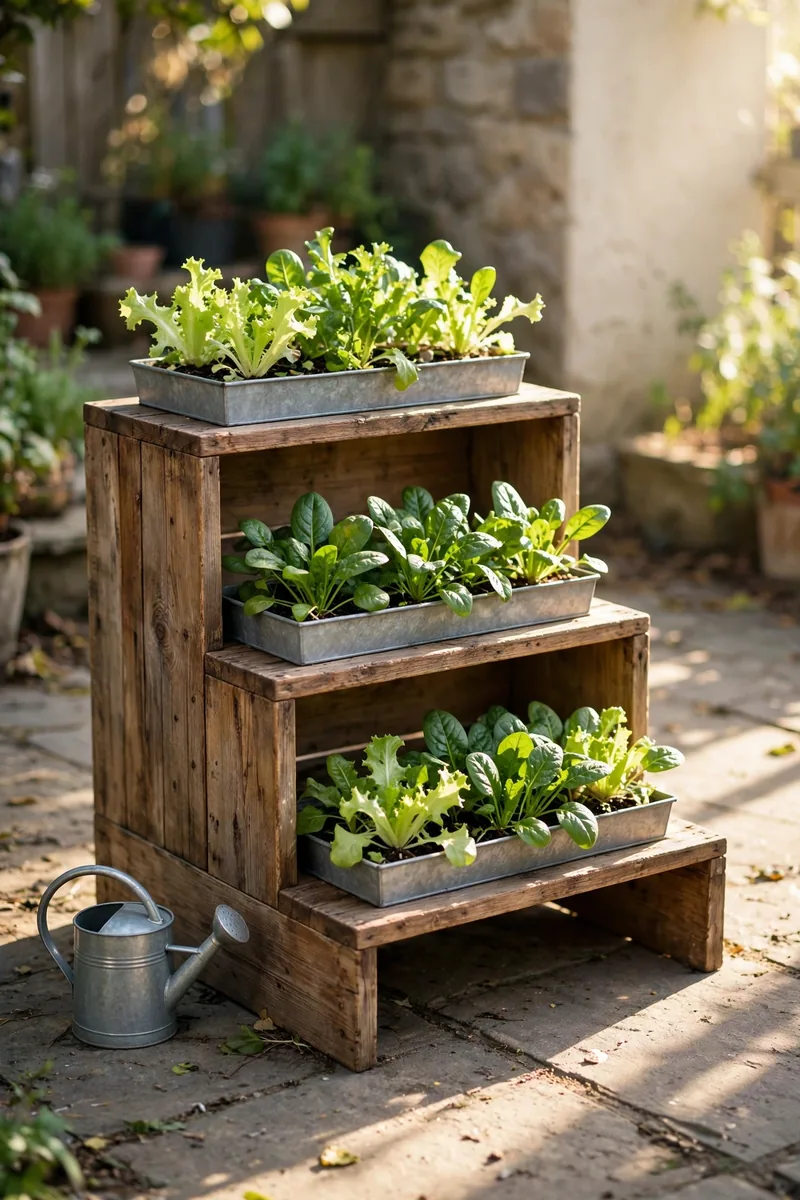
9. Stack Shallow Leafy-Green Planters on a Sunny Stepped Stand
A stepped stand is a workhorse for a small space vegetable garden: it can hold several planters in one corner. But stacking plants only helps if the lower rows still get light.
Choose an open stand with shelves that sit back from each other. Use containers deep enough for your chosen leafy greens, and keep the largest plants where they will not cover the others.
- Face the open side toward the available light.
- Leave room above each planter for leaves and watering.
- Use a sturdy stand rated for the weight of wet containers.
Look at the bottom row as the plants grow. If leaves above shade it heavily, move a planter. A full shelf is less useful than a healthy crop.
🌿 Leave each row open to the light
Side-view plan for a stepped stand. The open side faces the light.
Keep leaves clear of the row below.
Leave space to reach the soil.
Check for shade as plants grow.
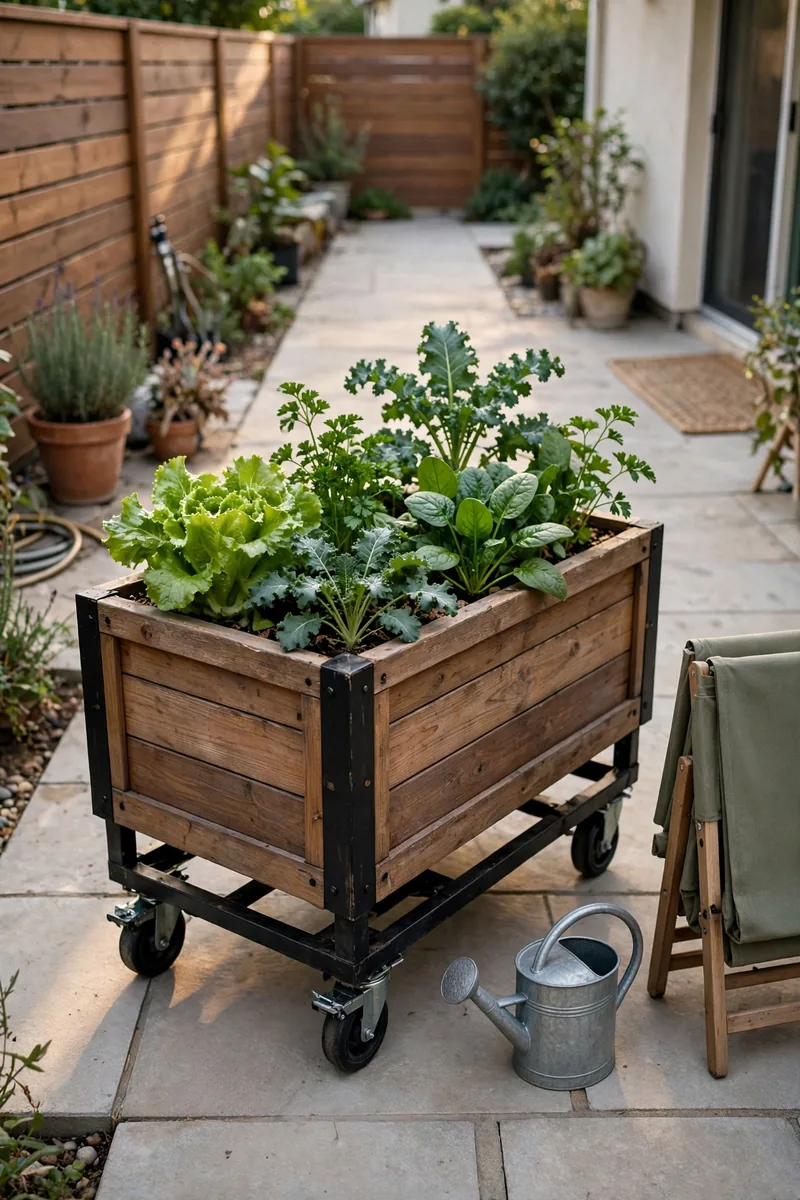
10. Roll a Vegetable Planter Out of the Way When You Need the Patio
A planter on wheels can make a small space vegetable garden easier to share on a small patio. Keep it in a good growing spot most days, then move it when you need access to a chair or table.
Use a stable planter with wheels rated for the full load, including wet soil. Locking wheels help it stay put while you work.
Before filling it, test the route:
- Is the surface firm and level?
- Are there steps, gaps, or door tracks in the way?
- Can you move it without hitting nearby plants?
Move slowly, and keep tall growth supported. Wheels help with access, but they do not make a heavy planter safe to push down a slope.
⚠️ Check more than the wheels
Check the load rating of the whole planter or wheeled base. Keep drainage holes clear, lock the wheels when parked, and leave exits open. For balconies, confirm the allowed load before adding a large container.
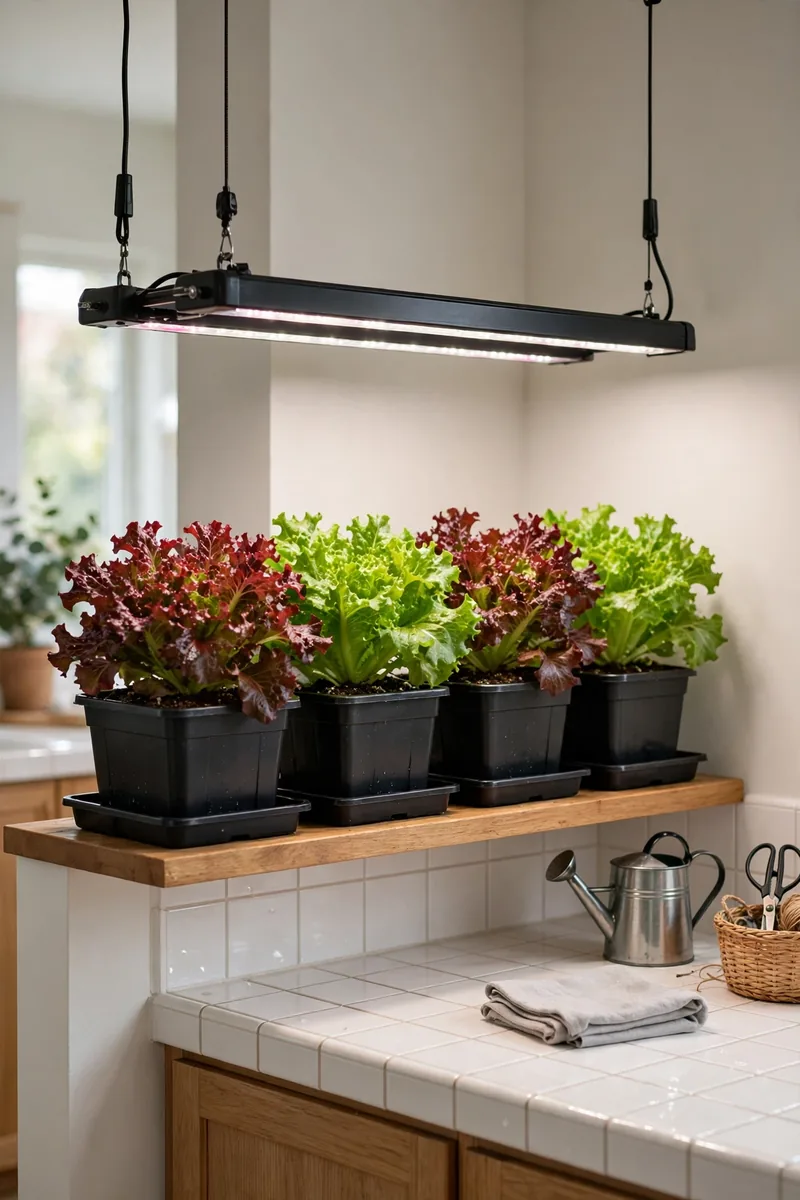
11. Build an Indoor Salad Shelf With Grow Lights
An empty shelf can become a small space vegetable garden indoors when you add suitable grow lights. This gives you a growing option even when your windows do not provide enough light.
Start with one shelf and a few containers of leaf lettuce. Choose lights made for growing plants, then follow their guidance for height and daily running time.
- Use containers with drainage and trays to catch water.
- Leave space for air to move around the leaves.
- Keep plugs and electrical connections away from water.
Check the plants as they grow. Raise adjustable lights when needed, and empty standing water from the trays. Keep the setup easy to reach for daily checks.
🌱 Indoor shelf setup
Light
Use an adjustable fitting so you can change its height as the leaves grow.
Water
Take care when watering. Keep runoff inside a tray and away from electrical fittings.
Access
Leave enough space to remove each container without catching the leaves.
12. Grow Microgreens on a Small Kitchen Shelf
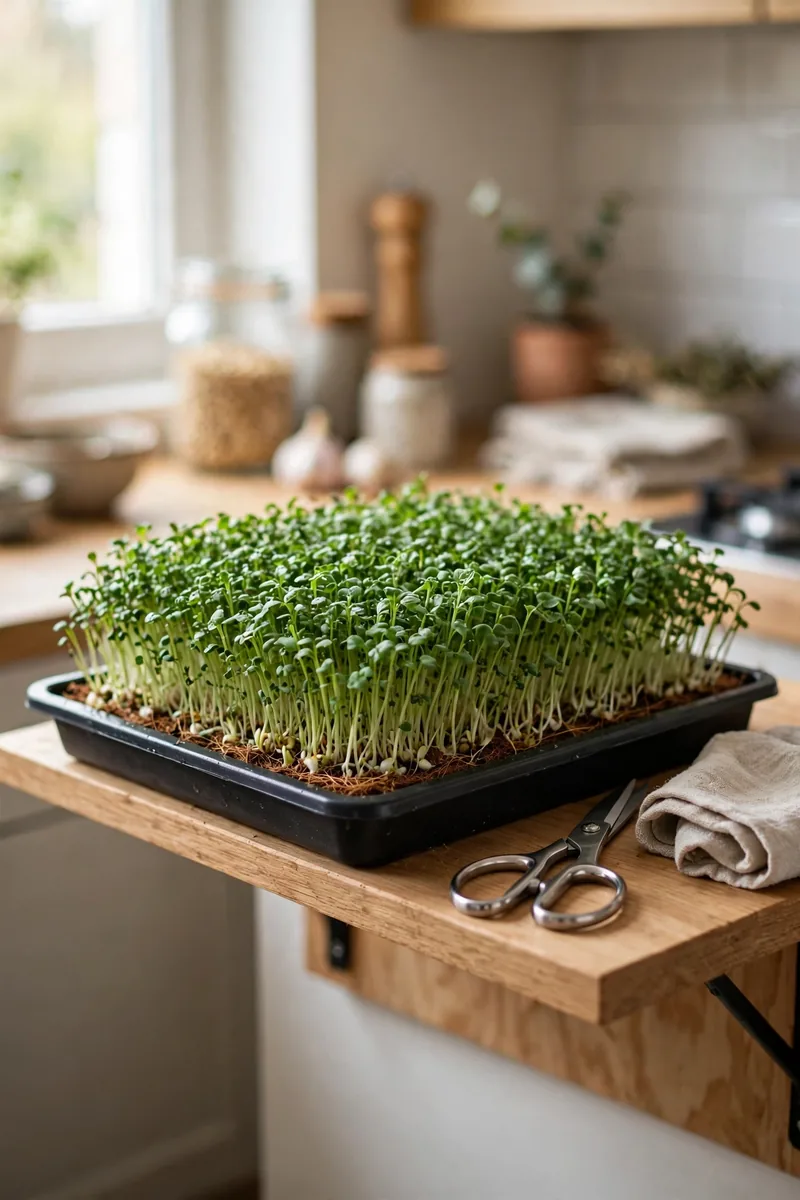
Microgreens let you grow a small crop in a small space vegetable garden without finding room for full-sized vegetables. You harvest the young shoots, so a shallow tray can fit on a bright kitchen shelf or under a grow light.
Choose seeds sold for growing edible microgreens. Use clean trays and follow the seed supplier’s growing directions.
- Sow into a suitable growing medium.
- Keep it moist without leaving it soaked.
- Give the seedlings the light and airflow they need.
- Cut the shoots with clean scissors when ready.
Start with a single tray so you can learn how quickly it dries. Discard any batch that develops mold or an unusual smell.
💡 Make the next tray easier
Keep a note of the seed type, sowing date, and how the tray grew. Change one thing at a time when you sow again.
13. Plant Quick Radishes Between Slower-Growing Vegetables
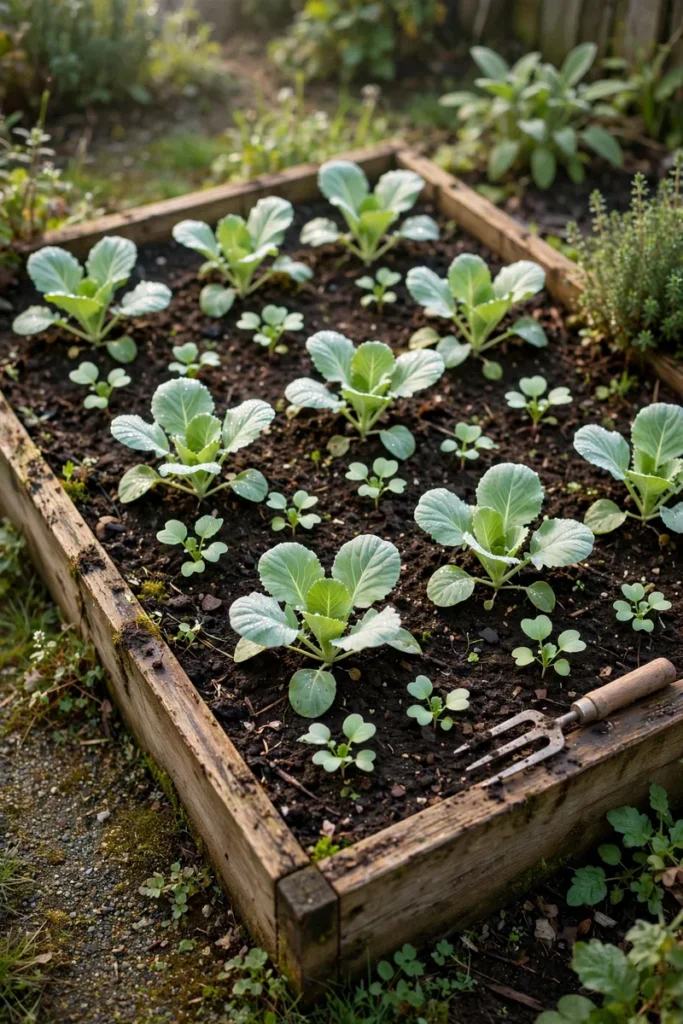
Bare soil between young vegetables is easy to overlook in a small space vegetable garden. A quick radish crop may fit between slower plants before their leaves spread out.
Check the growing times and spacing for both crops first. This works only when you can harvest the radishes before the main crop needs that space. Follow the sowing season on the packet too.
- Leave the main vegetables at their full recommended spacing.
- Sow a small row of radishes in the open gap.
- Harvest on time instead of letting the row become crowded.
A few radishes between young cabbages can be a useful trial. Keep the first planting small so you can see how the crops grow together.
🌱 Use the gap for a short crop
Start
Sow only where young plants leave enough light and root space for a small radish crop.
Watch
Check the radishes as the main crop spreads. The gap will not stay open forever.
Clear
Harvest before the larger plants crowd the row. Do not leave extra plants squeezed in.
14. Sow Lettuce in Small Batches Instead of Filling Every Pot at Once
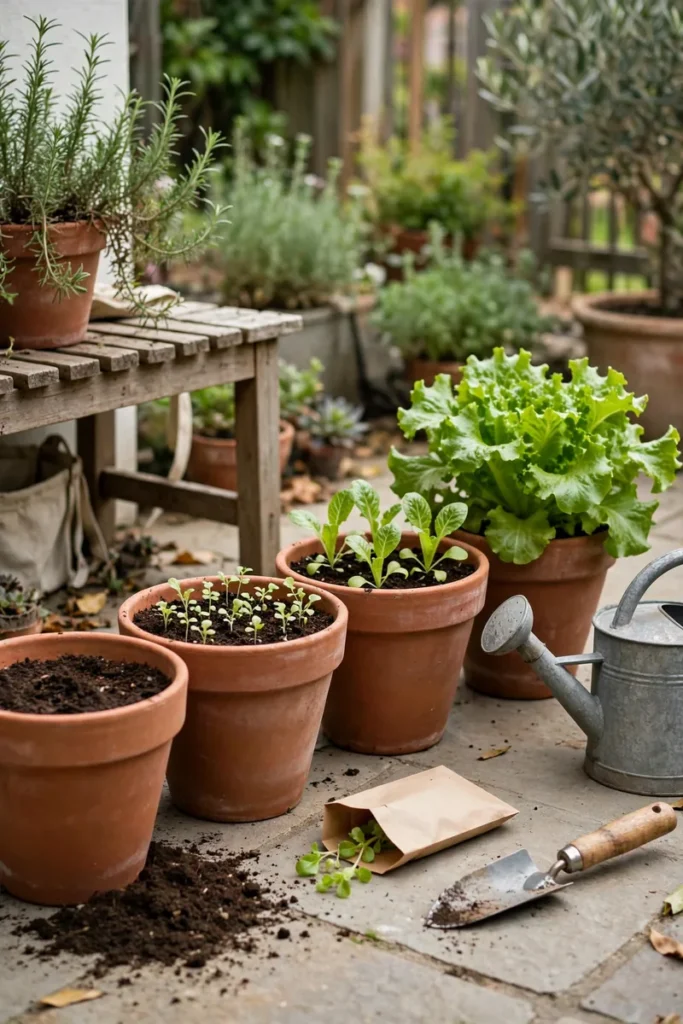
In a small space vegetable garden, several pots planted on the same day can leave you with more lettuce than you need at once. Small batches help spread the work and the harvest.
Sow one container first, then start another batch later. Choose the gap between sowings using the variety, season, and how much your household eats. Growth will change with the weather.
Keep a simple record:
- When you sowed each batch.
- Which variety you used.
- When you started picking.
You do not need to fill every pot straight away. An empty container gives you room for the next sowing. Our balcony and windowsill pot planner can help you map out which containers hold each batch. If one batch grows slowly, adjust the plan instead of following a fixed calendar.
| Batch | Write a short name or number for each pot. |
|---|---|
| Sown | Record the date and variety. |
| Picked | Note when picking began and whether you wanted more or less. |
15. Replace Finished Peas With a Crop for the Next Season
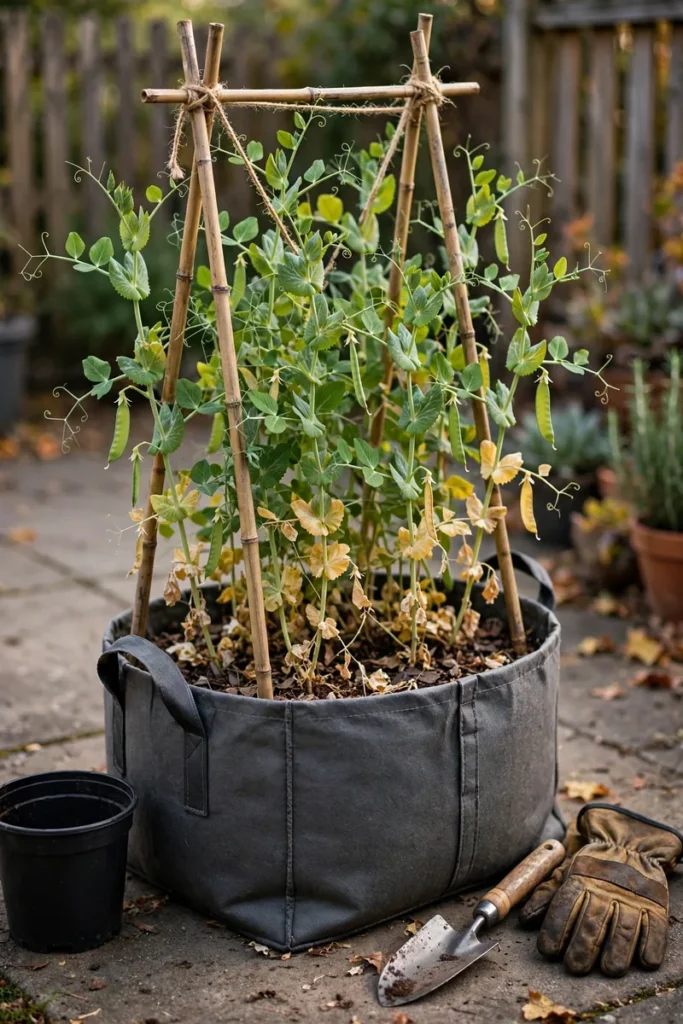
In a small space vegetable garden, a container can grow more than one crop during the year. Once your peas finish, you may be able to use the same space again rather than leave the pot empty.
Choose the next crop for your local season. There is no single planting order that suits every climate.
- Remove the finished pea plants and check for signs of disease.
- Check the remaining growing mix and refresh or replace it as needed.
- Add suitable nutrients using the product directions.
- Sow or plant a crop that fits the coming weather.
Healthy soil and the right timing matter more than filling the pot quickly. Avoid putting new plants into mix that may carry disease.
🌱 Plan the next use
Check the season
Look up local sowing times before buying the next seeds.
Check the mix
Deal with drainage or plant-health problems before planting again.
Check the crop
Match the new plant to the container depth and available light.
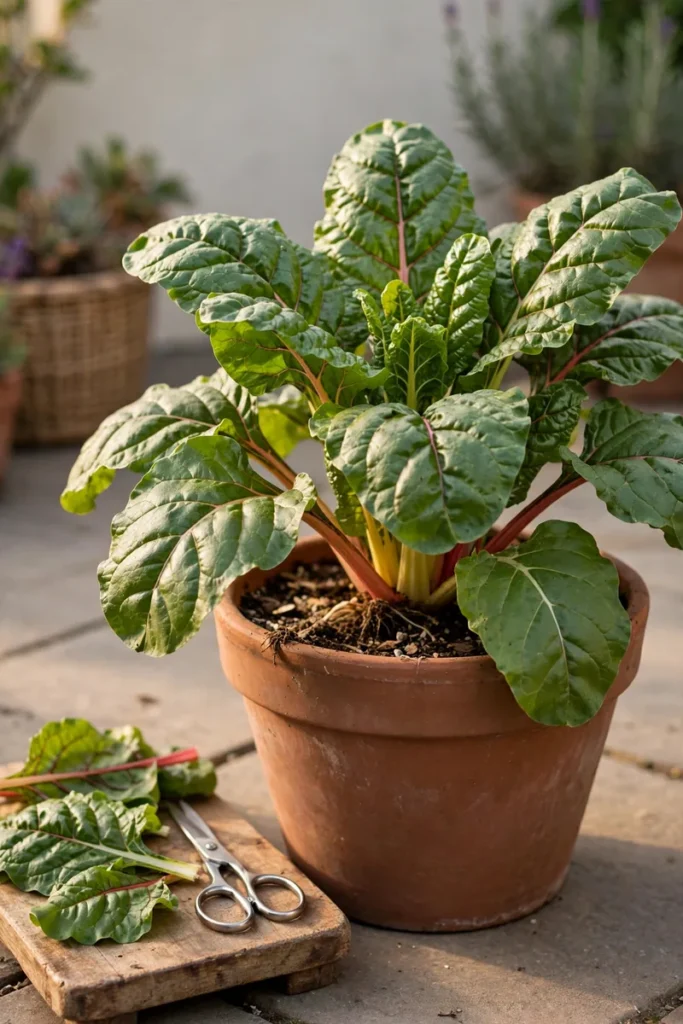
16. Harvest Outer Leaves From Chard to Keep One Pot Producing
A pot of chard can keep a small space vegetable garden producing for months: you do not need to cut down the whole plant for one meal.
Let the plant grow strong enough before harvesting. Then take a few outer leaves and leave the small leaves in the middle to keep growing. Avoid stripping most of the plant at once.
- Use clean scissors or a clean knife.
- Keep cuts away from the central growing point.
- Let the plant recover before taking more.
Check moisture and feed as needed for container growing. A few leaves for dinner may be a better use of a small pot than waiting for one large harvest.
✅ Leave enough plant to grow
- Check: The plant is well established before you start picking.
- Pick: Take only what you need from the outside.
- Keep: Leave the center and plenty of healthy leaves in place.
- Wait: Give the plant time to grow before another heavy picking.
17. Give a Compact Summer Squash Its Own Corner Container
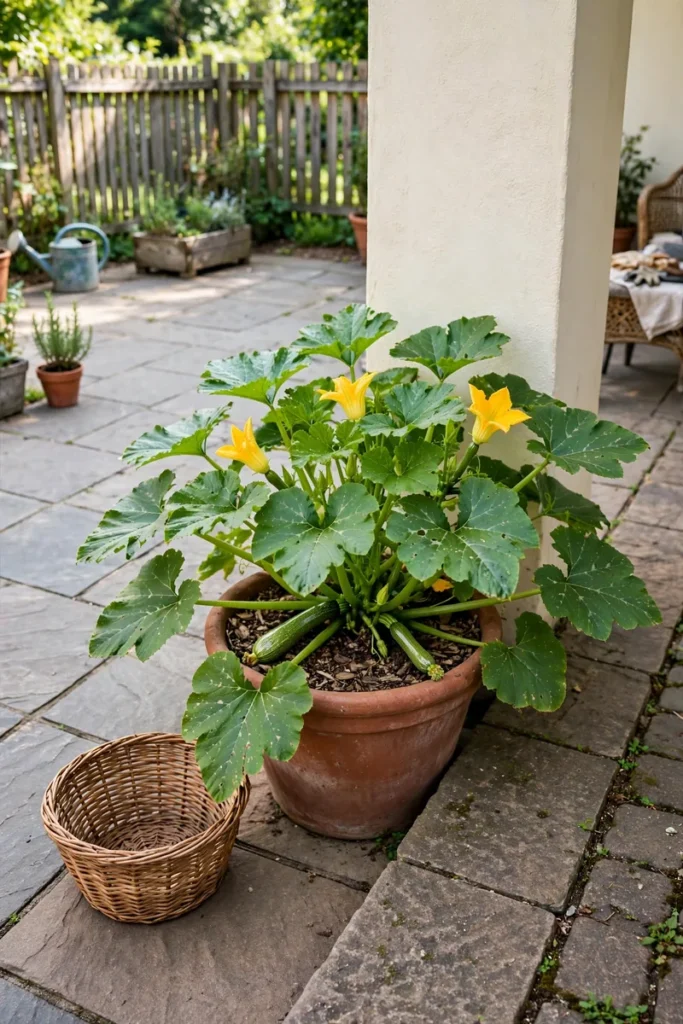
In a small space vegetable garden, one squash plant can take up more room than you expect. Its pot may fit in a corner while its leaves spread across the path.
Choose a compact bush variety and check its mature spread before buying it. Use a large container that meets the variety’s growing needs. Give the plant its own space rather than squeezing smaller pots around the base.
- Keep the leaves clear of the main walkway.
- Leave room to reach the soil for watering.
- Check beneath the leaves for young squash.
A sunny corner can work if there is enough space around it. If the full-grown plant will block access, choose a smaller crop instead.
🌱 Check the fit before planting
Below the leaves
The container needs enough room for the roots and suitable drainage.
Around the leaves
Allow the mature spread listed for your variety.
Beside the plant
Keep a clear place to stand while watering and picking.
18. Reserve Your Best Growing Space for Vegetables You Actually Eat
The best crop for your small space vegetable garden is one you will use. A vegetable can grow well and still take up space that would serve you better with something else.
Think about what you cook each week. Then compare that list with your light, growing season, and container sizes.
Ask yourself:
- Will I pick this often enough?
- Do I enjoy eating it?
- Does it fit the space when fully grown?
- Can I give it the care it needs?
Start with a few useful crops instead of a long shopping list. Keep notes after each season. If a plant gave you little food or too much work, try something else next time.
| You eat it often | Keep it on your shortlist if the space and season suit it. |
|---|---|
| It needs more room than you have | Look for a suitable compact variety or choose another crop. |
| You rarely cook with it | Try a small amount first before giving it your best spot. |
Start Your Small Space Vegetable Garden With One Growing Spot
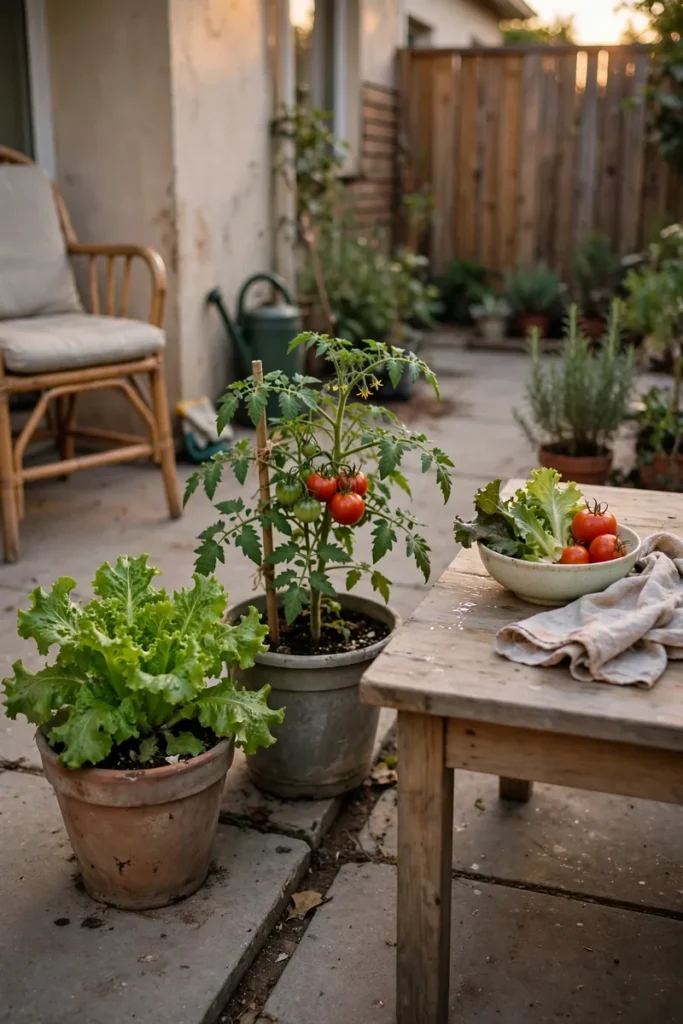
You do not need to try all these small space vegetable garden ideas at once. Choose one sunny spot, one suitable container, and a crop you enjoy eating. Leave room to water and pick, then watch how the plants use the space as they grow.
Your first season will help you see what fits your home and routine, and how your small space vegetable garden changes with the seasons. You may need a deeper pot, fewer plants, or a better place for the light. Make those small changes as you learn.
Save this list on Pinterest so you can come back when you are ready to plant your next pot.