
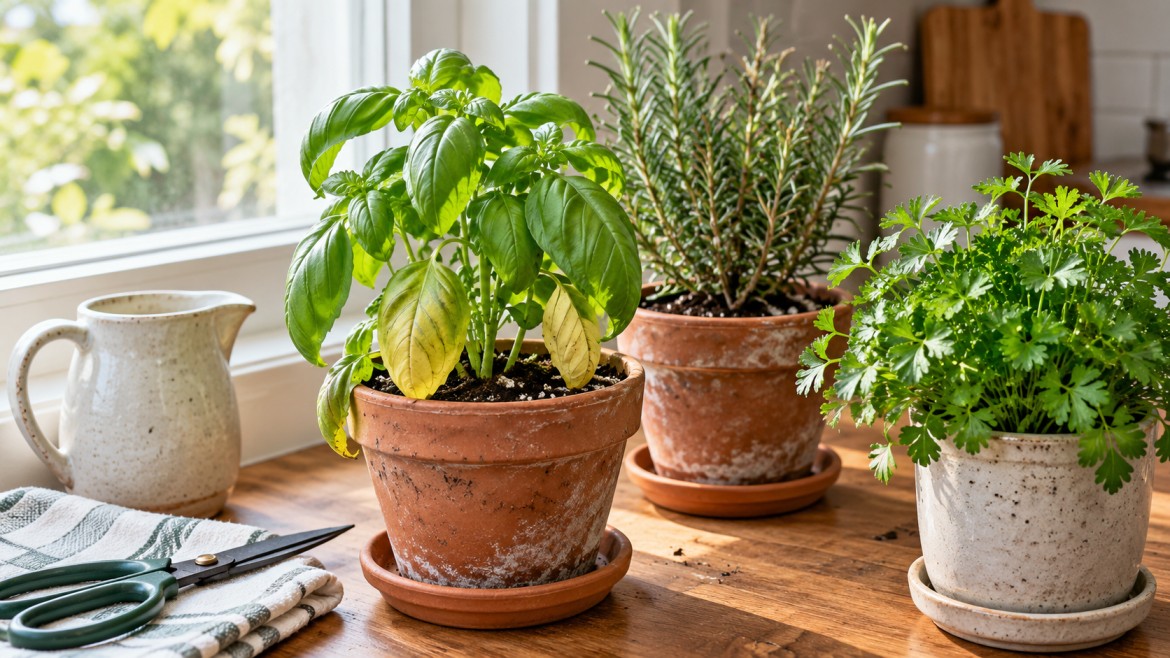
You bring home a fresh pot of basil, set it beside the kitchen window, and picture picking leaves for dinner. A week later, the stems lean toward the glass and the lower leaves turn yellow. If you’re wondering, “why are my indoor herbs dying,” the next step is to check what is happening around the roots and leaves.
Several problems can look alike. A thirsty herb may droop, but a plant sitting in wet potting mix can droop too. Weak light, trapped water, pests, and heavy harvesting can also leave a once-full pot looking tired.
The checks below will help you narrow down the cause and choose a useful fix. You’ll learn when to water, when to hold back, and which growing conditions need attention before you pick more leaves.
Begin with one plant and work through the checks in order. Recovery depends on the herb and the damage already done, so watch for healthy new growth rather than expecting every damaged leaf to recover.
The active time is a planning estimate. Repotting, pest treatment, and equipment setup take extra time. There is no fixed recovery deadline.
What You Need
Begin with what you have. Buy replacement supplies only when a check shows they are needed.
For checking and basic care
- Your herbs and any plant labels you still have
- A sink or waterproof tray
- A jug or small watering can
- A cloth for spills
- A phone or notebook for recording changes
- Clean scissors or herb snips for later harvesting
Only if a problem calls for them
- A flashlight or magnifying glass for inspecting pests
- A room thermometer for checking temperature extremes
- A clean pot with drainage holes and a matching saucer
- Fresh potting mix suited to container herbs
- A suitable grow light and timer
- Fertilizer with directions for edible container plants
- Replacement seeds or a healthy young herb plant
Identify your herb and its symptoms
Basil, rosemary, mint, and thyme do not all need the same care. Confirm your herb’s name from its label if you still have it. Keeping different herbs in separate pots makes their watering needs easier to manage.
Look at the whole plant. Are the lower leaves yellow, the tips brown, or the stems thin and leaning? Note when the change began and whether you recently moved, watered, fed, or heavily harvested it. Take a clear photo for comparison. These details help narrow down the cause without guessing from one leaf.
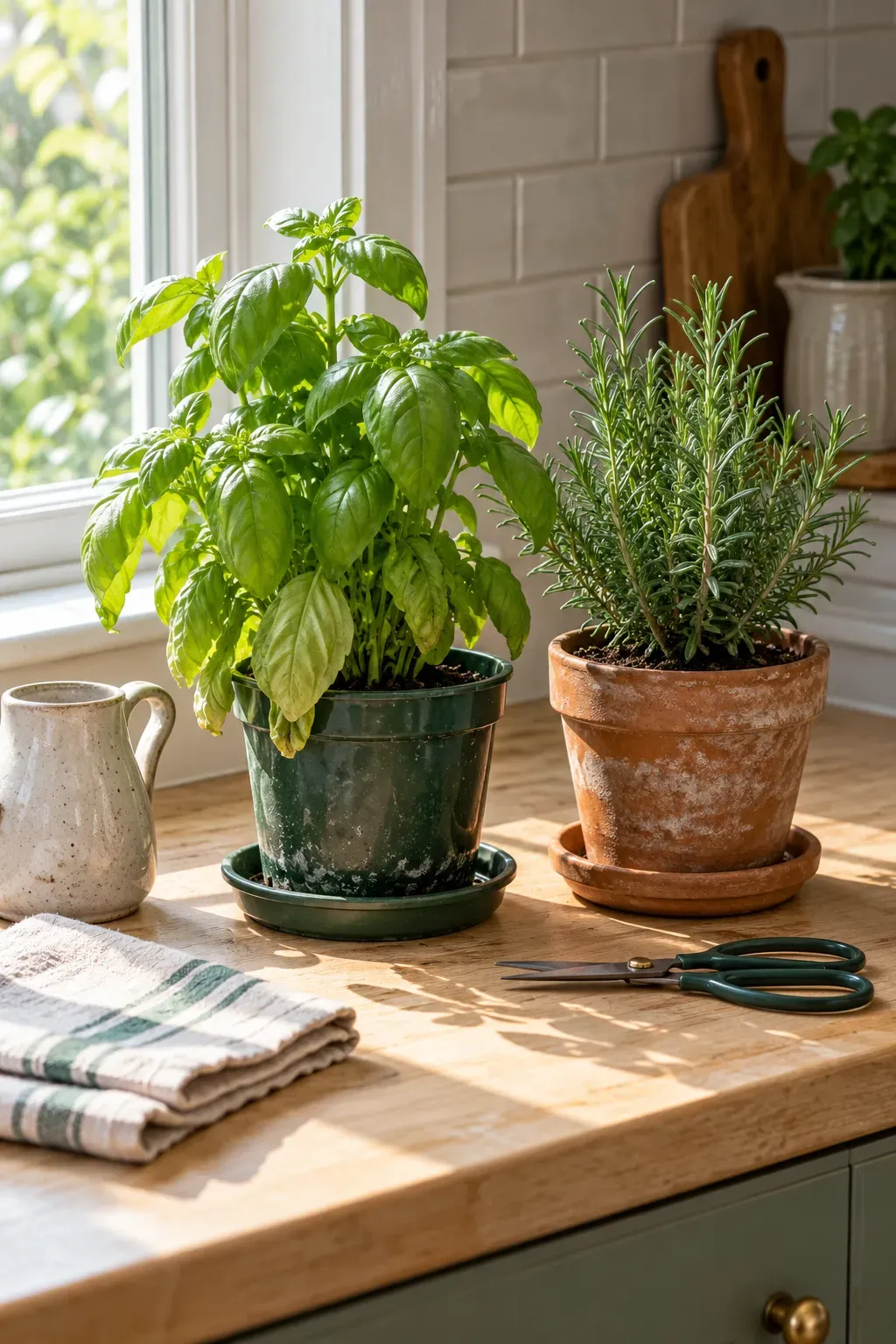
Check the potting mix before adding water
Before reaching for the watering can, gently feel the potting mix below the surface near the edge. Avoid digging through roots. Lift the pot as well; its weight becomes a useful clue once you know how it feels wet and dry.
Wet mix means you should pause watering and check drainage. Dry mix points toward a need for water, but the next decision still depends on the herb. A pale surface can hide moisture below it, so do not rely on color alone.
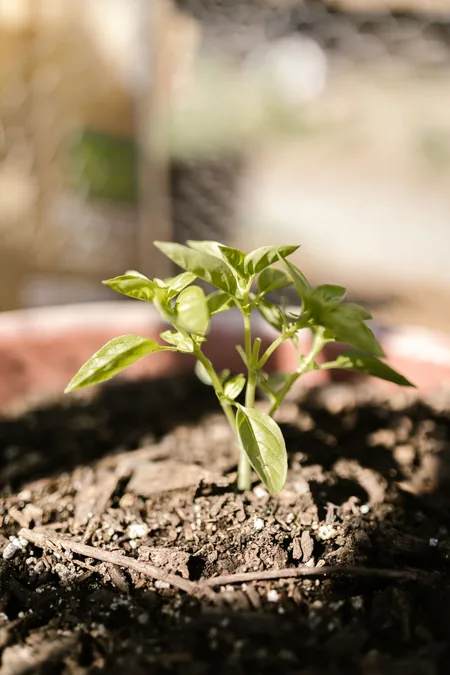
Check where excess water can escape
Water needs a way out of an ordinary pot filled with potting mix. Check the base over a sink or waterproof tray. The drainage holes should be open, and the pot should not be standing in collected water.
Empty the saucer or decorative outer pot. If the growing pot has no drainage holes, plan to move the herb into a suitable pot that does. Adding less water cannot reliably make up for a container that traps it.
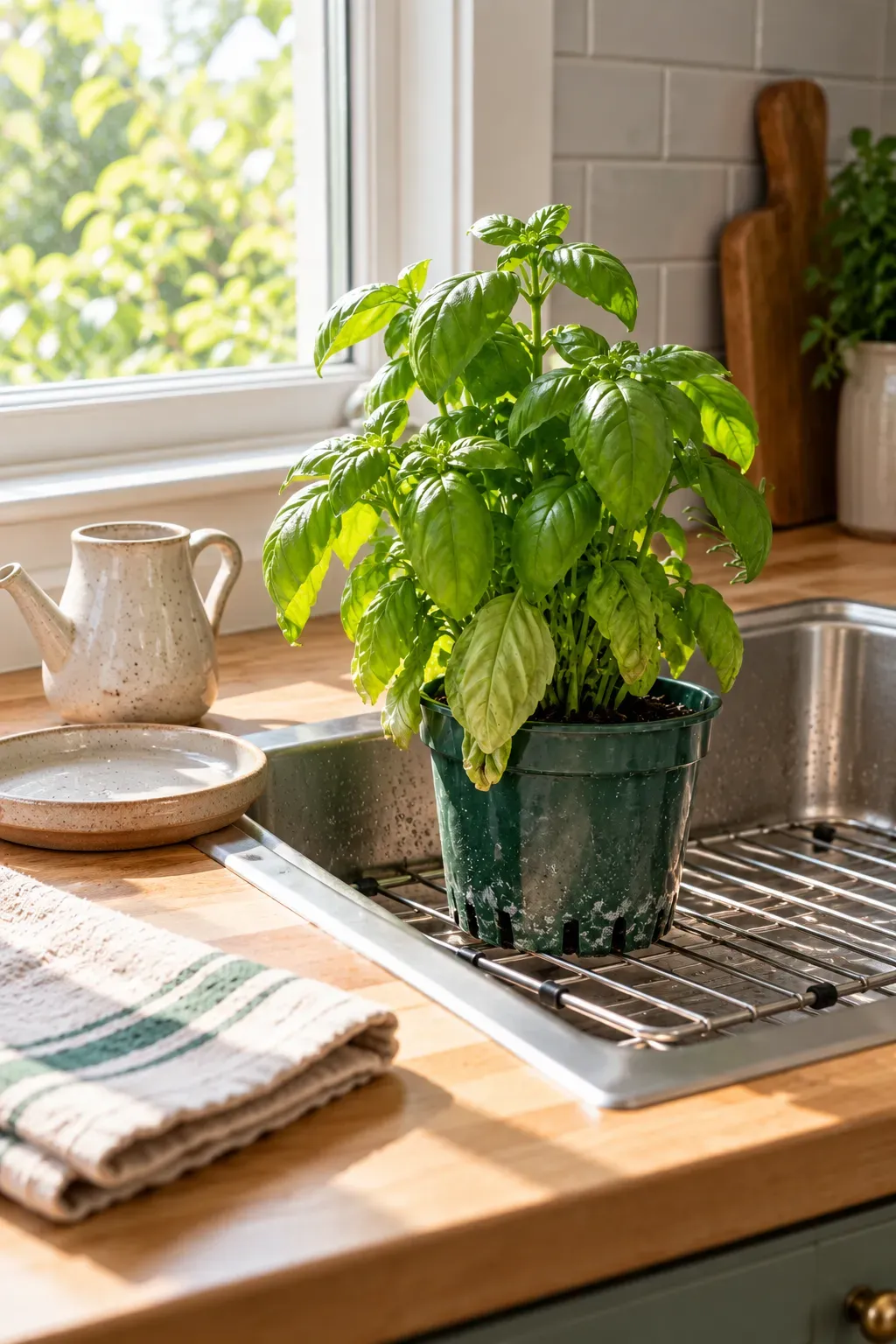
Match watering to your herb’s needs
A fixed watering day can leave one herb thirsty and another too wet. Basil and mint generally prefer more even moisture; thyme, oregano, and sage need the mix to dry more between waterings. Rosemary also needs good drainage, but its root ball should not become completely dry.
When watering is needed, pour slowly over the mix until excess water drains from the base. Let it drain fully before returning the pot to its place. Check moisture again before the next watering; avoid giving every pot the same amount.

Improve the light reaching the leaves
Thin stems leaning toward the window can point to weak light. Look at the leaves’ actual position: a bright kitchen does not mean enough light reaches a pot behind a curtain.
Choose a sunnier position, introducing stronger direct sun gradually. If window light is limited, use a suitable grow light for 12–16 hours daily, with darkness overnight. Follow the fixture’s guidance for distance above the plants; different lights have different strengths.
Move herbs away from temperature extremes
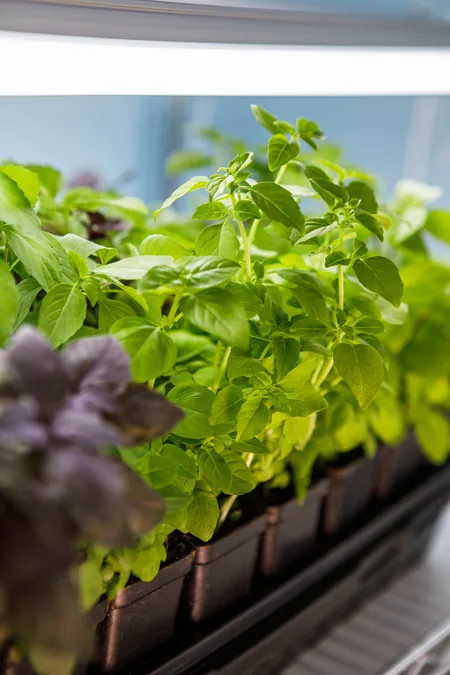
Cold glass, hot afternoon sun, and air blowing from a vent can make a windowsill harder on herbs than the rest of the room. Basil is especially sensitive to cold.
Set pots where leaves cannot touch cold panes and heating or cooling vents do not blow directly over them. Keep enough light at the new spot. If the temperature seems uncertain, place a room thermometer beside the pots and check it during the coolest and warmest parts of the day.
Inspect leaves and stems for pests
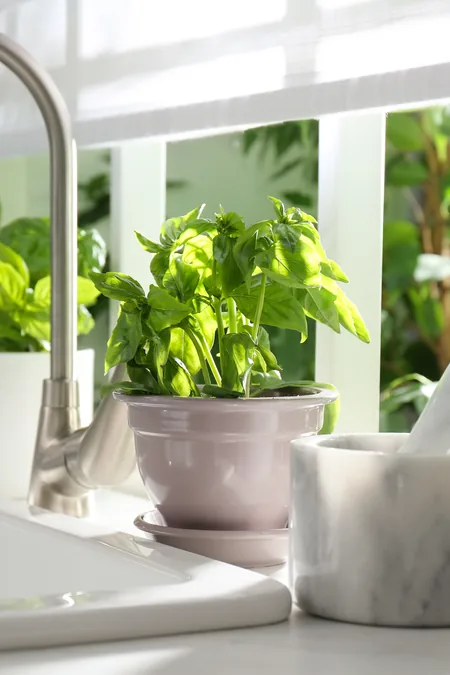
Tiny pale speckles, sticky patches, or fine webbing deserve a closer look. Check leaf undersides and tender shoots with a magnifying glass if needed. These clues can help you spot pests, but identify what you find before choosing treatment.
Move an infested pot away from other plants. For a small aphid infestation, gently rinse the leaves over a sink while protecting the mix from becoming soaked. Recheck the plant afterward; one rinse may not remove every insect.
Adjust feeding to the plant’s growth
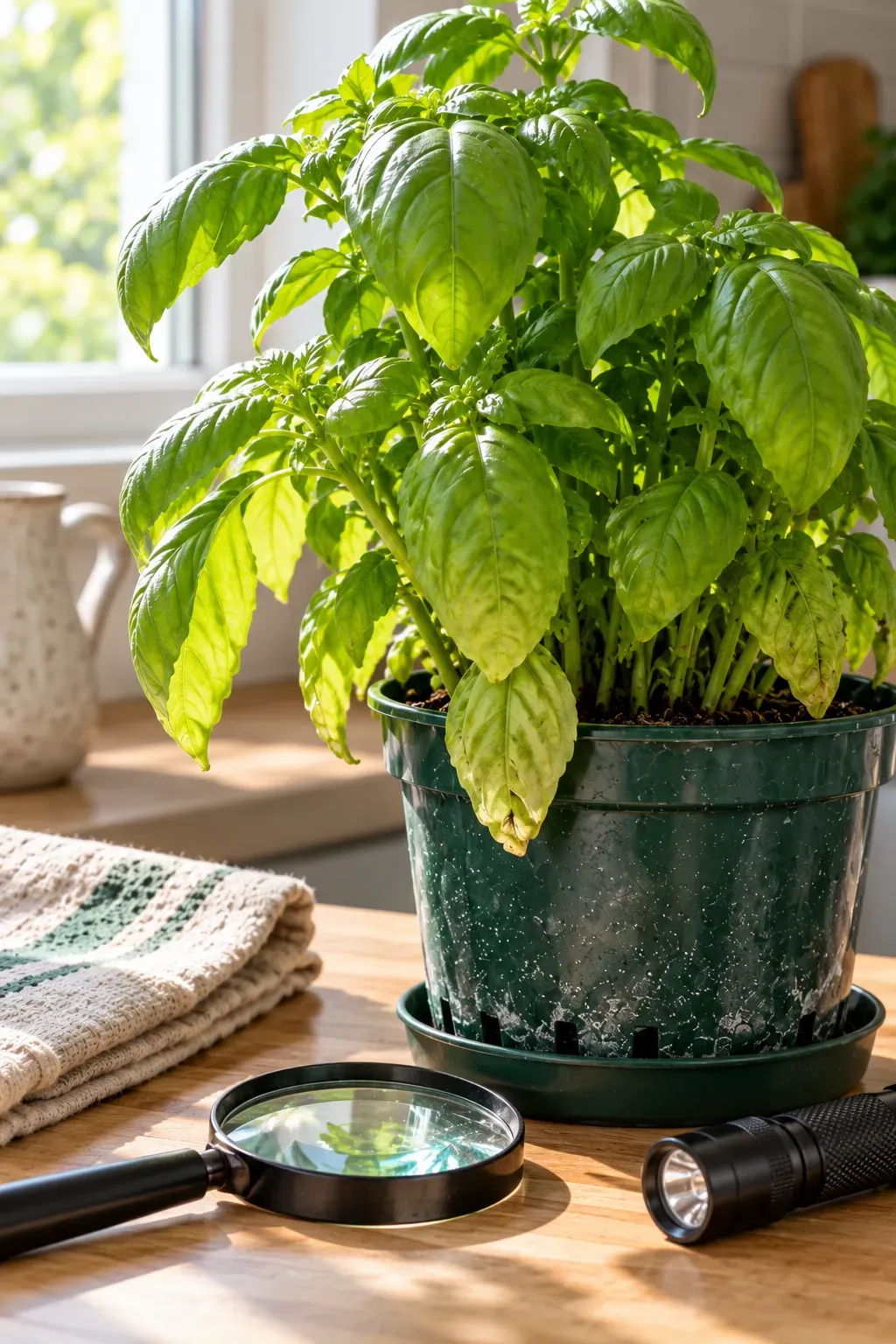
Yellow leaves do not automatically mean a herb needs fertilizer. Wet roots and poor light can produce similar symptoms. Correct those problems before feeding a stressed plant.
If the herb is growing and needs nutrients, use a fertilizer suited to edible container plants at the label’s rate and frequency. Check whether the potting mix already contains fertilizer. Adding more on top can damage roots. Reduce or pause feeding when growth slows, rather than keeping the same schedule all year.
Reduce harvesting while plants recover
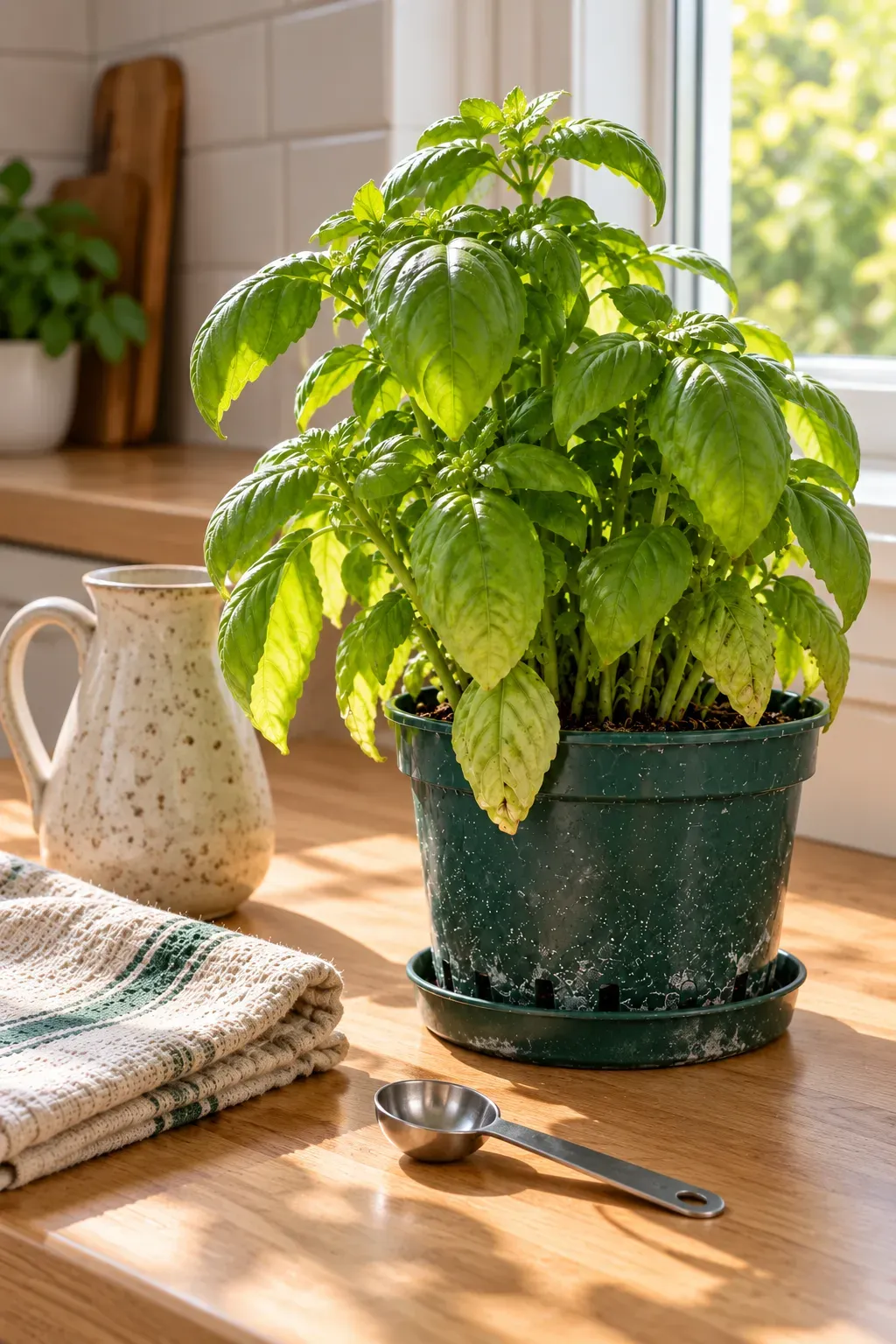
Leave healthy green leaves on a weak herb so it can keep making food from light. Pause picking if the plant is wilting, losing leaves, or barely growing.
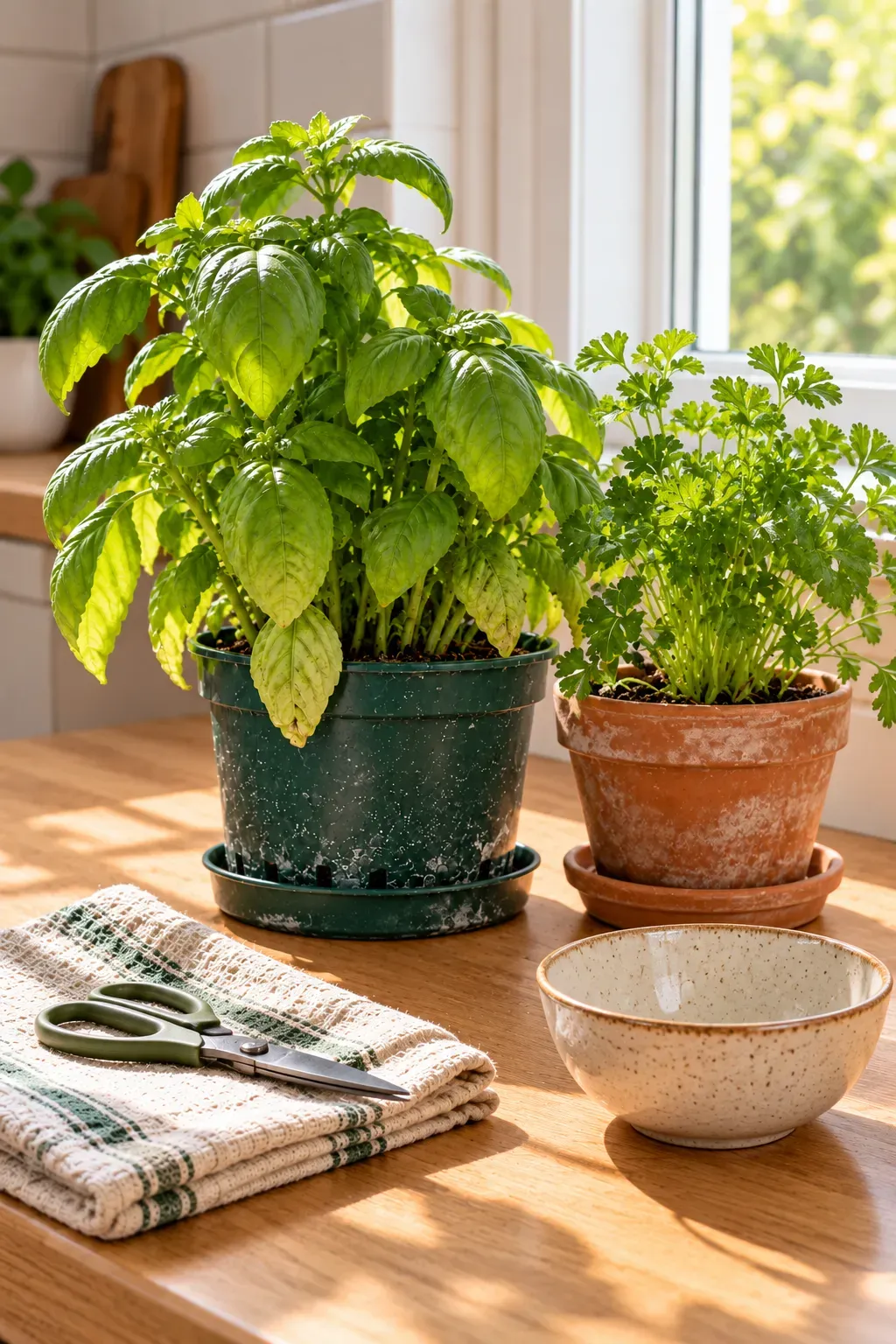
Once fresh growth is steady, take small amounts. For basil, snip a stem above a healthy pair of leaves. For parsley, remove selected outer leaf stalks near the base while leaving the center growing. On rosemary and thyme, take small leafy tips and avoid cutting into bare old wood. Keep enough foliage for the plant to continue growing.
Track new growth before making more changes
Fresh leaves and steady growth are more useful signs than the appearance of an old brown leaf. Dead leaf tissue will not turn green again. Compare your plant with the photo you took earlier, and note changes in moisture, leaf loss, and new shoots.
Keep checking the conditions you corrected. Avoid adding fertilizer or more water merely because recovery seems slow. If decline continues, revisit the diagnosis. A plant with a rotting stem base and mostly soft, decaying roots may need replacing. Correct the growing conditions before bringing in its replacement.
