

A pot can look roomy at the garden center and feel crowded just a few weeks after planting. The tomato leans into the walkway, the mint spreads through its neighbors, and the pretty herb bowl holds plants that need very different amounts of water. Small details like these can make a container garden harder to care for than you expected.
These container gardening ideas start with the things that help a planting work: enough root space, useful drainage, plants suited to the light, and room to reach in with a watering can. There are options for growing food, adding flowers, and arranging pots without giving up the whole patio.
You do not need to build every setup or buy matching planters. Start with one idea that fits the spot you have and the time you can give it. A lettuce trough beside the back door or a few well-placed herb pots can be a useful first step. Each idea includes a practical detail to help you plan before you fill the container.
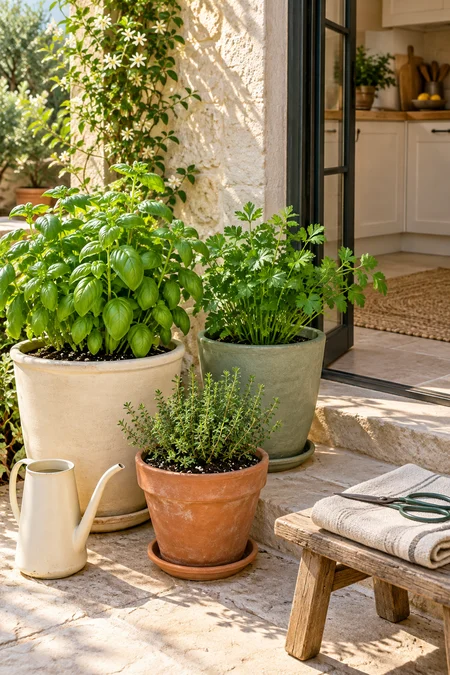
Container gardening ideas: keep everyday cooking herbs in separate pots near the kitchen
The herbs you use most deserve a spot you can reach without stepping around patio furniture. Set basil, parsley, and thyme in separate draining pots near a sunny kitchen door.
- Give each plant enough space to grow beyond its nursery pot.
- Arrange the pots so you can reach the mix with a watering spout.
- Check moisture in each container instead of watering the whole group automatically.
Separate pots let you respond when basil needs water but thyme is still damp. Keep any saucers accessible so you can empty them after watering or rain.
🌿 Same doorstep, different watering checks
Basil
Check more often during warm, breezy weather. Avoid letting the whole root ball dry out.
Parsley
Aim for steady moisture with free drainage. A damp surface does not always tell you what is happening below.
Thyme
Let the upper mix dry between waterings. Keep the pot from sitting in collected water.
2. Grow Cut-and-Come-Again Lettuce in a Wide Trough
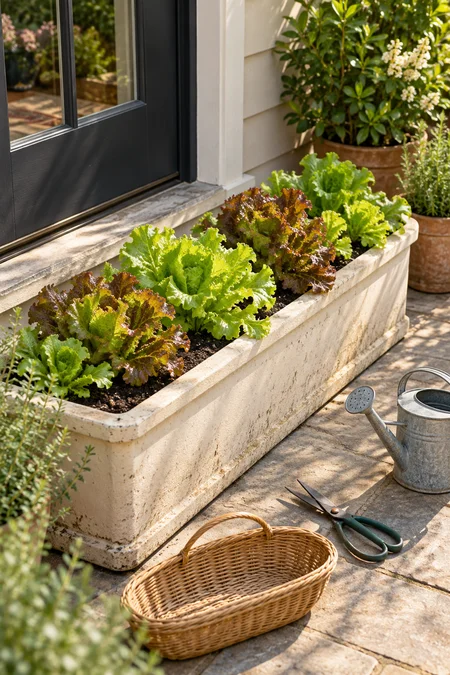
A wide trough makes it easy to grow loose-leaf lettuce within reach of the back door. Choose a container with drainage holes and enough depth for roots, then leave space between plants rather than packing in a full nursery tray.
Keep the setup useful:
- Place it where you can reach the whole row.
- Check moisture regularly as the leaves fill out.
- Grow during suitable cool weather, with protection from strong afternoon heat when needed.
Pick a few outer leaves from established plants for small salads. Growth slows in poor conditions, so leave enough foliage for the plants to recover.
🥬 A gentle lettuce harvest
Choose an established plant with several healthy leaves.
Remove a few larger outer leaves. Leave the small center leaves and growing point intact.
Move to another plant, then allow fresh growth before returning for more.
3. Give a Compact Tomato Its Own Large Planter and Cage
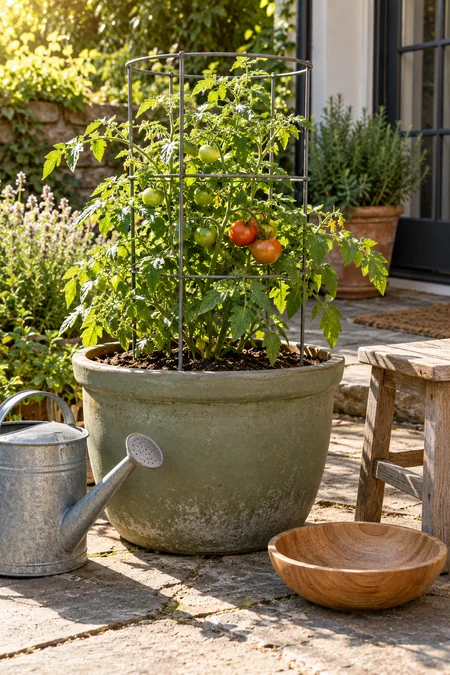
One well-supported tomato can be easier to manage than several plants squeezed into a decorative tub. Choose a compact variety suited to containers, then match the planter size to that variety’s growing needs.
Set the cage in place at planting time, before roots spread through the mix.
- Position the pot where the tomato receives strong direct sunlight.
- Leave access around the rim for watering.
- Follow the fertilizer directions for container-grown vegetables.
A small nursery plant can quickly hide the soil beneath its leaves. Keep the watering spout within reach of the mix instead of spraying through the foliage.
✅ Give it room
- Choose a compact variety and a planter suited to its mature size.
- Secure an appropriately sized cage when planting.
- Leave the root space available for the tomato.
🚫 Avoid the squeeze
- Do not judge the final pot size by the tiny seedling.
- Avoid pushing supports through an established root ball.
- Skip adding extra plants just to fill visible soil.
4. Keep Mint Contained in a Standalone Pot
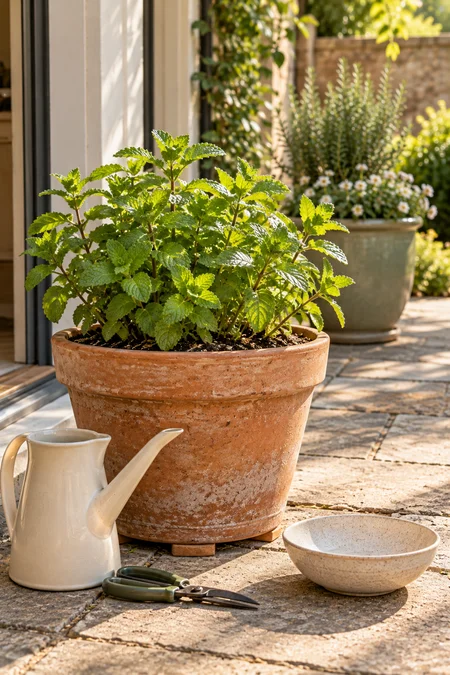
Mint can crowd out slower herbs when they share a container. Give it a pot of its own and place it on paving where you can see what grows over the rim.
Choose a draining container with room for its spreading roots. Keep the mix reasonably moist, and harvest tips regularly to encourage branching.
Check the edges: Lift trailing stems away from neighboring pots and watch for roots emerging below. Even a contained mint plant needs attention as it fills its space. Divide or repot it when roots become crowded rather than adding it to the shared herb bowl.
⚠️ A pot is only part of the boundary
Mint stems can root where they touch damp soil, and roots may escape through drainage holes. Keep the container away from garden beds and nearby pots, with its base and trailing stems easy to inspect.
5. Plant a Sunny Herb Bowl with Thyme and Oregano
Thyme and oregano can share a container because both suit sunny conditions and dislike staying waterlogged. Choose a broad bowl with drainage holes and useful root depth, rather than a thin decorative dish.
Plant modest starts with room between them. The open patches of mix make watering easier while the herbs settle in.
- Use a freely draining container mix.
- Let the upper mix dry between waterings.
- Trim spreading growth before one plant covers the other.
Keep this bowl separate from herbs that prefer steadier moisture. If oregano starts taking over, move it into its own pot.

6. Sow Short Carrot Varieties in a Deep Container
Choose a short-rooted carrot variety, then check that your container is deeper than its expected mature roots. A deep pot with a broad opening gives you room to sow without squeezing seedlings against the sides.
- Fill it with loose potting mix suitable for containers.
- Sow directly where the carrots will grow.
- Keep the surface gently moist while waiting for seedlings.
- Thin crowded seedlings to the spacing on the seed packet.
Carrot seedlings look small for a while, which makes it tempting to leave every one. Give them room early so the roots can develop without pressing together.
🥕 Check before sowing
Measure the usable soil depth, allowing space below the rim for watering.
Break up firm clumps and remove coarse debris that could obstruct young roots.
Use a gentle watering rose so small seeds stay where you sowed them.
Snip unwanted seedlings at the surface to avoid disturbing the roots you are keeping.

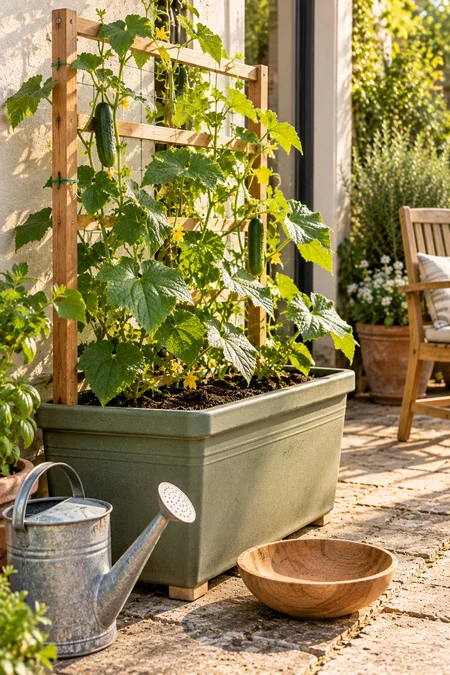
7. Train a Compact Cucumber Up a Planter Trellis
A cucumber grown upward leaves more patio space for a chair or a clear walking lane. Choose a compact vining variety suited to containers, since a bush type will not create the same climbing display.
Install a sturdy trellis when planting, and use a broad, substantial planter that can support both roots and climbing growth.
Keep the fruit within reach: Guide young stems toward the support with loose plant ties. Leave space to look behind the leaves, where cucumbers can hide. Check moisture often during warm weather, and follow the variety’s guidance for spacing and container size.
🥒 Plan the climbing space
Support position
Place the trellis near the back of the planter, with room for stems and watering access in front.
Picking access
Leave a gap behind the foliage so you can spot fruit without pulling the vines away.
Stable base
Use a securely fitted support and a sheltered position. Leaves catch more wind as the vine grows.
8. Grow Strawberries in a Broad Pot with Fruit Hanging Over the Rim
A few strawberries hanging over a pot’s edge are easy to spot when they begin to color. Choose a broad container with drainage holes and enough room for the variety’s recommended spacing.
Plant near the edges without cramming crowns against the rim. Let flower stems drape naturally as fruit develops.
- Keep the leafy crowns at the soil surface.
- Water the mix without leaving the pot standing in water.
- Remove unwanted runners if your goal is to maintain a compact planting.
Ripe fruit may attract birds and slugs, so check beneath the leaves as well as around the outside of the pot.
🍓 Set strawberry plants at the right level
Find the crown, the short thick section where leaves meet roots. Keep it at the finished soil surface.
Cover the roots with mix and leave room between plants for mature leaves and airflow.
Water gently, then check that settling has not buried the crowns or exposed roots. Let fruiting stems rest over the rim without bending them sharply.

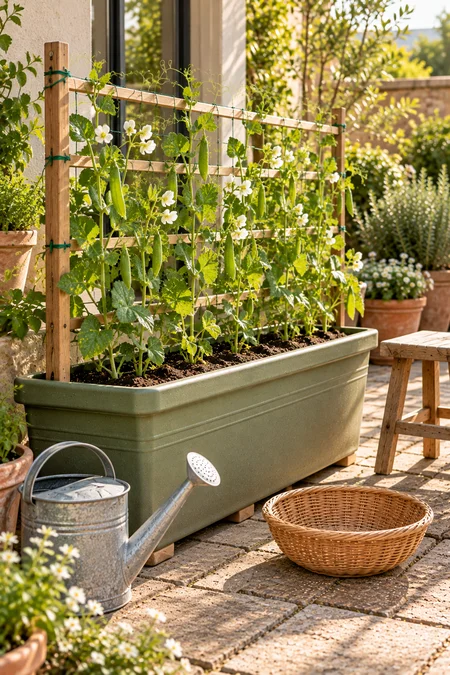
9. Start a Cool-Season Pea Screen in a Deep Trough
A low row of climbing peas can soften the edge of a patio while the weather is cool. Treat it as a seasonal planting, since peas often decline when summer heat arrives.
Choose a shorter climbing variety and a deep trough with a stable trellis fitted before sowing.
- Follow the seed packet for spacing and planting season.
- Keep the container in good light with shelter from strong wind.
- Guide young shoots toward the support as tendrils develop.
Leave the front of the trough open for picking. The screen will be light and leafy, so it works best as a gentle divider rather than full privacy.
10. Sow Radishes in Small Batches Across Separate Pots
Sowing every radish at once can leave you with more ready roots than you want to eat. Divide your planting across separate containers so each batch has its own space and harvest window.
Start one pot, then sow another later while the weather still suits the variety.
Keep a simple note: Record the sowing date and variety in a garden notebook. Use the packet’s timing as a guide, then check root development rather than relying on the calendar alone.
Thin seedlings early and keep moisture reasonably even. Once a pot is harvested, refresh its mix as needed before deciding whether conditions suit another sowing.
| All pots sown together | Pots sown in stages |
|---|---|
| Useful when you want a larger harvest within a similar window. | Useful when you prefer smaller harvests spread across suitable growing weather. |
| Seedlings need thinning and early care at roughly the same time. | Each pot needs checks suited to its stage of growth. |
| Watch closely so ready roots are not left growing too long. | Pause new sowings when heat or other conditions make the next crop unlikely to do well. |

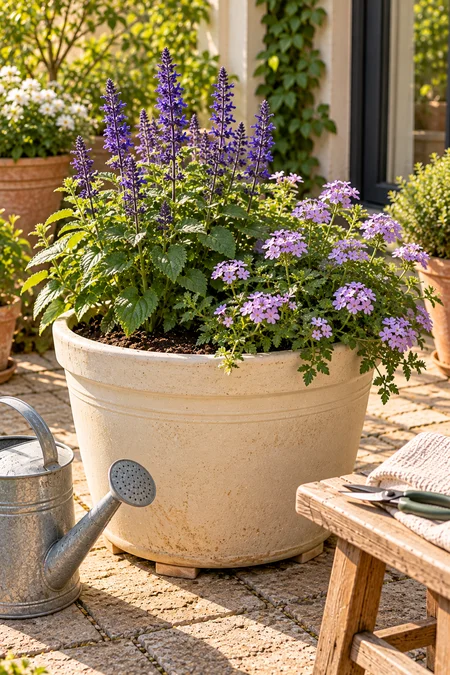
11. Build a Pollinator Pot with Compact Flowers That Share Sun Needs
A flowering container can offer visiting pollinators a feeding stop without taking over your patio. Choose compact plants with accessible blooms and similar growing needs, such as suitable varieties of annual salvia and verbena.
Start with their mature size, not how small they look in nursery pots.
- Use a broad container with drainage holes.
- Leave room for stems to branch without crowding.
- Place the pot in the sunlight the selected varieties need.
- Keep flowers within reach for removing spent blooms when useful.
A few well-spaced plants leave openings where you can check the mix and water without soaking the flowers.
🌼 Choose flowers that can share a pot
Flower access
Favor flowers with accessible nectar or pollen. Heavily doubled blooms can be harder for visitors to use.
Mature size
Compare the expected spread of each variety. Leave enough room that taller growth will not bury smaller flowers.
Shared care
Match sun and moisture needs before matching flower colors. Plants sharing roots also share the same watering routine.
12. Fill a Shady Corner with a Fern and Heuchera in Separate Containers
Set a fern and a heuchera in separate pots where their leaf shapes can stand out. Fine fern fronds beside broad, rounded heuchera leaves give a quiet corner interest without relying on flowers.
Choose varieties suited to your climate and the actual light in that spot. Bright shade is different from a dark recess beneath a deep roof.
Leave a watering gap: Keep enough space between the pots to reach the mix beneath the foliage. Separate containers let you adjust moisture for each plant and move one if the afternoon sun reaches farther than expected.
🌿 Check the shady corner
Observe the spot at different times. A short burst of hot sun may change which varieties suit it.
Choose containers with open drainage holes, even where rain rarely reaches.
Check the mix beneath the leaves. Dense foliage can shelter the soil from rain.
Keep heuchera crowns at the soil surface rather than burying the bases of the leaves.

13. Use a Self-Watering Planter for Basil in a Sunny Spot
A self-watering planter still needs checking. Its reservoir can help supply moisture between refills, but the plant must have access to that water through the planter’s wicking system.
Choose a purpose-built model with a working overflow, and follow its setup directions for the growing mix.
- Water newly planted basil from above while it establishes, as directed.
- Check the reservoir more often during hot or windy weather.
- Keep the overflow clear so excess water can escape.
Leave space around the basil rather than filling every corner with extra plants. A reachable fill opening makes routine checks much easier once the leaves spread.
✅ Help the system work
- Set up the wicking section exactly as the planter instructions describe.
- Check both the growing mix and reservoir while roots establish.
- Refill according to plant use, weather, and the planter’s guidance.
🚫 Avoid these shortcuts
- Do not assume a full reservoir means a new root ball is moist.
- Do not block the overflow against a wall or with debris.
- Do not leave the planter unchecked through a spell of hot weather.

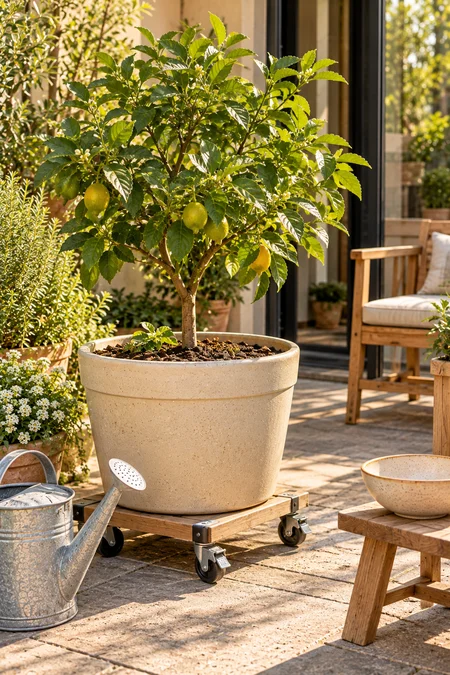
14. Put a Small Patio Citrus Tree on a Sturdy Plant Caddy
The sunny corner that suits a small citrus tree in summer may be too exposed when cold weather arrives. A sturdy plant caddy makes moving its container more manageable along a clear, level route.
Choose a compact citrus suited to container growing, then plan its cold-weather position before buying it.
- Use a caddy rated for the weight of the watered pot and tree.
- Keep the entire container base supported.
- Lock the casters whenever the planter is parked.
Where winters are too cold, arrange a bright, suitable sheltered space. Move the tree gradually between different light conditions, and keep the route free of steps.
📌 Plan the move before filling the pot
Check doorway width, thresholds, paving joints, and the space needed for branches. A wheeled base helps on smooth, level surfaces, but it does not make stairs or steep slopes manageable. Confirm that the winter location has enough light and suitable temperatures for your citrus.
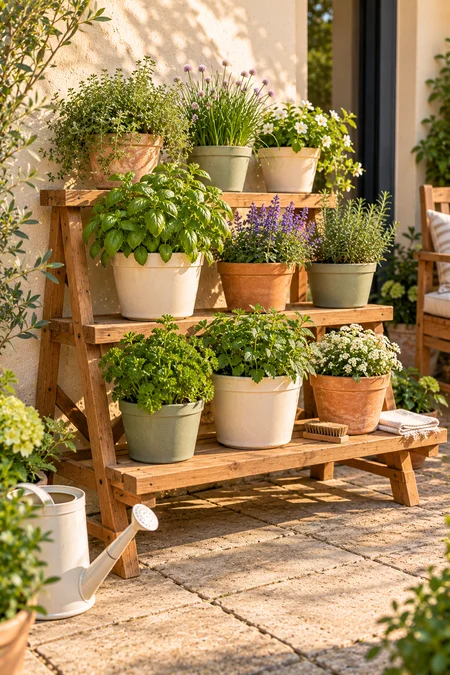
15. Turn a Bare Wall into a Stepped Pot Display
Keep every pot reachable from the front. That simple rule makes a stepped display easier to water than a crowded stack of plants.
Place a sturdy freestanding stand against a sheltered wall, then arrange smaller containers on its upper levels and heavier pots lower down.
- Choose a stand designed to support the pots when fully watered.
- Leave gaps so foliage does not shade every lower shelf.
- Keep each pot base fully supported.
- Check that drainage will not soak plants below that prefer drier mix.
A little empty shelf space is useful. It gives you somewhere to set a pot while checking leaves or clearing fallen debris.
BEFORE: Pots packed on the floor
Back pots are hard to reach. Taller leaves shade smaller plants, and watering means moving containers out of the way.
AFTER: A spaced, stepped arrangement
Offset pots across broad steps so light reaches the leaves and each rim stays accessible. Keep the stand level, stable, and clear of the walking route.
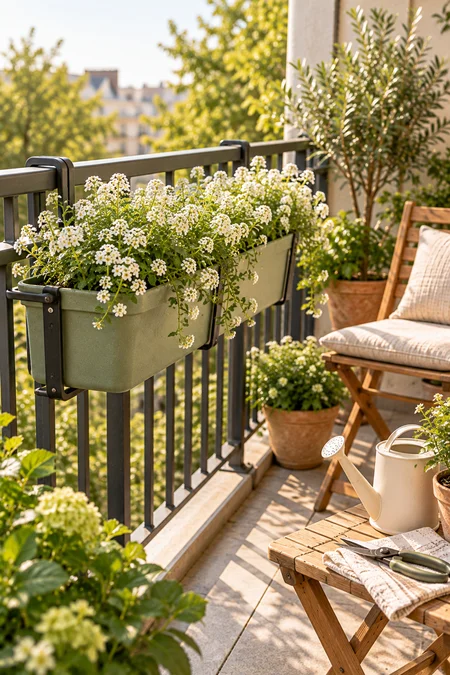
16. Add a Low Flower Trough Along the Inside of a Railing
A low flower trough brings blooms closer to eye level while leaving more floor space open. Choose a planter and bracket system designed for your railing, then position the trough on the inside where you can reach it.
Plant compact flowers suited to the light, such as sweet alyssum in a spot with suitable sun and temperatures.
- Allow for the weight of wet mix and mature plants.
- Keep foliage clear of doorways and walking space.
- Check the brackets regularly.
- Direct drainage away from seating and neighboring spaces.
Skip the setup if the railing cannot support it securely. A floor planter is still useful.
🌼 Check the fit before planting
Match the brackets to the railing’s shape and dimensions. Follow the mounting system’s load limits.
Confirm that the railing is sound and suitable for the added weight. Check any building restrictions before mounting.
Keep the fill surface within comfortable reach so watering does not require leaning over the rail.
Leave drainage holes working and check where the runoff goes before filling the trough.
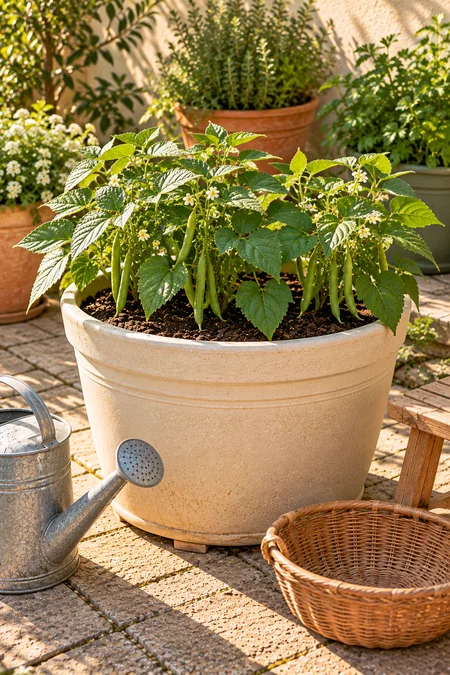
17. Grow Bush Beans in a Wide Container Without a Tall Trellis
Bush beans keep their growth fairly low, which suits a sunny patio where a tall climbing frame would feel crowded. Check that the seed packet says bush rather than pole, then choose a broad container with enough root depth for the variety.
Sow directly into the pot when conditions are warm enough.
Give each plant its share of space: Follow the packet’s spacing instead of scattering seeds across every bare patch. Keep moisture steady as flowers and pods develop, and inspect behind the leaves when picking. If stems lean under their crop, short supports can help without creating a tall structure.
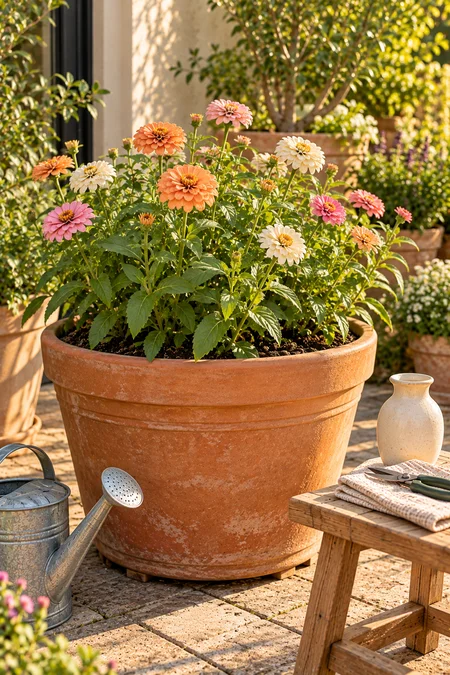
18. Make a Small Cutting Garden with Compact Zinnias
A few zinnia stems in a small kitchen vase can come from a single generous container. Choose a compact variety with stems long enough for the vase you use. The shortest bedding types may suit a tiny jar better than a tall arrangement.
Plant in a sunny position after cold weather has passed.
- Follow the variety’s spacing so air can move between plants.
- Water the mix rather than repeatedly wetting the leaves.
- Cut suitable stems with clean snips.
- Remove fading flowers as needed.
Keep the pot near a clear standing space. Reaching over a chair to cut flowers gets awkward once the plants branch out.
🌸 Plan for small bouquets
Check the mature height before buying seeds or plants. Match the variety to your container and intended vase.
Space plants for their mature spread. Leave a reachable opening for checking moisture and watering.
Choose open flowers on firm stems. Cut just above a healthy leaf pair, leaving enough foliage for continued growth.
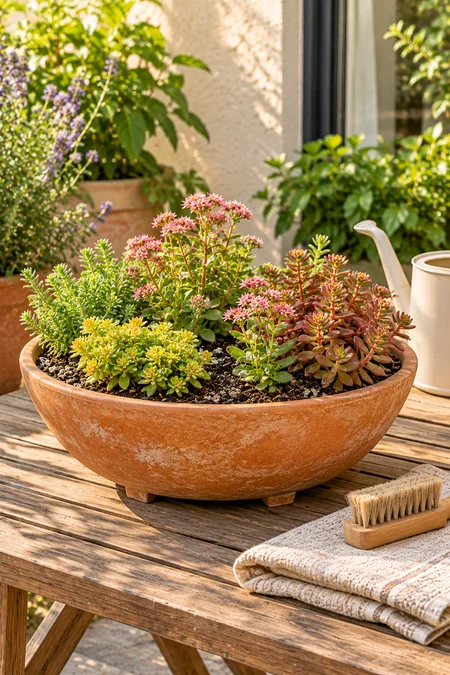
19. Create a Dry-Loving Sedum Bowl for a Sunny Patio Table
A decorative bowl without a drainage hole can leave sedum roots sitting in wet mix. Start with a draining container that has useful root depth, then choose low-growing sedums suited to your climate and sunlight.
Use a freely draining growing mix, and leave room for the plants to spread.
Check the whole setup: A saucer or solid tabletop can trap runoff beneath the bowl. Keep the drainage route open and empty collected water. These plants still need watering when the mix dries, especially while establishing. Check them rather than assuming rain or drought tolerance will handle every season.
✅ Keep water moving
- Choose a bowl with open drainage holes and room for roots.
- Use a mix suited to plants that dislike staying wet.
- Keep the container base clear enough for excess water to escape.
🚫 Skip hidden water traps
- Do not use a gravel layer as a substitute for drainage holes.
- Avoid leaving the bowl inside a water-filled outer container.
- Do not water automatically when the mix is still damp.
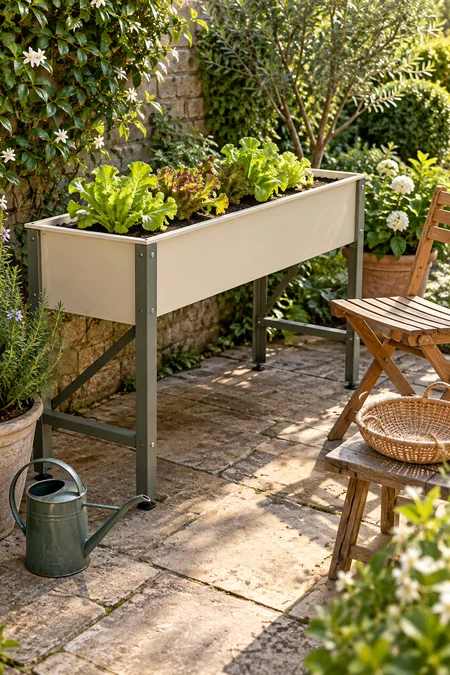
20. Set Up a Raised Lettuce Planter with Clear Space Around It
A lettuce planter on legs brings routine watering and picking closer to a comfortable working height. Choose a purpose-built model with a sturdy frame, enough soil depth, and a width you can reach across without stretching.
Position the empty planter before adding mix.
- Leave an open approach for standing or sitting.
- Check that the legs rest firmly on level ground.
- Keep the drainage outlet clear.
- Allow room for a watering can beside the planter.
Try reaching the far edge from your usual working position. A narrow box at the right height can be more useful than a larger one that leaves the back row out of reach.
💡 Check the working space first
If you plan to garden while seated, check knee room, cross-bracing, and the depth of the growing box before choosing a frame. The rim should be easy to reach without leaning heavily on it. Make sure drainage falls away from your feet and the main walking route.
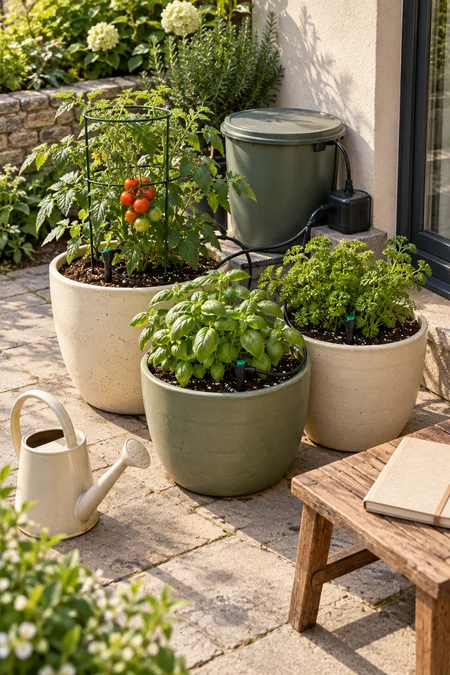
21. Group Thirsty Containers Around a Small Drip-Watering Kit
Dragging a watering can between scattered pots gets tiring when warm weather arrives. Group containers with similar moisture needs near a small drip-watering kit, while leaving space to reach every rim.
Choose a kit designed for your water source and container layout.
- Secure tubing along the back of the group.
- Keep the main walkway clear.
- Position emitters over the growing mix.
- Test the system while you are home.
Check moisture in each pot after a watering cycle. A large tomato planter and a smaller basil pot may need different emitter arrangements, even when both need regular water. Adjust the setup as plants grow and weather changes.
💧 Check what each pot receives
Emitter position
Place outlets where water reaches the root area. Keep them secured so they cannot slip over the rim.
Flow check
Watch every outlet during a test run. Look for blocked emitters, loose connections, and water missing the mix.
Pot-by-pot adjustment
Check beyond the damp patch beneath each outlet. Adjust the layout or watering time if parts of the root zone stay dry.
22. Use Removable Nursery Pots for an Easy Seasonal Flower Display
Keep seasonal flowers in removable growing pots inside a decorative outer planter. When one planting finishes, you can lift it out without emptying the entire display.
Choose inner pots with drainage holes and enough room for continued root growth. A small nursery pot may need replacing with a larger growing pot before it becomes part of the arrangement.
Check beneath the flowers: The outer planter must either drain freely or be emptied after watering. Leave enough room to lift each inner pot without pulling on stems. This setup suits a small doorstep display where you can easily inspect the containers and change plants with the season.
| Draining outer planter | Undrained cover pot |
|---|---|
| Useful outdoors where rain can reach the display, provided runoff has a clear path. | Easier to manage in a sheltered spot where you can monitor collected water. |
| Check that inner pots and fallen leaves do not block the outer drainage holes. | Lift out the growing pot to water, let it drain, then return it. Empty any water left inside the cover pot. |
| Keep the growing pots stable and easy to remove for root checks or seasonal changes. | Do not let the growing pot stand in pooled water, including water collected after unexpected rain. |

Start with One Container That Fits Your Space
You do not need a patio full of pots to make container gardening worthwhile. A few herbs near the kitchen or a flower planter beside your chair can give you something useful to tend and enjoy.
Choose one of these container gardening ideas based on the light, space, and watering time you actually have. Give the plants room to grow, keep drainage clear, and leave yourself an easy way to reach them. You can add another container once the first feels manageable.
Save this list to your gardening Pinterest board for the next time you have an empty pot and need a practical planting idea.