

Two plants can look lovely together at the garden center and still struggle once they share a pot. One wants the mix to dry a little, while the other wilts without steady moisture. Or a small seedling grows into a leafy giant that crowds its neighbor by midsummer.
Useful companion planting combinations for containers start with those everyday details. Plants need enough root space, similar growing conditions, and room for their leaves to spread. Sharing a container does not automatically mean they will protect each other from pests or produce a bigger harvest.
These combinations give you practical starting points for sunny patios, small balconies, and sheltered corners. You’ll find vegetables, herbs, and flowers that can share a container when you choose suitable varieties and leave enough space. Each idea explains the care they have in common, how to arrange them, and a mistake to avoid. Start with one pairing that suits your light and watering routine, then let the plants grow into the space.
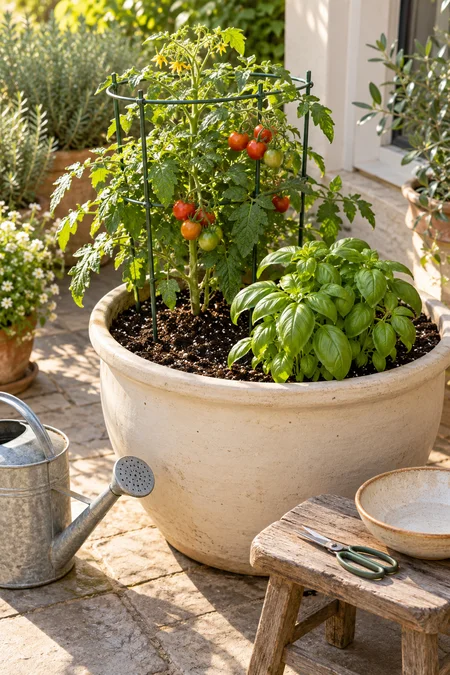
1. Pair a Compact Tomato with Basil in a Large Patio Pot
A tomato and basil pairing needs a generous pot, even when both seedlings fit easily in your palm. Choose a compact bush tomato and a small basil variety for a container holding roughly 20 gallons of potting mix.
Set the tomato slightly toward the back and the basil near the sunny front edge.
- Install the tomato support before roots spread.
- Leave an open patch of mix for watering.
- Trim basil regularly so its leaves stay clear of the tomato.
Both suit sun, regular feeding, and steady moisture with good drainage. Keep spreading mint elsewhere, where it cannot take over their root space.
🌿 Give each plant a place
Back: supported tomato
Choose a compact variety and leave its main stem easy to inspect.
Front: trimmed basil
Keep the basil on the brighter edge, outside the tomato’s thickest foliage.
Between: open soil
Keep a clear watering spot so you can check moisture without pushing leaves aside.
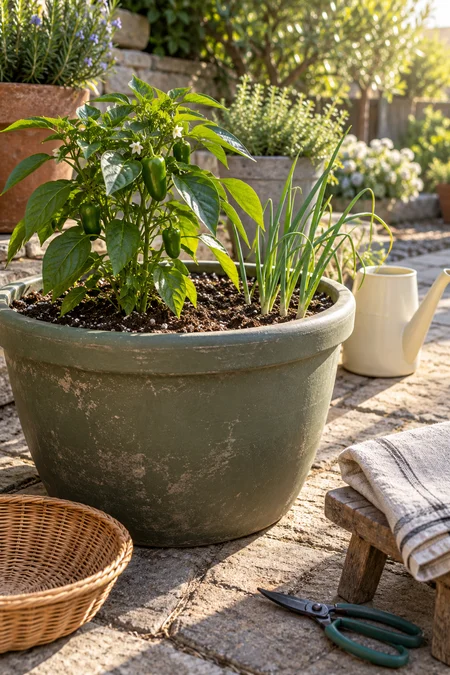
2. Grow a Compact Pepper with Scallions Around the Outer Edge
Leave the pepper room to branch before filling the edges. A compact pepper can share a broad container of roughly 10 gallons with a few scallions planted along one outer side.
The pepper gets the main growing space. The scallions add an easy crop without forming a thick leafy cover.
Set up the pairing:
- Choose a sunny position and freely draining potting mix.
- Space scallions loosely rather than making a tight ring.
- Harvest them while young if the pot starts feeling crowded.
Keep moisture fairly even without leaving the mix soggy. Save rosemary for another pot because its watering needs are less suited to this arrangement.
✅ Check before planting
- The pepper variety stays compact at maturity.
- The container is broad enough to leave space around the pepper’s stem.
- The scallions occupy one outer strip, leaving a clear watering spot.
- The pepper’s eventual branches will receive sun rather than press against a wall.
- Drainage holes stay clear beneath the pot.
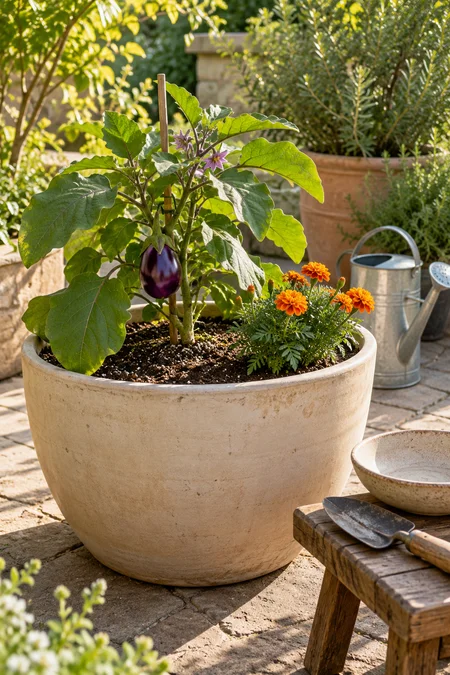
3. Match a Patio Eggplant with a Dwarf French Marigold
Purple eggplant fruit and small orange flowers make a cheerful pairing, but choose the plants by size first. Use a compact patio eggplant and a dwarf French marigold in a broad pot holding roughly 15 gallons of mix.
Give the eggplant most of the container. Place the marigold near the bright outer edge, where its flowers will stay clear of the broad leaves.
Both appreciate warmth, sun, and regular watering with good drainage.
Watch the mature size: a tall marigold can crowd this arrangement. The flower adds color and variety, but its presence does not make the eggplant pest-proof.
✅ Keep the planting open
- Use compact varieties of both plants.
- Keep the marigold near the sunny edge.
- Support the eggplant if fruit makes it lean.
⚠️ Avoid these shortcuts
- Filling every gap with extra flowers.
- Choosing a tall marigold without checking its size.
- Skipping pest checks because a marigold is nearby.
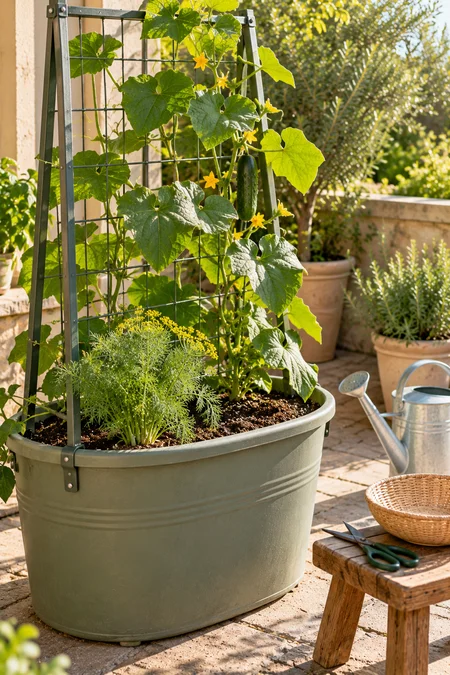
4. Combine a Trellised Cucumber with Compact Dill in a Large Tub
Train the cucumber upward before it spreads across its neighbor. A large tub holding roughly 20 gallons of mix can accommodate a container-suitable cucumber and a compact dill plant, provided both have room to grow.
Install a sturdy trellis at the back, then put the dill on the brighter front side.
- Guide cucumber shoots onto the support.
- Keep tendrils from wrapping around dill stems.
- Water thoroughly when needed, allowing excess water to drain.
Their shared need for sun and steady moisture makes the pairing workable. Avoid a full-size dill variety here, and give vigorous squash its own container.
⚠️ Keep dill out of the climbing path
Place the trellis where the cucumber can climb without covering the dill. Check new tendrils as they grow. If the dill becomes shaded or squeezed, harvest it rather than letting both plants struggle in a crowded tub.
5. Plant Bush Beans with Summer Savory in a Wide Container
Bush beans stay low enough to grow without a tall climbing frame, which makes them useful in an open patio corner. Pair a small group with summer savory in a wide container holding roughly 15 gallons of mix.
Give the beans most of the surface and keep the savory near an outer edge.
Keep their care simple:
- Follow the bean variety’s spacing guidance.
- Use a sunny position and freely draining mix.
- Water as needed without keeping the roots constantly wet.
Avoid adding a vigorous climbing bean to this layout. Summer savory is a useful culinary neighbor, but do not count on it to prevent bean pests.

6. Pair Short Peas with Early Radishes in a Cool-Season Planter
The radishes can leave the planter before the peas need all the space. Choose a short pea variety and quick-maturing radishes for a broad, deep trough with drainage holes.
Place a low trellis along the back and sow a separate radish row near the front. Both suit cool weather, good light, and evenly moist potting mix.
- Install the support before sowing.
- Thin seedlings to the spacing on their packets.
- Harvest radishes promptly instead of leaving them beneath spreading pea foliage.
This is a temporary pairing. Avoid filling the front with a large, long-season crop that will compete with the peas later.
🌱 Plant together, harvest in stages
Prepare the back row. Secure the low trellis, then sow peas beside it without crowding the support.
Leave a separate front strip. Sow radishes where their leaves can receive light and their roots are easy to reach.
Clear the radish row. Harvest when ready, then leave the space open if the peas are beginning to fill the planter.

7. Grow Short Carrots with Leaf Lettuce in a Deep Trough
Carrots need clear growing space below the surface, even when their tops look delicate. Choose a short-rooted variety and a trough with enough usable soil depth for its mature roots.
Sow carrots in their own rows, with leaf lettuce along one long edge. Loose potting mix and steady moisture suit both crops, especially during cooler weather.
Keep the layout easy to manage:
- Thin carrots rather than leaving a crowded seedling carpet.
- Cut outer lettuce leaves while plants are small.
- Keep the lettuce from shading newly emerged carrot seedlings.
Avoid large heading lettuces here. Their broad leaves can take over before the carrots get established.
🥕 Plan separate growing strips
Main space: carrot rows
Match the soil depth to the variety. Thin seedlings carefully so each root has room to develop.
Outer edge: leaf lettuce
Keep the lettuce within easy reach and harvest regularly before it spreads across the carrot rows.
Between: a visible gap
Leave enough separation to water gently and spot carrot seedlings beneath the finer foliage.

8. Combine Beets with Arugula for an Early Baby-Leaf Harvest
Treat the arugula as an early harvest, not a permanent filler. Sow beets with their own growing space in a broad container, then use a separate edge strip for arugula.
Both grow well in cool conditions with good light and consistent moisture. The timing matters more than squeezing in extra seedlings.
Harvest the arugula as baby leaves while the beet plants are still small. Clear that strip when the beet foliage begins to spread, cutting the arugula at soil level to limit disturbance.
Avoid the crowding trap: thin beet seedlings according to the packet, and do not let mature arugula bushes compete with developing beet roots.
| Beets: the crop that stays | Arugula: the early harvest |
|---|---|
| Reserve enough space for the roots and mature leaf spread. | Use a separate outer strip that is easy to reach with scissors. |
| Thin seedlings before they become a tangled clump. | Harvest young leaves before the plants become large and spreading. |
| Keep growing after the neighboring strip is cleared. | Remove the crop when the beets need the space. |

9. Pair Swiss Chard with Sweet Alyssum in a Broad Planter
Small white alyssum flowers soften the edge of a chard planter without needing another large leafy crop. Start with a compact chard variety and a small alyssum plant in a broad container holding roughly 10 gallons of mix.
Give the chard the main growing space and place the alyssum near the outer rim. Both suit good light and regular watering with reliable drainage.
- Pick outer chard leaves without stripping the plant.
- Trim alyssum if it starts covering the watering area.
- Leave the chard’s central growing point open.
Avoid adding another full-size chard plant just because the young arrangement looks sparse. Those leaves need room to unfold.
🌼 Leave room for the leafy crop
Main area: chard
Allow leaves to spread without pressing against a wall or another large plant.
Rim: sweet alyssum
Keep the flowering patch small enough that it does not surround the chard’s crown.
Open edge: easy access
Save a clear spot for checking the mix and reaching outer leaves at harvest time.
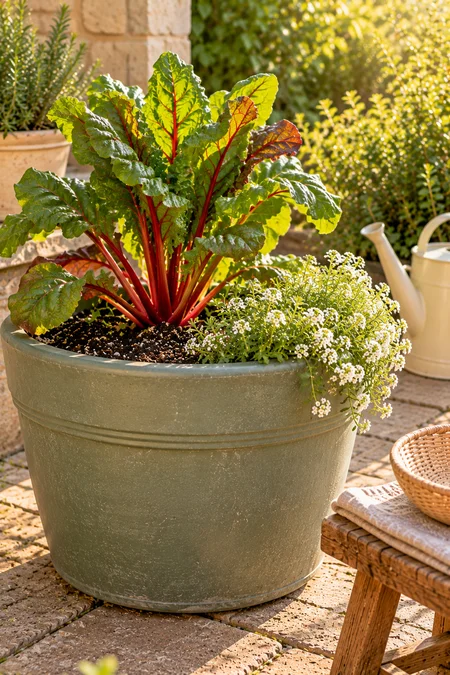
10. Underplant a Compact Kale with Spinach for a Cool-Weather Start
A young kale plant leaves tempting gaps around its stem. Use some of that space for a short spinach crop, while keeping the kale’s base clear.
Choose a compact kale variety and a broad pot holding roughly 15 gallons of mix. Plant spinach along the brighter outer edge during cool weather. Both appreciate consistent moisture, good drainage, and enough light for steady leaf growth.
Plan the spinach’s exit from the start:
- Harvest its outer leaves while tender.
- Watch for kale leaves spreading over the spinach.
- Clear the spinach before shade and crowding become persistent.
Avoid treating the spinach as permanent underplanting beneath a mature, broad-leaved kale.
📌 Let plant size set the timing
Clear the spinach when the kale begins covering it, even if the spinach could otherwise keep growing. Cut the spinach at soil level to avoid pulling through nearby kale roots. Leave the cleared edge open for watering and harvesting.

11. Grow Baby Pak Choi with Cilantro in a Spring or Fall Trough
Warm weather can send both pak choi and cilantro into flower before you get much to harvest. Give this pairing a cooler start in spring or fall, using a broad trough with drainage holes.
Choose a pak choi variety intended for harvesting small. Plant it in a separate row from the cilantro so the broad leaves do not cover the herb seedlings.
- Keep the potting mix evenly moist, with excess water draining away.
- Thin both crops according to their seed packets.
- Harvest pak choi before its leaves crowd the cilantro.
Avoid adding a summer pepper to this short-season arrangement. Its need for sustained warmth makes the timing awkward.
🌱 Plan around the cool season
Cool conditions
Choose a growing window with mild weather. Strong heat can shorten the useful harvest period.
Steady moisture
Check the mix beneath the surface and water before the trough becomes thoroughly dry.
A timely harvest
Pick pak choi while small and tender. Keep cilantro accessible rather than hidden beneath expanding leaves.

12. Pair Strawberries with a Small Chive Clump in a Wide Pot
A few upright chive leaves can fit beside a strawberry without covering its low crown. Start with one strawberry plant and a small chive division in a broad pot holding roughly 10 gallons of mix.
Plant them apart, leaving room for the strawberry’s leaves to spread. Both appreciate sun, regular watering, and freely draining potting mix.
Keep the strawberry easy to reach:
- Set its crown at soil level.
- Keep chive foliage from flopping across the fruit.
- Remove unwanted runners before they root around the pot.
Avoid using a large, established chive clump. It can fill more space than expected, and this pairing does not provide reliable pest protection.
✅ Keep crowns and fruit accessible
- The strawberry crown sits at the soil surface, rather than buried beneath mix.
- The chive division has its own space near an outer edge.
- Leaves have room to dry after rain or watering.
- Ripening berries remain visible for checking and picking.
- New runners are removed if they would crowd the shared container.
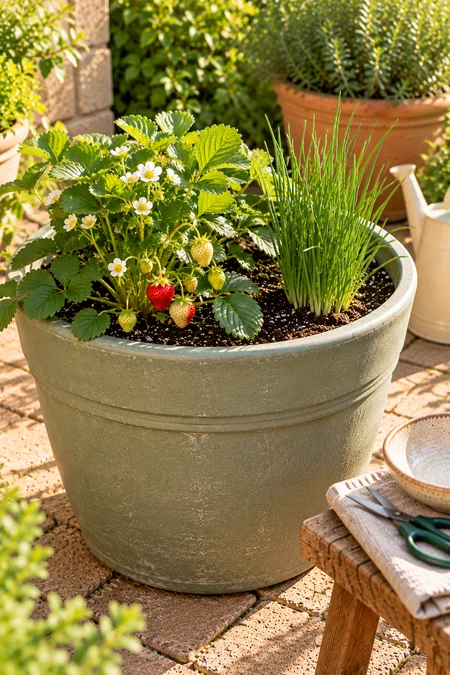
13. Combine Parsley and Chervil in a Cool, Bright Herb Planter
Fine chervil leaves bring a softer texture beside sturdy parsley. Give them a deep, roomy planter in a bright spot with gentle morning sun, especially where afternoons become hot.
Both prefer moisture that stays fairly even, rather than a pot that repeatedly dries hard. Sow chervil directly into its own side of the container and give the parsley space to broaden.
- Harvest parsley’s outer stems near the base.
- Snip chervil lightly while it is young.
- Leave a clear patch of mix for checking moisture.
Chervil is the shorter-lived partner, particularly as weather warms. Keep drought-tolerant thyme in a separate container instead of trying to share one watering routine.
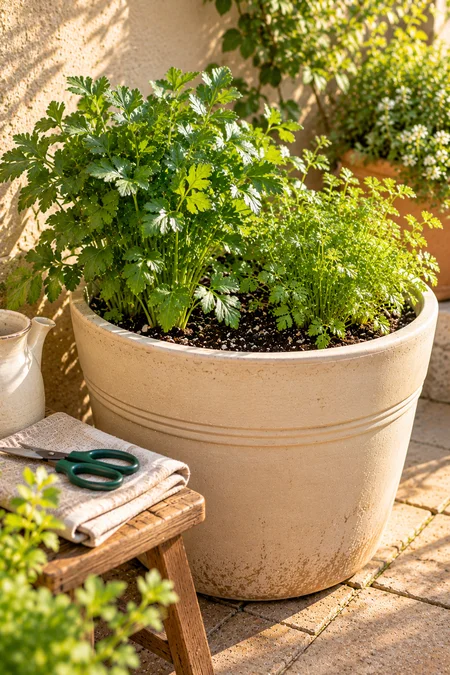
14. Plant Thyme and Compact Oregano in a Sunny Herb Bowl
Choose a broad herb bowl with useful soil depth, rather than a shallow decorative dish. Thyme and compact oregano can share it because both suit sun, good drainage, and a little drying between waterings.
Set the plants apart instead of pressing their nursery root balls together. Oregano can spread across the surface, so trim it before it grows over the thyme.
Match the watering routine: check the mix before reaching for the jug. These herbs still need water in containers, especially during hot weather, but neither benefits from constantly wet roots.
Keep basil and mint out of this bowl. Their thirstier growth makes a shared watering routine harder to manage.
| Together: thyme and compact oregano | Elsewhere: basil and mint |
|---|---|
| Allow the upper mix to dry somewhat before watering again. | These herbs generally suit more consistent moisture during active growth. |
| Use a sunny position and drainage holes that stay clear. | Choose separate containers so watering can match each plant. |
| Trim spreading oregano to preserve the thyme’s light and space. | Give mint its own pot to contain its spreading roots. |

15. Match Compact Sage with Winter Savory in a Free-Draining Pot
Give woody herbs room around their stems from the beginning. A compact culinary sage and a young winter savory plant can share a broad, deep container in a sunny position.
Use freely draining potting mix and keep their plant bases clear. Both prefer some drying between waterings once established, although a hot patio pot still needs regular moisture checks.
- Leave space between the plants for airflow.
- Trim leafy tips to keep growth manageable.
- Replant separately when their mature size crowds the container.
Skip moisture-loving parsley in this arrangement. Also avoid treating “drought tolerant” as permission to leave a newly planted pot dry while its roots establish.
✅ Give woody herbs breathing room
- Keep stems clear of piled potting mix.
- Check moisture before watering established plants.
- Leave room for both plants to widen.
- Move them into separate pots when needed.
⚠️ Avoid a wet, crowded base
- Do not leave the pot standing in collected water.
- Keep thirsty herbs in a different container.
- Avoid filling every gap with another seedling.
- Do not cut hard into bare woody stems to force a smaller shape.
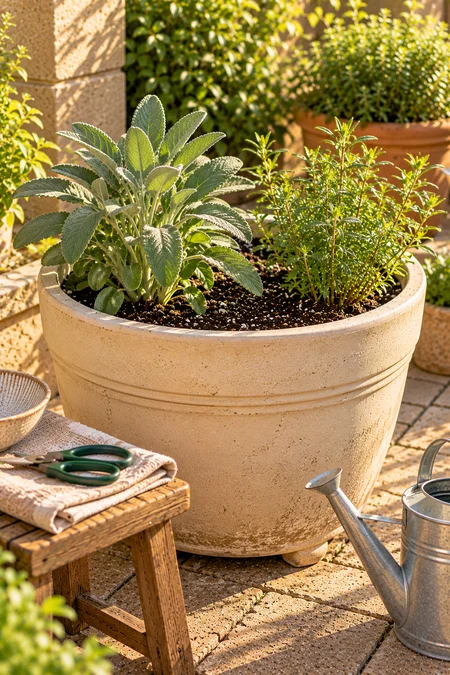
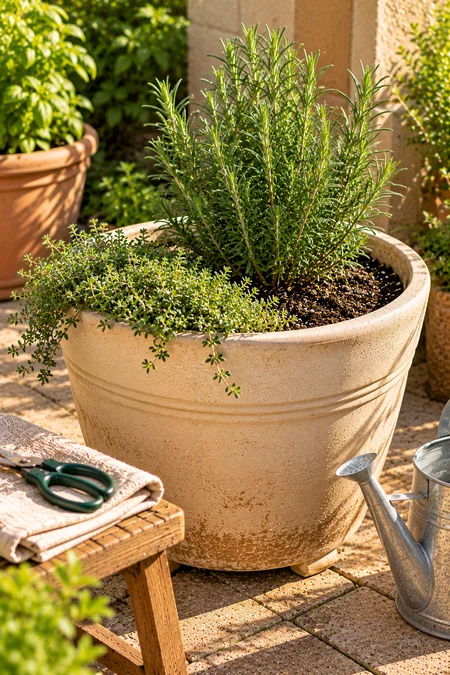
16. Pair a Small Upright Rosemary with Creeping Thyme in a Large Pot
An upright rosemary gives this pot height, while creeping thyme stays close to the rim. Start with small plants in a broad, deep container, leaving open space between the rosemary’s stem and the thyme.
Both suit sun and freely draining potting mix. Once established, let the upper mix dry somewhat before watering again.
- Place rosemary slightly toward the back.
- Keep thyme around one outer edge, away from the woody stem.
- Trim leafy growth before the plants overlap heavily.
Treat this as a planting that may need separating later. Avoid adding mint, which prefers more consistent moisture and can spread through the shared root space.
📌 Plan for the rosemary to grow
Check the mature size on the rosemary’s label. Light trimming can manage leafy growth, but it cannot keep a large variety small forever. Separate the plants if rosemary shades the thyme or the shared pot becomes difficult to water evenly. Avoid cutting deeply into bare woody stems.
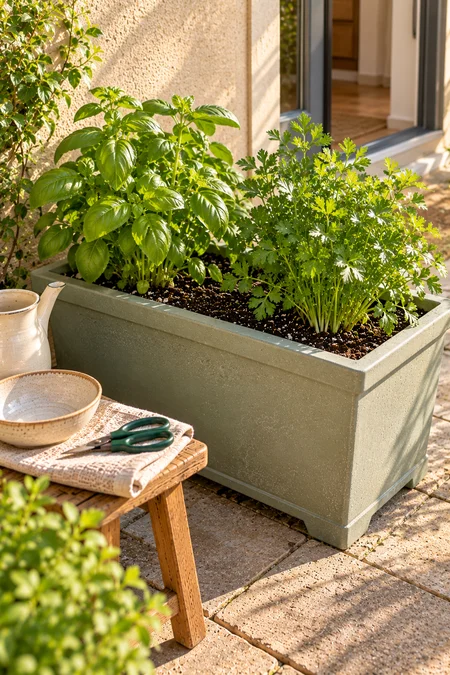
17. Grow Basil and Parsley Together in a Roomy Kitchen Herb Container
Keep frequently picked herbs near the kitchen door, where a quick harvest does not mean crossing the whole patio. Basil and parsley can share a roomy, deep container during warm weather.
Give each plant its own side. Both appreciate regular moisture and good drainage, although parsley may welcome some afternoon shade in very hot weather.
Keep their growth balanced:
- Pinch basil tips above a pair of leaves.
- Harvest parsley’s outer stems near the base.
- Leave enough space to reach the mix between them.
Start after chilly weather has passed because basil is sensitive to cold. Keep sage elsewhere so you can water this leafy pairing without keeping a woody herb too wet.
🌿 Share the pot, keep separate growing space
Shared moisture
Check the mix regularly during warm weather. Water thoroughly when needed and let excess water drain.
Separate sides
Allow room for basil to branch and parsley to widen without their stems becoming tangled.
Regular trimming
Take small harvests and leave plenty of healthy foliage. Keep basil from growing over the parsley.
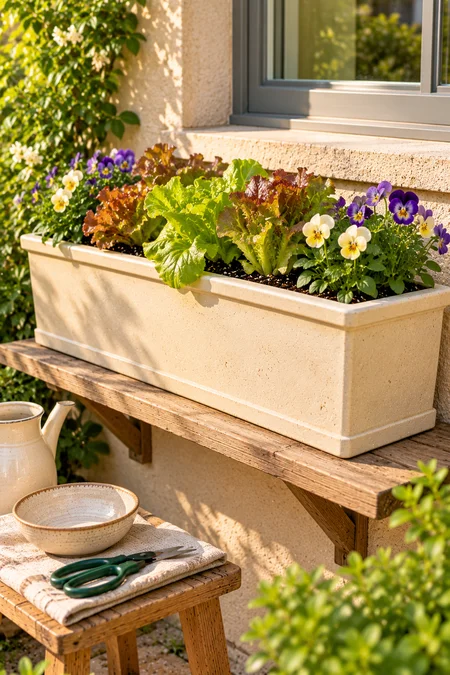
18. Combine Leaf Lettuce with Violas in a Cool-Season Window Box
Small viola flowers leave more room for lettuce than a large bedding plant would. Use a deep window-box planter with drainage holes, positioned where you can reach the whole planting easily.
Choose loose-leaf lettuce and compact violas for cool spring or fall weather. Both appreciate steady moisture without soggy roots.
- Leave gaps between lettuce plants and flower clumps.
- Pick outer lettuce leaves while they are tender.
- Remove faded viola flowers to keep the planting tidy.
Morning sun works well where afternoons become warm. Avoid using this as a midsummer planting against a hot wall, where lettuce may turn bitter and the violas can struggle.
✅ Keep the cool-season box productive
- Choose loose-leaf lettuce that can be harvested without removing the whole plant.
- Keep viola clumps small enough that lettuce leaves remain easy to reach.
- Check moisture across the box, including the ends that may dry faster.
- Remove faded flowers and damaged leaves before they collect on the mix.
- Reassess the planting when persistent summer heat arrives.
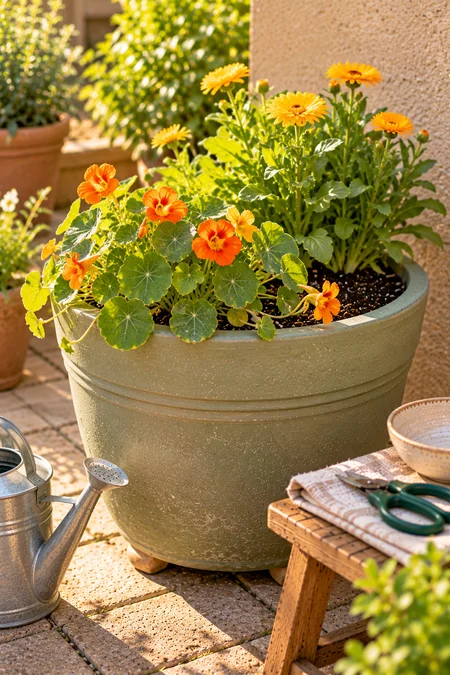
19. Pair a Dwarf Nasturtium with Compact Calendula in a Wide Pot
Round nasturtium leaves and upright calendula flowers give a shared pot two different shapes. Choose genuinely compact varieties and a wide container so neither plant has to push through the other.
This pairing is easiest during mild weather, with good sun and regular moisture in freely draining mix. Put calendula toward the back and the dwarf nasturtium near the front edge.
Check the labels before buying:
- Choose a bushy nasturtium rather than a long climbing type.
- Look for a short calendula variety.
- Allow room for both plants’ mature spread.
Avoid heavy feeding just to encourage more flowers. Too much nitrogen can produce leafy nasturtium growth that overwhelms the pot.
🌼 Choose the growth habit first
Nasturtium: compact and bushy
Choose a dwarf form that stays close to the container. Let only short stems spill over the front.
Skip: a long climbing or vigorous trailing variety that could cover the calendula.
Calendula: short and upright
Choose a compact variety with enough open space around its stems for light and airflow.
Skip: a tall variety squeezed into the remaining gap beside the nasturtium.
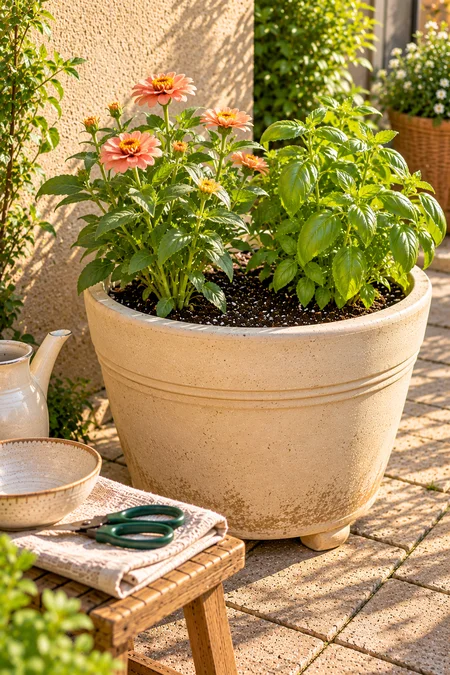
20. Match Compact Zinnias with Basil in a Sunny Summer Planter
Give this summer pairing an open spot where sunlight reaches both plants. A compact zinnia and a small basil variety can share a broad, deep planter during warm weather.
Plant them far enough apart that their mature leaves will not form a tight wall. Both appreciate regular watering with good drainage, and the basil stays useful when you keep picking its tips.
- Water the mix directly when practical.
- Trim basil before it shades the zinnia.
- Remove faded flowers and damaged leaves.
Avoid tall cutting-garden zinnias in this arrangement. Their height and spread can quickly turn a balanced pot into a shaded, crowded planting.
⚠️ Leave room for summer growth
Check the mature width of both varieties before planting. A small nursery pot does not mean a small adult plant. Keep a gap between their foliage and space around the container so leaves can dry after rain. If growth becomes crowded despite trimming, move one plant into its own pot.
21. Combine Zonal Geraniums with Trailing Verbena in a Sunny Container
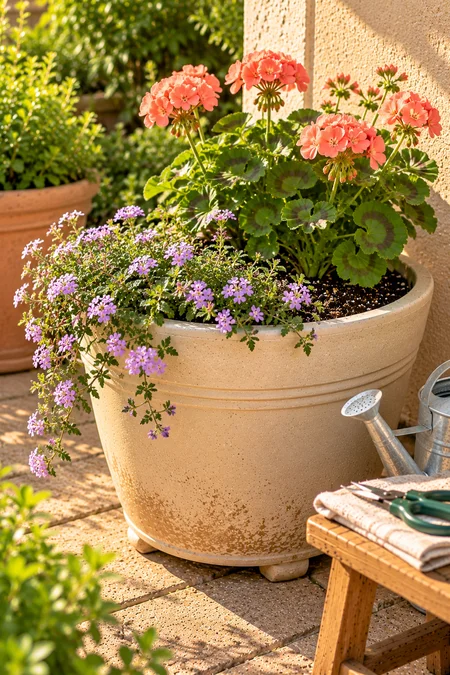
Upright geranium flowers and low trailing verbena give a sunny pot two clear layers. Choose a compact zonal geranium and a restrained trailing verbena for a broad container with drainage holes.
Position the geranium toward the back and the verbena near the front rim. Both appreciate sun and freely draining mix, but the shared pot should not dry out completely during active growth.
- Water when the upper mix begins to dry.
- Remove faded geranium flower stems.
- Trim verbena before it tangles around the geranium’s base.
Avoid adding shade-loving impatiens to this sunny arrangement. Leave clear space beneath the trailing stems so they do not spread across a walkway.
22. Pair Wax Begonias with Compact Impatiens in Bright Shade
A shaded patio can still support a flowering container if it receives plenty of indirect daylight. Pair compact wax begonias with shade-preferring impatiens in a broad pot, leaving room between their stems.
Both can grow with lightly moist, freely draining mix. Avoid keeping the container constantly wet, especially where shade slows drying.
Choose the position carefully:
- Use bright shade or gentle morning sun.
- Keep the plants away from harsh afternoon heat.
- Leave space around the foliage rather than pressing the pot into a dark corner.
Skip sun-loving verbena in this container. It usually needs a brighter position to flower well, even if its color looks appealing beside the begonias.
| A suitable shared position | A stressful placement |
|---|---|
| Bright shade with open-sky light, or gentle morning sun. | A dark recess or a position exposed to strong afternoon sun. |
| Lightly moist potting mix with drainage holes that stay clear. | A constantly saturated pot or repeated drying until the impatiens wilt. |
| Open space around the leaves and room for each plant to widen. | Tightly packed foliage pressed against a wall. |

23. Grow Compact Coleus with Torenia in a Sheltered Shade Planter
Patterned coleus leaves can carry a container even when only a few torenia flowers are open. Choose a compact coleus suited to shade and a trailing torenia for a broad, deep planter.
Give the coleus the back half and set the torenia near the front rim. Both appreciate warmth, bright shade, and fairly even moisture with good drainage.
- Pinch coleus tips to keep the plant bushy.
- Keep its leaves from covering the torenia.
- Trim trailing stems before they reach the walking area.
Avoid adding rosemary to this moist, shaded arrangement. Check variety labels too, since coleus plants vary widely in mature size and light tolerance.
🌿 Balance foliage and flowers
Back: compact coleus
Choose a modest mature size. Pinch growing tips before the foliage spreads over its neighbor.
Front: trailing torenia
Let the flowering stems spill over a clear edge, where they receive bright indirect light.
Between: easy care
Leave an open watering spot. Check moisture regularly rather than waiting for either plant to wilt.

Companion planting combinations for containers: start with one pot and a well-matched pair
The most useful companion planting combinations for containers begin with shared needs: suitable light, a workable watering routine, and enough room for both plants to grow. A pot that looks a little sparse at planting time often becomes easier to manage than one packed with seedlings.
Choose one pairing that fits your space and the season. Check mature plant sizes, leave a clear watering spot, and harvest or trim before neighbors become crowded. If one plant outgrows the arrangement, give it a separate pot.
Save this list to your gardening board for your next container planting day.