
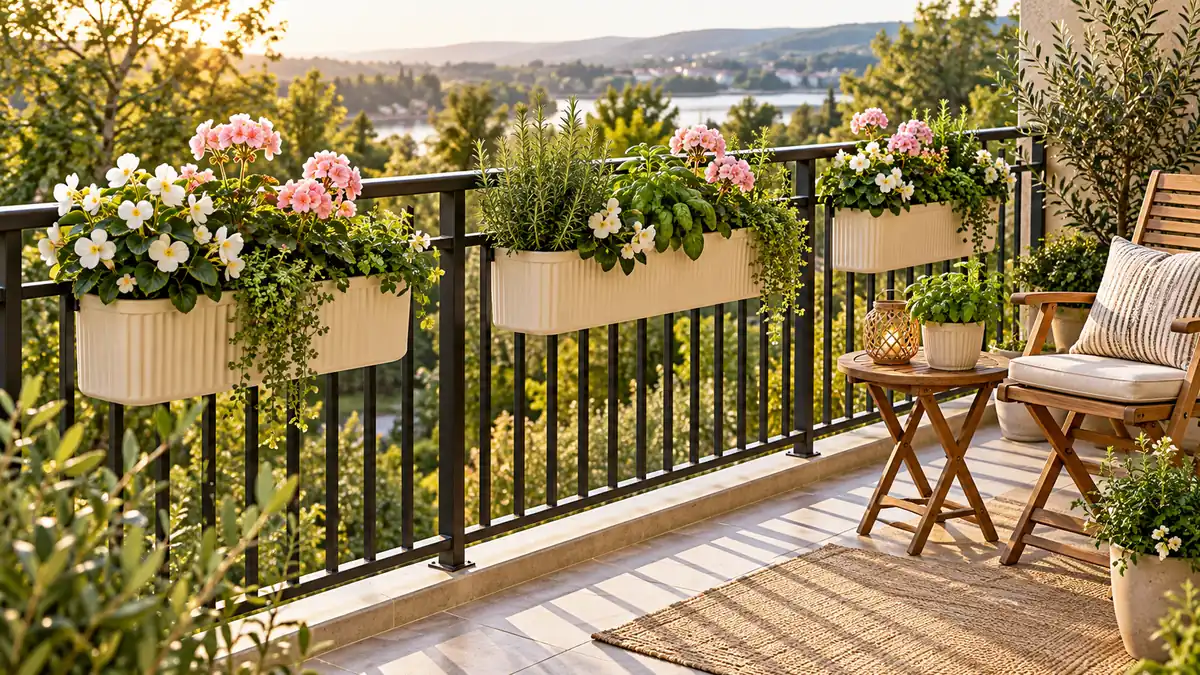
A balcony can run out of floor space before you have planted anything. Add a chair, a little table, and somewhere to set your watering can, and there is barely room for another pot. The railing offers another place to grow, but choosing a planter takes more thought than picking a color you like.
These railing planter ideas will help you make that narrow edge useful, with herbs to snip, strawberries to pick, and flowers that soften the view. You will find options for different light levels, watering habits, and balcony layouts, along with details that make each setup easier to care for.
Before buying, check your building’s rules and make sure the planter and its fittings suit your railing. Allow for the weight of wet potting mix, plants, and any stored water. Keep drainage from dripping onto neighbors below, and leave access routes clear. Then start with one manageable planter near a spot you already use. A small garden within easy reach is more inviting than a crowded row you have to squeeze past every morning.
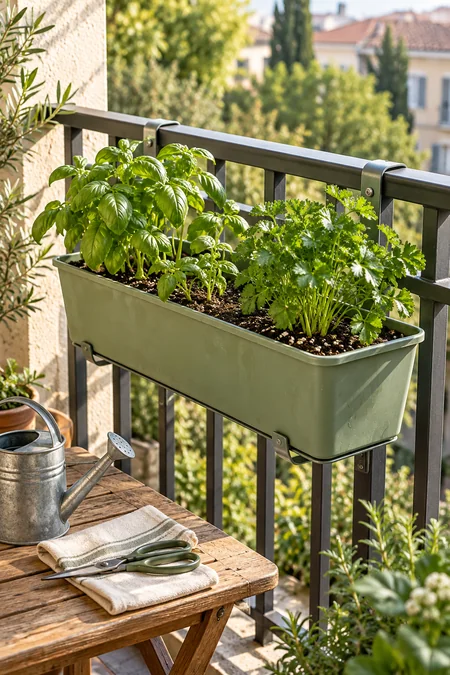
1. Grow a Kitchen Herb Garden Along Your Balcony Railing
Fresh herbs are easier to use when you can reach them without moving the breakfast chair. Put a securely fitted herb planter on the inside of a sunny railing, close to the balcony door.
- Start with herbs you already cook with, such as basil, parsley, or thyme.
- Use container potting mix and a planter with drainage holes.
- Leave growing room around each plant instead of packing in a full row of small starts.
Keep herbs with different watering needs in separate pots or boxes. Basil and thyme may look good together, but sharing one shallow trough makes watering harder to get right.
🌿 Group herbs by how you water
Basil + parsley
Check regularly. Water when the surface starts to dry, keeping the mix moist without leaving it soggy.
Thyme + oregano
Give them their own well-drained container. Let the upper layer of mix dry between waterings.
Check the pot
Wind, heat, and container size change how quickly mix dries. Check the soil before reaching for the jug.
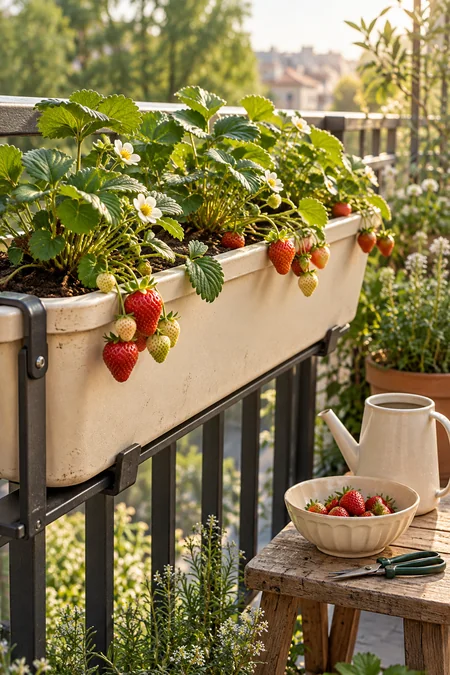
2. Let Compact Strawberries Trail Over a Railing Box
A few strawberries hanging over a planter rim make a sunny balcony feel like a tiny kitchen garden. Choose a compact variety suited to containers, and use a box deep enough for its roots rather than a narrow decorative tray.
Set each plant with its crown, where the leaves meet the roots, level with the potting mix. Keep the flowers and developing fruit facing the balcony side so they stay within easy reach.
A small upkeep habit: snip off unwanted runners so they do not tangle around the rail. Give the original plants room to grow instead of letting every new runner take root.
🍓 Before you plant strawberries
- Check the variety’s mature size and give its roots enough container space.
- Leave the crown uncovered while keeping the roots beneath the mix.
- Leave space below the inner rim so berries do not rub against brackets or furniture.
- Keep drainage holes open and plan where excess water will go.
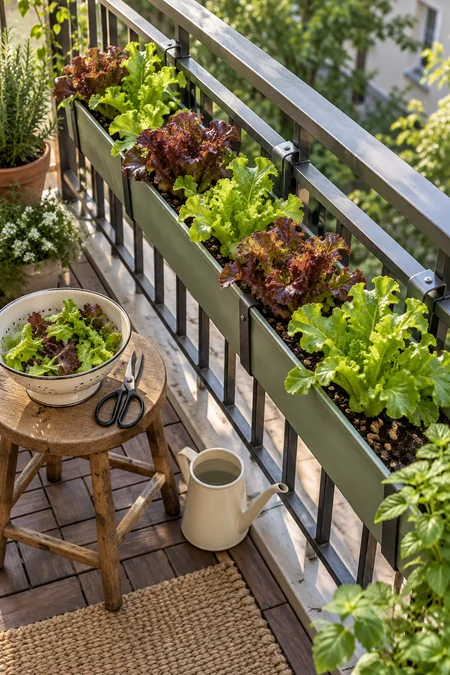
3. Plant a Cut-and-Come-Again Salad Trough
Fill a railing trough with loose-leaf lettuce for small pickings close to the kitchen. Green and red varieties make a useful display without needing flowers.
- Choose a spot with good light and some relief from harsh afternoon heat.
- Sow or transplant according to the variety’s spacing guidance, leaving room for airflow.
- Keep the mix evenly moist and start picking once plants are established with several usable leaves.
Harvest a few outer leaves from each plant rather than stripping one bare. Lettuce often turns bitter or sends up a flower stalk as conditions get hot, so treat this as a cool-season planting when summers are intense.
🥬 Pick around the outside
Pick: outer leaves
Take a few healthy, usable leaves near the outside of each established plant.
Leave: the center
Protect the small inner leaves and growing point. Leave plenty of foliage to support more growth.
Pause: let it recover
Wait for fresh growth before picking again. Replace plants that become bitter or start flowering.
4. Keep Mint in Its Own Removable Railing Pot
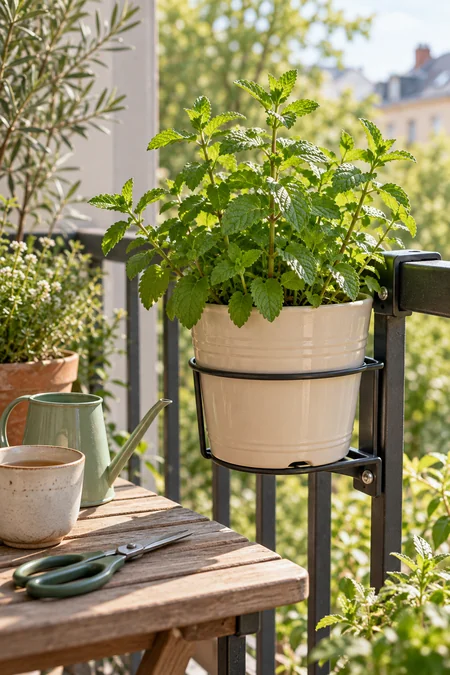
Mint can crowd neighboring herbs long before its leafy top looks especially large. Give it a separate pot held in a purpose-made railing holder, with a secure fit and drainage beneath the base.
A removable container makes it easier to check the roots and trim the plant at a table. Choose a leafy variety you enjoy in tea or cold drinks, then keep the mix moist without leaving the pot sitting in water.
Keep it manageable: shorten wandering stems before they reach nearby containers. When roots fill the pot and watering becomes difficult, divide or repot the plant rather than squeezing it back into the same space.
🌱 Check beneath the mint pot
Roots can emerge through drainage holes. Lift the pot out for checks, keep those holes clear, and avoid resting it directly on soil in another planter. Use the holder’s intended fastening system so the pot stays secure between checks.
5. Pair Upright Flowers With a Soft Trailing Edge
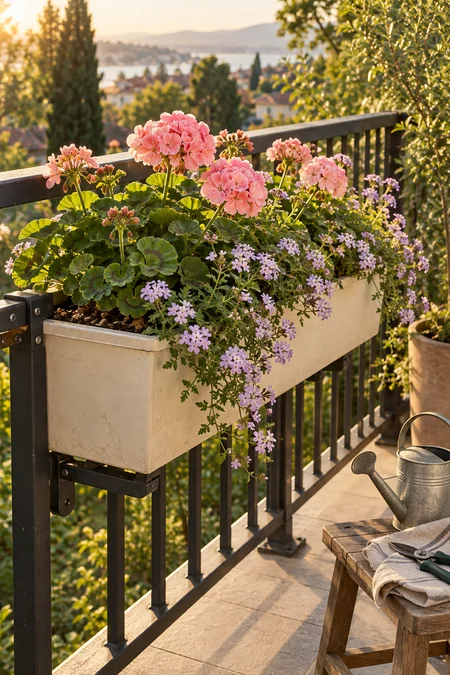
A compact upright flower gives a railing box some height, while trailing stems soften its hard front edge. Keep the tallest plant modest so the display still suits the scale of a small balcony.
For a sunny position, consider a compact zonal geranium with trailing verbena. Choose varieties with similar sun and watering needs, and check their mature spread before planting.
- Place the upright plant toward the rail, leaving room around its base.
- Set the trailer near the balcony-facing edge.
- Leave space for both to fill out instead of adding extra plants for instant fullness.
Keep trailing stems away from chair backs and the walkway below.
🌸 Build a balanced flower box
Toward the rail
Use a compact upright plant. Leave a gap around the stems for air and watering access.
Through the middle
Let existing plants fill this space. Add a mounding plant only if the box has room for its mature spread.
At the inner edge
Place the trailer where its stems can spill toward the balcony without catching on furniture.
6. Brighten a Shaded Railing With Begonias and Foliage
A shaded balcony does not have to mean an empty railing. Start with a shade-suited begonia, then add a compact foliage plant chosen for the same light and watering conditions.
- Use pale pink or white flowers where you want detail to stand out against a dark rail.
- Choose a small fern suited to your climate if the spot stays sheltered and evenly moist.
- Leave space between plants so damp leaves are not pressed together.
Check the light at the actual planter position. A railing near the balcony edge may be much brighter than the wall behind your chair. In very dim shade, expect slower growth and fewer flowers.
🌿 Match the planting to the shade
| Bright shade | Deeper shade |
|---|---|
| Open sky lights the planter, while strong direct sun is blocked. | Walls or an overhang block much of the sky and daylight. |
| Consider shade-suited flowering begonias. Follow the variety’s light guidance. | Favor shade-tolerant foliage, such as a suitable compact fern. Check moisture before watering again. |

7. Fill a Sunny Railing Box With Low-Growing Sedums
Keep a sedum planting low and open. A few spreading varieties can make a textured ribbon along a sunny railing without tall stems blocking the view from your seat.
Choose low-growing sedums suited to your local climate, and use a container mix intended for succulents. Drainage holes matter more than a decorative layer of gravel beneath the soil.
Leave some breathing room: begin with visible gaps between plants and let them spread. Water thoroughly when the mix has dried sufficiently, then let excess water drain away. Even drought-tolerant plants need attention while establishing, especially in a small box exposed to wind.
☀️ Give sedum roots a place to dry
✅ Do this
- Check the mature height so a tall sedum does not outgrow the plan.
- Use open drainage holes and a mix that drains freely.
- Choose winter-hardy varieties for your area if the box will stay outside.
🚫 Skip this
- A sealed decorative box that traps rain around the roots.
- Gravel at the bottom as a substitute for drainage holes.
- Assuming a plant’s hardiness in the ground guarantees survival in an exposed pot.

8. Choose Low, Compact Plants for a Breezy Balcony
Tall flowers can look tidy at the nursery and spend the afternoon bending across a windy railing. For a spot with regular breezes, choose low plants with compact growth, such as small sedums or creeping thyme where the light suits them.
- Check mature height before buying.
- Keep trailing growth short enough to avoid snagging on the railing.
- Feel the potting mix often because moving air can dry it quickly.
Plant choice cannot fix an exposed or poorly supported setup. If strong gusts are common, a sheltered floor-level container may be the better home for your garden.
🍃 Check the whole setup
- Choose hardware intended for your rail shape and the filled planter’s weight.
- Look for movement, loose fittings, or wear during routine checks.
- Keep the planting below the height where long stems catch every gust.
- Plan an accessible sheltered place to move removable planters before severe weather arrives.
9. Use a Self-Watering Railing Planter for Thirsty Summer Flowers
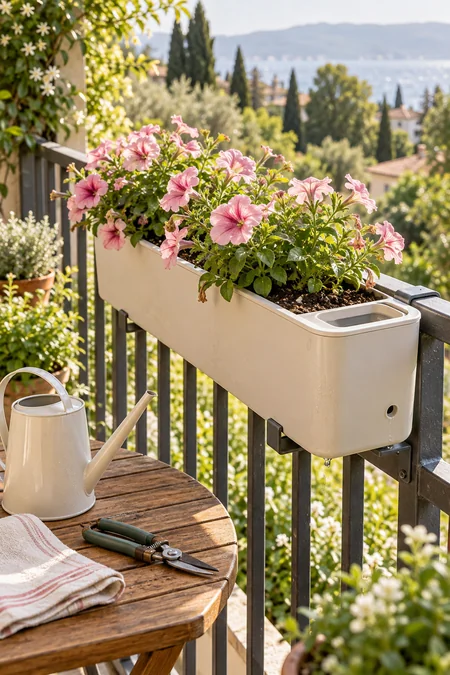
A water reservoir can stretch the gap between watering visits when summer flowers keep drying out. Choose a railing planter designed with a reservoir, a fill opening, and an overflow outlet, then match it with flowers that prefer fairly even moisture, such as petunias.
Follow the planter’s setup instructions. New plants may need watering from above until their roots can use the stored water.
Check before topping up: feel the growing mix and read any water-level indicator. A reservoir does not remove the need to check plants, especially after rain or during a hot spell. Include the stored water in the total weight your rail and fittings must support.
💧 Know what each part does
Reservoir
Stores water beneath the growing area. Use the recommended mix and wicking parts so moisture can reach the roots.
Fill opening
Gives access to stored water. Keep foliage clear of it and replace its cap if the design includes one.
Overflow outlet
Releases excess water. Keep it clear and direct drainage where it will not drip onto people or balconies below.
10. Fit a Saddle Planter Over a Compatible Rail
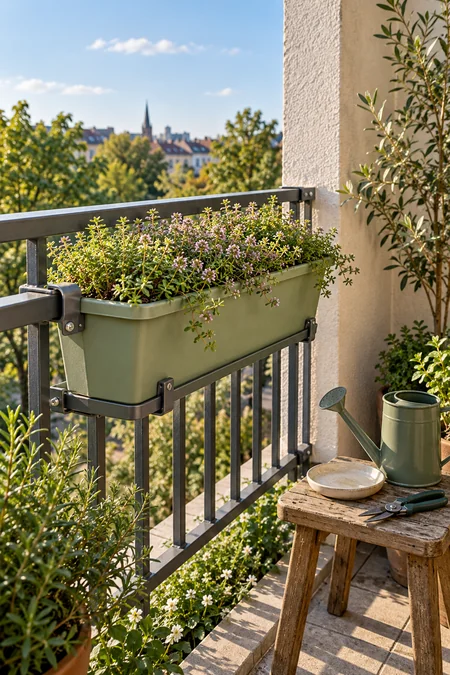
Check the rail before choosing the planter. A saddle planter has a shaped channel underneath that sits over a compatible top rail, keeping the container close to the railing instead of hanging from a long bracket.
Measure the rail’s width and note whether its top is flat, rounded, or angled. Compare those details with the planter’s stated fit range and fastening instructions.
Fit first, plant second. Test the empty container and install every required securing part before filling it. A planter that rocks or slides needs a different fit, not extra soil to hold it down.
📏 Check the fit before filling
- Measure the whole top rail. Include caps or trim that change its width or shape.
- Check the underside. Make sure posts and rail joints leave space for the planter channel and securing parts.
- Confirm access. Position the empty planter where you can reach both planting compartments, check fasteners, and manage drainage.
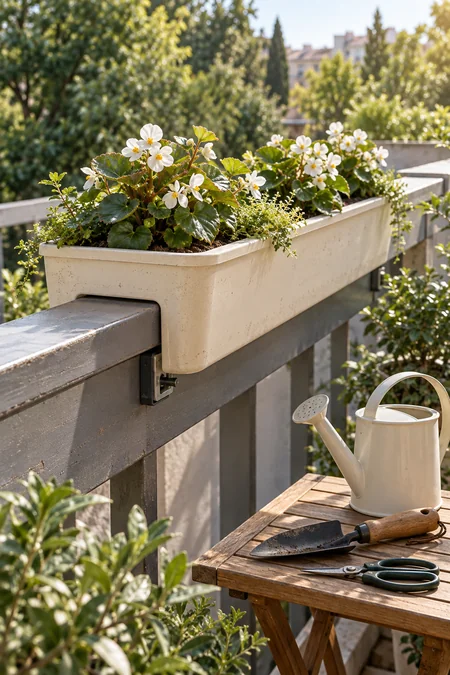
11. Hang a Slim Trough on the Inside of the Railing
The pot beside your balcony chair can steal just enough room to make every trip outside awkward. An inward-facing railing trough moves that planting above the floor while keeping it within reach for watering and trimming.
Choose a narrow box that still gives your plants enough root space. Compact flowers or small herbs are easier to fit here than large, spreading plants.
- Check how far the box and brackets project into the balcony.
- Leave room for the chair to move without hitting the planter.
- Position the trough where you can reach its full length from the floor.
Keep furniture away from the railing rather than using it as a step to reach plants.
🪴 Make room around the chair
BEFORE
A floor pot blocks the chair legs. Its saucer sits in the walking route, and the door catches the foliage.
AFTER
A suitable railing trough clears that floor area. Check that the door opens fully, the chair moves freely, and watering does not leave a slippery patch below.

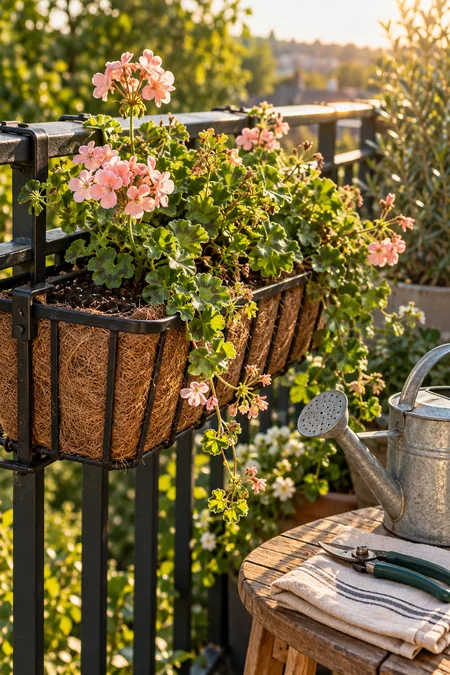
12. Add Cottage Texture With a Coir-Lined Railing Basket
The brown fibers of a coir liner soften the outline of a metal basket before the flowers fill out. Pair that texture with a modest trailing pelargonium for a sunny railing, or shade-suited begonias where the light is gentler.
Use a basket made for railing mounting, with a liner that fits closely enough to hold the potting mix.
Expect more moisture checks: exposed coir lets water evaporate through the sides. Feel the mix beneath the surface, especially near the basket edges. Water slowly so moisture reaches the root ball instead of rushing down a gap beside the liner.
💧 Watch the liner as well as the leaves
A dry-looking liner does not tell you how wet the whole root ball is. Check the mix before adding water. Replace a liner that has thinned enough to spill soil, and avoid sealing the basket with an unperforated plastic sheet that traps water.
13. Use Separate Pot Holders to Move Plants as the Light Changes
Separate railing pots let you adjust the planting when a nearby building or balcony overhang changes the shade. A basil plant can stay in a brighter stretch while a shade-suited begonia sits farther along the rail.
- Watch where direct sun reaches the railing at different times of day.
- Fit each pot into a holder designed for its shape and filled weight.
- Move pots when the light pattern changes enough to affect their growth.
There is no need to shuffle them every morning. Make changes gradually when moving a plant into stronger sun, and secure each pot again before leaving it in place.
☀️ Give each pot a suitable spot
Sunnier stretch
Consider basil, thyme, or sun-loving flowers. Keep their different watering needs in mind even when pots sit together.
Bright shade
Choose a shade-suited begonia or foliage plant. Check the variety’s guidance rather than relying only on the plant name.
Changing shade
Recheck the rail as seasons change. Leaves stretching toward the light can be a reason to reassess the position.
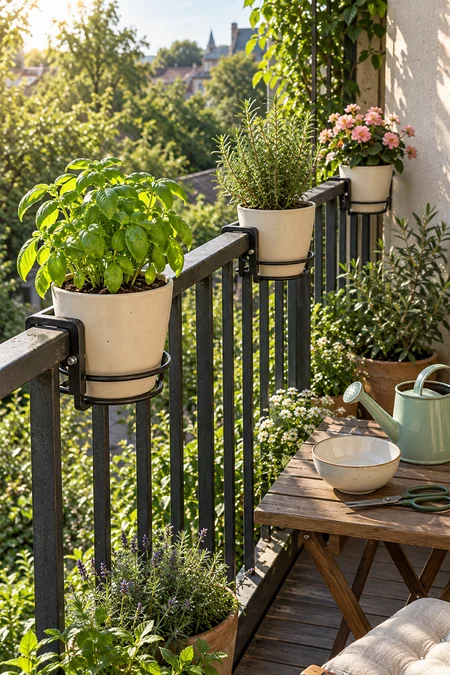
14. Slip Removable Nursery Pots Into a Railing Planter Shell
Planting directly into a box makes a full display, but separate nursery pots make seasonal swaps easier. Use a securely mounted outer planter that can hold the pots upright and let excess water escape.
Choose nursery pots large enough for the plants to keep growing. Leaving a vigorous plant in its tiny shop pot will make watering harder as the roots fill it.
- Leave enough space to grip each pot rim.
- Keep the outer planter’s drainage openings clear.
- Lift out a tired plant without pulling apart its neighbors.
Skip filling the gaps with loose soil. Keeping the pots separate is what makes this setup useful.
🪴 Check the removable-pot setup
- Pot bases sit flat without balancing on the shell’s rim.
- The shell supports the combined weight of every watered pot.
- Water can leave both the nursery pots and the outer container.
- Each plant lifts out without catching on a bracket or neighboring stems.
- Any removal or fastening system works as intended with the inner pots in place.

15. Repeat Matching Planter Boxes With Deliberate Gaps
A row of matching boxes can make a mixed planting look calmer. Repeat the same container shape and finish, then leave sections of bare rail between them so the balcony still feels open.
Start with the places you need to keep clear: the door, the chair you pull out, and the corner where you turn with a watering can. Arrange the boxes around those everyday movements.
Repeat a small detail: use the same flower color or leaf shape in each box, while choosing plants that suit that section’s light. Matching containers do not need identical plants, and equal spacing matters less than room to use the balcony comfortably.
🌿 Leave gaps where they help most
Beside seating
Leave room for the chair back and elbows. Check the layout with the chair pulled out, not only tucked away.
At corners
Stop boxes short enough that mature foliage will not collide with plants on the adjoining rail.
Around fittings
Keep fastening points visible and reachable. Leave required handrail access clear rather than filling every gap.
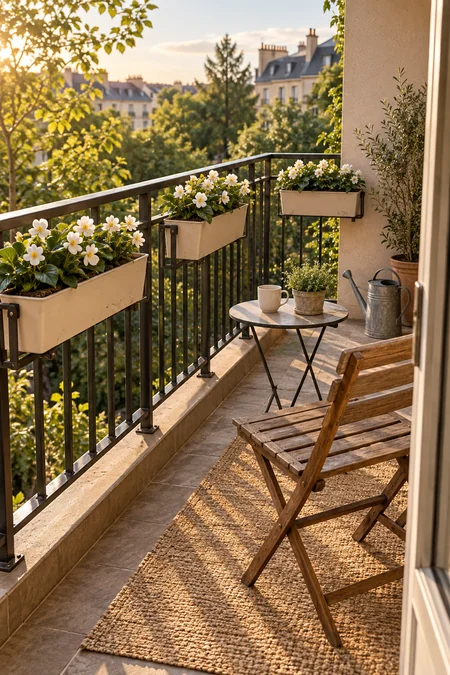
16. Plant a Fragrant Railing Box Beside Your Balcony Seat
Fragrance is easier to notice when the flowers are close to where you sit. Place a small railing box near your usual balcony seat, leaving room for the chair and a clear path past it.
Choose plants for scent as well as color. Sweet alyssum can bring a light, honey-like fragrance, while some compact dianthus varieties have a clove-like scent.
- Check that the variety is fragrant before buying.
- Match its light needs to that section of railing.
- Leave growing room so stems do not press against your shoulder.
Start with one scented planting. Its fragrance may be subtle outdoors, especially when a breeze carries it away from your seat.
🌼 Choose a scent that suits the spot
| Plant choice | Light and watering fit |
|---|---|
| Sweet alyssum | Sun to part shade. Keep container mix evenly moist without soaking it. Some afternoon shade can help in hot weather. |
| Fragrant compact dianthus | A sunny position and freely draining mix. Let the surface begin to dry between waterings, and avoid leaving the roots soggy. |

Start With One Railing Planter
Start with the railing planter ideas that fit the way you use your balcony. A box near your chair, planted for the light it actually receives, gives you a manageable place to begin. Check the fit, leave room for roots, and keep watering access simple.
Let that first planting show you what works before adding more. You may find that a short stretch of flowers or herbs gives you plenty to enjoy while keeping the floor open for everyday life.
Save this list to your gardening Pinterest board for the next time you plan a balcony refresh.