
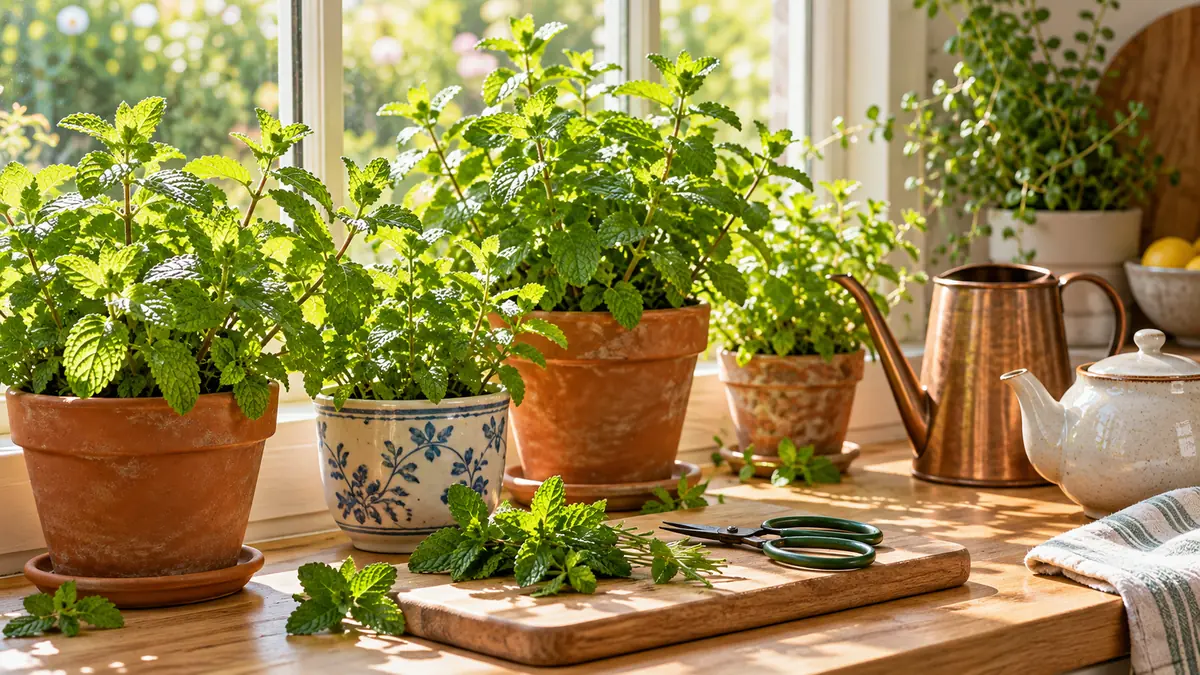
A pot of mint can look full at the store, then turn thin and floppy beside your kitchen sink. Before you blame your watering, check the light. Mint needs a bright growing spot, and even a familiar variety can struggle on a dim counter.
Choosing the best mint varieties for indoor growing starts with how you plan to use the leaves. Spearmint makes sense for everyday cooking. Peppermint suits a stronger brew. Fruity and variegated types earn their space when you enjoy their scent, flavor, or foliage enough to keep picking and tending them.
The choices below include familiar mint types and named selections, with practical reasons to grow each one. They share a few basics: a pot with drainage holes, potting mix that stays lightly moist without sitting soggy, and enough light to support fresh growth. A grow light can help when window light falls short. Start with a plant you will actually use, give it its own container, and build your collection as your space allows.
1. Spearmint for an Everyday Kitchen Mint
Spearmint is a sensible first choice when you want one pot to serve several kitchen jobs. Its familiar mint flavor works in chopped salads, yogurt sauces, and a glass of water beside lunch.
Start with a healthy young plant in a draining pot near your brightest suitable window.
- Snip a stem just above a pair of leaves to encourage branching.
- Leave plenty of foliage after each harvest.
- Turn the pot when growth begins leaning toward the glass.
Choose it for regular use. A few fresh sprigs are easier to fit into daily meals than a large harvest you have no plan for.
🌿 Match the pot to your kitchen
Cooking habit
Keep closed herb scissors nearby so small harvests fit into meal prep.
Light check
Long gaps between leaves can signal that the growing spot is too dim.
Root space
Give mint its own container so spreading roots do not crowd another herb.

2. Peppermint for a Stronger Cup of Mint Tea
A small harvest of peppermint brings a sharper, more cooling flavor to a mug than spearmint usually does. It is worth growing when fresh mint tea is already part of your routine.
Begin with a few washed leaves, steep them, and adjust the next cup to your taste. More leaves do not always make a more pleasant drink.
Growing note: Buy a labeled plant or take a cutting from a known peppermint plant. Peppermint is a hybrid, so seed is not a dependable way to reproduce it. Keep the pot away from a heating vent, where the mix can dry quickly.
| Peppermint | Spearmint |
|---|---|
| Try a light brew first if you prefer a gentler drink. | A useful starting point for a softer mint flavor. |
| Pair a small amount with cocoa for a minty variation. | Pair with lemon slices for a fresh-tasting infusion. |
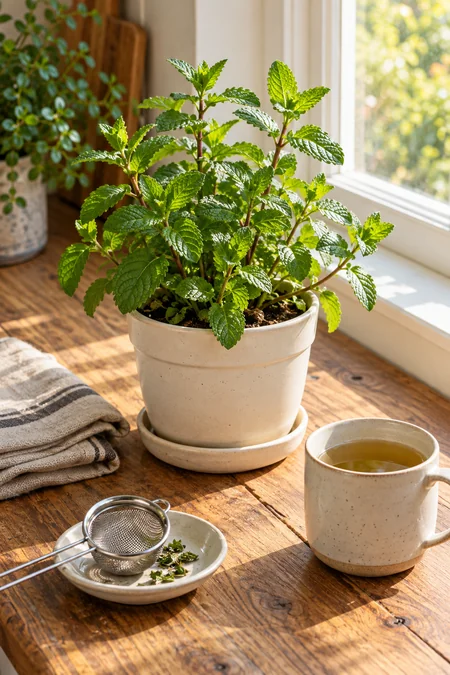
3. Chocolate Mint for Cocoa and Dessert Garnishes
The name promises more chocolate than the plant may deliver. Chocolate mint is a peppermint selection, and its cocoa-like scent can be subtle. Expect mint first, with a scent that some growers find chocolatey.
That still gives it a useful place near a kitchen window.
- Add a small washed sprig beside a bowl of berries.
- Steep a few leaves in warm milk before making cocoa, then strain.
- Use tender tips as an edible dessert garnish.
Choose a live plant from a clearly identified source. Its often dark stems add interest, but stem color alone cannot confirm that you have chocolate mint.

4. Apple Mint for Mild Flavor and Soft, Fuzzy Leaves
Soft, rounded leaves give apple mint a different look from the sharper outline of spearmint. The foliage has a fuzzy texture, and its mild mint scent can carry an apple-like note.
Give this vigorous mint room on a broad shelf or counter beside the window. A tiny decorative pot soon becomes limiting.
Kitchen tip: Steep the leaves and strain them out if you dislike their fuzzy texture in food. For a cold drink, make the infusion first, let it cool, and then refrigerate it.
Trim long stems above a leaf pair while the plant is actively growing. Keep enough foliage for it to recover between pickings.
💡 When the pot starts drying unusually fast
Check the roots before adding more water to your routine. A dense mass of circling roots can mean apple mint needs dividing or moving into a slightly larger draining pot. Leave space between its leaves and neighboring plants.
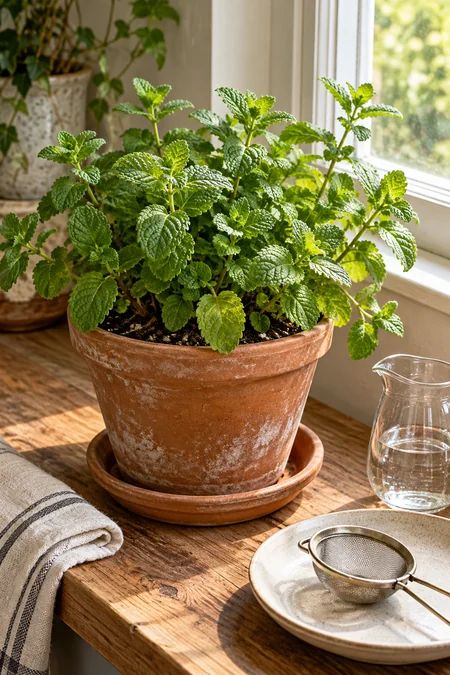
5. Pineapple Mint for Cream-Edged Leaves on a Bright Windowsill
Choose pineapple mint when you want useful foliage with a little pattern. This variegated apple mint has green leaves edged with cream, plus a fruity mint scent that may suggest pineapple.
The pale leaf edges make it easy to spot among plain green kitchen herbs. Give it a bright growing position, and introduce stronger direct sun gradually.
- Start with a named plant to keep the variegated character.
- Inspect new stems for shoots carrying only green leaves.
- Remove those fully green shoots at their base if you want to preserve the mixed foliage.
It can supply occasional sprigs for infusions, but do not expect the flavor of pineapple juice.
🌿 Keep the pattern
Check whole shoots, not just single leaves. A healthy shoot with cream-edged leaves is the right choice when taking a cutting.
✂️ Skip the shortcut
Do not keep a fully green shoot just because it looks stronger. Green growth can outpace the variegated stems and gradually take over the pot.
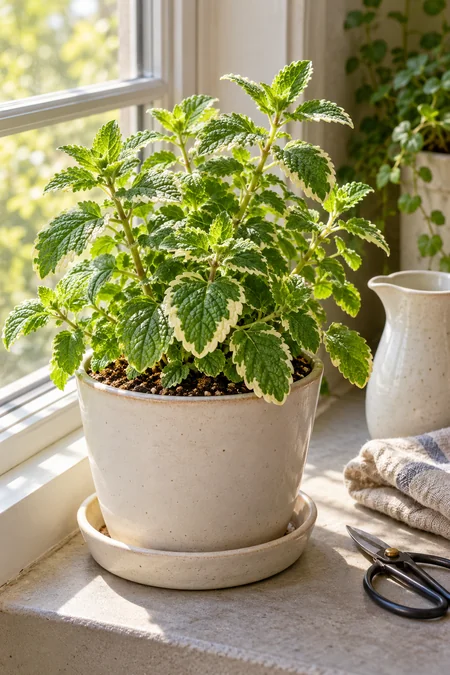
6. Orange Mint for Fragrant Leaves in Homemade Infusions
Orange mint offers a citrus-like scent alongside mint, making it worth a spot if you enjoy experimenting with homemade drinks. Its aroma can seem more floral than freshly peeled orange, so choose it for the leaves you actually like.
Before buying a plant in person, ask whether you may gently rub a leaf and smell it.
- Choose firm stems and healthy new growth.
- Check beneath the leaves for pests.
- Look for a clear variety name on the nursery label.
At home, steep a small sprig on its own before adding other herbs. That first plain cup helps you decide which flavors to pair with it.
🌿 Before the new pot joins your herbs
- Keep it apart from established plants while watching for hitchhiking pests.
- Check that the inner pot can drain freely inside any decorative cover pot.
- Keep the nursery label so you can find the same selection again.
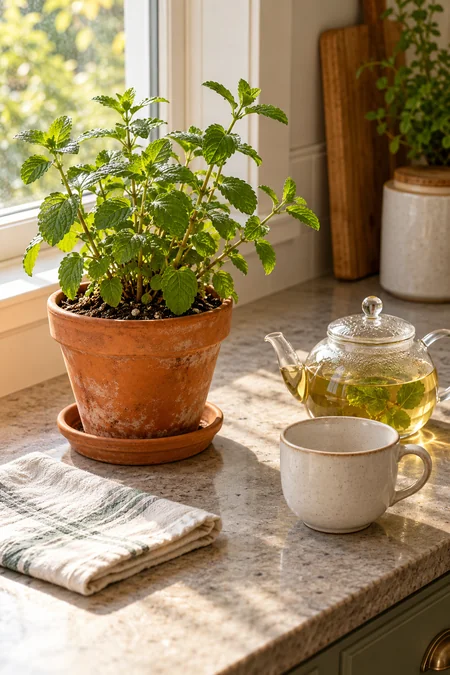
7. Moroccan Mint for Fresh Tea and Frequent Snipping
Fresh sprigs of Moroccan mint give a familiar spearmint character to a pot of tea. This spearmint selection makes sense when brewing leaves is the main reason you want an indoor mint plant.
Set it where you can reach the stems without moving a row of other pots. Easy access makes small, regular harvests more practical.
Harvest rhythm: Let a young plant establish before taking much foliage. Snip above leaf pairs and leave shorter shoots to keep growing. If new growth slows, reduce picking and check the light.
A modest indoor pot supplies occasional sprigs. Frequent large teapots may call for more than one well-lit plant.
🍵 Build a practical tea-growing spot
Catch the drips
Use a removable saucer and empty collected water after watering.
Protect the leaves
Keep foliage clear of hot kettle steam and cold window glass.
Support new growth
Add a suitable grow light if window light cannot support steady, leafy growth.
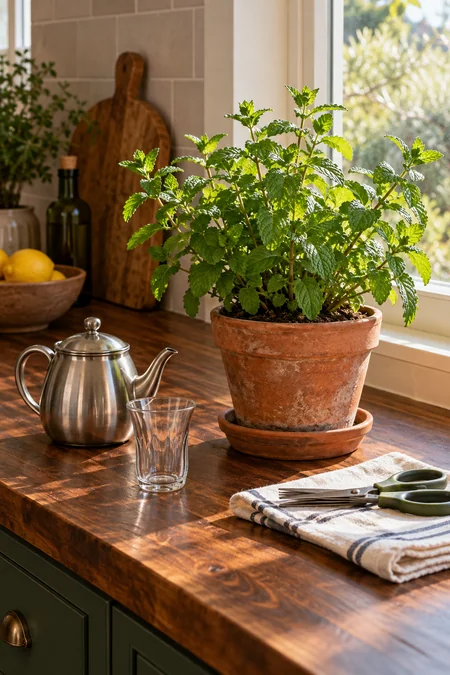
8. Kentucky Colonel Mint for Large Leaves You Can Easily Pick
Large leaves make Kentucky Colonel mint useful when you want mint you can quickly rinse, chop, or tuck into a drink. This spearmint cultivar earns its space through convenient harvests, especially if tiny sprigs feel fiddly during meal prep.
Give it a stable pot and room for upright growth. It is a vigorous kitchen herb, so plan to manage its size.
- Trim stems above a leaf pair instead of stripping every leaf from a long stalk.
- Check the roots when the pot becomes crowded.
- Divide an established, healthy clump when it outgrows your available space.
A broad windowsill or bright counter suits it better than a narrow ledge.
💡 Trim for space, check for light
A leafy plant filling its corner may need a trim. Long, weak stems with widely spaced leaves may need better light. Cutting back repeatedly will not fix a growing spot that stays too dim.

9. Mojito Mint for Fresh Lime Drinks and Simple Syrups
Buy a named mojito mint plant if fresh lime drinks are what you make most often. Its aromatic leaves are useful in sparkling water, alcohol-free mojitos, and mint syrup for homemade drinks.
Nurseries sometimes use the word mojito loosely, so check the plant description rather than choosing by a drink photo on the label.
Kitchen shortcut: Gently press washed leaves to release their aroma. Grinding them into tiny pieces leaves bits floating through the drink.
Keep the plant in its bright growing spot between harvests. A dim drinks cart may look inviting, but it will not support the fresh growth needed for regular picking.
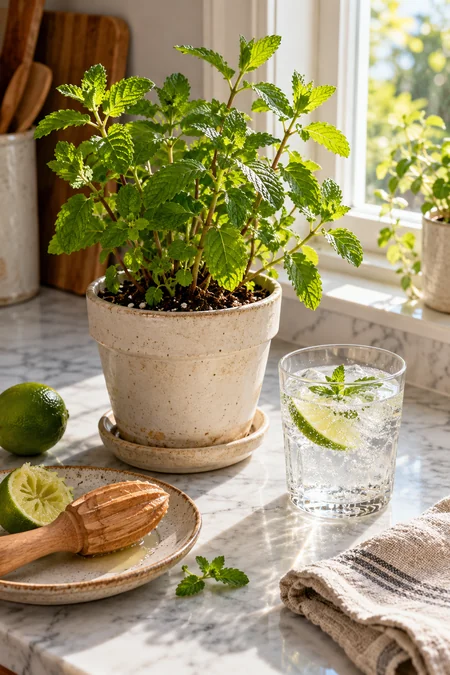
10. Curly Mint for Textured Leaves and Neat Garnishes
Crinkled leaves are part of curly mint’s appeal. This curly-leaved spearmint brings texture to a small herb collection and provides sprigs that look distinctive beside fruit or on a finished dessert.
Keep the foliage easy to inspect. Its folds can hide dust and small pests, especially when stems crowd together.
- Check both sides of the leaves during routine care.
- Rinse harvested sprigs under gentle running water.
- Let them drain before adding them to food.
Curly mint suits growers who enjoy a decorative, edible plant. Choose healthy new growth with the expected crinkled shape, and investigate sudden distortion rather than assuming every curled leaf is normal.
🔎 Read the leaves before you snip
- Compare new leaves with older healthy leaves on the same plant.
- Look more closely if you notice sticky residue, fine webbing, or pale speckling.
- Keep a suspect plant apart from neighboring herbs while you identify the problem.
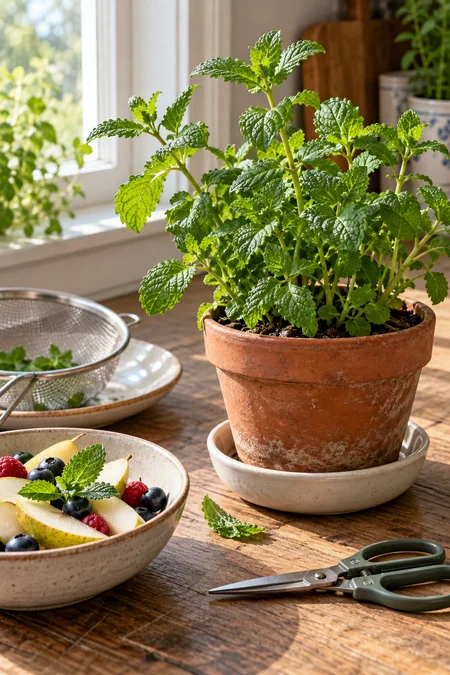
11. Strawberry Mint for Delicate Fruit-Scented Garnishes
A small strawberry mint sprig can finish a bowl of berries without taking over the whole dish. This specialty mint is grown for a fruity scent that can suggest strawberries, though the strength of that note varies between plants.
Use it where you can notice a gentle aroma.
- Add washed tender leaves to a small serving of fruit.
- Try a sprig in plain sparkling water before adding other flavors.
- Chop a little into yogurt just before eating.
Give it a useful spot: Keep the pot near a bright kitchen window, with its stems clear of neighboring foliage. Buy a named plant so you know which selection you are trying.
🍓 Find a pairing you will use again
Start plain
Try one simple food or drink so other flavors do not hide the mint.
Keep it fresh
Prepare tender leaves near serving time instead of leaving chopped herbs out.
Make a note
Record the pairing you liked before trying a different specialty mint.
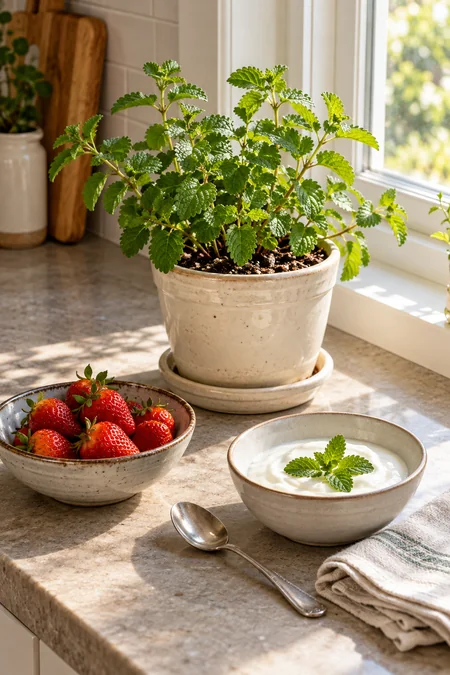
12. Banana Mint for Growers Who Enjoy Unusual Herb Scents
Banana mint belongs on the shortlist for curious herb growers, especially those who already have an everyday cooking mint. Its appeal is a scent often described as banana-like, not a promise that the leaves will taste like ripe fruit.
If possible, smell a nursery plant before buying it. The name alone cannot tell you whether you will enjoy it.
Start small: Try a washed leaf in a little fruit salad or make a light infusion. Keep the first taste separate from a whole recipe.
Give it bright light and a pot that drains freely.
📌 Choose curiosity without crowding the window
Treat banana mint as a trial plant if growing space is tight. Keep the nursery name with the pot and note whether you enjoy its scent, use its leaves, and have enough light for healthy growth before adding more specialty varieties.

13. Grapefruit Mint for a Citrus-Scented Herb Collection
Leave elbow room for grapefruit mint. Its citrus-scented foliage gives you another option for fresh infusions, but a vigorous plant can soon stretch beyond the small corner where it started.
Place its pot where you can reach around the leaves and check the soil. Avoid wedging it behind taller herbs.
- Taste a light infusion before mixing it with stronger mints.
- Trim healthy stems above leaf pairs to manage their spread.
- Move nearby pots apart when their foliage begins touching.
The grapefruit note can be subtle, so keep expectations closer to an aromatic herb than a glass of citrus juice. It earns its place when you enjoy that scent regularly.
🌿 Make room for care
Keep the pot rim accessible and the saucer removable. You should be able to check moisture and empty drainage water without bending stems aside.
✂️ Avoid constant crowding
Do not tuck a vigorous mint behind other pots to hide long stems. Improve its light and spacing, then trim or divide it as needed.

14. Ginger Mint for Savory Dishes and Herbal Blends
Ginger mint gives you mint with a spicy aromatic note to try in simple food and drinks. It does not supply the heat of fresh ginger root, so taste the leaves before using it as a substitute in a recipe.
A little chopped into a cucumber salad is an easy first test.
Plant choice: Some ginger mint selections have yellow-marked foliage. Check the nursery description so you know what healthy growth should look like.
Keep harvests light while the plant settles into its indoor position. Save heavier picking for active, leafy growth.
| Fresh in food | Steeped in a drink |
|---|---|
| Use tender leaves and chop them close to serving. | Use washed leaves and strain them out before drinking. |
| Test a small portion before seasoning the whole bowl. | Taste the mint alone before adding other herbs. |
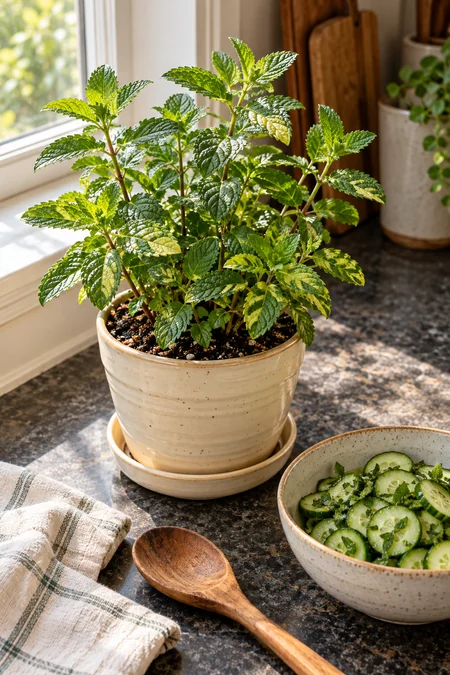
15. Basil Mint for a Different Twist on Savory Mint
Your usual mint may suit tea, while basil mint gives you a reason to snip leaves for dinner. This specialty mint is named for an aroma that can suggest basil, though its flavor still needs a small taste test before you build a dish around it.
Start with a simple food that leaves room for the herb.
- Stir a little chopped leaf into plain yogurt.
- Add a small amount to sliced tomatoes.
- Sprinkle tender leaves over warm vegetables just before serving.
Give its spreading roots a separate container in a bright growing spot.
🍽️ Make the first taste useful
Yogurt spoonful
Try the herb before adding garlic or spices that could hide its flavor.
Tomato slice
Compare a plain bite with an herb-topped bite before dressing the whole plate.
Warm vegetables
Add tender leaves after cooking to keep their fresh aroma noticeable.
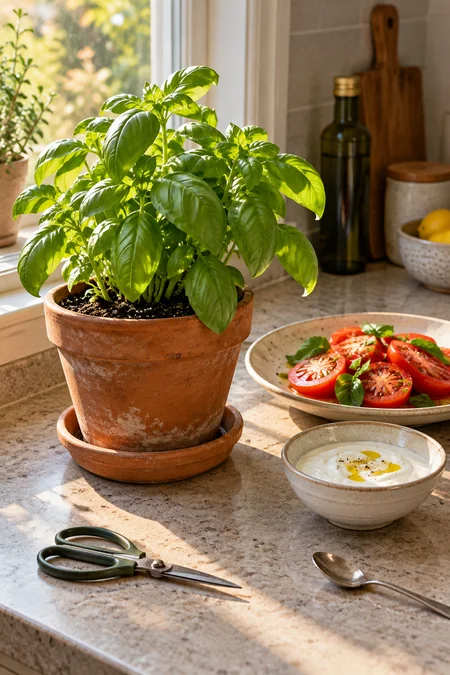
16. Lavender Mint for Floral Tea Blends
Lavender mint offers a floral note for growers who enjoy fragrant herbal drinks. It is a mint selection with a lavender-like aroma, so expect leafy mint growth rather than the woody stems and narrow leaves of a lavender plant.
Start with a light infusion to see how the floral character tastes to you. Then blend a little with familiar spearmint if you prefer a gentler introduction.
Growing tip: Give it bright light and check the potting mix before watering. Despite its name, treat it as mint rather than letting it dry out like a Mediterranean lavender.
Choose it for the scent of its leaves. Indoor flowering is not needed to make this plant useful.
🍵 Keep the floral note in balance
If the first cup tastes too perfumed, use fewer lavender mint leaves next time. When blending, let a familiar mint provide most of the leaves and add lavender mint as a small accent. Adjust one ingredient at a time so you can repeat a blend you enjoy.

Start With a Mint You Will Actually Use
The best mint varieties for indoor growing are the ones that fit your light, space, and kitchen habits. Start with spearmint for everyday meals or peppermint for a stronger cup of tea. Add a specialty variety when its scent or foliage gives you a clear reason to grow it.
Give each plant its own draining pot, keep the mix lightly moist, and leave enough leaves after picking for fresh growth. A small collection you can care for comfortably is easier to enjoy.
Save this list to your indoor herb garden board so you can compare varieties before your next nursery visit.