

Basil can droop while its soil is still wet. Thyme can look dry on top while moisture lingers farther down. If you are learning how to water indoor herbs, those mixed signals can make every refill of the watering jug feel like a guess.
A better routine starts with the pot and the soil. Each herb uses water at its own pace, and the same plant may dry out faster beside a bright summer window than during a dim winter week. Watering every pot on the same day can leave one too wet and another too dry.
This guide walks you through checking moisture, deciding when water is needed, soaking the root ball, and letting excess water escape. You will also learn how to respond when a pot has stayed wet too long or dried out more than intended.
Allow about 5–10 minutes of active care for a small collection, plus draining time. You do not need an expensive moisture meter or a strict calendar. Start with a pot you can drain, a few soil checks, and a willingness to treat each herb separately.
These times cover routine care. A stressed herb may need several days or longer to show improvement.
- A small watering jug with a narrow spout
- Room-temperature water
- Herb pots with drainage holes
- Saucers or removable decorative cover pots
- A sink or draining tray where pots can drain freely
- An optional plain wooden skewer for checking deeper moisture
- Choose a pot that lets excess water escape.
- Match your moisture target to the herb.
- Check the soil below the surface.
- Decide whether this pot needs water today.
- Pour water slowly across the soil.
- Let the pot finish draining.
- Empty water from the saucer or cover pot.
- Adjust your checks as light and growth change.
- Help an overwatered herb dry safely.
- Rehydrate an underwatered root ball gradually.
These are alternative responses to different problems. Check the soil before choosing either one.
How to water indoor herbs: choose a pot that lets excess water escape
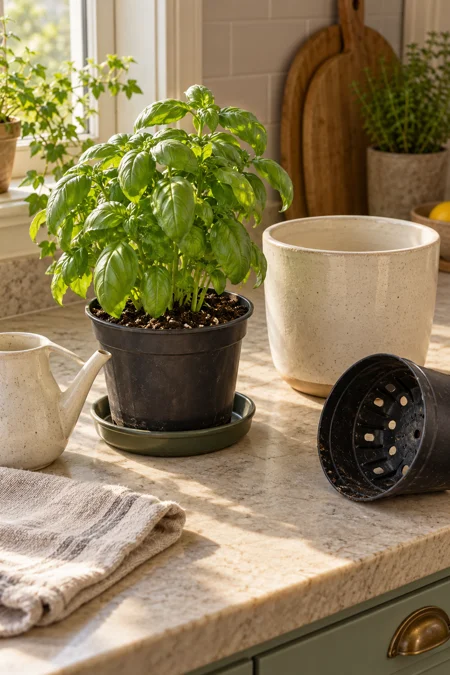
A decorative pot can hide standing water even when the soil surface looks dry. Use a growing pot with open drainage holes, either on a saucer or inside a cover pot you can remove.
Keep a healthy herb in its current draining pot if it fits well. When repotting is needed, choose a container only about 1–2 inches wider than the root ball. A much larger pot can stay wet longer. Stones at the bottom cannot replace drainage holes.
Water needs a clear route out of the growing pot.
Avoid a large ring of unused, slow-drying soil around a small root ball.
The inner pot should lift out so you can drain it and empty the outer pot.
Match Your Moisture Target to the Herb
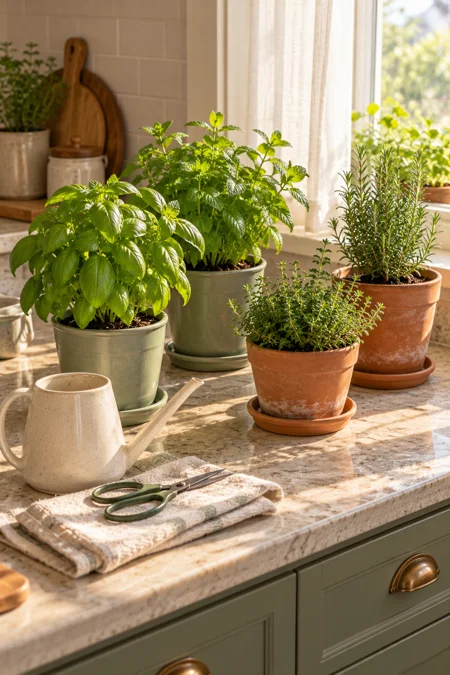
Basil and mint usually prefer more even moisture than thyme and rosemary. That does not mean their roots should stay soaked.
For basil or mint, aim to water as the upper soil starts drying, before the whole root ball becomes parched. Let thyme and rosemary dry farther down between waterings. Pot size and growing conditions affect that gap, so treat these as starting points rather than fixed dates.
Prefer more even moisture around the roots.
Watch for the upper soil starting to dry. Avoid letting the entire root ball become parched.
Prefer more drying between waterings.
Check below the surface. A dry-looking top layer can still hide wet soil underneath.
Check the Soil Below the Surface
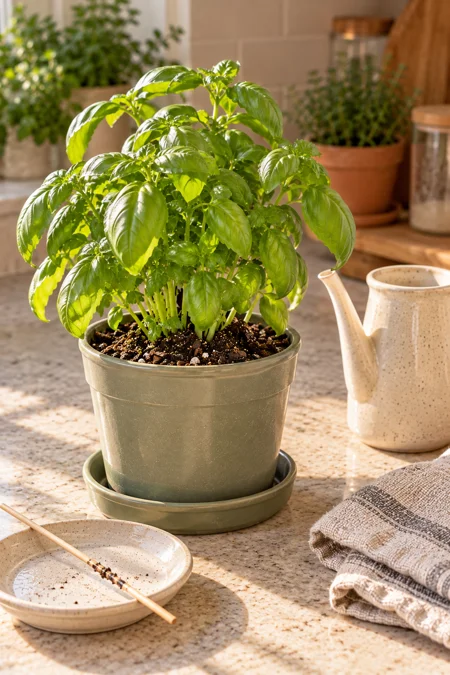
The top layer dries first, so look beneath it before reaching for water. Press a finger gently about 1 inch into the mix near the pot’s edge, away from the main stem.
Notice whether it feels wet, lightly damp, or dry. For a deeper clue, slide a plain wooden skewer gently into the mix without forcing it through roots. Damp soil often darkens the wood or clings to it. Compare that result with pot weight: a recently watered pot usually feels heavier than the same pot when drier.
Check about 1 inch deep. Is the mix wet, lightly damp, or dry?
A wooden skewer can reveal moisture farther down. Stop if you meet resistance.
Learn how it feels after watering and again as it dries. Different pots are not a reliable comparison.

Decide Whether This Pot Needs Water Today
If the mix is still wet below the surface, leave the watering jug aside—even when the leaves droop. Wet roots can struggle to supply water to the plant, so drooping alone is not a reason to add more.
For basil or mint, water as the upper soil starts drying while some moisture remains deeper down. Give thyme and rosemary more drying time. When the clues disagree, check another spot. A lighter pot and drier soil together offer better evidence than leaf appearance alone.
Remember: Yellow leaves and drooping can have several causes. Soil moisture helps you choose the right next action.
Pour Water Slowly Across the Soil
Use room-temperature water and a narrow spout to wet the soil around the plant, keeping the stream gentle. Move around the pot instead of pouring against one stem.
Pause whenever water gathers on the surface. Continue in slow passes until the root ball is moistened and excess water begins leaving the drainage holes. There is no single cup amount that suits every container. Frequent tiny sips can leave deeper roots dry, while a thorough watering followed by the right drying interval reaches more of the root zone.
Guide a gentle stream around the plant rather than onto the leaves or against one stem.
Let it soak in before adding another slow pass. Keep water below the rim.
The amount depends on the pot, mix, and starting moisture—not a universal cup measurement.
Let the Pot Finish Draining
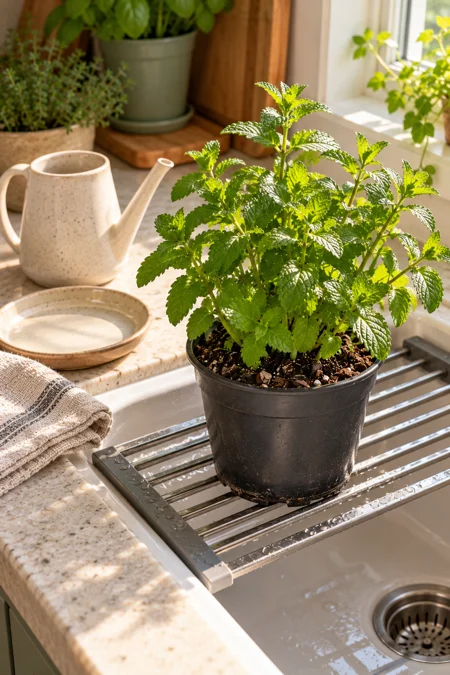
A few drops may continue after the main flow stops. Leave the pot upright over a sink or on a stable rack above a collecting tray, with its drainage holes clear of pooled water.
Wait until dripping has largely stopped before returning it to its growing spot. Drainage time varies with the mix and container. If runoff appeared immediately but the root ball still feels dry, check for water bypassing the soil rather than treating fast drainage as proof of thorough watering.
No fixed timer needed: Watch the drainage. Returning a pot to standing water undoes the benefit of letting it drain.
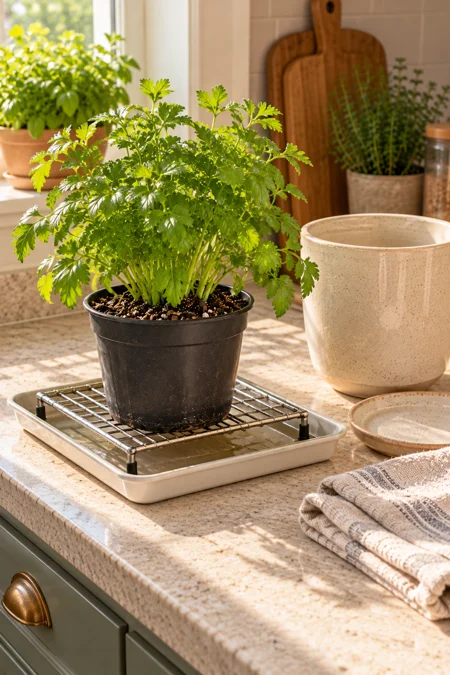
Empty Water From the Saucer or Cover Pot
Even a well-drained pot can release a little more water after you put it back. Empty the saucer or decorative cover pot before returning the herb to its place.
Check again after about 15 minutes and discard any new puddle. The pot’s base should stay above collected water. A deep cover pot makes this easy to miss, so lift out the inner pot to look.
Empty water left in the saucer or cover pot.
Look for a fresh puddle from the last few drainage drops.
Keep the pot’s base out of standing water.

Adjust Your Checks as Light and Growth Change
How often to water indoor herbs depends on how quickly each pot dries. During your first week, check moisture daily without automatically adding water. Use those observations to set a checking rhythm.
Brighter light, active growth, and warm rooms can speed drying. Dimmer winter conditions often slow it, although indoor heating may dry some pots faster. Terracotta usually loses moisture faster than plastic. After moving a plant or changing its light, check more often until you know its new pace.
- The window becomes brighter or warmer.
- The herb starts growing quickly.
- Heating makes the room warm and dry.
- A small or porous pot loses moisture quickly.
- Days are dimmer and growth slows.
- The growing spot stays cooler.
- The potting mix remains damp longer.
- A less porous container retains moisture.

Help an Overwatered Herb Dry Safely
Persistent wet soil calls for a pause, not another splash. Hold off on watering until the mix reaches that herb’s moisture target, and remove any water trapped beneath the pot.
Keep the plant in suitable light with gentle air movement. Do not use a heater or sudden harsh sun to force drying. Overwatering indoor herbs often means watering again before the roots have had enough air. If wet soil accompanies worsening wilt, a sour smell, or a soft stem base, inspect the roots rather than waiting indefinitely.
Empty trapped water, pause watering, and keep the herb in suitable light. Resume watering only when soil checks show it is ready.
Gently slide out the root ball for inspection. Firm roots are more reassuring than roots that feel mushy or lose their outer layer. Color alone does not confirm rot.
If roots are rotting, remove clearly soft, dead sections with clean scissors and repot the remaining healthy roots in fresh, lightly moist potting mix and a clean draining pot sized to fit. Severe rot may prevent recovery.
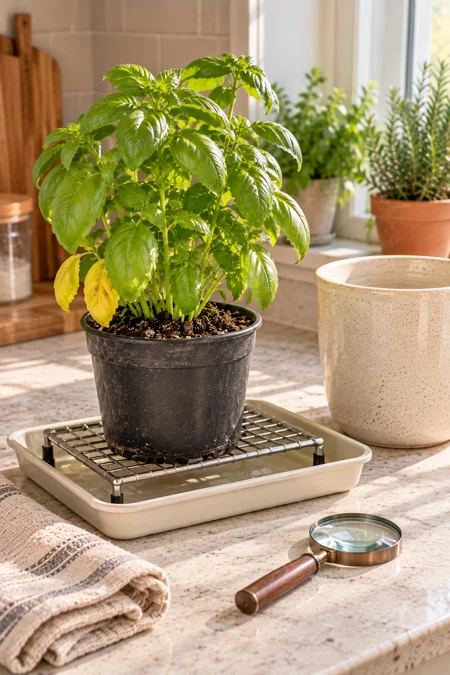
Rehydrate an Underwatered Root Ball Gradually
A very light pot, dry soil below the surface, and limp leaves together are useful signs of underwatered indoor herbs. Dry mix may shrink from the pot’s sides, letting water escape around it.
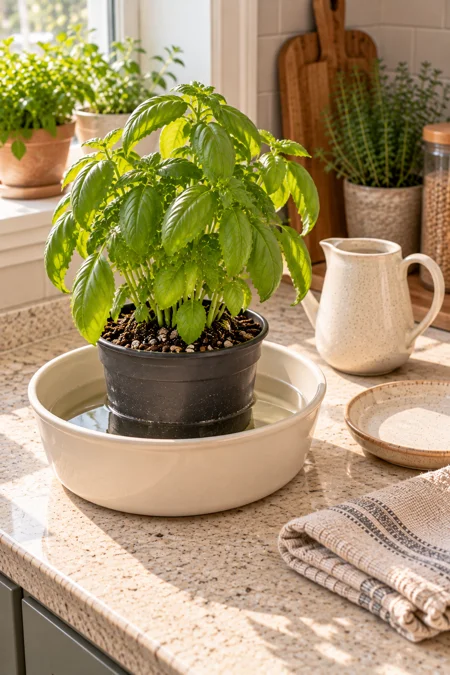
Apply room-temperature water in slow passes, pausing to let each pass soak in. If water keeps bypassing the dry root ball, use the short soak below. Drain thoroughly afterward.
Check the plant later that day, but do not add more water while the mix remains moist. Crisp leaves may stay damaged even if the remaining plant recovers.
Check after 10–15 minutes. Look for a heavier pot and moisture reaching farther into the mix. If the root ball is still dry, allow a little longer and check again rather than leaving it unattended.
Stage 5 complete. Waiting for “continue.”
Stage 6 — Troubleshooting and FAQ
Troubleshoot Watering Problems Before Adding More Water
A struggling herb does not always need another drink. Check below the soil surface and look inside the saucer or cover pot before choosing a fix. Leaf symptoms help you spot trouble, but the root-zone moisture helps you decide what to do.
| If this happens | Try this |
|---|---|
| Leaves droop while the soil is wet. | Pause watering and empty trapped water. Keep the herb in suitable light. If wilting worsens or the stem base softens, inspect the roots for damage. |
| Leaves droop, the pot feels light, and deeper soil is dry. | Rehydrate the root ball with slow watering. Use a short monitored soak if water bypasses the dry mix, then drain thoroughly. |
| Water runs out immediately, but the pot stays light. | Check for dry mix pulling away from the pot’s sides. Water may be escaping through that gap. Confirm that moisture reaches inside the root ball before calling the watering finished. |
| The mix stays wet much longer than usual. | Check for blocked drainage holes, trapped water, reduced light, or an oversized pot. If the mix remains dense and soggy, consider repotting into a suitable container potting mix rather than adding gravel underneath. |
| Lower leaves turn yellow. | Check moisture before changing the watering routine. Yellowing can also come from older leaves, poor light, pests, or nutrient problems. Do not assume it always means too much or too little water. |
| The herb stays limp after dry soil has been moistened. | Allow time to respond without repeatedly soaking it. Check for heat stress and root or stem damage if wilting persists. Crisp, dead leaves will not recover, even when surviving growth improves. |
Answer Common Indoor Herb Watering Questions
How often should I water indoor herbs?
There is no reliable weekly schedule for every herb. Check moisture daily while learning how quickly each pot dries, then water according to the plant’s needs and the soil condition. A reminder to check is more useful than a reminder to pour.
How much water should I give each pot?
Use enough to moisten the root ball evenly and allow excess water to leave the drainage holes. The amount changes with pot size, potting mix, and how dry it was beforehand. Empty the saucer afterward rather than leaving runoff beneath the roots.
Can misting replace watering?
No. A light mist on the leaves does not supply enough water to the root ball. Use soil checks to guide watering, and do not treat wet leaves as proof that the roots have enough moisture.
Is watering from the top or bottom better?
Slow top watering works well for routine care when the mix absorbs water evenly. A short bottom soak can help rewet dry mix that repels water, but remove the pot once it has taken up moisture and let it drain. Neither method makes it safe to leave a standard herb pot standing in water.
Should I water less in winter?
Often, lower light and slower growth mean longer gaps between waterings. Warm indoor heating can change that pattern, so keep checking the mix. When watering is needed, moisten the root ball properly instead of giving a smaller splash because it is winter.
Can I water all my herbs at the same time?
You can check them together, but water only the pots that need it. Basil and mint generally need more even moisture than thyme and rosemary. Separate pots make those different needs easier to manage.
Stage 6 complete. Waiting for “continue.”
Stage 7 — Quick Reference Card and Conclusion
Keep This Indoor Herb Watering Checklist Nearby
Check the soil, water when needed, and give excess water a clear way out.
A narrow-spout watering jug, room-temperature water, pots with drainage holes, saucers or removable cover pots, and a place to drain. A plain wooden skewer is optional.
- Choose a draining pot. Keep drainage holes open and avoid an oversized container.
- Match the herb’s needs. Basil and mint prefer more even moisture; thyme and rosemary need more drying time.
- Check below the surface. Feel the upper soil and use deeper checks or pot weight when needed.
- Decide before pouring. Water according to the soil condition, not drooping leaves alone.
- Water slowly across the soil. Moisten the root ball evenly until excess water leaves the drainage holes.
- Let the pot drain. Keep its base above collected water until dripping has largely stopped.
- Empty the saucer or cover pot. Check again after about 15 minutes for later drainage.
- Adjust your checking rhythm. Reassess as light, room heat, growth, and drying speed change.
- For an overwatered herb: Pause watering, remove trapped water, and inspect the roots if wet soil comes with worsening symptoms.
- For an underwatered root ball: Rewet slowly; if water bypasses dry mix, use a short monitored soak and drain thoroughly afterward.
Build a Routine Around What Your Herbs Need
You now know how to water indoor herbs by checking the soil, matching each plant’s needs, and letting excess water drain away.
Start with your next soil check and notice how each pot changes between waterings.
As you learn those patterns, deciding when to water should feel less like guessing.
Save this guide to your indoor herb garden Pinterest board so the checklist is nearby when you need it.