
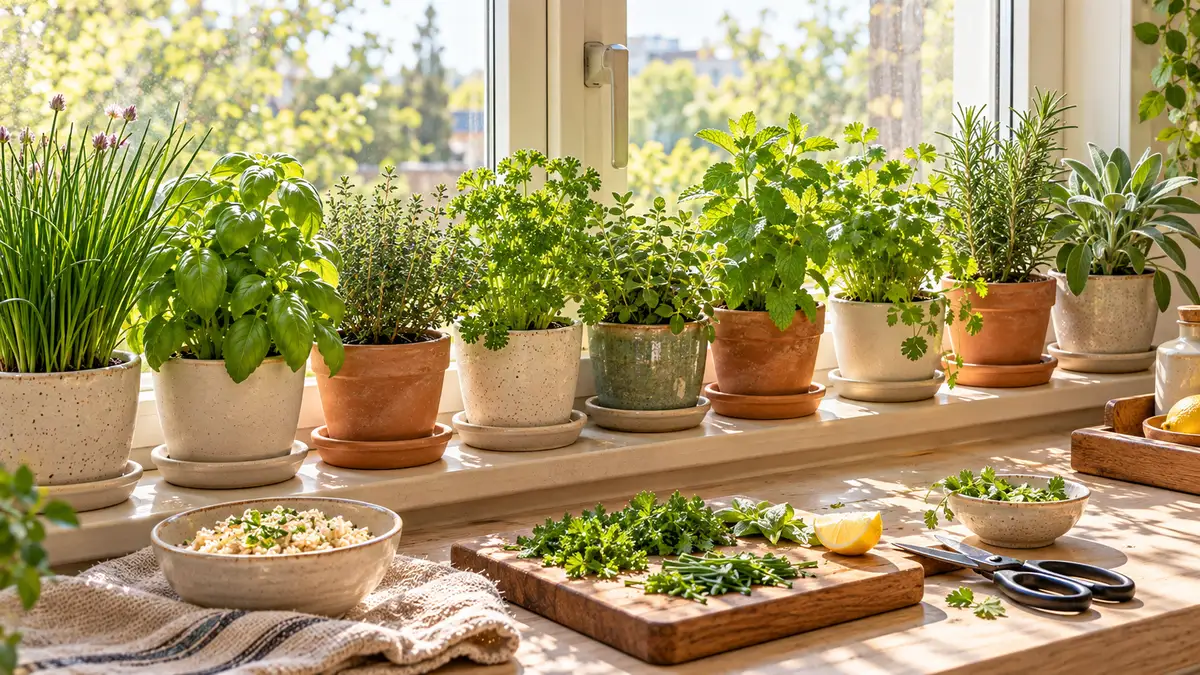
Buying a whole bunch of herbs for a few spoonfuls gets old, especially when the rest turns limp in the fridge. Growing herbs for small pots indoors near the kitchen seems like an easy fix. Then the basil stretches toward the glass, the mint crowds its container, or a tiny planter dries out before dinner.
The best herbs for small pots indoors are the ones that fit your space, your light, and the way you cook. Some can supply a few leaves or stems over a long stretch. Others make more sense as short crops that you sow again. A small pot can provide useful garnishes and seasoning, but it will not keep up with every large batch of pesto.
This list will help you choose herbs worth giving windowsill space, with practical advice on picking, watering, and knowing when a plant needs more room. Start with the flavors you already reach for. Give them a pot with drainage and the brightest suitable spot you have, adding a grow light when window light falls short.
Herbs for small pots indoors: grow chives for quick snips over eggs and potatoes
A few chive leaves can finish scrambled eggs without leaving half a store-bought bunch in the fridge. Their upright growth also makes a modest pot easier to fit beside the kitchen window.
Start with a small established clump in a pot with drainage. Give it strong light, and water when the surface begins to dry.
- Cut the leaves you need with clean scissors, leaving some green growth.
- Spread your picking around the clump instead of repeatedly cutting one side.
Indoor growth can slow, especially in dim seasons. Let fresh leaves develop before taking another generous handful.
🍳
Finish the dish
Scatter chopped leaves over eggs, potatoes, or soup near serving time.
✂️
Pick selectively
Choose healthy outer leaves and leave younger growth to develop.
🪴
Check crowded roots
A dense root mass and a pot that dries unusually fast can signal time to divide.

Herbs for small pots indoors: 2. Choose Compact Basil for Small, Frequent Leaf Harvests
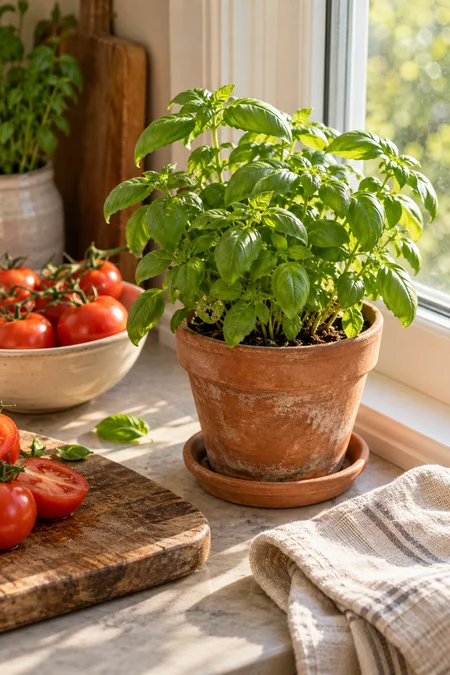
Choose a basil variety described as compact or bushy if your growing space is tight. It still needs strong light, warmth, and enough root room. A tiny decorative cup will soon become a problem.
A small nursery plant is a useful starting point. If a supermarket pot contains many crowded seedlings, separate them into smaller groups before they compete for space.
Pick for branching: harvest the growing tip just above a healthy pair of leaves, rather than stripping random leaves off a bare stem.
Check the potting mix often in a warm window. Water when the surface starts to dry, then empty the saucer.
🌿 A simple basil picking routine
Find a growing stem with several healthy leaf pairs. Leave a small or struggling plant to grow first.
Cut the tip just above a leaf pair, leaving healthy leaves below the cut.
Let the side shoots develop before picking that stem again. Remove flower buds when you notice them.
3. Keep Thyme for Small Sprigs With Plenty of Flavor
Thyme earns its space when you cook with small amounts. A few leafy tips can season mushrooms, roasted carrots, or a pan of beans. Its small leaves and woody stems also suit a compact pot better than many large, thirsty herbs.
Give it your sunniest suitable window or strong supplemental light. Use a free-draining potting mix, and let the surface dry between waterings.
- Snip soft, leafy tips instead of cutting deeply into bare wood.
- Leave plenty of foliage after each harvest.
A pot that stays wet for days needs attention. Check drainage and light before adding more water.
✅ Do this
Lift the pot and feel the mix before deciding it needs water.
Water thoroughly when needed, then let excess water drain away.
🚫 Skip this
Do not give thyme the same watering schedule as nearby basil.
Do not leave its nursery pot standing in water inside a decorative cover pot.

4. Give Parsley a Narrow Pot With Room for Its Roots
A shallow planter may fit neatly on the sill, but parsley benefits from more depth. Choose a narrow, deeper pot with drainage so its roots have room without taking over the counter.
Flat-leaf parsley is useful for soups, grain bowls, and chopped herb dressings. Keep the mix lightly moist, and provide strong light for steady growth.
Harvest from the outside: cut mature outer stalks near the base, leaving the younger center growth intact.
Avoid trimming every leaf tip as though you are giving the plant a haircut. Whole outer stalks are easier to gather, and the center can keep growing.
| Shallow decorative pot | Narrow, deeper growing pot |
|---|---|
| Gives roots less downward space as the plant develops. | Provides extra root room while keeping the base fairly compact. |
| May need replacing sooner if roots fill the container. | Offers more growing space, though crowding can still happen. |
| A pot without drainage should only hold a removable inner pot. | Drainage holes and an emptied saucer help prevent standing water. |

5. Trim Oregano for Pizza, Sauces, and Roasted Vegetables
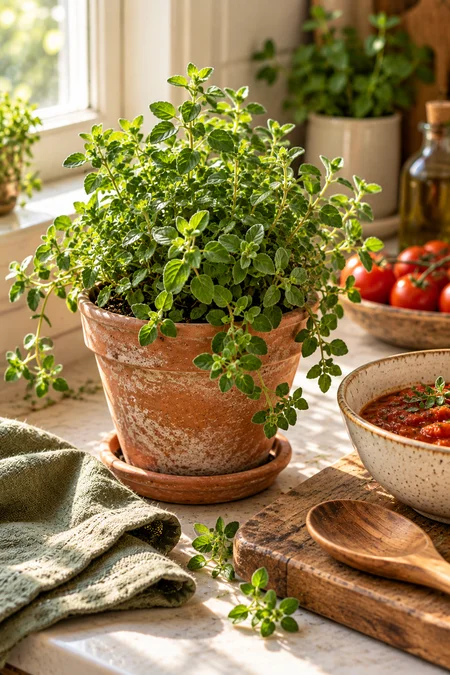
The trailing stems are your cue to check oregano before it spreads across the windowsill. Regular light trimming helps keep a young plant manageable and gives you leafy tips for dinner.
Choose culinary oregano with a flavor you enjoy. Give it strong light, a draining pot, and time for the surface of the mix to dry between waterings.
- Add chopped leaves to tomato sauce or roasted vegetables.
- Take small cuts from several leafy stems instead of stripping one bare.
Small-pot growing has a limit. If roots become crowded and the mix dries unusually fast, divide the plant or move it into a larger pot.
6. Grow Spearmint Alone and Keep Its Growth in Check
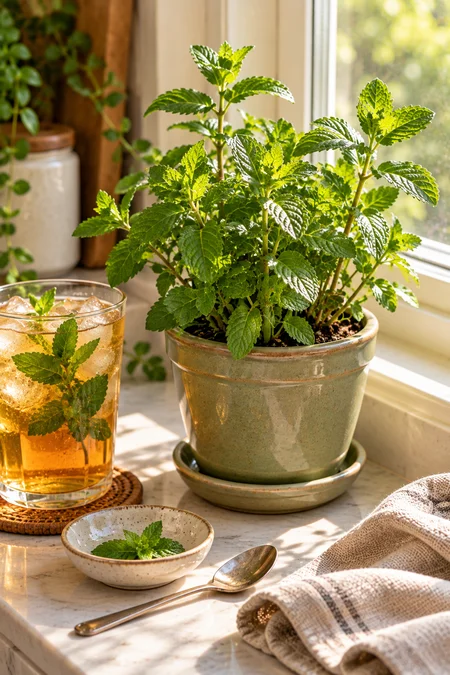
Spearmint can quickly outgrow the little pot that looked so tidy beside the kettle. Give it its own container so you can manage its roots and watering without disturbing another herb.
Keep the mix lightly moist, but empty any water left in the saucer. Strong window light helps produce fuller growth. A dim corner often leaves you with long stems and fewer useful leaves.
- Snip leafy tips above a pair of leaves.
- Leave enough foliage for the plant to keep growing.
For regular kitchen use, start with small harvests for tea, yogurt sauces, or chopped salads. A small pot needs recovery time between larger pickings.
🪴 When mint fills its pot
If roots form a tight mass and the pot dries much faster than before, inspect the root ball. Divide a healthy plant and replant a smaller rooted section in fresh potting mix. Trimming the leaves alone does not solve crowded roots.
7. Try Sweet Marjoram for a Gentler Flavor in Everyday Meals
Sweet marjoram brings a softer, sweeter flavor than oregano, which makes it useful when a dish needs gentle seasoning. A few leaves work well in scrambled eggs or the small pot of beans warming on the stove.
Start with a young plant and give it strong light. Use a container with drainage, and let the surface of the mix begin to dry before watering again.
Keep the harvest light: snip tender tips above healthy leaves rather than cutting back into bare, woody stems.
Add fresh marjoram toward the end of cooking to keep more of its delicate flavor. It suits small meals where a modest harvest is enough.
🥣
White beans
Stir chopped leaves into warm beans with olive oil and a little lemon.
🍳
Egg dishes
Fold a small amount into an omelet filling or sprinkle over cooked eggs.
🥕
Roasted vegetables
Toss tender leaves through warm carrots or zucchini just before serving.

8. Use Garlic Chives When You Want a Mild Garlic Finish
Cut a few garlic chive leaves when a rice bowl or omelet needs a mild garlic note. Unlike the hollow leaves of common chives, these leaves are flat, so they are easy to spot and chop.
Grow a small clump in a pot with drainage and strong light. Water when the surface starts to dry, without letting the whole root ball stay dry for long.
- Choose mature outer leaves for picking.
- Leave the short new leaves in the center to develop.
Snip the harvest into small pieces for even flavor. If the plant is growing slowly indoors, reduce your picking rather than cutting the entire clump.
✂️ Before you cut garlic chives
Choose firm, healthy outer leaves. Leave yellowing or damaged leaves out of the kitchen harvest.
Use clean scissors and cut above the soil, keeping the growing base intact.
Check that plenty of green leaves remain. Wait for fresh growth before another substantial harvest.

9. Sow Garden Cress for a Quick Crop of Peppery Greens
Garden cress gives a sandwich a peppery finish without needing a long-lived windowsill plant. It earns its place here as a short crop, grown for young greens and then sown again.
Scatter seeds over moist potting mix in a shallow container with drainage. Keep the surface from drying during germination, then give the seedlings bright light as they grow.
Plan to resow: cut the young greens above the mix when they are large enough to use. Do not count on repeated harvests from the same tray.
A second small container lets you start the next crop while the first is ready for the kitchen.
🌱 The tray you are using
Harvest tender greens with clean scissors, keeping the potting mix out of the cut leaves.
After the crop is finished, clear the old growth and wash the container before reuse.
🪴 The tray coming next
Sow a fresh batch in clean potting mix before the current crop is used up.
Adjust the amount you sow to the sandwiches and salads you actually make.

10. Grow Chervil as a Short Crop for Eggs and Gentle Sauces
That soft, fernlike foliage belongs beside an omelet more often than in a long-simmering stew. Chervil has a delicate flavor that is easiest to notice when you add the leaves near serving time.
Sow it directly into its growing pot to avoid disturbing the roots. Choose a container with some depth, keep the mix lightly moist, and offer bright light without a hot afternoon window baking the leaves.
- Pick small amounts of outer foliage.
- Leave the center growing.
- Start another pot if you use it often.
Treat chervil as a short crop. Once it begins flowering, a younger replacement usually makes more sense for tender leaves.
⚠️ Watch for heat and flower stalks
A warm room and hot window can shorten chervil’s leafy stage. If a taller central flower stalk appears, plan a replacement sowing in a cooler, bright spot. Extra water will not turn a flowering plant back into a young leafy crop.

11. Sow Cilantro in Small Batches for Fresh Garnishes
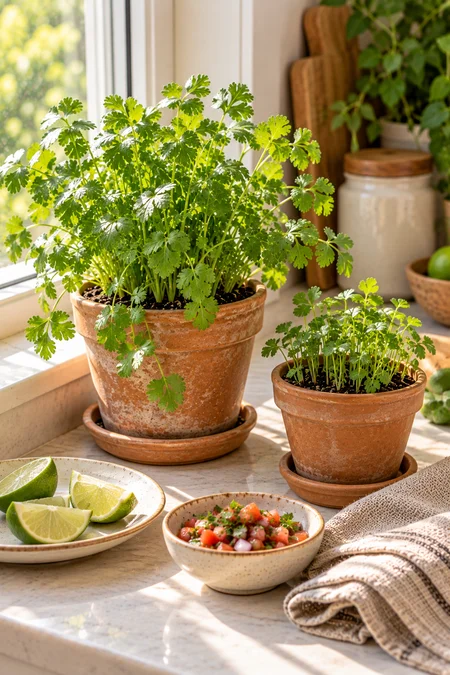
One cilantro plant rarely keeps up with every taco night. It grows, produces useful leaves, then eventually sends up a flower stalk. Treating it as a short crop makes a small indoor pot much less frustrating.
Sow seeds directly into a deeper container with drainage. Give the seedlings strong light and avoid a spot where hot afternoon sun overheats the pot.
- Thin crowded seedlings so the remaining plants have room.
- Pick outer leaves while leaving the growing centers intact.
- Sow another small pot before the first batch fades.
Keep the mix lightly moist. For a steady kitchen supply, overlapping small batches are more useful than repeatedly cutting an aging plant.
✅ Keep the next batch growing
Use a second pot to replace plants that are flowering or becoming less leafy.
Watch for a taller central stem and finer upper leaves as signs the plant is moving toward flowering.
🚫 Skip the endless-harvest plan
Do not expect removing flower stalks to keep the same plant leafy indefinitely.
Avoid stripping every leaf while waiting for replacement seedlings to grow.
12. Choose Dwarf Dill and Harvest It While It Is Young
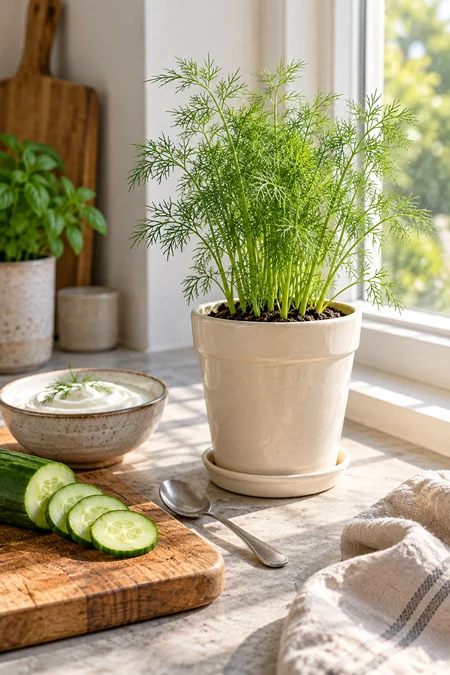
Dwarf dill takes up less space than taller types, but “dwarf” does not mean it can spend its whole life in a tiny cup. Choose a compact variety and a deeper pot that fits your sill.
Sow directly into the container, then thin the seedlings rather than keeping a crowded tuft. Dill needs strong light indoors. A grow light can help when window light leaves the stems thin and leaning.
Pick small amounts: snip a few outer leafy sprigs and protect the central growing tip.
Use the tender foliage in cucumber salads or yogurt sauce. Plan a replacement sowing as the plant matures and begins to flower.
| Compact or dwarf dill | Taller dill types |
|---|---|
| A more manageable choice for limited space above a windowsill. | Need more height as stems develop and flowering approaches. |
| Still need root depth, strong light, and space between plants. | Are harder to maintain as mature plants in small indoor pots. |
| Useful for modest harvests of fresh leafy sprigs. | Can be harvested young, but a small pot limits their longer-term growth. |
13. Grow Summer Savory for Beans, Soups, and Small Savory Dishes
A few summer savory leaves bring a peppery, thyme-like note to a bowl of beans. It is worth considering if soups and lentils appear on your menu more often than mint tea or pesto.
Grow it in a draining pot under strong light. Let the surface of the mix start to dry before watering, then allow excess water to escape.
- Snip tender tips while the plant is leafy.
- Leave healthy growth below each cut.
- Use a little at first, then taste the dish.
Summer savory is an annual. A small pot suits a young, lightly harvested plant, but it is not a permanent windowsill shrub.

14. Keep Rosemary Small With Light Harvests and Strong Light
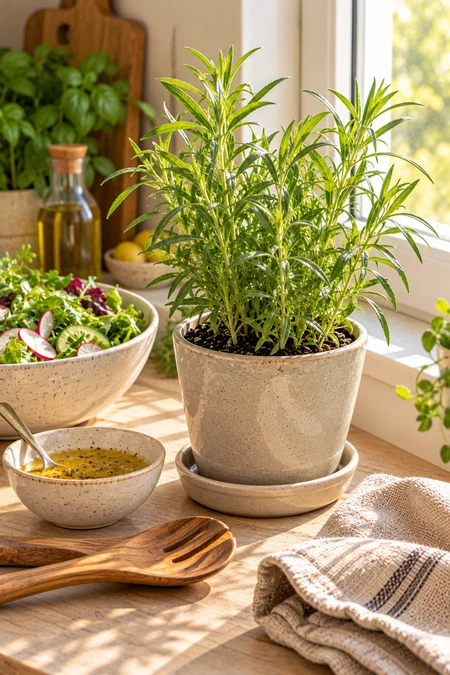
Rosemary is a more demanding indoor choice than its sturdy leaves suggest. A bright-looking room may still provide too little light, and wet potting mix can cause trouble around the roots.
Start with a small established plant in a draining pot. Give it your strongest suitable window light, adding a grow light when needed. Allow the surface of the mix to dry before watering, without leaving the entire root ball dry for long.
Harvest gently: take short leafy tips and avoid cutting into bare old wood.
A modest plant can supply seasoning for potatoes or beans. Expect slow growth indoors and leave time between pickings.
🪴 Check the spot before choosing rosemary
Strong light reaches the foliage. A dim shelf across the room is unlikely to support useful growth.
The pot drains freely, and water cannot collect around its base.
Air can move around the plant. Foliage is not pressed against glass or crowded between other pots.
There is room for a larger container later if the roots fill the current pot.

15. Pick a Few Sage Leaves for Meals That Need a Strong Flavor
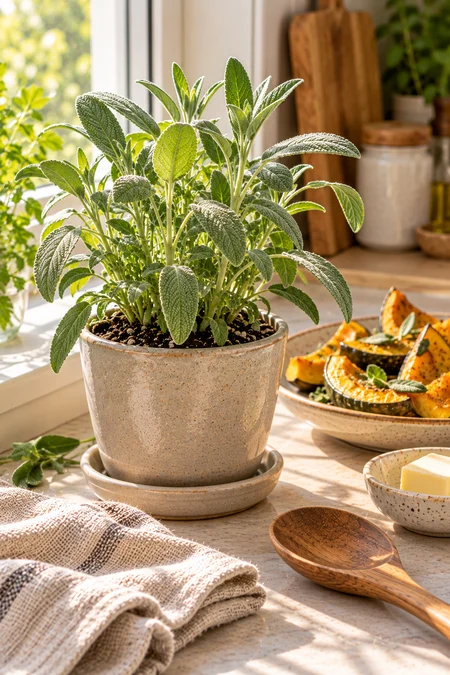
Sage makes sense in a small kitchen garden because you often need only a few leaves. Its earthy flavor suits roasted squash, white beans, and butter spooned over pasta.
Choose common culinary sage and start with a young plant. Give it strong light and a pot that drains freely. Let the surface of the mix dry between waterings rather than keeping it constantly damp.
- Pick a few mature leaves from a healthy, established plant.
- Leave most of the foliage in place.
- Pause harvesting when growth slows.
The soft gray-green leaves may look sturdy, but a small indoor plant cannot replace heavy picking quickly. It will also need more root room as it matures.
🌿 MAKE A SMALL HARVEST COUNT
Thinly slice a few sage leaves so their flavor spreads through the dish. Taste before adding more. A small pot is most useful for occasional seasoning while fresh growth catches up.
16. Start French Tarragon With a Plant for Its Familiar Kitchen Flavor
French tarragon brings a gentle anise flavor to mustard dressings, eggs, and chicken dishes. Start with a plant labeled French tarragon, since it is usually grown from cuttings or divisions rather than seed.
Give it strong light and a draining pot with room for its roots. Let the surface of the mix begin to dry before watering again.
Pick the tender tips: take small amounts from leafy stems and leave plenty of growth behind.
A young plant can fit a small container, but it will not stay that size forever. Expect seasonal slowdown, too. French tarragon is not a reliable source of fresh leaves throughout the year indoors.
📌 Check the plant label
Seed packets labeled simply “tarragon” often contain Russian tarragon, which has a different, usually milder flavor. Choose a clearly labeled French tarragon plant for the familiar kitchen seasoning. Seasonal rest can reduce its leaves even when your care routine has not changed.
17. Keep Lemon Balm Trimmed for Tea and Fruit Dishes
Lemon balm can turn a tidy little plant into a tangle of stems. Its fresh lemon scent makes it useful for tea and fruit dishes, but keeping it indoors means managing that growth.
Give it a separate pot with drainage, bright light, and lightly moist potting mix. Check the surface before watering instead of following a fixed schedule.
- Trim leafy stems just above a pair of leaves.
- Leave healthy foliage below each cut.
- Check the roots if the pot starts drying unusually fast.
Use the tender leaves soon after picking. This is a vigorous herb, so a small container works best while you keep both stems and roots from becoming crowded.
🌿 Before: long, crowded stems
Leaves press against the window or overlap nearby pots, making the plant harder to inspect.
Check the light as well as the shape. Sparse, stretched growth may need a brighter spot.
✂️ After: lightly shortened stems
Shorten selected stems above healthy leaf pairs, keeping plenty of green growth.
Use the trimmings in the kitchen and let new shoots develop before another substantial harvest.
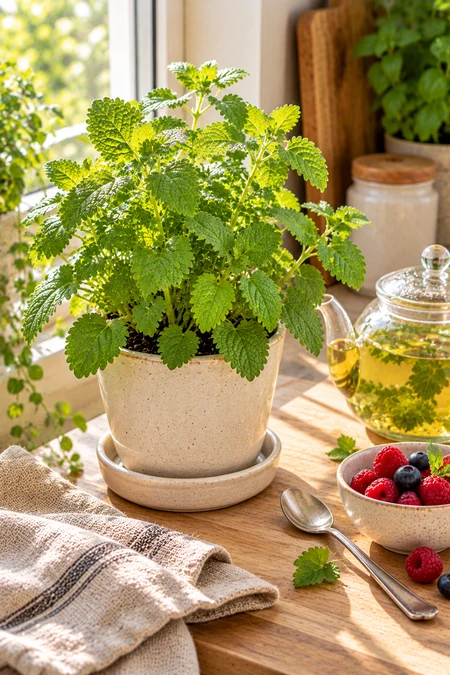
18. Harvest Young Sorrel Leaves for a Tangy Finish
Young sorrel leaves add a sharp, lemony taste to a simple salad. A small harvest can also brighten soup, though the leaves soften and lose their bright green color when cooked.
Start with a young culinary sorrel plant in a deeper pot with drainage. Give it bright light and keep the mix lightly moist. Its roots will eventually need more room than a tiny windowsill container allows.
Choose the outer leaves: take tender, well-developed leaves while leaving the center untouched.
Use a little alongside milder greens before adding more. Sorrel makes the most sense in a small pot when you want a tangy accent, rather than a whole bowl of salad leaves.
🌿 Pick sorrel without stripping the plant
Choose tender outer leaves that have opened fully. Leave the smallest central leaves to grow.
Cut individual leaf stalks near the base without cutting into the central crown.
Watch the next flush of growth. If the root ball is tightly packed, move the plant into a larger pot or divide it when suitable.

19. Try Salad Burnet for a Mild Cucumber Note
Salad burnet is worth a spot if you often make simple salads, soft cheese spreads, or herb butter. Its young leaves have a mild cucumber-like flavor that works best in fresh dishes.
Grow a young plant in a draining pot with some depth and strong light. Water when the surface begins to dry, and avoid leaving water in the saucer.
- Pick tender leaves rather than older, tougher growth.
- Strip the small leaflets from firm stalks before chopping.
- Leave enough foliage for steady recovery.
The plant forms a leafy clump that can eventually outgrow its container. Keep harvests modest and check root space as it develops.
🥗
Fresh salads
Scatter tender leaflets over mild greens. Keep the dressing gentle so their flavor is noticeable.
🧀
Soft cheese
Fold finely chopped leaves into a plain cheese spread for toast or cucumber slices.
🧈
Herb butter
Mix chopped young leaves into softened butter and taste before adding stronger herbs.

20. Give Culantro a Warm Spot for Bold Flavor in Small Amounts
Culantro has a bold flavor similar to cilantro, but its long, toothed leaves look quite different. A little finely chopped leaf can season a pot of beans or broth, making a modest harvest useful.
Choose a young plant if you can find one. Give it warmth, bright filtered light, and evenly moist potting mix that drains freely.
Allow room across the pot: culantro grows as a spreading rosette, so a narrow cup soon becomes cramped.
Pick outer leaves near the base while protecting the central growth. This is a conditional indoor choice, best for a warm, bright growing spot rather than a chilly windowsill.
🪴 Does your space suit culantro?
The growing spot stays warm and is away from cold drafts or chilly window glass.
Bright filtered light reaches the leaves. Shade tolerance does not make a dark shelf suitable.
You can keep the mix lightly moist while letting excess water drain away.
The leaves have room to spread, with space for a wider pot as the plant grows.

The best herbs for small pots indoors are the ones you will actually use and have enough light to grow. Start with a few favorites, such as chives for eggs, basil for tomatoes, or thyme for roasted vegetables.
Choose pots with drainage, check the soil before watering, and give each plant time to recover after picking. Keep cilantro and other short crops on a repeat-sowing plan. Move longer-lived herbs into larger pots when their roots need room.
You do not need all 20 to make dinner taste fresher. Save this list on Pinterest for the next time you choose herbs for your kitchen windowsill.