

Fresh herbs make a small kitchen feel useful fast. A snip of basil, mint, or chives can turn plain food into something better, but many people put off growing them because they think it takes fancy planters, a big sunny room, or a lot of money.
The truth is simpler than that. Most herb gardens start with light, a few smart containers, and a setup that fits your real life. If your counter is crowded, your balcony is tiny, or your budget is tight, you can still grow plenty in a way that looks neat and feels easy to manage.
This list is built for gardeners who need every inch to work harder. Each idea is practical, low cost, and easy to adapt. If you have been wanting an indoor herb garden on a budget, these are the kinds of setups worth saving so you can start with what you already have and grow from there. Before you shop, try our container garden budget calculator to estimate your costs.
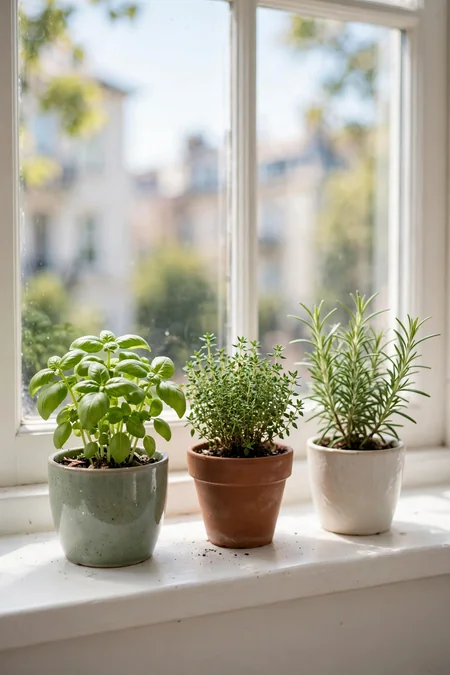
1. Turn Your Brightest Windowsill Into a Three-Pot Herb Row
A bright windowsill is often the cheapest growing spot in the house. If you get a few hours of solid light there, start with just three herbs instead of crowding the whole ledge. Basil, parsley, and chives are a smart trio for many kitchens.
Keep this setup simple:
- Use matching saucers so water stays contained.
- Leave a little gap between pots so leaves can dry.
- Pick herbs you actually cut often, not ones that only sound nice on paper.
It looks tidy, costs very little, and keeps fresh herbs within arm’s reach while you cook.
2. Plant Several Herbs in One Long Trough to Save Counter Space
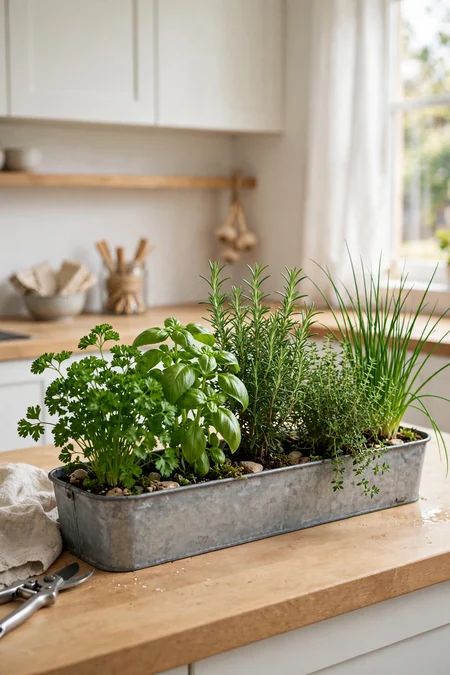
One long planter can do the work of several small pots, which is a big help when your counter already has a kettle, a cutting board, and that one bowl that never seems to move. A trough keeps the herbs together and gives the area a cleaner look.
To make it work well, remember:
- Pair herbs with similar watering needs.
- Keep mint in its own pot if you can, since it grows fast.
- Use a tray under the planter so drips do not spread across the counter.
This setup works especially well for shallow shelves and narrow ledges.
3. Stack Wooden Crates Into a Slim Vertical Herb Garden
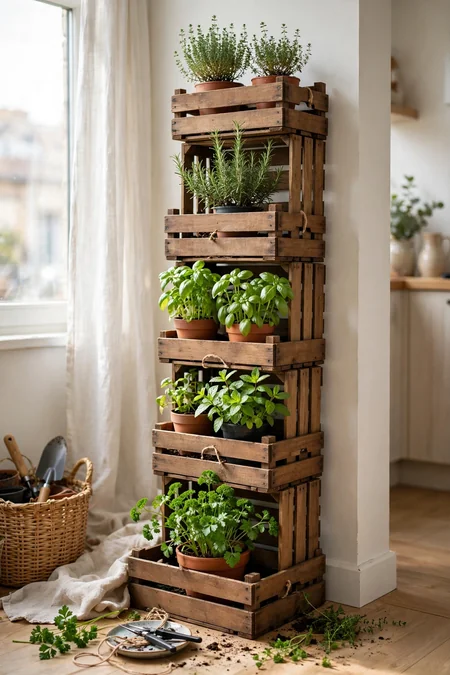
A floor corner can hold more herbs than most people expect. Stack two or three wooden crates, turn the openings outward, and you get vertical storage and growing space without paying for a special plant stand.
A few details make the difference:
- Put heavier pots at the bottom so the stack feels steady.
- Use one crate level for tools or extra saucers.
- Keep the whole setup near a bright wall or window, not in a gloomy corner by itself.
This is a good fix for that awkward empty spot beside a patio door or kitchen table.
A bare corner with loose pots on the floor, a cluttered look, and no clear place for tools or trays.
A slim crate tower that lifts herbs upward, keeps the footprint small, and gives each level a clear purpose.
4. Make a Self-Watering Herb Pot From a Reused Bottle
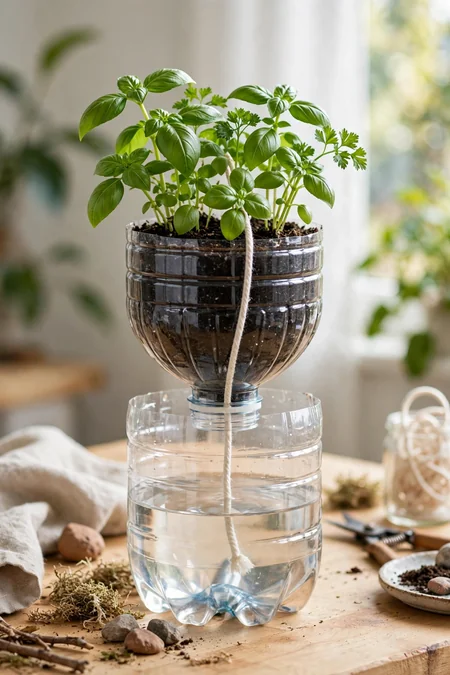
If you forget to water for a day or two, a simple self-watering setup can save a lot of droopy leaves. You do not need a store-bought kit either. A clean plastic bottle, some string, and a small pot can do the job.
Basic idea:
- Fill the lower part with water.
- Thread a wick up into the soil.
- Set the planted top section in place and let the soil pull water as needed.
It is a smart use for salad dressing bottles or juice bottles, especially when you are starting herbs from seed.
Cut and clean a sturdy bottle, then use the bottom half as the water reservoir.
Add a cotton wick through the planted top section so moisture can travel upward.
Place the system in bright light and refill the base before it runs dry.
5. Put Your Herb Garden on a Rolling Cart You Can Move Around
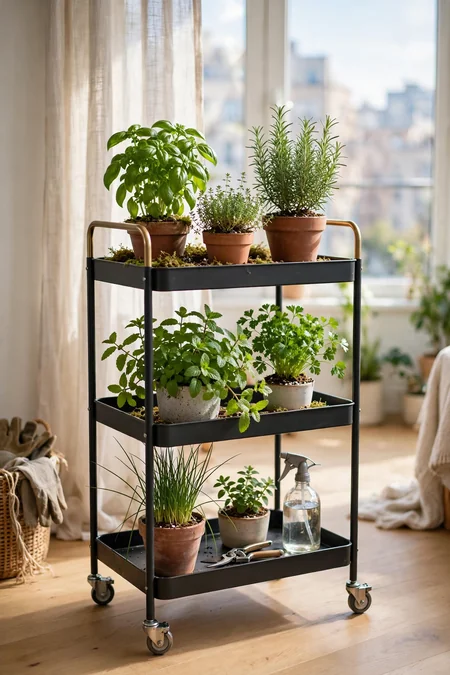
Some homes have good light in the morning and bad light by dinner. A rolling cart solves that problem. You can shift your herbs closer to the window, slide them out of the way when guests come over, or wheel them near the sink on watering day.
A cart works best when you keep each shelf focused:
- top shelf for the herbs you cut most
- middle shelf for tools, feed, and scissors
- bottom shelf for extra pots or seedlings
It is especially handy in rentals where you need flexibility and cannot mount anything on the wall.
6. Use Thrifted Mugs and Bowls as Covers for Plain Nursery Pots
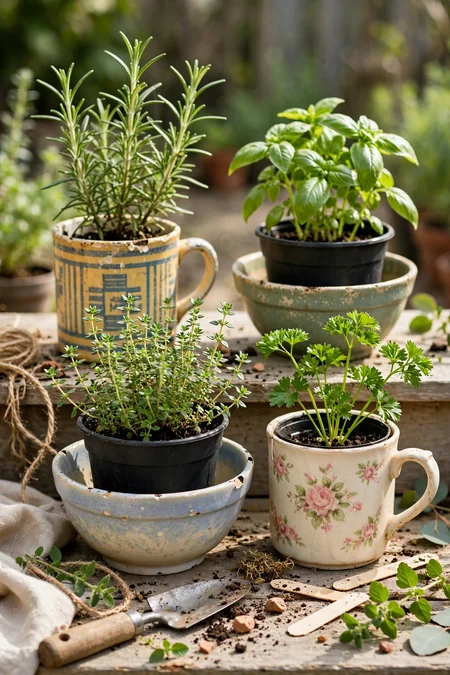
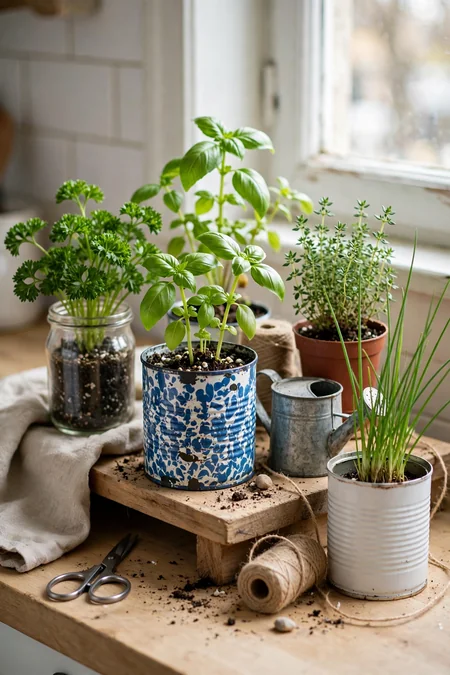
Plain plastic nursery pots are useful, but they can make a small kitchen garden look unfinished. Instead of replacing them, slip the whole pot inside a thrifted mug, cereal bowl, or small crock that fits around it.
This works best when you:
- Keep the herb in its original pot with drainage holes.
- Lift the nursery pot out when watering.
- Empty any water that collects inside the outer container.
Look for simple pieces in similar colors rather than buying a full matching set. A shelf of mismatched pottery can still feel tidy when the shapes and tones relate to each other.
💡 Quick Tip
Use mugs and bowls as decorative covers, not sealed planters. Keep the herb in a draining nursery pot inside so excess water can be removed easily.
7. Mount a Pegboard to Get Small Herb Pots Off the Counter
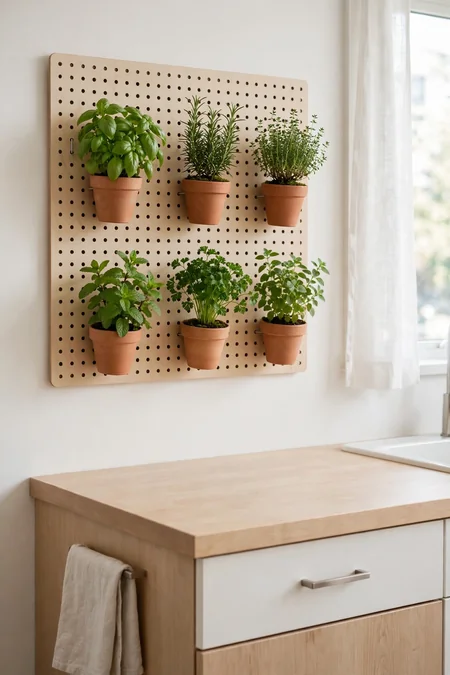
Counter space disappears quickly once herbs, appliances, and food prep start competing for the same few feet. A pegboard lets you use a blank wall instead.
Hang only small, lightweight herb pots and keep the arrangement easy to reach.
A simple setup works better than a packed one:
- Use sturdy hooks or small pegboard shelves.
- Keep frequently harvested herbs around eye level.
- Leave room between pots for leaves to spread.
- Place a tray or wipeable surface below if watering might drip.
The goal is to free the counter, not turn the wall into another crowded storage zone.
Use small pots and secure holders.
Leave open space so herbs stay reachable.
Do not overload hooks with heavy planters.
Do not pack pots so tightly that watering becomes awkward.
8. Choose Seeds or Starter Plants Based on What Saves You More
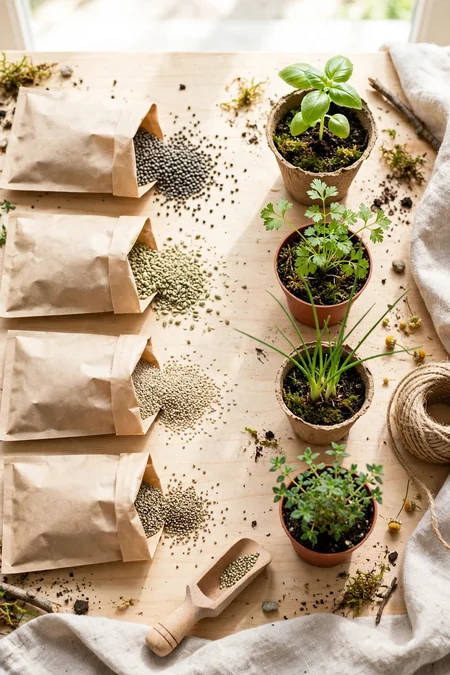
Seeds are cheaper per plant, but that does not always make them the cheapest choice for every herb. A small starter plant can make more sense when you only need one plant or want to harvest sooner.
Think about how you plan to grow:
- Choose seeds when you want several plants or enjoy starting them yourself.
- Choose starter plants when you want a quick beginning with less setup.
- Check what you already own before buying trays, pots, or seed-starting supplies.
For a small herb garden, mixing both methods often keeps spending under control better than using only one.
| Seeds | Starter Plants |
|---|---|
| Useful when you want several plants from one packet. | Useful when you only need one or two herbs. |
| Needs more time and seed-starting care. | Gives you a larger plant from day one. |
| Good for filling several containers cheaply. | Good for keeping a tiny garden simple. |
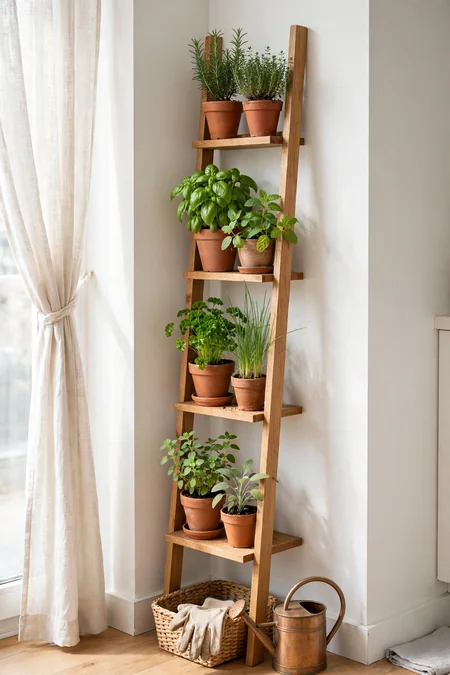
9. Turn a Narrow Ladder Shelf Into a Vertical Herb Corner
A ladder shelf gives you several growing levels while using about as much floor space as a small stool. That makes it useful beside a bright window, patio door, or unused stretch of wall.
Put herbs that need the strongest light on the brighter upper shelves. Lower shelves can hold extra pots, watering supplies, or herbs that still receive enough usable light in that spot.
One small rule helps keep the setup practical: do not fill every shelf just because it is empty.
A little open space makes watering easier and keeps trailing leaves from tangling into the plants below.
Use the ladder shelf to gain height, not to squeeze in the maximum number of pots. Open space keeps the herbs easier to reach, water, and trim.
10. Start Herb Seeds in Clean Food Containers Before Buying Pots
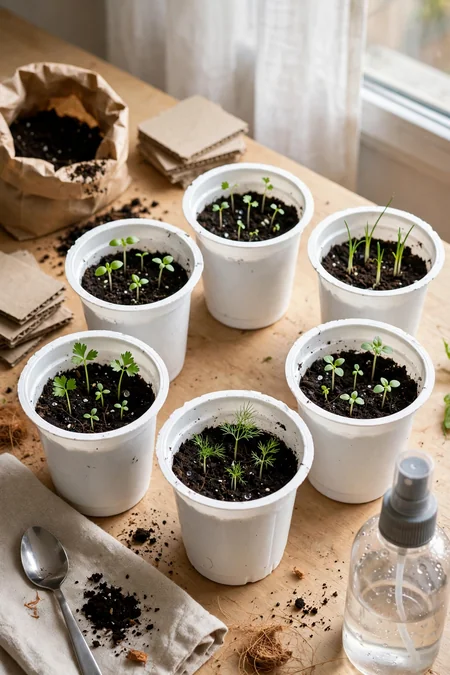
Seedlings do not care whether their first container came from a garden center. Clean yogurt cups, shallow produce tubs, and other food containers can work for starting herbs when they are prepared properly.
Before planting, check three things:
- Wash the container well.
- Add drainage holes where needed.
- Choose something deep enough for the seedling to develop before transplanting.
Keep a tray underneath to catch drips and label the herbs in a simple way if you are starting several kinds. Once the seedlings outgrow their temporary containers, move them into proper draining pots instead of keeping them cramped.
Before you sow
11. Build a Tiny Herb Garden Around the Herbs You Actually Cook With
A small herb garden becomes much more useful when every pot earns its space. Instead of buying whatever looks good at the nursery, think about the herbs you reach for while cooking each week.
Start with three questions:
- What herbs do you buy most often?
- Which ones do you regularly throw away before finishing?
- Which fresh flavors would you actually snip straight into dinner?
Someone who cooks pasta often might choose basil, parsley, and oregano. If tea and fresh drinks are more common in your kitchen, mint could deserve one of those limited spots.
Grow what will get cut, not what will simply fill the shelf.
12. Split a Crowded Supermarket Basil Pot Into Several Plants
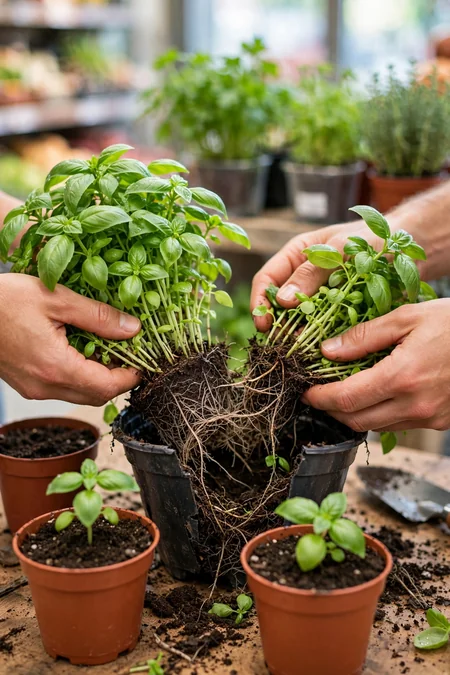
That lush basil pot from the grocery store often contains many young plants packed tightly together. Instead of treating it as one permanent plant, you can carefully divide the root ball and give smaller groups their own containers.
Work slowly:
- Water the basil before dividing it.
- Slide the root ball out and gently tease sections apart.
- Replant small groups in pots with drainage.
- Keep them out of harsh conditions while they settle.
You do not need a separate pot for every stem. The goal is simply to reduce crowding and give the roots more room than they had in the original container.
Water the crowded basil pot so the root ball is easier to handle.
Separate the root mass into a few manageable sections without pulling hard on the stems.
Replant the sections in draining pots and give them time to settle before heavy harvesting.
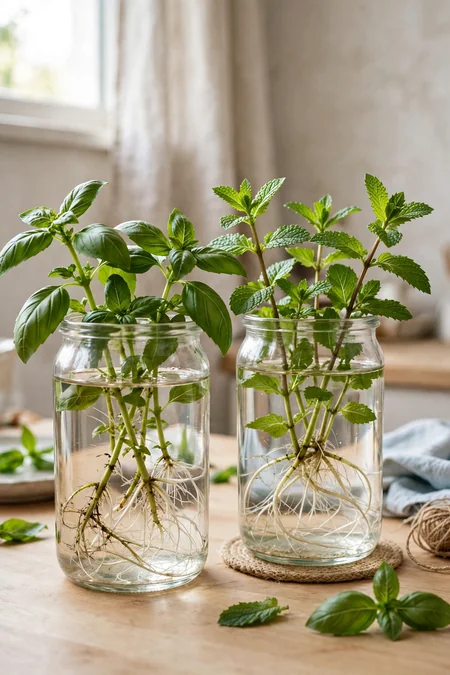
13. Root Mint and Basil Cuttings Before Spending Money on New Plants
One healthy herb plant can become several if you take cuttings instead of buying another pot. Mint and basil are especially useful for this because fresh stem cuttings can be started in water before being moved into soil.
The setup is tiny. A clean glass, a bright spot, and a few trimmed stems are enough to get started.
For cleaner results:
- Remove leaves that would sit below the water.
- Keep some healthy leaves at the top.
- Refresh the water when it starts looking cloudy.
- Pot the cutting once it has developed a useful root system.
It is an easy way to fill another small container without another nursery purchase.
One established mint or basil plant and an empty pot that would normally mean another trip to buy a plant.
Several rooted cuttings ready for their own containers, all started from a plant you already had.
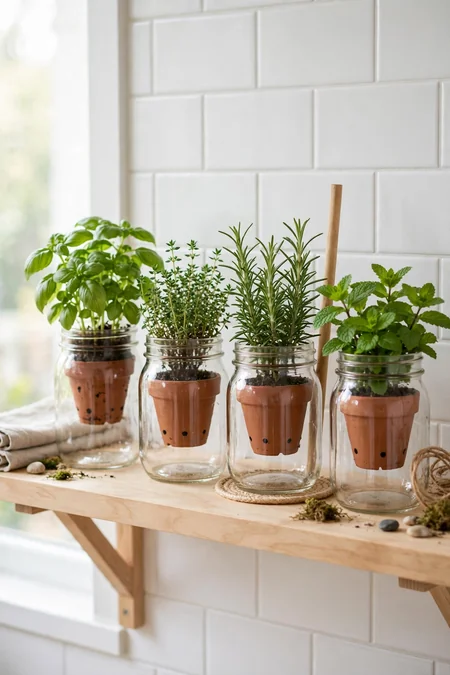
14. Use Mason Jars as Cachepots Instead of Drainage-Free Planters
Mason jars look neat on a herb shelf, but planting directly into a jar can make watering harder because excess moisture has nowhere to escape.
There is an easier way to use them.
Keep each herb in a small draining pot that fits inside the jar. The glass becomes a decorative outer container, while the nursery pot handles the practical growing job.
After watering, check the bottom of the jar. If water has collected there, lift the inner pot out and empty it.
That small habit lets you reuse jars without asking herb roots to sit in trapped water.
📌 Good To Know
Treat the jar as a cover pot. A smaller draining container inside gives excess water somewhere to leave the soil and makes it easy to empty any water collected at the bottom.
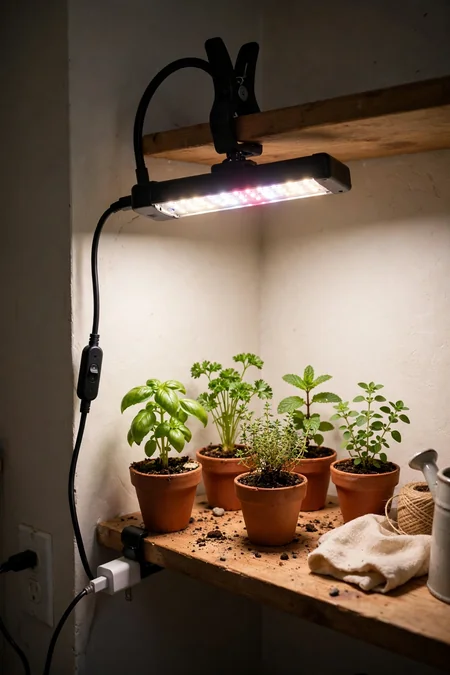
15. Add a Simple Clip-On Grow Light to a Dim Herb Corner
A cheap container does not help much if the herbs are stuck in a corner that is too dim. When your best shelf is away from a useful window, a small clip-on grow light can make the location more practical.
Keep the setup modest. You usually do not need to turn the whole room into a plant station.
A clip-on fixture works well for:
- one narrow shelf
- a few small herb pots
- seedlings that need a brighter growing spot
Position the light so it covers the leaves evenly, then adjust it as the plants grow rather than letting the stems stretch toward one side.
16. Keep Every Herb Pot on One Tray to Protect Small Surfaces
A row of herb pots can turn into a messy watering job fast, especially on a narrow shelf or kitchen counter. One shared tray keeps drips, loose soil, and stray leaves in one place.
It also makes cleanup much easier.
Instead of lifting five saucers one by one, you can wipe or rinse a single tray. Choose one that is slightly larger than the group of pots so none of them sits right against the edge.
Just remember that the tray is there to catch water, not store it. If water collects after watering, empty the excess rather than leaving the pots standing in it.
| One Shared Tray | Separate Saucers |
|---|---|
| Keeps several pots contained in one spot. | Works well when pots are spread around the room. |
| Faster to lift and wipe during cleanup. | Each pot can be moved without disturbing the others. |
| Useful on narrow shelves and counters. | Useful when herbs live in separate locations. |
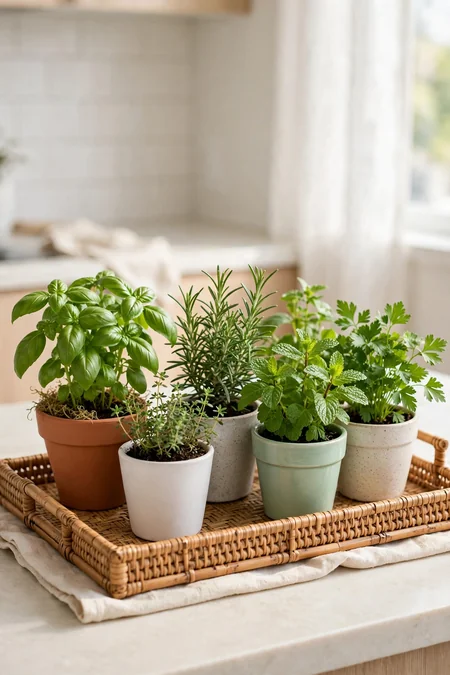
17. Group Herbs by Watering Needs Instead of Cramming Random Plants Together
Putting every herb together because the pots look good can make care harder. Rosemary and thyme generally prefer a different watering rhythm from thirstier herbs such as basil.
A better rule is simple: group plants by how you care for them. If you’re not sure which herbs can share a pot, try our herb compatibility checker to compare their needs.
You can still keep everything on the same shelf, but place herbs with similar needs beside one another. That makes it easier to notice which group needs attention instead of watering every pot automatically.
This matters even more in a small setup because containers dry at different speeds. Check the soil rather than treating the whole herb collection as one plant.
Keep herbs with similar watering habits close together.
Check each pot before adding more water.
Do not water every herb on the same schedule just because the pots share a shelf.
Do not choose plant groups based only on how the containers look together.
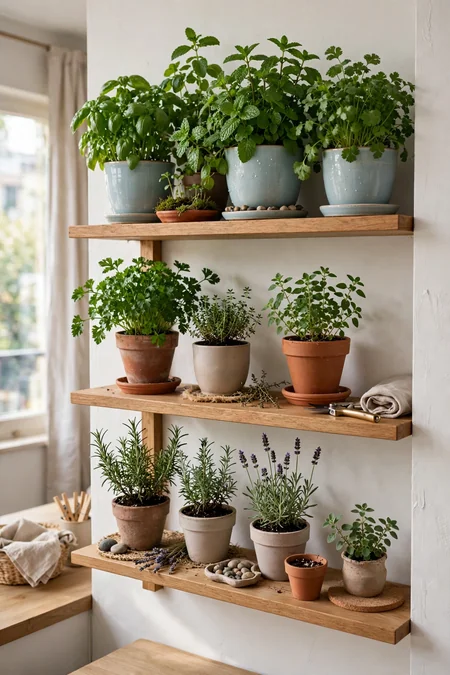
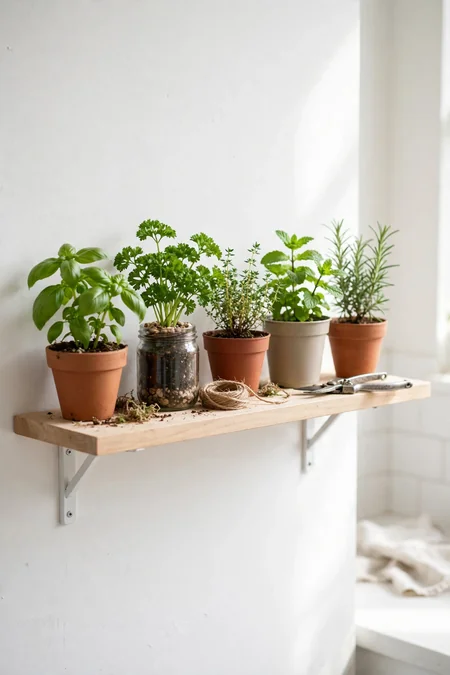
18. Use an Existing Shelf Above the Counter for a Mini Herb Row
Before buying a plant stand, look at the shelves you already have. A shelf above a counter, sideboard, or breakfast nook may have enough room for a short row of herbs without taking any new floor space.
The trick is keeping it practical.
- Use compact pots that do not hang over the edge.
- Keep frequently harvested herbs within comfortable reach.
- Put a tray beneath the pots if the shelf is wood.
- Avoid blocking things you use every day.
If the shelf receives useful light, this can be one of the cheapest ways to add a garden because the structure is already there.
- ▸Keep pots small enough to sit fully on the shelf.
- ▸Use the brightest part of the shelf for the herbs that need it most.
- ▸Leave enough open space to lift each pot for watering and trimming.
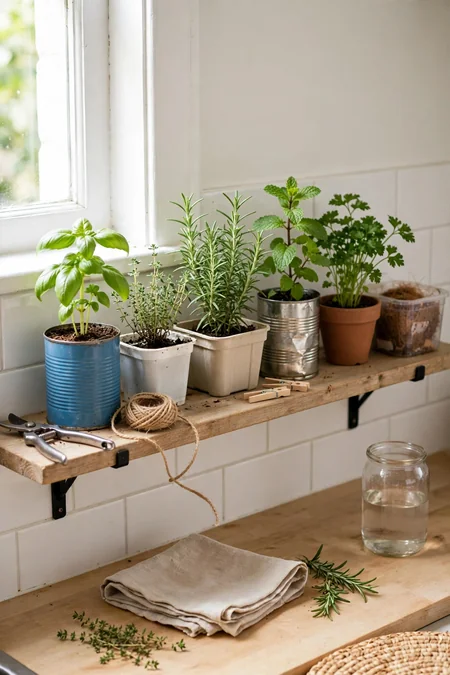
19. Move Your Herb Pots to a Small Balcony or Patio When Conditions Suit Them
An indoor herb garden does not have to stay in one place all year. If you have a small balcony or patio, movable pots let you use suitable outdoor conditions when they make sense for the plants.
Start gently rather than moving herbs from a protected indoor shelf straight into intense outdoor exposure.
Keep the pots easy to carry, and watch how the plants respond. A small tray or basket can make several containers easier to move together.
The useful part of this idea is flexibility. Your limited indoor space gets a break, while the herbs can use an appropriate outdoor spot when conditions are suitable.
Treat outdoor time as a change in growing conditions, not just a change of scenery. Move herbs gradually and keep checking light, moisture, and plant response.
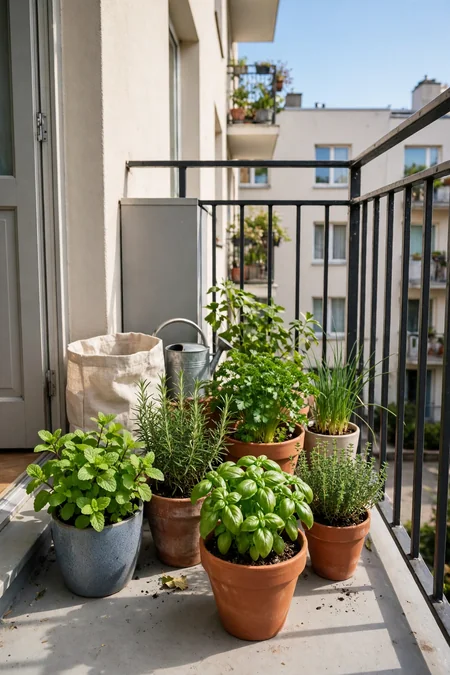
20. Create a Mini Herb Nursery With Leftover Pots and Young Seedlings
Those extra nursery pots tucked under the sink can become a useful little growing station instead of clutter. Gather the smallest containers, clean them, and use them for seedlings, rooted cuttings, or young herb divisions.
Keep the nursery separate from your finished display.
That gives you one place to:
- watch new growth closely
- keep spare plants together
- reuse containers before buying more
- grow replacements for herbs you harvest often
A shallow tray underneath makes the whole group easier to manage. Once a plant becomes established and needs more room, move it into a larger permanent pot.
Build your mini nursery
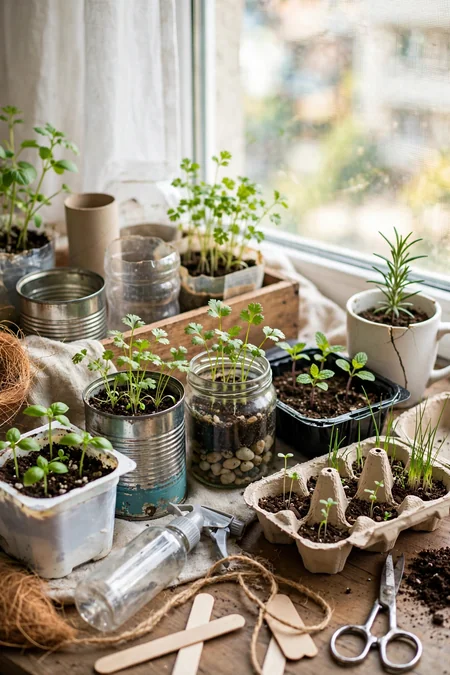
21. Keep a One-Shelf Indoor Herb Garden With Only Your Most-Used Herbs
More plants do not automatically make a better herb garden. In a very small home, one well-organized shelf can be enough.
Choose a few herbs that repeatedly end up in your meals and give those plants the best light and easiest-to-reach spots. Skip the varieties that look interesting but rarely leave the pot.
A simple one-shelf setup is easier to water, trim, rotate, and clean around.
It also makes your indoor herb garden on a budget easier to maintain because you are spending your money, soil, and limited space on plants that have a clear purpose in your kitchen.
A Small Herb Garden Can Still Give You Plenty to Use
You do not need a room full of plants or a cart of new supplies to grow fresh herbs at home. Start with the light and space you already have, then choose a few ideas that solve your biggest problem, whether that is a crowded counter, empty wall, tight budget, or awkward window.
The best small herb setup is one you can water, trim, and actually use without turning it into another chore. Reuse containers when they make sense, spend money where it helps the plants most, and let the garden grow slowly with you.
Save these indoor herb garden on a budget ideas to Pinterest so you can come back to them when you are ready to set up your own small growing space.