
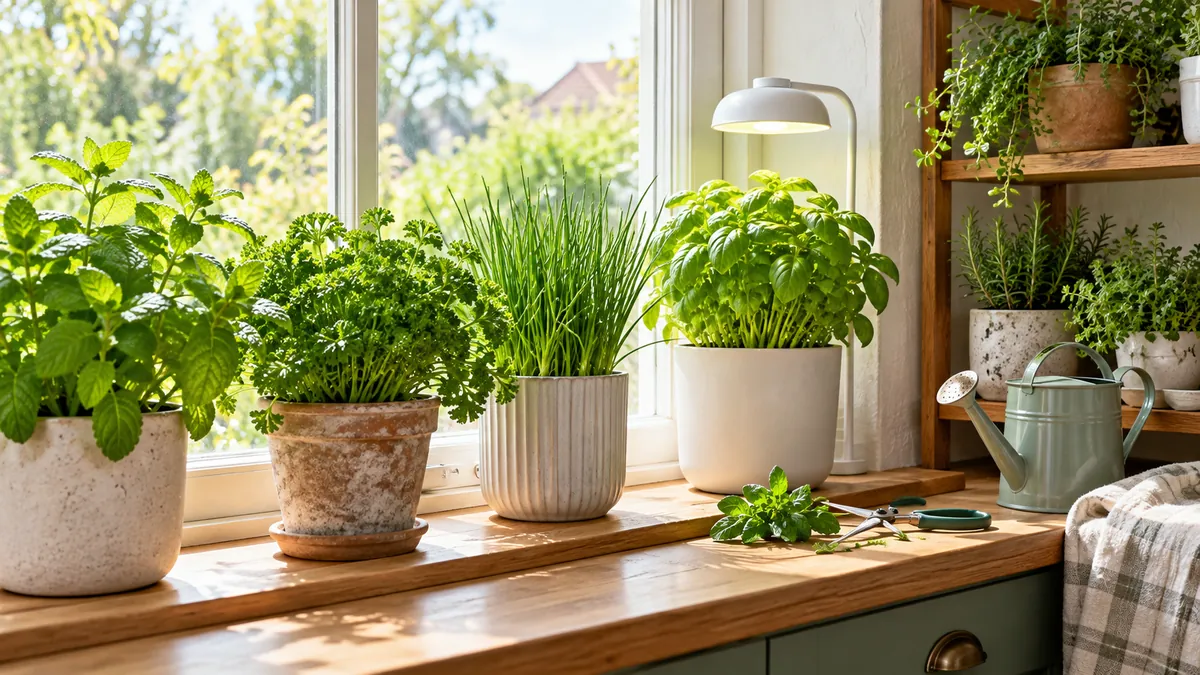
Your kitchen has room for a herb pot, but the sunny windowsill in every gardening photo looks nothing like yours. Maybe a nearby building blocks the afternoon sun. Maybe the brightest window sits in the bedroom, far from the cutting board. Fresh herbs can still be worth trying, but choosing the right plant is only part of the job.
Searching for low light herbs to grow indoors often turns up lists that confuse outdoor shade with a dim room. Herbs still need enough light to make new leaves. Some can manage with less direct sun, while others need a brighter window or a grow light before regular picking makes sense.
These 22 options make those differences clear. You will find herbs to try near bright windows with limited direct sun, followed by choices that need extra light in a darker home. Each idea includes a practical care move and a realistic harvest goal. Start with one plant where daylight is strongest, then watch its new growth before filling the whole shelf.
Low light herbs to grow indoors: grow mint near your brightest window for occasional fresh sprigs
A few mint leaves can freshen a glass of water without needing a basketful of herbs. Mint tolerates some shade outdoors, making it a reasonable first trial near a bright indoor window with limited direct sun.
- Start with a healthy rooted plant in its own pot with drainage holes.
- Check the mix regularly and water when the surface starts to dry.
- Snip a small shoot above a leaf pair, leaving plenty of foliage behind.
Keep the pot beside the window rather than on the darker kitchen island. If new stems stretch and leaves become sparse, improve the light before picking again.
🪟 Clear the view
Keep curtains and taller plants from shading the mint. Leave leaves clear of cold glass.
🪴 Check the saucer
Let excess water drain, then empty the saucer. A decorative outer pot should not hold hidden water.
🌿 Watch regrowth
Choose occasional garnishes over frequent large cuts until fresh leafy shoots are growing steadily.
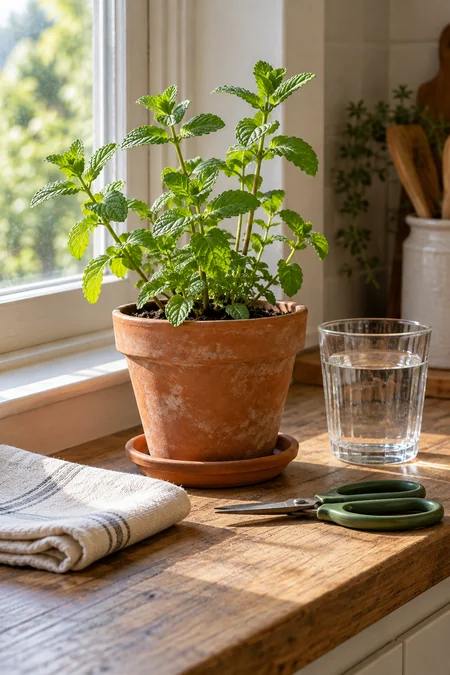
Give Lemon Balm Window Space and Room to Spread
Crowding lemon balm behind other pots blocks the light its lower leaves need. Give this leafy herb its own place near a bright window, where its stems can spread without disappearing behind a larger plant.
Lemon balm can tolerate partial shade outdoors, but indoor light may still be too weak for steady harvests. Use a pot with drainage, and check the mix before watering rather than following a fixed schedule.
Start small: Pinch a leafy tip for a drink or fruit dish only after the plant settles in and makes new growth. A crowded row of pots is less useful than one plant with room to grow.
💡 Check the gaps between leaves
Long, weak new stems with wide gaps between leaf pairs can signal too little light. Move the plant to a brighter spot or add a grow light. Extra fertilizer will not replace missing light.

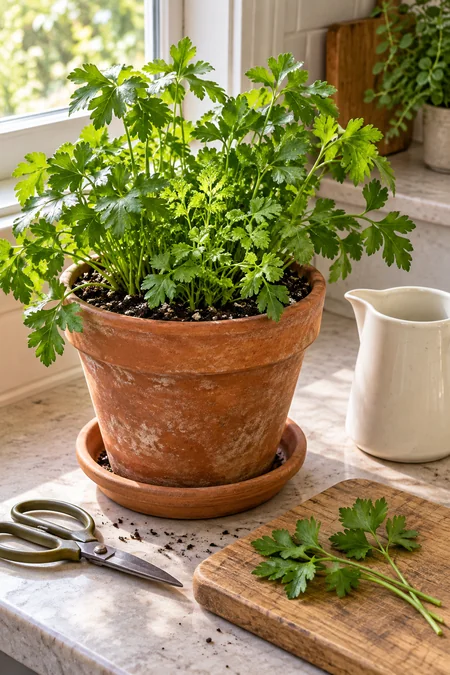
Harvest Parsley a Few Outer Stems at a Time
Cut parsley at the base of an outer stem, leaving the small central leaves to develop. This makes better use of a modest indoor plant than repeatedly clipping leaf tips across the whole pot.
Parsley tolerates some outdoor shade, but a bright indoor window is still important. An established plant gives you a head start because parsley can be slow to grow from seed.
- Choose a pot with enough depth for its roots and holes underneath.
- Water thoroughly when needed, then let the excess drain away.
If fresh center growth slows, pause harvesting. That small bunch beside the sink needs time to replace what you take.
✅ Choose a mature stem
Follow an outside stem down toward the soil before cutting. Keep the blade clear of the central crown and nearby young stems.
🚫 Leave the center intact
Avoid cutting across the entire plant like a lawn. The small central leaves are the next part of your harvest.
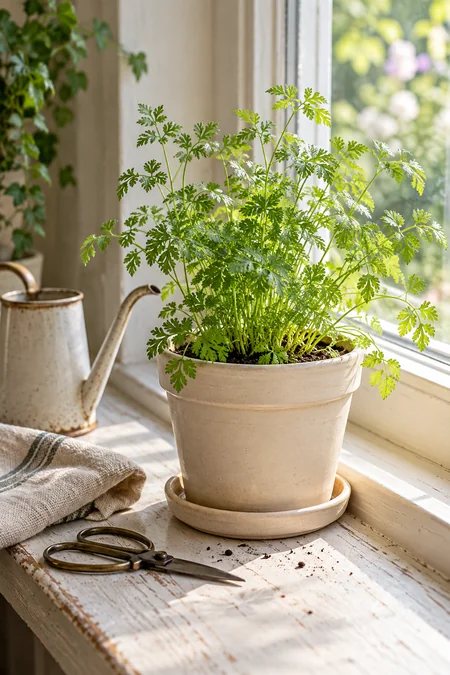
Try Chervil on a Cool, Bright Windowsill
Fine, fernlike chervil leaves suit a small windowsill pot, especially if that window stays bright without becoming hot. This delicate herb prefers cool growing conditions and can bolt, or send up a flower stalk, as conditions warm.
Sow it in the container where it will grow to avoid disturbing its roots later. Keep the mix lightly moist, with drainage underneath, and harvest small amounts of tender foliage.
Placement matters: Avoid a shelf above a radiator or beside a hot oven. Add the leaves near the end of cooking so their mild flavor is not lost in a long simmer.
🌱 Check the spot before sowing
- The pot receives bright daylight, not just room lighting.
- The window area stays comfortably cool instead of trapping afternoon heat.
- Leaves will not touch cold glass or sit in a blast of air from a vent.
- A saucer protects the sill and can be removed easily for emptying.
Grow Cilantro in Small Batches for Tender Leaves
Cilantro is not a permanent leafy houseplant. It eventually flowers and sets seed, so growing fresh batches makes more sense than expecting one pot to supply leaves all year.
Give it a bright window, preferably a cool spot with some gentle direct sun. In a dim home, supplemental light may be needed even though cilantro can tolerate partial shade outdoors.
1. Sow directly into a pot deep enough for root growth. 2. Thin crowded seedlings so they have room to develop. 3. Start another pot while the first still has usable leaves.
Pick lightly and watch for a rising flower stem. Cutting it off will not reliably return the plant to its earlier leafy stage.
🌱 Fresh sowings
Small overlapping batches help replace aging plants. Weak light can still limit the supply.
🪟 Cool conditions
Watch for heat trapped behind a sunny pane. A bright window can also become too warm.
✂️ Leaf harvests
Choose mature outside leaves and leave smaller central growth. Treat flowering as a cue to rely on the next batch.

Keep Chives Close to the Glass and Allow Regrowth
Let new leaves replace the last harvest before reaching for the scissors again. Chives can tolerate partial shade outdoors, but indoor plants usually need a bright window with some direct sun or supplemental light to produce useful regrowth.
Start with an established clump in a pot with drainage. Place it near the glass without letting the leaves touch a cold pane. Thin, floppy new leaves can be a reason to review the light, especially if the pot sits behind a curtain.
Keep the harvest small: A few leaves over scrambled eggs are a more realistic goal than cutting the whole clump every few days. Winter growth may slow or stop.
✂️ Cut, rest, then check
- Choose a few mature green leaves. Cut near the base, leaving a short stub above the soil.
- Leave the rest of the clump growing. Check soil moisture before watering, and empty the saucer afterward.
- Wait for fresh leaves to lengthen before another harvest. If growth stalls, review light and seasonal rest rather than cutting again.
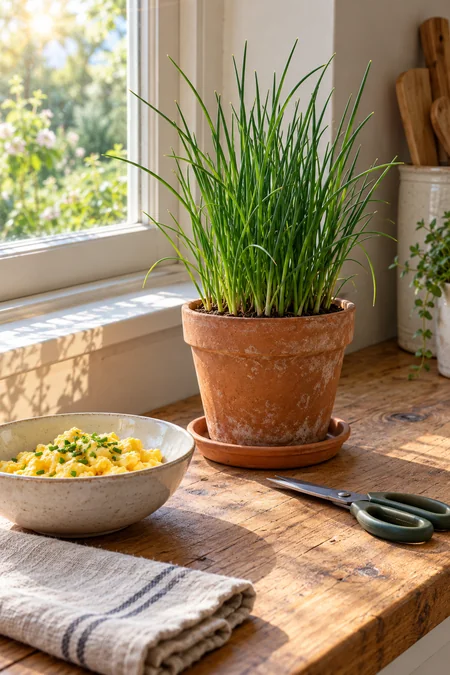
Grow Garlic Chives for Flat, Garlicky Leaves
Flat leaves give garlic chives a different look from the hollow, rounded leaves of common chives. Their garlic flavor also makes them useful in dumpling fillings, eggs, and quick stir-fries.
Give a rooted clump your brightest available window. Garlic chives tolerate some outdoor shade, but that does not make a dim kitchen shelf a productive growing spot.
- Choose a container with room for the clump to widen and holes for drainage.
- Keep the mix lightly moist without leaving water in the saucer.
- Harvest a few established leaves near the base, leaving the smaller growth.
If replacement leaves stay weak or sparse, add a grow light before expecting regular kitchen harvests.
🌿 Leaf shape
Garlic chives have narrow, flat blades. Common chives have slender, hollow leaves.
🍳 Kitchen use
Slice across the blades into short pieces. A small picking suits a garnish or a single serving.
🪴 Growing space
Leave space above and around the pot. A low shelf can bend the leaves and block window light.

Give Sorrel a Deep Pot for Small Leaf Harvests
A young sorrel leaf adds a sharp, lemony note to a bowl of greens. Garden sorrel can tolerate partial shade, making it worth a trial beside a bright window where direct sun is limited.
- Choose a deep container that gives its roots room, and use potting mix with drainage underneath.
- Check moisture regularly so the root ball does not repeatedly dry out.
- Begin picking only once the plant is settled and producing new leaves.
For a small indoor plant, aim for occasional flavoring rather than enough leaves for a large batch of soup. Leave the center growing, and select tender leaves while they are still small.
| Young, tender leaves | Older, larger leaves |
|---|---|
| Usually softer and easier to use raw. | Can develop firmer stems and tougher texture. |
| Slice a little into a mixed salad for tart flavor. | Remove tough stems and cook usable leaves into a sauce or soup. |
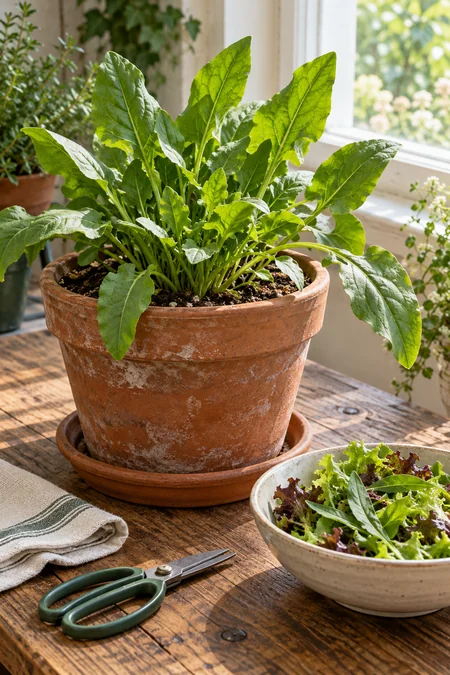
Keep Vietnamese Coriander Warm Near a Bright Window
Drying Vietnamese coriander like a pot of thyme can leave it struggling. This tropical herb prefers warm conditions and consistently moist potting mix, with a way for excess water to escape.
Its pointed leaves bring a peppery, coriander-like flavor to fresh dishes. It tolerates partial shade outdoors, but a bright window is still a better indoor starting point than a shaded corner.
- Begin with a rooted plant and keep it clear of cold drafts.
- Check moisture often, especially in a small pot.
- Snip a growing tip above a leaf joint once fresh growth is underway.
Keep the stems within reach of the window light as they spread across the pot edge.
✅ Keep moisture steady
Check the mix before it becomes dry throughout. Water the root ball, allow drainage, and keep the pot in a warm, bright place.
🚫 Skip the dry-and-soak cycle
Do not wait for repeated wilting, then leave the pot standing in water. Misting the leaves does not replace watering the roots.
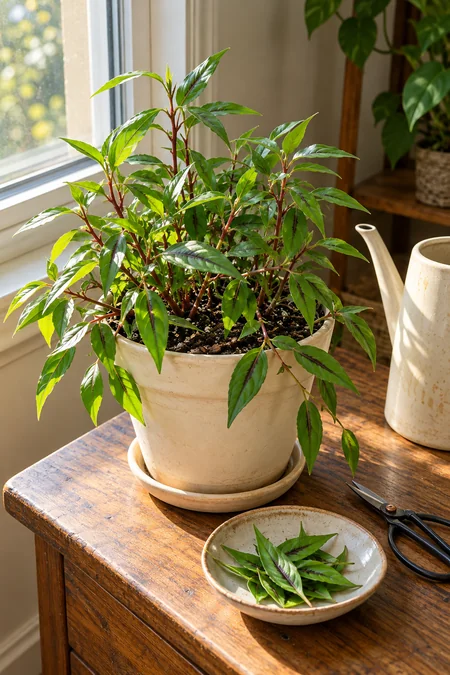
Try Culantro for Bold Flavor Without Harsh Midday Sun
Culantro forms a low rosette of long, toothed leaves, giving it a very different shape from cilantro. Its strong flavor makes a small harvest useful in a pot of beans or a cooked seasoning base.
This warm-climate herb tolerates outdoor shade and is worth trying at a bright indoor window without harsh midday sun. A dim room may still require a grow light. Keep the mix evenly moist in a draining pot, and avoid cold windowsills.
Pick from the outside: Take an established outer leaf while leaving the central growing point intact. Chop the leaf finely for cooking, especially if its edges or midrib feel firm.
📌 Check the name before buying
Culantro is Eryngium foetidum. Cilantro is Coriandrum sativum. They are different plants with similar flavor notes. Check the botanical name on the nursery listing so you bring home the herb you intended.
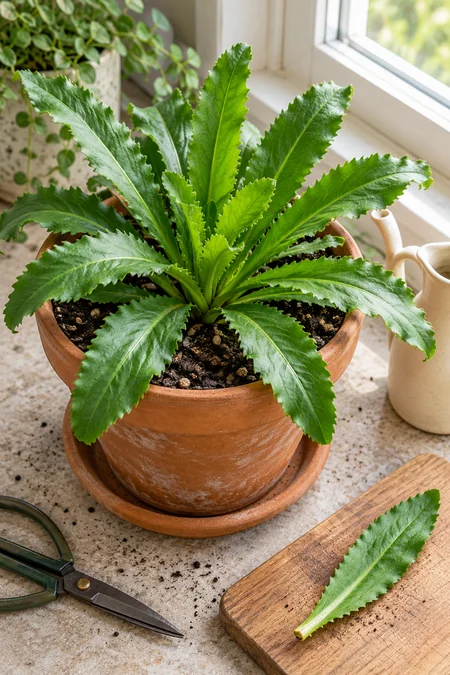
Test Mitsuba in a Cool Spot With Bright Filtered Light
A few mitsuba leaves can finish a bowl of soup without calling for a large harvest. Also called Japanese parsley, this herb has a gentle celery-like flavor and leaves divided into three leaflets.
Mitsuba tolerates outdoor shade, so a cool, bright window with filtered light is a reasonable indoor trial. That still means close to daylight, not on a shelf across the room.
- Keep the potting mix evenly moist, with drainage below.
- Leave space around the foliage instead of crowding it behind other pots.
- Pick a few established outer stems once new growth is steady.
Add the leaves near serving time to keep their delicate texture and flavor.
🪟 Placement
Avoid heat trapped beside afternoon glass. Pale, stretched new growth is a reason to review the available light.
💧 Moisture
Check below the surface before watering. Moist mix should not mean a pot left sitting in a full saucer.
🌿 Light picking
Protect the smaller central leaves. A garnish is a useful first goal while you judge how quickly the plant replaces stems.
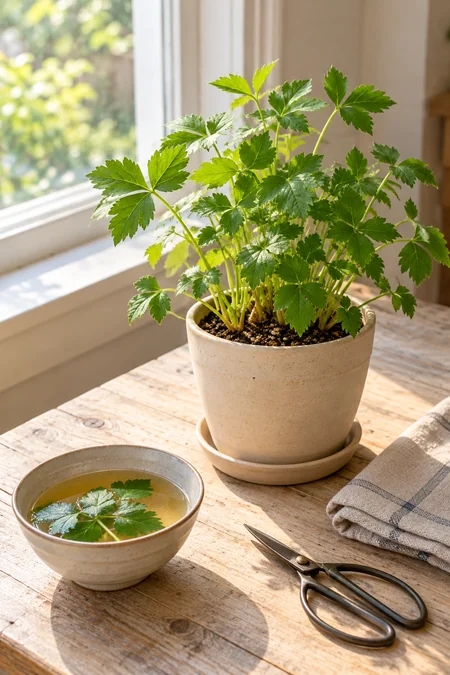
Keep Bay Laurel Near a Bright Window for Occasional Leaves
Choose a small culinary bay laurel plant, sold as Laurus nobilis, before choosing its decorative pot. This slow-growing woody herb can tolerate some shade, but indoors it belongs near a bright window rather than in a dim corner.
A compact plant can provide an occasional leaf for a stew. Let it settle in before harvesting, and keep most of its foliage intact.
Check before watering: Allow the surface of the mix to dry slightly, then water and drain thoroughly. A cool room and weak winter light can slow water use. Lift the pot from its outer container to check for trapped water, even when the top looks dry.
🪴 Choose a bay plant you can manage
- The nursery identifies the plant as culinary bay, Laurus nobilis. Other plants called laurel are not interchangeable.
- The plant fits beside your bright window without pressing against the glass.
- The growing pot has drainage holes and can be lifted out of any decorative cover.
- You can inspect leaf undersides and stems for pests before adding it to your indoor plants.
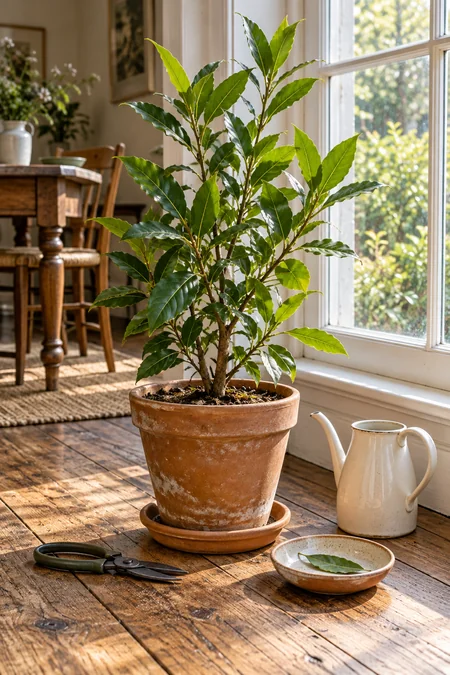
Add a Grow Light for Basil in a Dim Kitchen
Basil on a dark counter often grows tall and sparse instead of producing the leafy plant you wanted. It marks a change in this list: the following herbs need stronger light, and a low-light home should plan on supplemental lighting for useful harvests.
Place basil beneath a grow light suited to leafy plants. Follow the maker’s guidance for distance and daily operating time, and adjust the fixture as the plant grows.
- Keep the leaves clear of cold window glass.
- Pinch a growing tip above a leaf pair once the plant is established.
- Leave enough foliage to support new growth.
A few leaves for tomato toast are a sensible first harvest. Wait for branching before expecting pesto quantities.
Before: the distant counter
The room looks bright to your eyes, but the plant sits far from the window. New stems lengthen with wide gaps between leaves.
After: light over the leaves
A suitable grow light covers the foliage at the recommended distance. Judge the change by new growth, since old bare stems will not instantly fill in.

Give Dill Extra Light and Space Above the Pot
Leave headroom for dill before sowing it. Even a modest plant can outgrow a low shelf, pushing its fine leaves against a light fixture or into the shade above it.
Dill is a sun-loving herb. In a home with limited daylight, use a suitable grow light and choose a compact variety to make the setup easier to manage. Sow directly into a deep pot with drainage, since moving seedlings can disturb their roots.
Think beyond germination: A seedling emerging does not prove the spot can support a harvest. Wait for fresh leafy growth, then snip lightly. Keep another batch in mind as the older plant moves toward flowering.
🌱 Set up for the mature plant
- Choose a deep growing pot and read the variety’s expected mature size before selecting a shelf.
- Sow in that pot and thin crowded seedlings according to the seed packet. Do not leave a dense tangle of stems.
- Use a light with adjustable height. Maintain the maker’s recommended clearance as the foliage grows, and keep neighboring pots from shading the lower leaves.

Start French Tarragon With a Plant and a Bright Growing Spot
Packets of tarragon seed can lead to a different herb than the French tarragon you wanted for cooking. French tarragon is grown from divisions or cuttings, so begin with a correctly identified rooted plant.
Give it a bright window, with supplemental light in a dim home. Its ability to tolerate some outdoor shade does not make it a dependable dark-room herb.
- Use a draining pot and avoid mix that stays soggy.
- Let the surface begin to dry before watering again.
- Take small shoot tips only while the plant is actively growing.
French tarragon may die back for winter rest. Do not promise yourself a steady supply of fresh leaves through every season.
🌿 Plant selection
Ask for French tarragon propagated from an existing plant. Seed-grown Russian tarragon differs in flavor.
💧 Drainage check
Empty the saucer after watering. During slow growth, check the root zone rather than watering on the same schedule.
🪟 Light and rest
Extra light supports active growth, but it is not a guarantee against seasonal dieback. Pause harvests when growth stops.
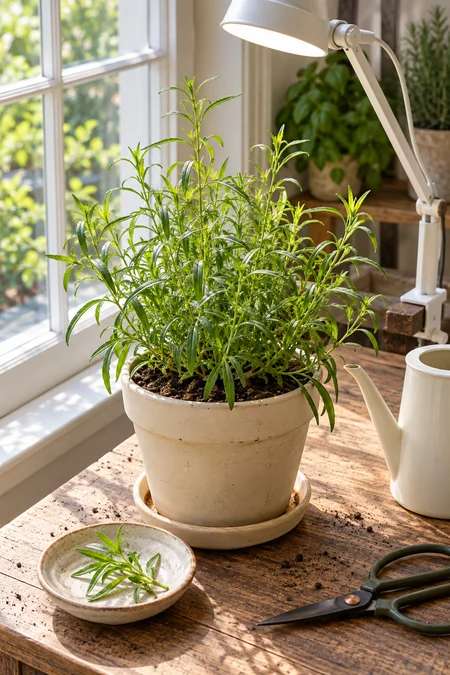
Grow Oregano Only Where You Can Provide Stronger Light
A green oregano plant is not always a productive oregano plant. It may hold on in a weakly lit spot while making little new growth to replace the leaves you pick.
Treat this sun-loving herb as a grow-light choice in a home with limited daylight. Keep its leafy stems within the fixture’s recommended coverage area.
- Start with a culinary variety you enjoy using.
- Let the surface of the potting mix begin to dry before watering.
- Take short leafy tips above a leaf pair, leaving plenty of growth.
Watch the new shoots rather than the oldest leaves. Pause picking if stems become thin and widely spaced.
| Slow survival | Useful leafy growth |
|---|---|
| Older leaves remain, but fresh growth is sparse. | Fresh leafy tips develop and replace small harvests. |
| Review light, moisture, and root health before picking again. | Harvest lightly and keep checking how quickly new shoots appear. |
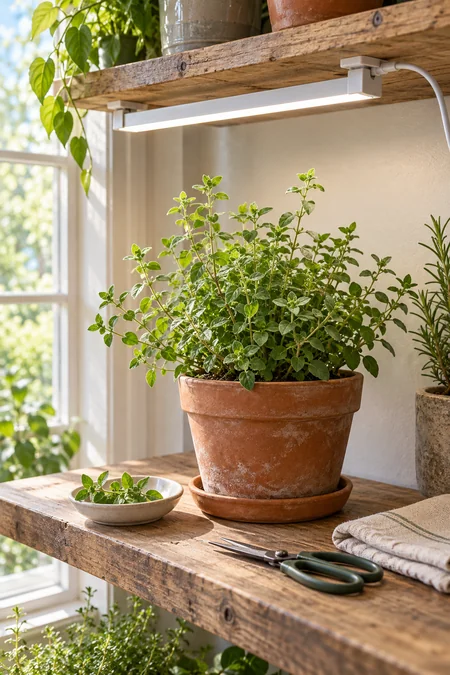
Keep Sweet Marjoram Warm With Supplemental Light
Sweet marjoram brings a softer, sweeter flavor than oregano to eggs and vegetables. Its small, softly hairy leaves make a compact pot useful when you only want a few sprigs.
Give it strong light and a warm spot away from cold drafts. In a dim home, a grow light is part of the setup, not an optional decoration.
Pick the tips: Snip tender shoots above a leaf pair after the plant starts growing steadily. Keep the pot draining freely and let the surface begin to dry between waterings. Avoid letting a decorative pot hide leftover water beneath the roots.
🌡️ Warmth
Keep foliage away from cold glass. Warmth does not mean placing the pot in the drying blast of a heating vent.
💡 Light
Follow the fixture’s guidance for distance and operating time. Keep taller nearby plants from blocking the light.
✂️ Gentle harvests
Leave several leafy shoots untouched. More branching must develop before the next picking can be larger.
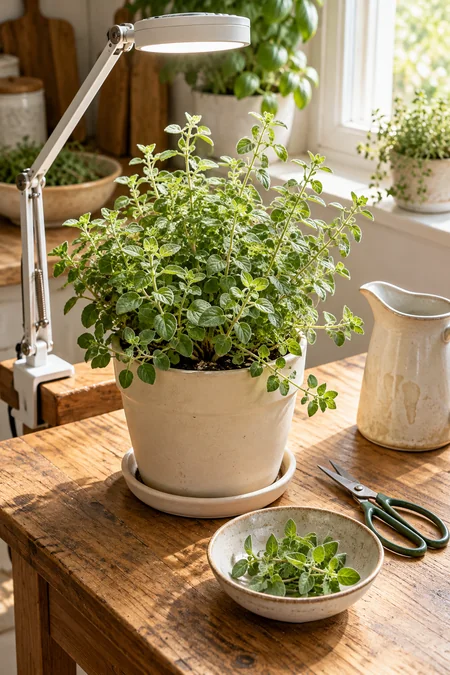
Give Thyme a Grow Light and Check Before Watering
Watering thyme every time you water mint can leave its roots sitting in mix that stays wet too long. Keep thyme in a separate pot so its watering can follow the plant’s actual needs.
This sun-loving herb needs strong light indoors. Use a suitable grow light if your window cannot provide enough, and keep its small leafy shoots inside the lit area.
1. Check the mix below the surface before watering. 2. When the upper mix has dried, water thoroughly and let the excess drain. 3. Empty the saucer instead of leaving the pot to soak.
Snip tender tips for cooking while leaving green growth on the stems. Avoid cutting a small plant back to bare woody branches.
💧 A dry surface can hide damp mix
In weak light or a cool room, the lower root zone may stay wet after the top looks dry. Check a little deeper and notice the pot’s weight. Do not water on a fixed calendar, but do not leave the entire root ball dry for long periods either.

Make Sage a Grow Light Choice for Limited-Sun Homes
Soft, gray-green sage leaves can look sturdy even when the plant is getting too little light. Give culinary sage strong light from the start rather than waiting for long, weak stems to appear.
An established small plant is easier to fit into a home setup than a large woody specimen. Place it beneath a suitable grow light and leave space around its broad leaves.
- Use a pot with drainage holes and a loose container mix.
- Allow the upper mix to dry before watering again.
- Pick a few mature leaves without stripping whole stems.
A small harvest can season roasted vegetables. Let the remaining foliage support fresh growth before picking more.
✅ Check before adding water
Look at the mix and feel below the surface. Keep the drainage opening clear and empty the saucer after watering.
🚫 Do not treat every droop as thirst
Drooping can also happen when roots struggle in wet mix. If the pot is already damp, investigate instead of adding another drink.

Reserve Rosemary for Your Brightest Supported Setup
Rosemary is a demanding choice for a home with little natural light. Include it only if you can offer strong supplemental light, good drainage, and space for air to move around its branches.
Start with a healthy small plant rather than a dense decorative topiary. Keep it away from a heating vent, and inspect the root zone before watering. Rosemary dislikes waterlogged roots, but its container should not be left completely dry for extended periods.
Harvest with restraint: Take a small green tip while the plant is actively growing. Leave leafy growth on each branch instead of cutting into bare old wood. If growth stalls, pause harvests and reassess the setup.
🌿 Is your spot ready for rosemary?
- A suitable grow light covers the whole plant at the maker’s recommended distance and operating time.
- The pot drains freely and can be removed from any decorative cover for inspection.
- Branches have space around them rather than touching neighboring plants or a damp window.
- You can check moisture regularly and accept small, occasional harvests while judging its growth.
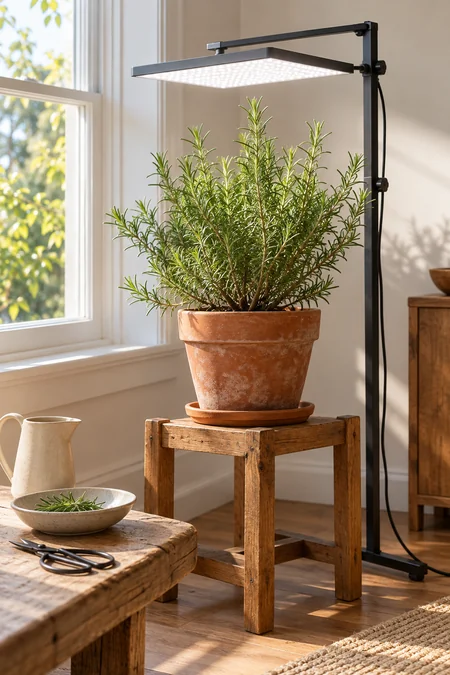
Give Lemon Verbena Strong Light and Room for Seasonal Changes
A lemon verbena plant may lose its leaves as it enters winter rest. That seasonal change can surprise anyone expecting a leafy kitchen herb all year.
While actively growing, this woody herb needs strong light. In a home with limited sun, plan on supplemental lighting and enough room for its stems to extend without touching the fixture.
- Choose a small rooted plant and a pot with drainage.
- Pick a few leaves or tender tips only when fresh growth is steady.
- Check soil moisture before watering, especially when growth slows.
Its lemon-scented leaves suit an occasional cup of herbal tea. If leaves fall, also check light, watering, and pests rather than assuming every bare branch means normal dormancy.
🍂 Plan for a seasonal pause
Winter leaf loss can accompany lemon verbena’s natural rest. A resting plant usually uses less water, so check the mix instead of keeping a summer watering schedule. Extra light is not a promise of year-round leaves.

Grow Stevia With Extra Light for Occasional Sweet Leaves
Start with a small stevia plant if you want to try its sweet leaves without waiting for seedlings. Give it a warm spot and strong light, using a suitable grow light when window daylight is limited.
Stevia needs enough light to keep making leafy shoots. Keep its potting mix lightly moist, let excess water drain, and avoid leaving the pot in a full saucer.
Taste before adding more: Leaf sweetness varies, and some leaves have a lingering aftertaste. Begin with a little in a drink rather than treating fresh leaves as an exact replacement for measured sugar. Pick lightly while new growth is steady.
🌱 Set up, watch, then pick
- Position the light so it covers the whole plant. Follow the maker’s distance and operating guidance, and leave room to raise it as stems grow.
- Watch the new shoots. Long, thin stems with widely spaced leaves can signal insufficient light. Review the setup before taking a harvest.
- Pick a few established leaves, leaving young tips and plenty of foliage. Wait for replacement growth before picking again.

Start Small and Let New Growth Guide You
Choosing low light herbs to grow indoors starts with the light you can actually provide. Try a shade-tolerant option near your brightest window, or make room for a suitable grow light before choosing a sun-loving herb. No herb on this list can supply steady harvests in a truly dim corner.
Begin with a plant you will use in your cooking. Watch for fresh leaves, check the mix before watering, and keep your first harvests small. Let healthy regrowth guide what you add next.
Save this list to your indoor gardening board for your next herb-shopping trip.